Key Takeaways
- NVIDIA reports Nov. 17, its first earnings report under interim CEO Colette Kress, after neoclouds sold off on financing fears.
- AI clouds, industrial and enterprise buyers brought in 42% of NVIDIA’s revenue last quarter, and that revenue grew 138%.
- NVIDIA’s 14x forward multiple is a five-year low, but fiscal 2028 forecasts assume those customers stay funded.
NVIDIA (NVDA) reports on Nov. 17, its first earnings report with Colette Kress as interim CEO. Jensen Huang resigned on Nov. 11, and Kress remains CFO. The AI clouds that rent out NVIDIA’s chips took the worst of the selling, led by CoreWeave (CRWV) and Nebius (NBIS).
Steve Eisman explained why on The Real Eisman Playbook: “NVIDIA has invested $2 billion in both CoreWeave and Nebius. Investors view NVIDIA as a safety net for these two NeoClouds.”
Speaking on the Bloomberg Intelligence podcast on Nov. 11, before the resignation was announced, analyst Vasu Kasibhotla sized what that means for NVIDIA itself: “NeoClouds and ACIE segment as a whole has become nearly half of NVIDIA’s own revenue.”
Nearly Half, and the Fastest-Growing Half
ACIE is NVIDIA’s AI Clouds, Industrial and Enterprise category, which includes the neoclouds. NVIDIA’s CFO commentary shows ACIE revenue up 138% to $40.3 billion in the quarter to July 26, 2026, against 102% growth for hyperscale. That’s 45.3% of data center revenue and 41.9% of NVIDIA’s total.
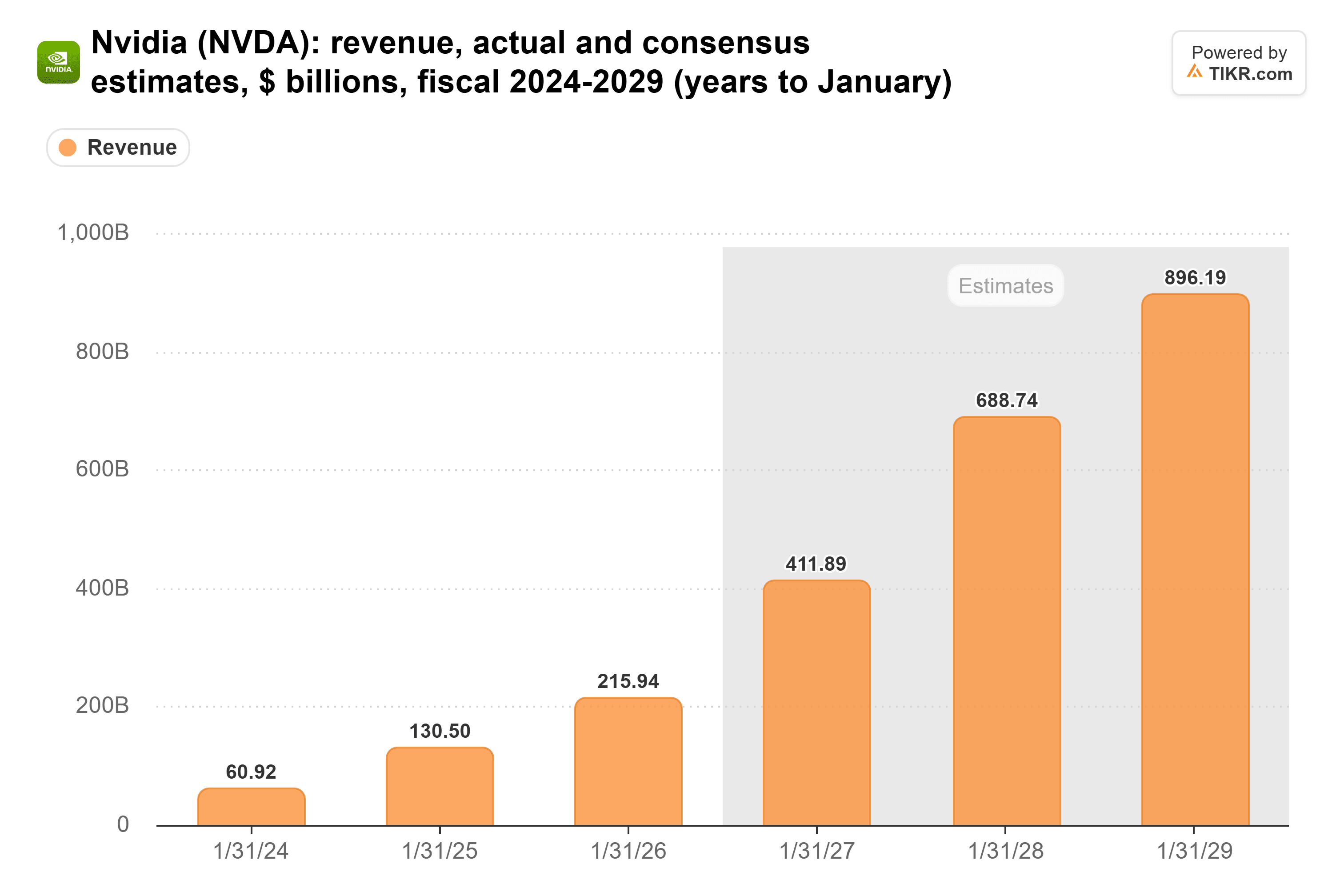
Wall Street counts on that growth continuing, with analysts expecting revenue to more than triple, from $216 billion in the year ended January 2026 to $689 billion in fiscal 2028:
A CFO Now Holds NVIDIA’s Checkbook
Dan Niles, founder of Niles Investment Management, expects Kress to be choosier. He wrote on X that she “likely protects balance sheet,” so “be wary of neo-clouds & their financing chain.” The Information has since reported NVIDIA is expected to slow its AI investing and credit guarantees, though deals under binding contracts should go ahead.
NVIDIA already funds buyers more quietly. Free cash flow fell from a record $48.6 billion in the April quarter to $21.4 billion in July, as receivables jumped $22.3 billion and customers took 60 days to pay, up from 45:
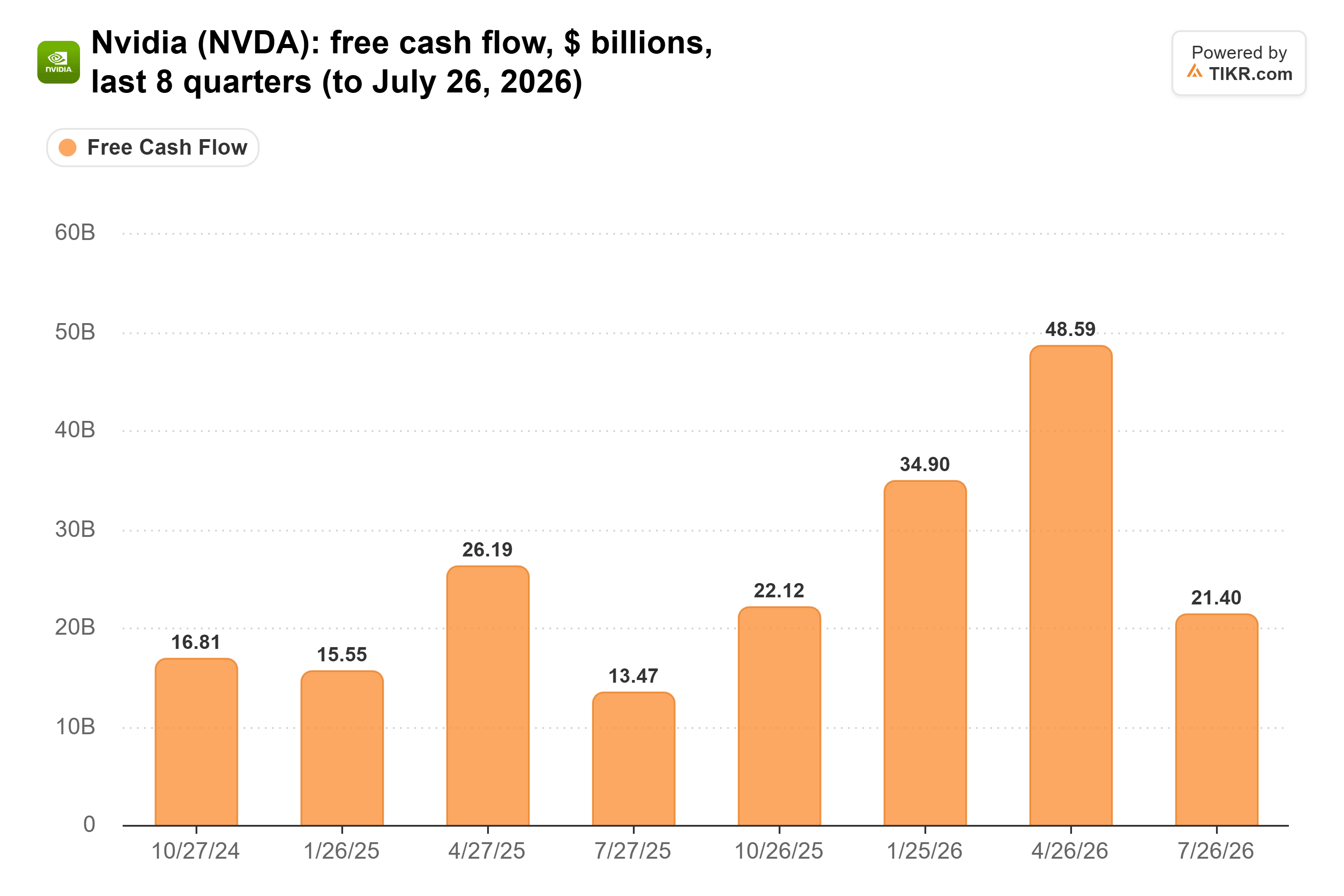
NVIDIA tied the longer terms to certain investment-grade customers on multi-quarter agreements, without naming them. Either way, it’s NVIDIA’s cash funding buyers.
TIKR Tracks 62 Analysts on NVIDIA. How Many Say “Buy”?
See the full breakdown of Buy, Hold, and Sell ratings on NVIDIA, along with Wall Street’s revenue and earnings estimates, all in one place. More than 500,000 investors use TIKR to research stocks like this one. See NVIDIA’s Analyst Ratings
Hyperscalers Have Chips of Their Own
NVIDIA has a cushion. On its Aug. 26 call, management guided fiscal 2028 revenue up about 70% and called that outlook supply-constrained, so a chip a neocloud can’t pay for could go to a hyperscaler. Kasibhotla also expects NVIDIA’s next leader to keep backing the ecosystem.
But hyperscalers now sell chips of their own. Morgan Stanley estimates Alphabet’s direct TPU system sales at $84 billion in 2027, and Amazon plans to sell Trainium outside AWS in the second half of 2027. NVIDIA’s hyperscale revenue grew 13% from the April quarter, about half ACIE’s 25%.
Cheap for a Reason
NVIDIA trades at 14x forward earnings, its lowest in five years and far below its 36x average:
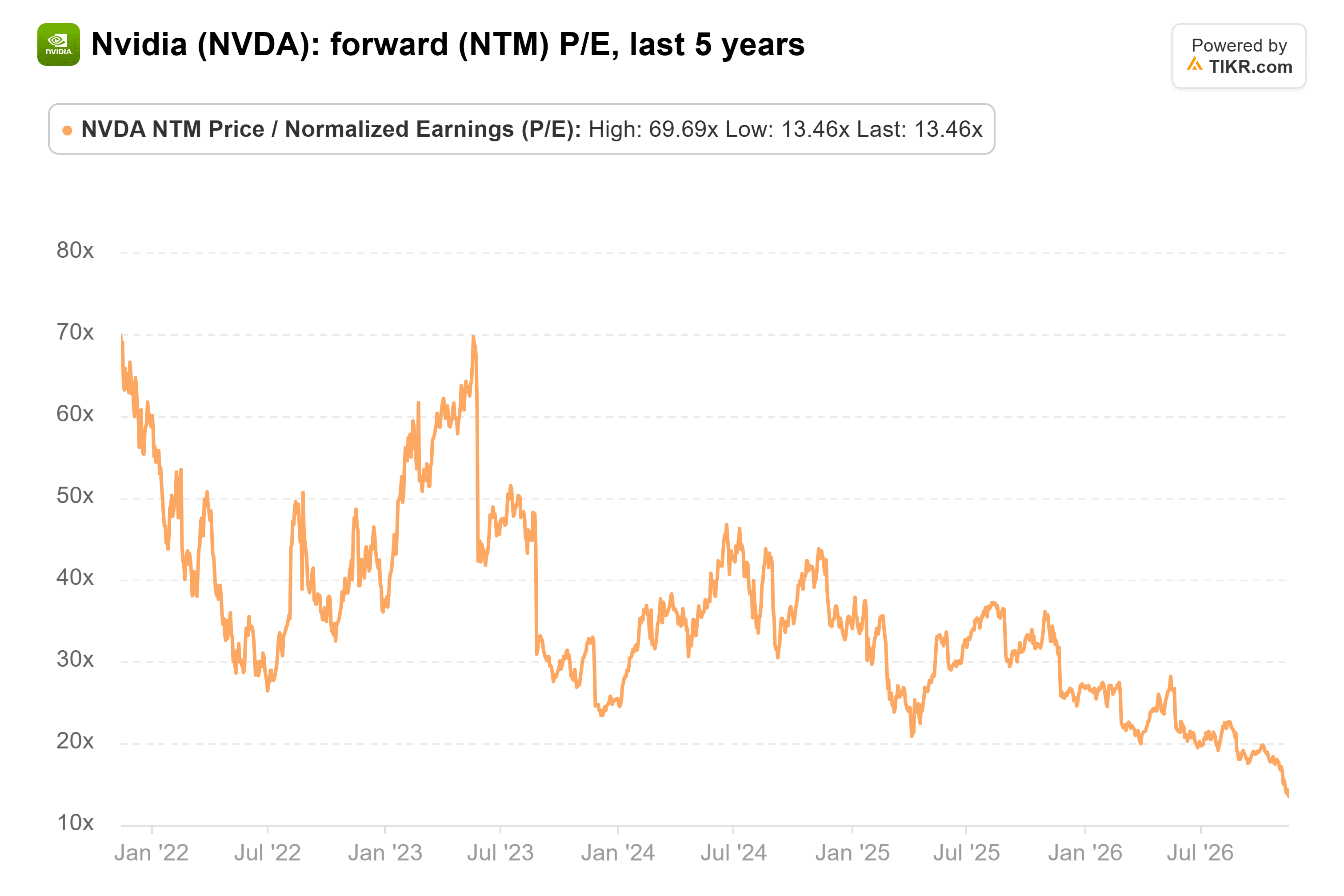
The market expects some of this. Still, shareholders have more riding on Kress’s checkbook than the neocloud selloff suggests, because the $689 billion forecast assumes NVIDIA’s fastest-growing customers keep getting funded. If they don’t, 14x isn’t as cheap as it looks.
Kress gets her first chance to answer on Nov. 17. If customers pay faster than July’s 60 days and ACIE keeps outgrowing hyperscale, I’d worry a lot less.
So What Is NVIDIA Stock Actually Worth?
TIKR lets you forecast the future price of any stock in less than a minute. Just enter a few assumptions into TIKR’s valuation model and see what NVIDIA could be worth. Start from Wall Street consensus estimates, or adjust the inputs to reflect your own view of the business. It’s free to use.
Disclaimer:
Please note that the articles on TIKR are not intended to serve as investment or financial advice from TIKR or our content team, nor are they recommendations to buy or sell any stocks. We create our content based on TIKR Terminal’s investment data and analysts’ estimates. Our analysis might not include recent company news or important updates. TIKR has no position in any of the stocks mentioned. Thank you for reading, and happy investing!