Key Takeaways
- Eli Lilly’s EloraTZP combination produced up to 23.3% weight loss at 48 weeks in adults with obesity and type 2 diabetes, against 14.8% for tirzepatide alone. Those results first came out on Sept. 30.
- That figure estimates weight loss if every patient had stayed on treatment, and 27.0% of patients on the top dose quit over side effects, against 2.9% on tirzepatide. Lilly is betting on a single injection with a slower dose ramp in Phase 3.
- Tirzepatide made up 65.9% of Lilly’s third-quarter revenue, and the stock trades at 30.8x forward earnings, 23% below its five-year average, leaving room for a higher multiple if the next generation delivers.
Eli Lilly (LLY) put its next obesity combination back in front of investors with a Nov. 14 release ahead of ObesityWeek in Washington, D.C. The headline figure isn’t new. EloraTZP, which pairs the amylin drug eloralintide with tirzepatide, produced up to 23.3% average weight loss at 48 weeks in adults with obesity and type 2 diabetes when Lilly first reported the Phase 2 results on Sept. 30. Tirzepatide 15 mg alone managed 14.8%.
That gap stands out because weight-loss drugs usually do less in people with diabetes. Novo Nordisk (NVO) got 15.7% at 68 weeks from CagriSema, its own amylin combination, in a similar population (a cross-trial comparison, so treat it as a rough guide).
The 23% Assumes Everyone Stayed on Treatment
Lilly’s 23.3% is the efficacy estimand, an estimate of the weight loss if everyone randomized had stayed on treatment for the full 48 weeks (dose pauses and changes allowed). The dropout figures are the catch. Discontinuations due to side effects ran 10.8% to 27.0% across the combination arms, against 2.9% on tirzepatide alone and 16.7% on placebo. Stomach-related side effects, mostly mild to moderate, showed up more often on the combination and clustered during dose escalation.
The 27% came from the top combination, eloralintide 9 mg plus tirzepatide 15 mg, according to Lilly’s third-quarter earnings slides. That’s the same arm behind the 23.3%. Lilly’s fix is a single-injection version with a slower ramp, headed into Phase 3 by the end of 2026 (Phase 2 patients took two separate shots).
Two-Thirds of Lilly Now Rides on Tirzepatide
Lilly’s own reports show why this matters. Mounjaro and Zepbound, both tirzepatide, made up 36.6% of revenue in 2024 and 56% in 2025. In the third quarter of 2026, they brought in $16.1 billion of Lilly’s $24.4 billion, or 65.9%.
EloraTZP is built on top of tirzepatide, not in place of it. If it works, Lilly’s best-selling molecule stays at the center of the next generation too.
Lilly Stock Still Trades Below Its Average Multiple
At $1,444 as of the Nov. 13 close, Lilly trades at 30.8x next-12-month earnings, 23% below its five-year average of 40.0x. The multiple peaked near 67x in late 2023 and bottomed at 23.0x in mid-2025.
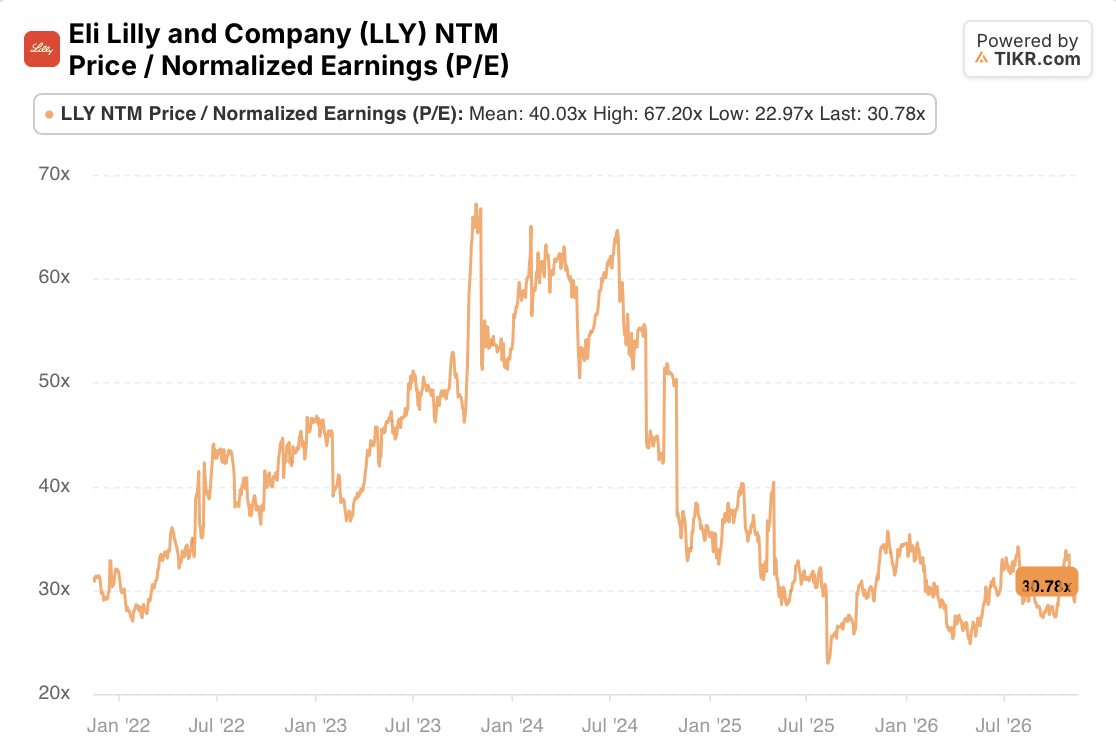
That discount leaves room for the multiple to rise if the pipeline delivers, though it can’t show how much pipeline value is already in the price. A return to the average multiple on today’s estimates would mean about 30% upside. A next-generation combination that patients can stay on is one of the things that could help close that gap.
TIKR Tracks 32 Analysts on Eli Lilly. How Many Say “Buy”?
See the full breakdown of Buy, Hold, and Sell ratings on Eli Lilly, along with Wall Street’s revenue and earnings estimates, all in one place. More than 500,000 investors use TIKR to research stocks like this one. See Eli Lilly’s Analyst Ratings
The Question EloraTZP’s Phase 3 Has to Answer
The top dose already lost 27.0% of its patients to side effects, so the open question is whether Phase 3’s single shot and slower ramp can cut that number without giving up the weight loss. A result counting everyone who started, dropouts included, could come in below 23.3%, but the dropout rate alone can’t say by how much. On a like-for-like basis, the 23.3% compares with CagriSema’s 15.7%, which also assumes patients stayed on treatment; Novo’s result counting everyone was 13.7%. Lilly’s Dec. 7 Innovation Day could bring more detail on the Phase 3 plan.
So What Is Eli Lilly Stock Actually Worth?
TIKR lets you forecast the future price of any stock in less than a minute. Just enter a few assumptions into TIKR’s valuation model and see what LLY stock could be worth. Start from Wall Street consensus estimates, or adjust the inputs to reflect your own view of the business. It’s free to use.
Value Eli Lilly and Company for free→
Disclaimer:
Please note that the articles on TIKR are not intended to serve as investment or financial advice from TIKR or our content team, nor are they recommendations to buy or sell any stocks. We create our content based on TIKR Terminal’s investment data and analysts’ estimates. Our analysis might not include recent company news or important updates. TIKR has no position in any of the stocks mentioned. Thank you for reading, and happy investing!