Key Takeaways
- Starship lost one of its roughly 18,000 heat-shield tiles on SpaceX’s first catch of the ship from orbit, and SpaceX CEO Elon Musk agreed that works out to about 99.995% reliability.
- Musk also said the material the launch tower’s arms scraped off the ship will be replaced with stainless steel wool that’s meant to survive reentry.
- This is real progress on what Musk calls Starship’s biggest remaining challenge, a heat shield that can fly again right away.
- One catch isn’t a track record, so the next test is how quickly SpaceX flies a caught ship again.
SpaceX (SPCX) caught Starship’s upper stage with its launch tower for the first time on Nov. 14, after 14 orbits and deploying 26 Starlink V3 satellites.
And the heat shield came home almost whole.
As Tim Dodd, the creator of Everyday Astronaut, pointed out on X: “Starship has about 18,000 tiles and only ONE fell off. That’s already about a 99.995% reliability rate.”
Musk’s reply was one word: “Yeah.”
Starship’s hardest problem just got smaller
Musk has been clear about what stands between Starship and cheap, frequent flights. In November 2024, he wrote on X: “The biggest technology challenge remaining for Starship is a fully & immediately reusable heat shield.” He also set the bar for passing that test: land the ship, refill it and launch again with no refurbishment or laborious inspection.
Earlier ships fell well short of that. In a February interview with John Collison and Dwarkesh Patel, Musk said ships that soft-landed in the ocean lost so many tiles that they wouldn’t have been reusable without a lot of work.
Against that history, one missing tile is a big step.
TIKR tracks 40 analysts on SpaceX. How many say “Buy”?
See the full breakdown of Buy, Hold, and Sell ratings on SpaceX, along with Wall Street’s revenue and earnings estimates, all in one place. More than 500,000 investors use TIKR to research stocks like this one. See SpaceX’s Analyst Ratings
Steel wool for the chopsticks
The tiles weren’t the only wear the catch showed. One X user posted footage and wrote: “You can really see the ablative getting scraped off by the chopsticks.” (The chopsticks are the tower’s two catch arms. Ablative material protects the ship by burning away, so it gets used up.)
Musk answered: “That will be replaced with stainless steel wool for future flights.”
Space YouTuber Marcus House asked whether that meant “Some sort of material that survives entry and doesn’t scrape off?” Musk said: “Yes.” Every part that has to be swapped out costs time on the ground between flights, and a material that gets through both reentry and the catch is one less thing to replace.
Starlink is Starship’s biggest customer
Most of SpaceX’s launches are for itself: 23 of its 35 launches in the third quarter were its own missions. SpaceX designed each full Starship to carry up to 60 V3 Starlink satellites, which it puts at 20 Falcon 9s’ worth of capacity. So the faster a caught ship flies again, the faster Starlink gets new capacity to sell, and the catch itself was already a step toward cheaper launches for Starlink.
Analysts expect SpaceX’s revenue to climb from $49.0 billion this year to $338 billion in 2028:
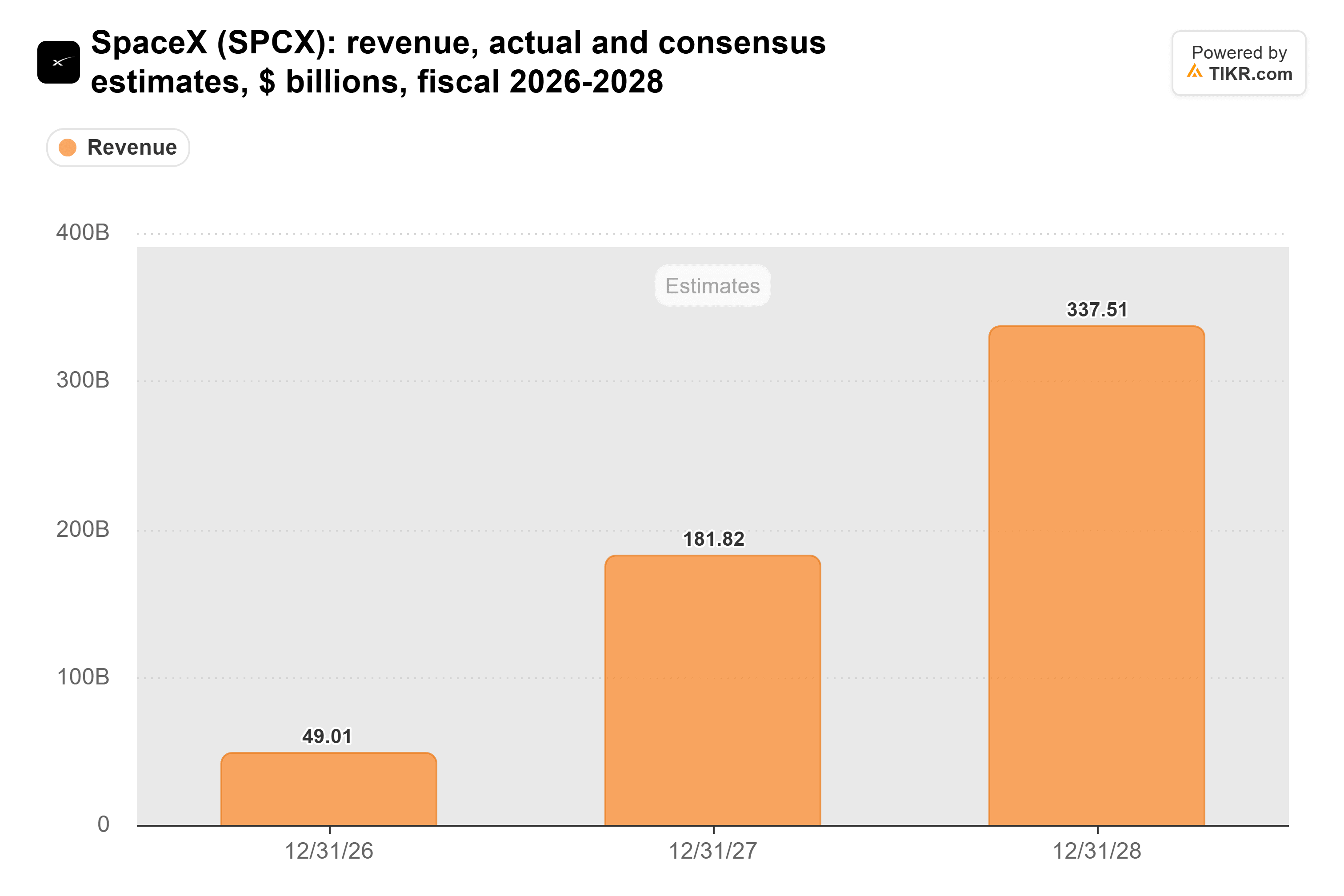
Most of that jump comes from the AI compute business, which brought in 51.9% of third-quarter revenue. A tile count won’t move those estimates on its own, but Starlink’s share of the growth depends on Starship flying often.
The cost of launching and turning those vehicles around also shows up in SpaceX’s gross margin, which rose every year from 2023 to 2025:
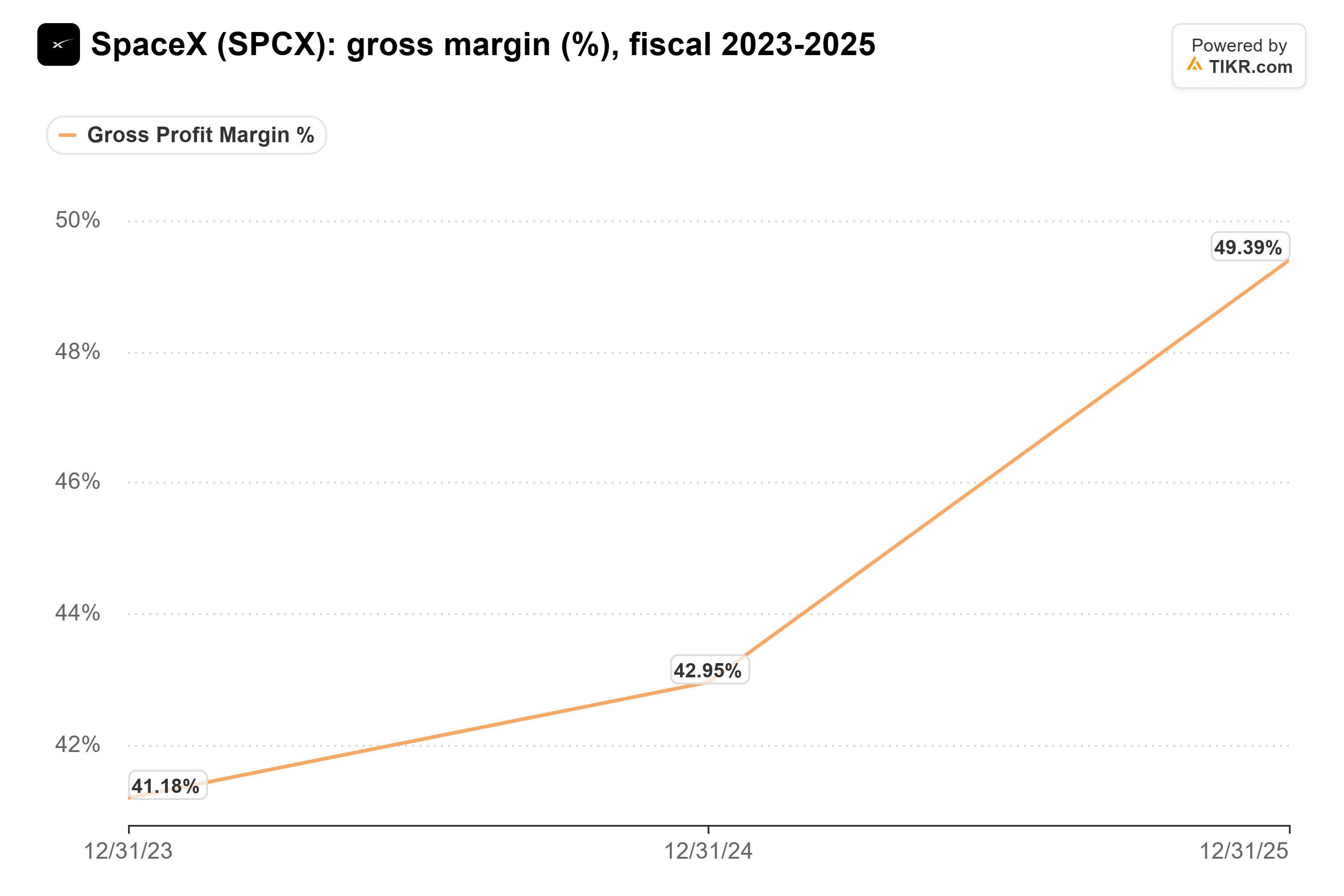
And over the last twelve months it’s even higher, at 56.7%.
One catch isn’t a track record
Still, this was one flight. The same mission lost its booster after SpaceX called off the booster’s tower catch, and SpaceX hasn’t said when the caught ship will fly again. The steel wool is itself a fix the ship needs after this flight, while Musk’s own bar is no refurbishment at all. His timelines have slipped, too: in August, he talked about a flight a day within a year, and on the October earnings call, he guided to weekly flights in the first half of 2027.
But I’d still call this a clear win. One tile in about 18,000 is a long way from the losses Musk described on earlier ships, and steel wool goes right at the material SpaceX would otherwise replace after every catch. The proof will come when SpaceX flies a caught ship again, and we’ll see how much work it took to get it there.
So what is SpaceX stock actually worth?
TIKR lets you forecast the future price of any stock in less than a minute. Just enter a few assumptions into TIKR’s valuation model and see what SpaceX could be worth. Start from Wall Street consensus estimates, or adjust the inputs to reflect your own view of the business. It’s free to use.
Disclaimer:
Please note that the articles on TIKR are not intended to serve as investment or financial advice from TIKR or our content team, nor are they recommendations to buy or sell any stocks. We create our content based on TIKR Terminal’s investment data and analysts’ estimates. Our analysis might not include recent company news or important updates. TIKR has no position in any of the stocks mentioned. Thank you for reading, and happy investing!