Key Takeaways
- Microsoft is lobbying the Trump administration to drop a planned ban on new Chinese optical transceivers, Reuters reported on Nov. 10.
- Chinese companies make about two-thirds of the world’s transceivers, and Coherent’s CEO says calendar 2027 is “basically booked out.”
- The ban’s scope decides who wins: a reported 3.2-terabit threshold would hit parts not expected to ramp until 2028, when Coherent expects far more capacity.
Microsoft (MSFT) is pressing the Trump administration to drop a planned ban on new Chinese optical transceivers, the parts that let AI chips and servers trade data over fiber, Reuters reported on Tuesday.
Reuters named Coherent (COHR) as one of the US makers that could fill the gap. But Coherent’s CEO said last week that calendar 2027 is already “basically booked out.”
Microsoft Wants the Ban Stopped
The administration has weighed the ban since at least August over fears Beijing could use the parts to steal data, install malware or disrupt service, and the Federal Communications Commission is working on it. In September, Microsoft joined a handful of companies in meeting White House and national security officials to flag the supply risk. It has 35 US data centers under construction and 134 planned, according to Cleanview data cited by Reuters.
The problem is supply. Chinese companies hold about two-thirds of the global market, per Counterpoint Research, and some data centers need millions of transceivers. John Miller of the Information Technology Industry Council, a tech lobbying group, said a ban could “grind” the data center rollout to a halt, leaving AI chips that cloud companies already bought sitting unused.
Coherent Is Already Sold Out
Reuters cited a Foundation for American Innovation report saying US makers lack the scale to replace Chinese supply, and Coherent’s own call on Nov. 4 backs that up. CEO Jim Anderson said “calendar ‘27 is basically booked out and the customers are booking out calendar ‘28 now.” That’s on top of a $20 billion, five-year deal with a major AI company that starts ramping in early 2028.
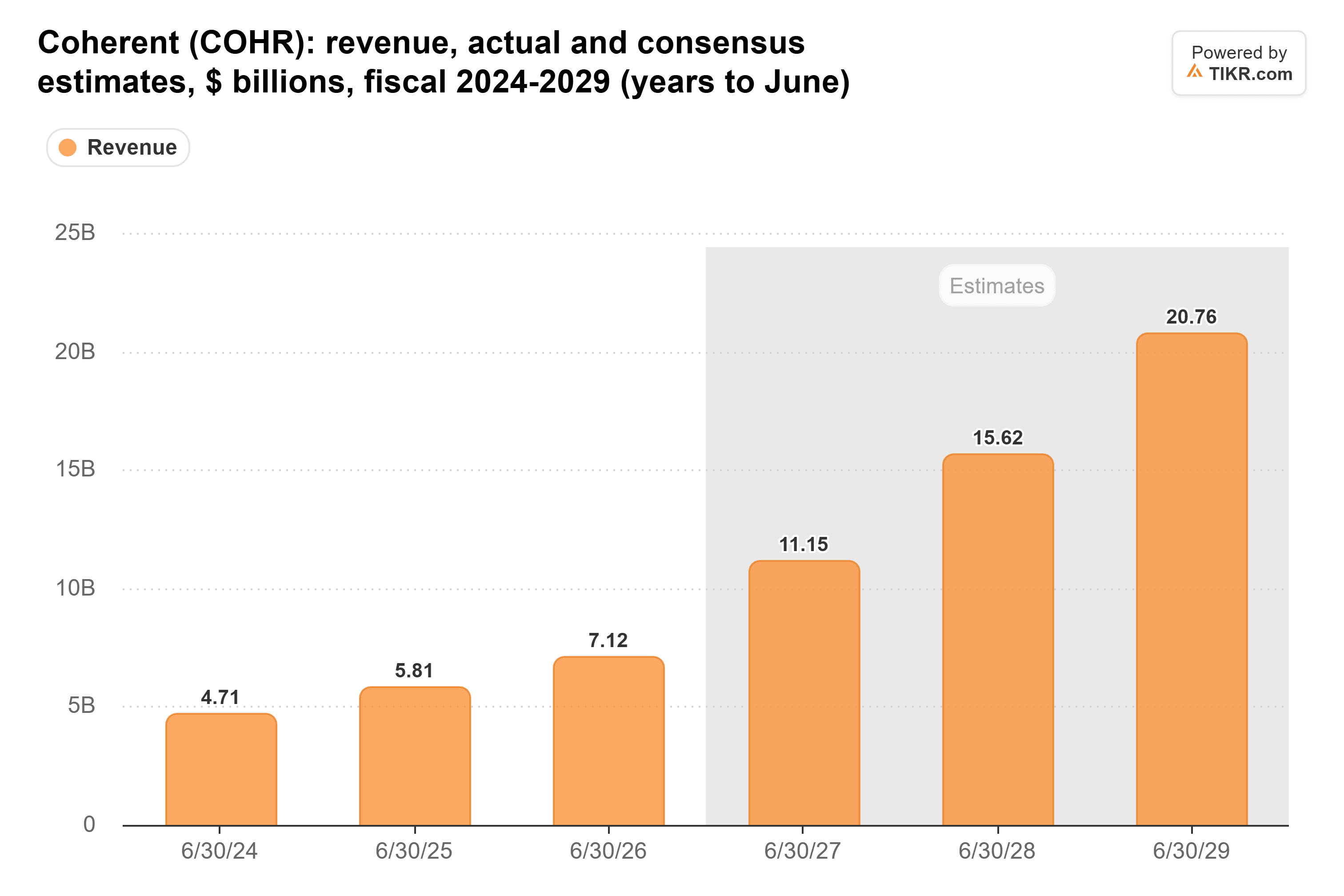
Analysts expect Coherent’s revenue to jump from $7.12 billion in fiscal 2026 (which ended in June) to $11.2 billion this fiscal year and $15.6 billion in fiscal 2028:
With 2027 spoken for, a ban wouldn’t add much volume near term. Coherent can only ship what it can make. What it could add is price. Gross margin has already climbed from 30.9% in fiscal 2024 to 37.5% in fiscal 2026:
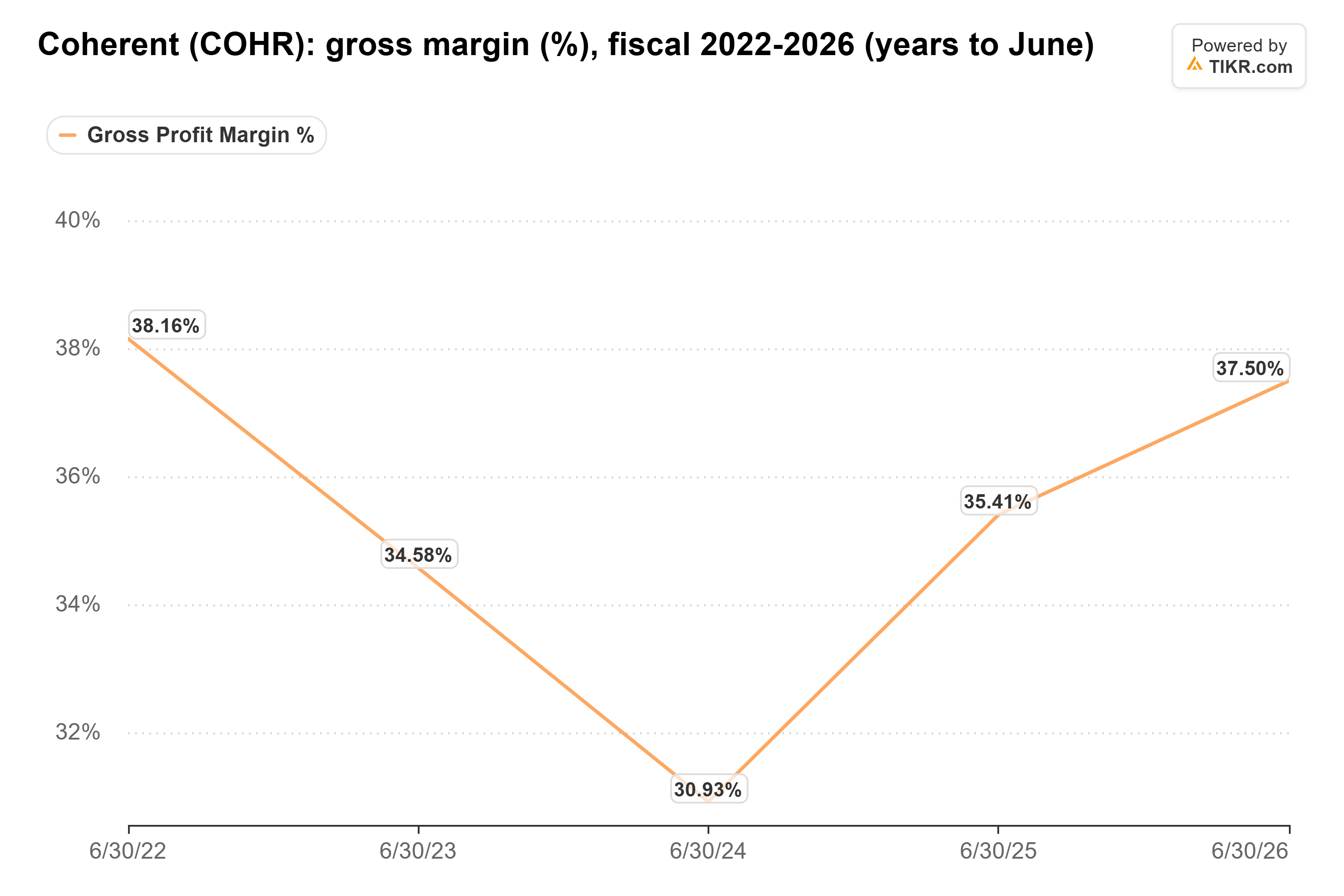
That’s just below the 38.2% of fiscal 2022, and CFO Sherri Luther already credits “pricing optimization,” with lower input costs and better yields, for the gains. Shut out its biggest rivals and Coherent has more room to push.
TIKR Tracks 58 Analysts on Microsoft. How Many Say “Buy”?
See the full breakdown of Buy, Hold, and Sell ratings on Microsoft, along with Wall Street’s revenue and earnings estimates, all in one place. More than 500,000 investors use TIKR to research stocks like this one. See Microsoft’s Analyst Ratings
Microsoft Would Foot the Bill
Microsoft’s capital spending has nearly quintupled, from $23.9 billion in fiscal 2022 to $115.9 billion in fiscal 2026:
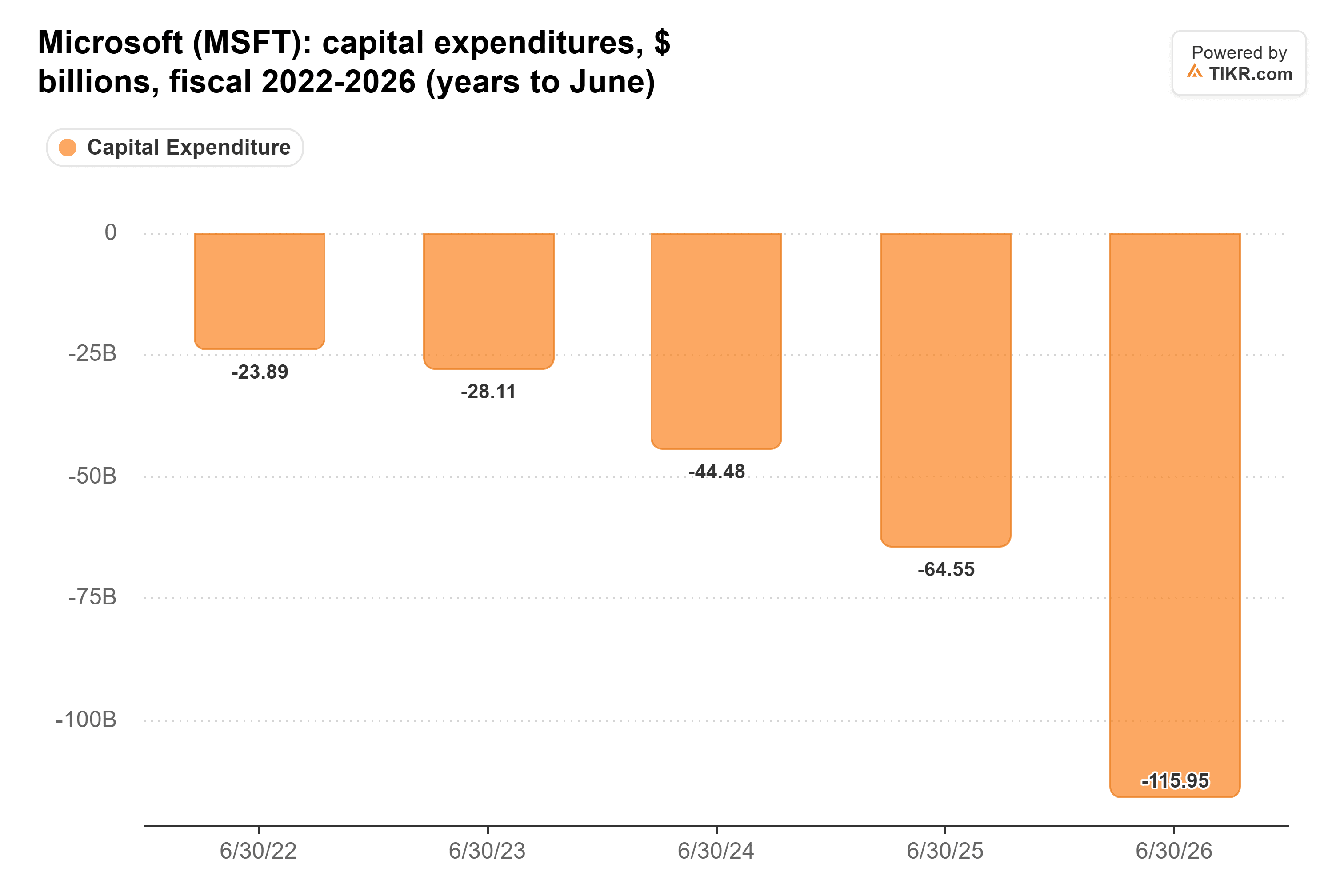
It’s already paying up for parts. In April, Microsoft tied about $25 billion of its calendar 2026 spending plan to higher component prices, mostly memory. A ban would put optics on the same list, and delays would hurt more than prices.
The Question Hanging Over Coherent and Microsoft
Two of Reuters’ sources said the FCC is weighing a 3.2-terabit-per-second threshold, and a Morgan Stanley note cited in the report says those parts won’t ramp until 2028, with wide installation in 2029. That lines up with Coherent’s buildout: it doubled its indium phosphide laser capacity a quarter ahead of plan and aims to more than double it again by the end of calendar 2027.
A narrow ban timed like that is close to ideal for Coherent. A broad one that hits sooner mostly means longer waits for Microsoft, not more revenue for Coherent. Microsoft has the most to lose either way, which is why it’s lobbying, and Coherent’s next report early next year will show whether pricing keeps lifting its margins even without a ban.
So What Is Coherent Stock Actually Worth?
TIKR lets you forecast the future price of any stock in less than a minute. Just enter a few assumptions into TIKR’s valuation model and see what Coherent could be worth. Start from Wall Street consensus estimates, or adjust the inputs to reflect your own view of the business. It’s free to use.
Disclaimer:
Please note that the articles on TIKR are not intended to serve as investment or financial advice from TIKR or our content team, nor are they recommendations to buy or sell any stocks. We create our content based on TIKR Terminal’s investment data and analysts’ estimates. Our analysis might not include recent company news or important updates. TIKR has no position in any of the stocks mentioned. Thank you for reading, and happy investing!