Key Takeaways
- Nvidia stock fell 14% on Friday after Reuters reported an SEC look at its accounting.
- Nvidia’s biggest risk is now disclosure, not demand.
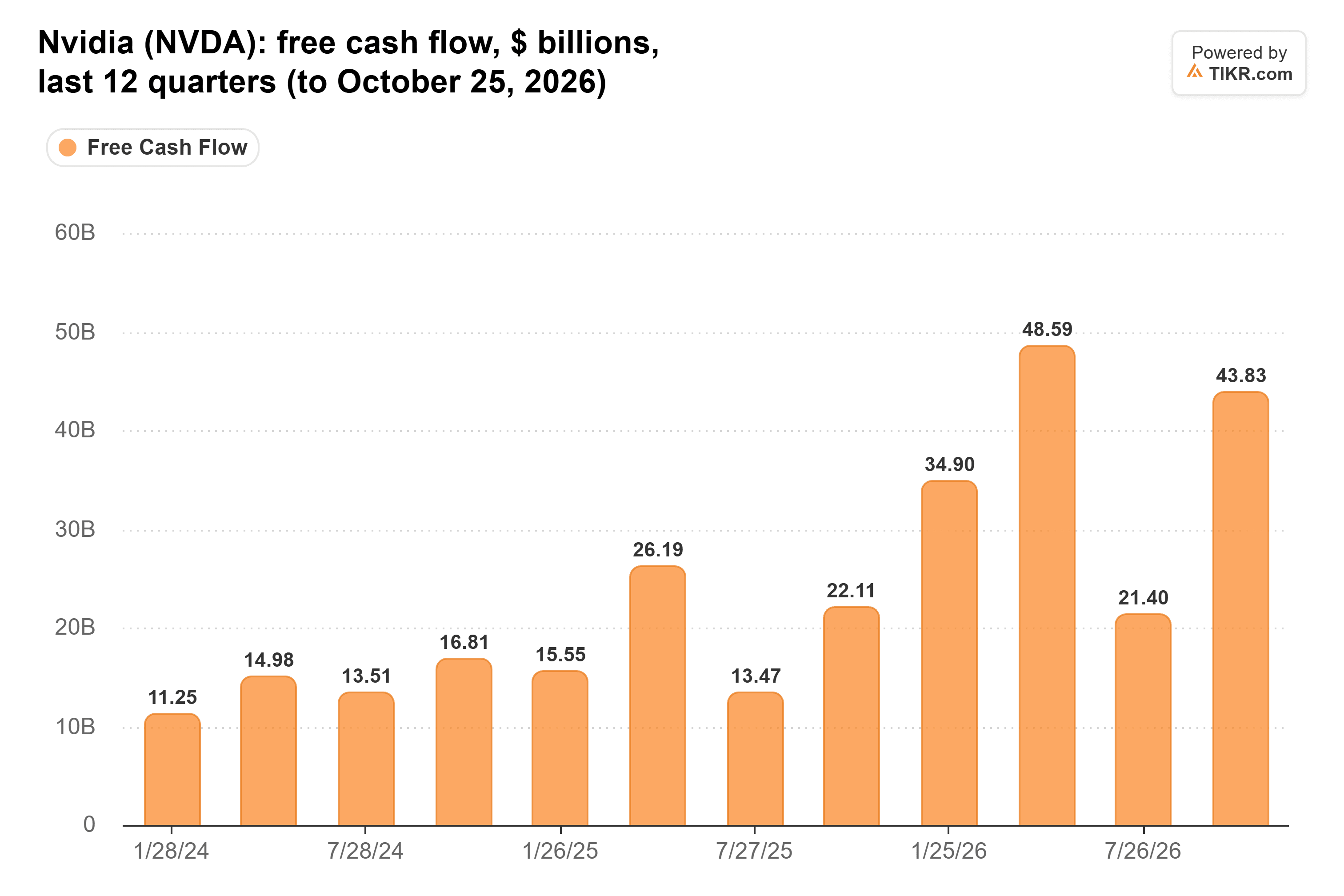
- It trades at 8.7x forward earnings despite $43.8 billion of quarterly free cash flow.
- The 10-Q, due by Dec. 4, is the next test.
Nvidia (NVDA) stock fell 14% on Friday, Nov. 20, its worst day since the DeepSeek selloff in January 2025, after Reuters reported that SEC enforcement staff are examining “potential accounting issues” at the company.
On Tuesday, a post on X asked: “Why would a former $5 trillion company take weeks to file its 10-Q, as if it were a suspicious company that had just changed its auditor (e.g., SMCI)?” Michael Burry, the investor made famous by The Big Short, replied: “Exactly.“
That ticker belongs to Super Micro Computer (SMCI), which, like Dell Technologies (DELL), builds servers around Nvidia’s chips. Their books are the best outside check on Nvidia now.
What Happened to Nvidia This Week
The Wall Street Journal first reported an SEC probe on Tuesday without pinning down its focus. Reuters added the accounting angle Friday, though it couldn’t learn when the inquiry began, and the SEC declined to comment.
Nvidia also hasn’t filed its 10-Q. It had filed on results day for nine straight reports, but with Tuesday’s results, interim CEO and CFO Colette Kress said it would come “in the coming weeks.” UBS said management tied the timing to the board’s investigation into former CEO Jensen Huang.
TIKR Tracks 63 Analysts on Nvidia. How Many Say “Buy”?
See the full breakdown of Buy, Hold, and Sell ratings on Nvidia, along with Wall Street’s revenue and earnings estimates, all in one place. More than 500,000 investors use TIKR to research stocks like this one. See Nvidia’s Analyst Ratings
The Demand Is Still There
Analysts expect Nvidia’s revenue to nearly double to $424 billion in the fiscal year ending January 2027, then reach $726 billion the year after:

Those estimates predate Friday’s report and shouldn’t move unless the SEC questions how that revenue was booked.
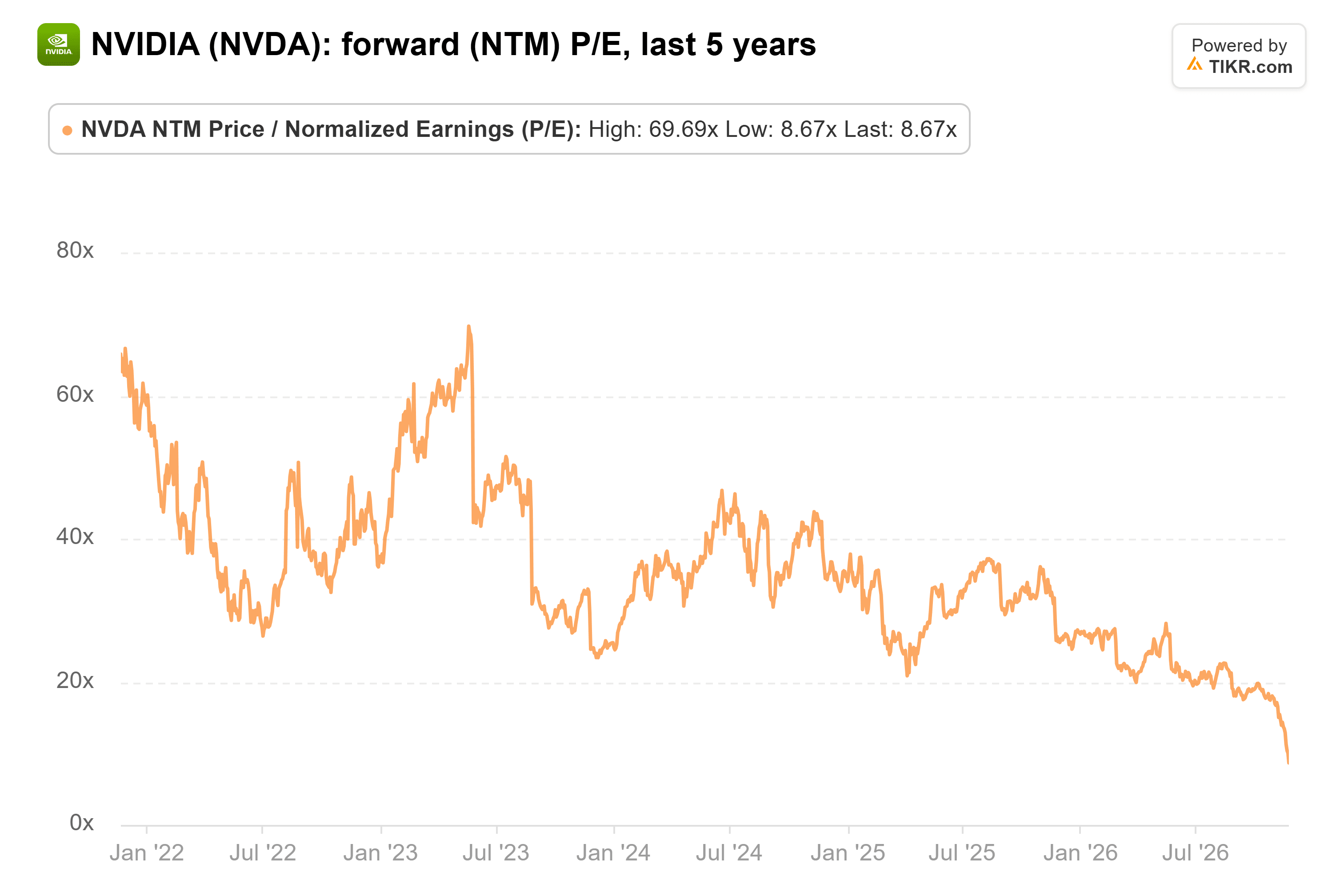
But the market has stopped paying for them: Nvidia trades at 8.7x forward earnings, its lowest in five years and about a quarter of its 35x five-year average:
Nvidia’s Cash Is Its Best Defense
Free cash flow was $43.8 billion in the quarter to Oct. 25, about double the July quarter’s $21.4 billion:
Customers are paying more slowly: receivables reached 64 days of sales, up from 60 in July and the most since 2022. Still, revenue that turns into that much cash is hard to dismiss. The 10-Q should show who owes the money and how far the board’s investigation has gone.
Super Micro and Dell Are the Outside Checks
Super Micro is the comparison Nvidia doesn’t want. Its Nov. 3 release called its September-quarter figures preliminary, with its auditor yet to review them, and operations used $434 million of cash even as sales nearly quadrupled to $19.9 billion. It has since filed its 10-Q.
Dell reports Tuesday, Nov. 24. It ended its July quarter with a $95 billion AI backlog, but its $2.2 billion of operating cash flow trailed $4.1 billion of net income. Whether buyers pay is the first outside read on Nvidia’s customers since the probe report.
Nvidia’s 10-Q Deadline Is the Real Test
An SEC inquiry isn’t a finding. Nvidia has been here before: after an accounting review in 2002, it restated results and settled with the SEC in 2003 without admitting wrongdoing.
The stock already prices in a lot of bad news, and the cash backs up most of what Nvidia reports. A 10-Q by Dec. 4 with no restatement, and receivables back toward 60 days, would go a long way toward rebuilding trust. Miss that deadline, and the Super Micro comparison gets much harder to shake.
So What Is Nvidia Stock Actually Worth?
TIKR lets you forecast the future price of any stock in less than a minute. Just enter a few assumptions into TIKR’s valuation model and see what Nvidia could be worth. Start from Wall Street consensus estimates, or adjust the inputs to reflect your own view of the business. It’s free to use.
Disclaimer:
Please note that the articles on TIKR are not intended to serve as investment or financial advice from TIKR or our content team, nor are they recommendations to buy or sell any stocks. We create our content based on TIKR Terminal’s investment data and analysts’ estimates. Our analysis might not include recent company news or important updates. TIKR has no position in any of the stocks mentioned. Thank you for reading, and happy investing!