Key Takeaways
- Former Stability AI CEO Emad Mostaque says Meta and Google will “sell space inside their models,” so that asking for a beer gets you a Bud Light.
- Ad money lets Meta and Alphabet give AI away, while rivals that depend on paying developers have to charge for theirs.
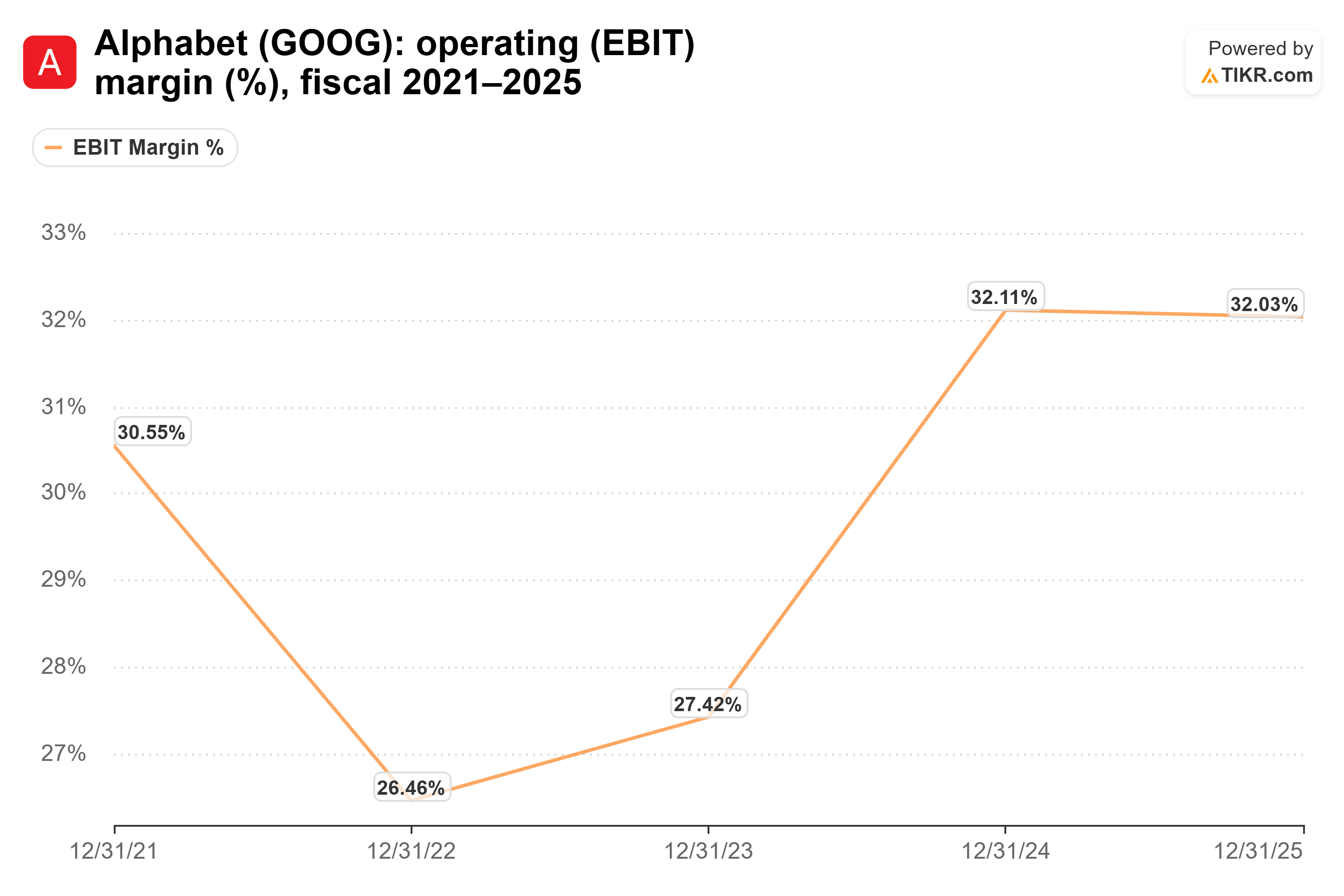
- Meta made $201 billion of revenue in 2025 at a 41% operating margin, and Alphabet’s operating margin was 32%.
- Meta’s launch post says Muse conversations stay out of its ad systems, so watch this week’s earnings for any change in how it plans to make money from Muse.
Ask an AI assistant to recommend a beer, and someday the answer could be an ad.
Former Stability AI CEO Emad Mostaque thinks that’s where Meta Platforms (META) and Alphabet (GOOG) are headed. On a recent episode of Moonshots with Peter Diamandis, he said:
“Meta and Google have said they will sell space inside their models so that when you ask for a beer it says a Bud Light”
(He’s not a fan of the beer, for what it’s worth.)
If he’s right, Meta and Alphabet are about to run the playbook that made them rich: give the product away, and let advertisers pay for it.
But Meta hasn’t said that about Muse, at least not publicly. Its launch post says “Muse doesn’t share a person’s conversations or the data in their VM with Meta’s ad systems.”
So a Bud Light answer would be a change of course. Meta’s AI plan works without one anyway, because the old playbook is already paying for it.
TIKR tracks 63 analysts on Meta Platforms. How many say “Buy”?
See the full breakdown of Buy, Hold, and Sell ratings on Meta Platforms, along with Wall Street’s revenue and earnings estimates, all in one place. More than 500,000 investors use TIKR to research stocks like this one. See Meta Platforms’ Analyst Ratings
Most people won’t pay for AI
On The Ezra Klein Show, investor Paul Kedrosky argued that most people do just fine on cheaper models. His example was “this incredible uptake in Meta’s Muse product, which has dominated the app charts and everything else, which uses a relatively primitive model.”
That’s a problem for the companies that sell AI for a living. Kedrosky estimates that something like 80% of the token usage and revenue at the biggest frontier model companies comes from coders, who are willing to pay up for the best models.
Most people aren’t coders. Muse became the #1 free app in the app stores, and its paid plans at $20 and $100 a month are an extra on top.
OpenAI and Anthropic have to charge for their AI, while Meta can let its ad business pay the bill.
The ad engine pays for it
Meta’s revenue grew from $118 billion in 2021 to $201 billion in 2025, with only a small dip in 2022.

And that money is very profitable. Meta’s operating margin rose from 29% in 2022 to 41% in 2025.

That works out to about $83 billion of operating profit in 2025. That’s why Meta can afford to give its AI away, even while it spends heavily on models like Muse Wonder, its first frontier model.
Plus: Muse already feeds the ad engine from the advertiser’s side. Meta says the most common thing business owners ask Muse is to figure out which of their ad campaigns are working and which aren’t. If an assistant helps a restaurant owner run better Instagram ads, that owner has a reason to keep buying them.
Meta isn’t the only company with an ad engine big enough to do this. Alphabet has run the same playbook for two decades, with Search, Gmail and YouTube all free and all paid for by ads. Its operating margin rose from 26.5% in 2022 to 32% in 2025.
A paid answer still has to be a good answer
Selling space inside an answer is a much bigger step than putting an ad next to search results. An assistant that reads your email and books your travel is only useful if you trust it. If it recommends a Bud Light because someone paid for that, the next recommendation is easier to doubt.
That may be why Meta has kept Muse conversations out of its ad systems so far.
The old playbook is already running
My take: Meta and Alphabet don’t need Bud Light answers to win in consumer AI. Their ad engines already pay for free AI that rivals have to charge for. If they do sell space inside their models later, that’s upside on top.
Of course, that could change quickly. Meta reports third-quarter results this week, and the thing to listen for is whether management says how it plans to make money from Muse itself, through ads inside it or the paid plans.
So what is Meta stock actually worth?
TIKR lets you forecast the future price of any stock in less than a minute. Just enter a few assumptions into TIKR’s valuation model and see what Meta could be worth. Start from Wall Street consensus estimates, or adjust the inputs to reflect your own view of the business. It’s free to use.
Disclaimer:
Please note that the articles on TIKR are not intended to serve as investment or financial advice from TIKR or our content team, nor are they recommendations to buy or sell any stocks. We create our content based on TIKR Terminal’s investment data and analysts’ estimates. Our analysis might not include recent company news or important updates. TIKR has no position in any of the stocks mentioned. Thank you for reading, and happy investing!