Key Takeaways
- Disney’s fiscal fourth-quarter adjusted EPS rose to $1.77, beating the $1.67 forecast, as revenue climbed 16% to $25.9 billion with help from an extra week.
- Streaming operating income doubled to $824 million, but Disney will stop disclosing that figure starting next quarter.
- Disney plans to raise content spending about 9% to $26 billion in fiscal 2027 while it pursues about $3 billion in annual cost savings.
- The February report should show about $5.4 billion in segment operating income if guidance holds.
Walt Disney (DIS) beat Wall Street on Tuesday, then took away one of the numbers investors watch most closely.
Fiscal fourth-quarter adjusted EPS rose to $1.77 from $1.11, ahead of the $1.67 analysts expected, according to LSEG. Revenue climbed 16% to $25.9 billion, although an extra 53rd week flattered both figures. Even without that week, adjusted EPS grew 43% to $1.59.
Shares rose about 2% in early trading. Yet the same release said Disney will stop reporting streaming operating income, just as that business started to look like a real profit engine.
That matters because Netflix (NFLX) posted a 34.6% operating margin in its third quarter, and Disney’s streaming margin was the cleanest way to measure the gap.
Every segment pulled its weight
The quarter ended October 3, and all three segments grew profit sharply:
- Entertainment operating income rose 92% to $1.33 billion on 17% revenue growth.
- Sports operating income jumped 53% to $1.39 billion as ESPN drew record NFL audiences.
- Experiences operating income climbed 20% to $2.25 billion, a fourth-quarter record.
For the full year, revenue reached $102.3 billion, up 8%, so the top line kept its steady climb…
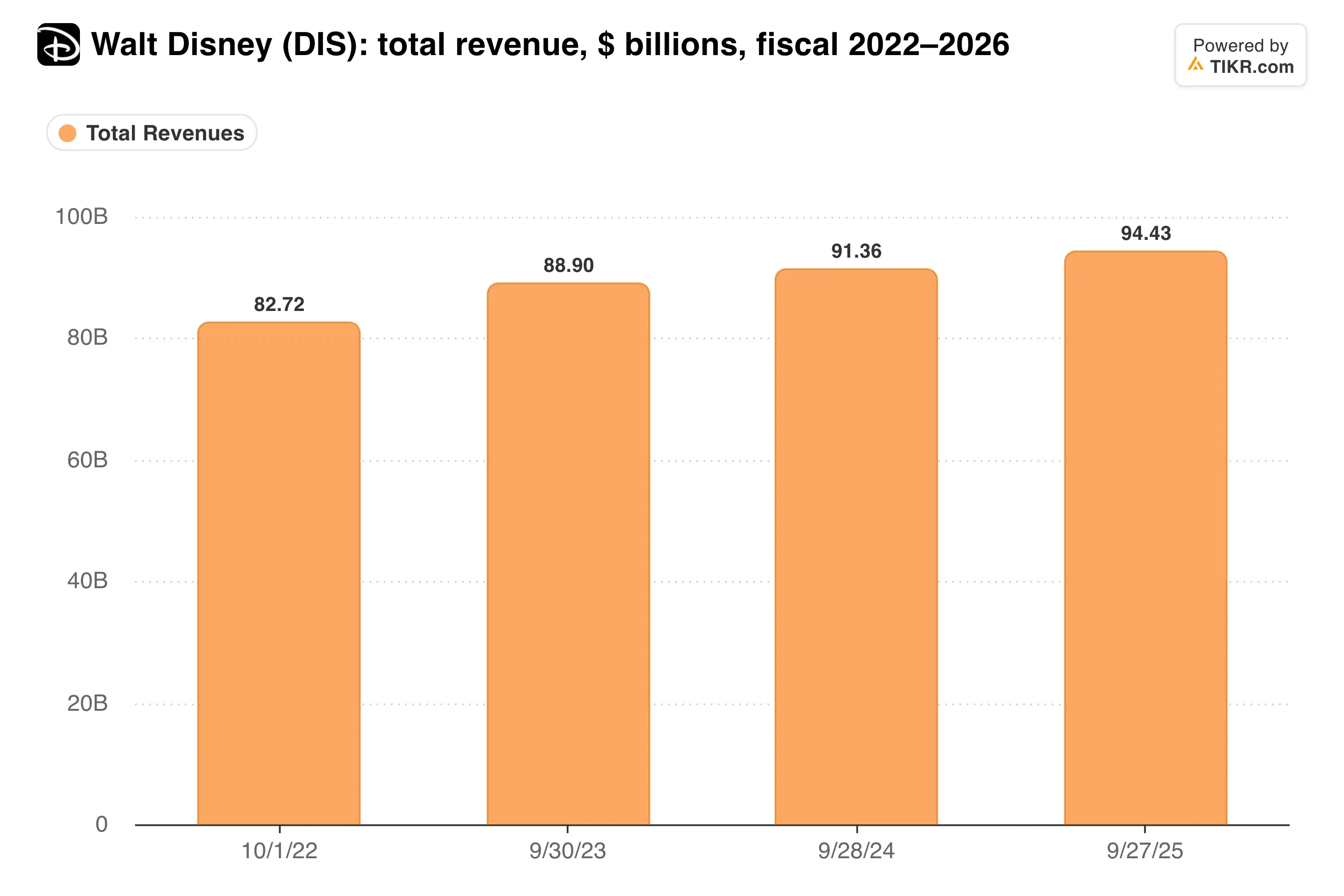
The extra week added about $1.6 billion of that, or roughly two points of growth.
Shareholders got a raise too. Disney lifted its annual dividend 33% to $2.00 per share after buying back $9 billion of stock in fiscal 2026. It plans to repurchase roughly another $9 billion this year.
Streaming profit goes dark
Disney’s streaming business earned $824 million in the quarter, double the $402 million a year earlier. Full-year streaming operating income reached $2.57 billion, almost twice fiscal 2025’s $1.30 billion, at an 11.5% margin.
Starting next quarter, that line disappears. Management now runs Entertainment as one business, so it will report segment profit with more revenue detail instead.
Not everyone buys the logic. Forrester research director Mike Proulx told Reuters the move was “way too soon to, effectively, suppress a key streaming performance indicator.”
So how far does Disney still trail its biggest streaming rival on profitability?
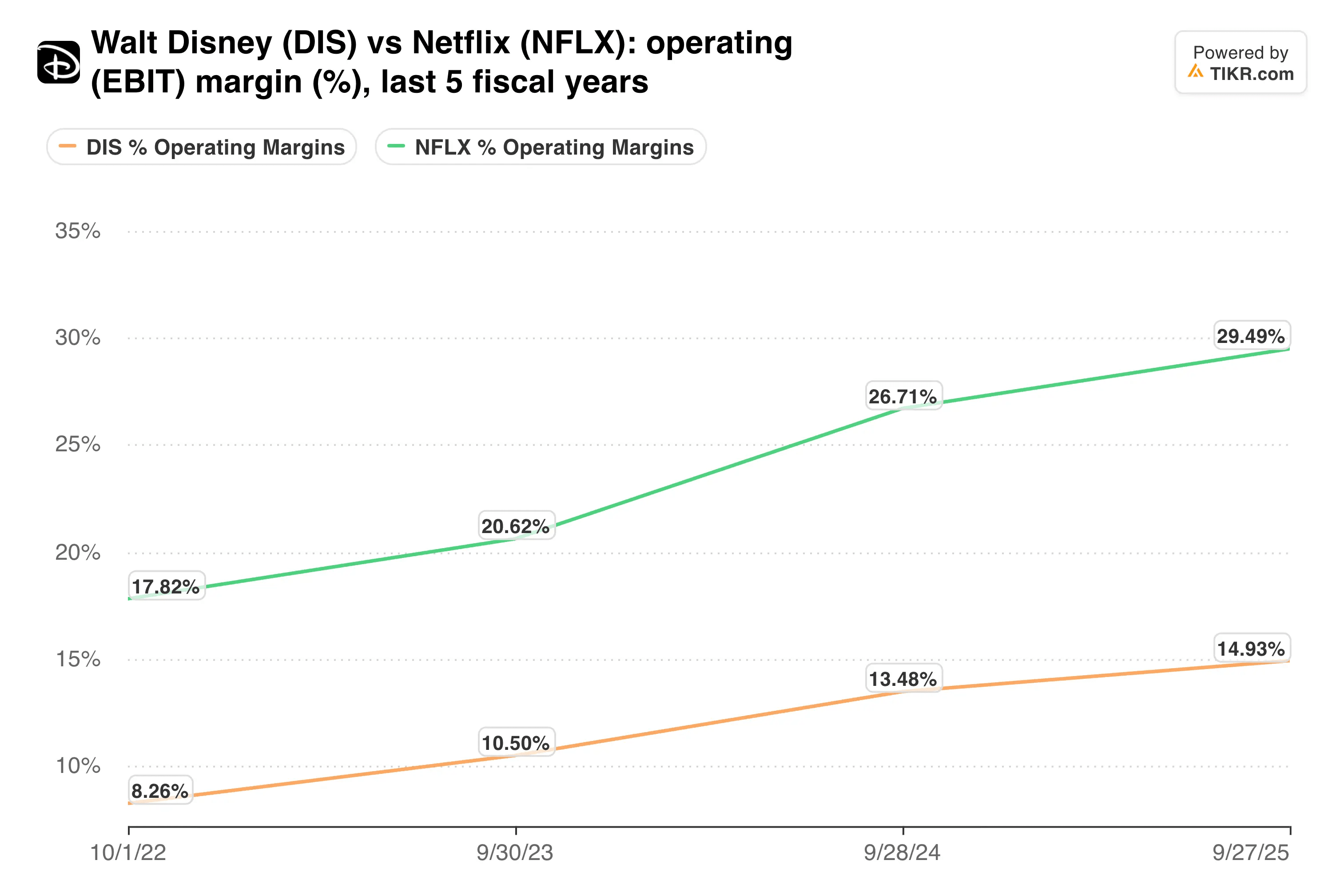
Netflix expects a 31.5% operating margin for 2026. Disney’s streaming unit hit 13.6% in its best quarter yet, and investors will now have a harder time tracking whether that gap closes.
TIKR tracks 32 analysts on Disney. How many say “Buy”?
See the full breakdown of Buy, Hold, and Sell ratings on Disney, along with Wall Street’s revenue and earnings estimates, all in one place. More than 500,000 investors use TIKR to research stocks like this one. See Disney’s Analyst Ratings
The bill for growth rises
The harder part is spending. Disney plans about $26 billion of cash content spending in fiscal 2027, up roughly 9%, with more going to sports rights and international shows. Capex should stay near $9 billion.
On the other side, a cost program now targets about $3 billion in annual savings by fiscal 2029. CFO Hugh Johnston told CNBC that more layoffs are part of it.
Here is what pays for all of it.
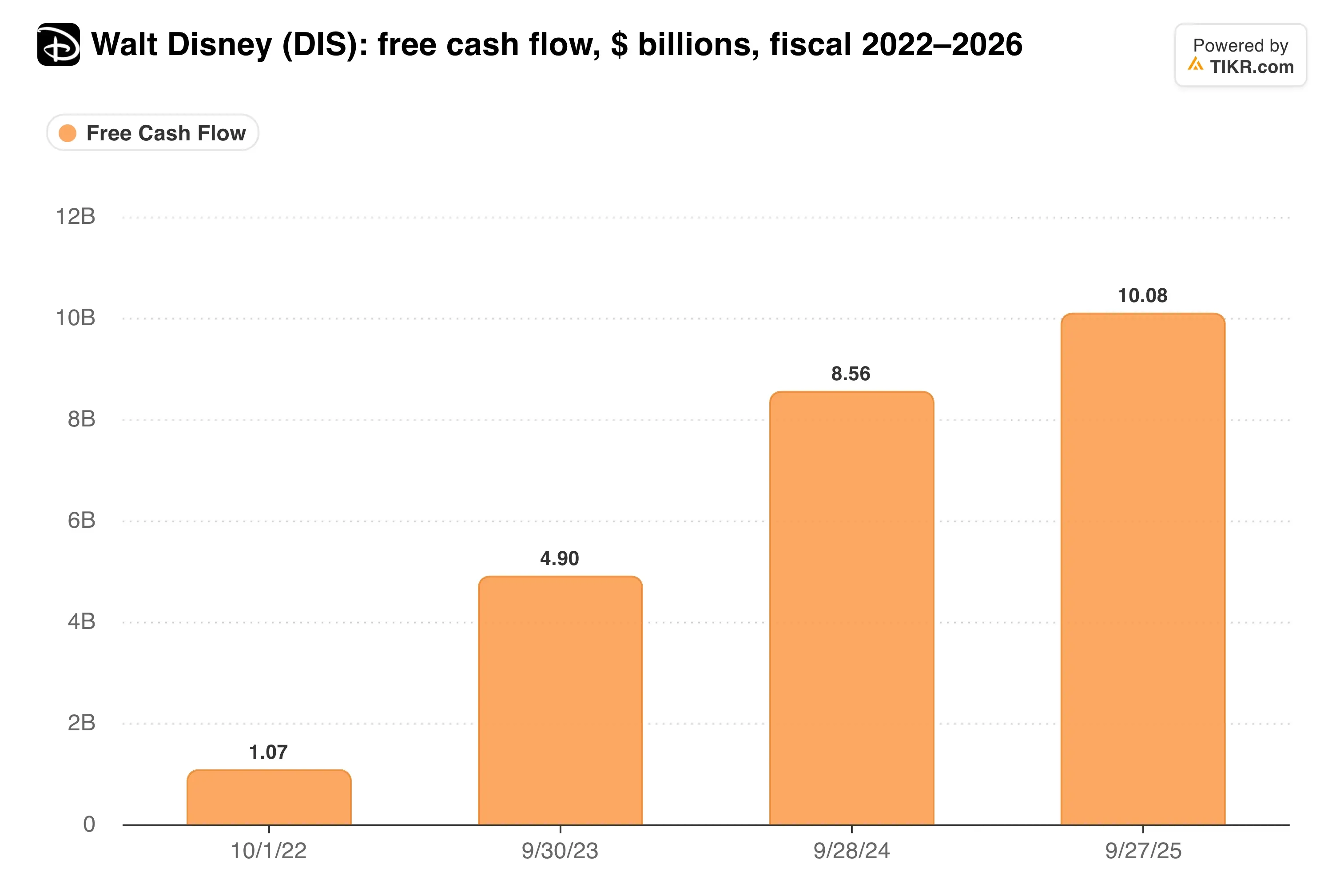
Disney generated $10.6 billion of free cash flow in fiscal 2026 and guides to about $11 billion this year, enough to cover the buyback and the bigger dividend.
Guidance looks solid but lumpy. Management expects double-digit adjusted EPS growth excluding the extra week, plus about 8% segment profit growth. Most of that lands in the first half, though, while Hong Kong and Shanghai attendance should stay weak.
My take: The business under Josh D’Amaro looks healthier than it has in years, and the cash returns are real. Still, raising content spend while hiding the streaming margin asks investors for more trust. I’d hold the stock but want proof that the extra spending lifts Entertainment profit.
The first fiscal 2027 report, expected in February, should show about $5.4 billion in segment operating income if guidance holds. Disney reported $4.6 billion a year earlier. Avengers: Doomsday, opening December 18, will land in that quarter too.
So what is Walt Disney stock actually worth?
TIKR lets you forecast the future price of any stock in less than a minute. Just enter a few assumptions into TIKR’s valuation model and see what Walt Disney could be worth. Start from Wall Street consensus estimates, or adjust the inputs to reflect your own view of the business. It’s free to use.
Disclaimer:
Please note that the articles on TIKR are not intended to serve as investment or financial advice from TIKR or our content team, nor are they recommendations to buy or sell any stocks. We create our content based on TIKR Terminal’s investment data and analysts’ estimates. Our analysis might not include recent company news or important updates. TIKR has no position in any stocks mentioned. Thank you for reading, and happy investing!