
Social Security recipients just got their best raise in three years, but investors in Korn Ferry (NYSE: KFY), T-Mobile US (NASDAQ: TMUS), and Levi Strauss & Co. (NYSE: LEVI) could be in line for a bigger one.
The Social Security Administration has announced a 3.6% cost-of-living adjustment, or COLA, for 2027, the largest since 2023. For the average beneficiary, that works out to about $75 more per month, starting with January checks. Analysts expect all three of those companies to raise their dividends per share at roughly triple that 3.6% pace in 2027.
Here is the catch. For most retirees enrolled in Medicare, the Part B premium comes straight out of that check, and it is projected to rise $6.60 a month to $209.50 in 2027. That trims the typical net raise to around 3%. A recent AARP survey found that just 23% of adults over 50 think a COLA of this size actually keeps up with the prices they pay.
And a COLA was never designed to make anyone better off. It only tries to keep benefits from falling behind inflation. Longer term, the program’s trustees project that the retirement trust fund will be exhausted in 2032, which would trigger an across-the-board benefit cut of about 22% unless Congress acts first.
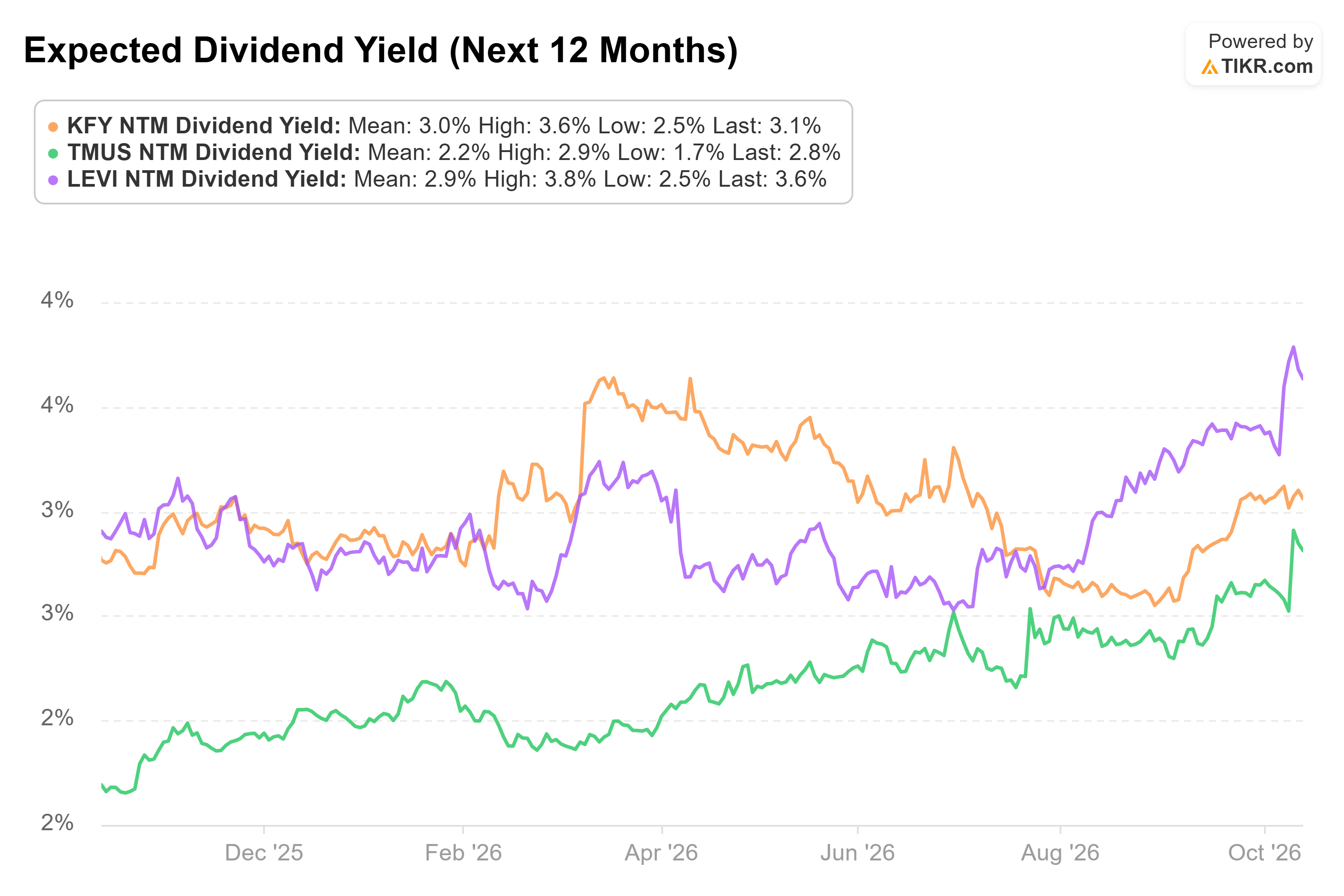
That is why retirement income works better when Social Security is not the only leg of the stool. A portfolio of dividend-paying stocks can send you a check every quarter, and unlike the COLA, those payouts can grow at whatever pace the underlying businesses allow. Based on current analyst estimates, the following three companies are expected to raise their dividend per share by an average of about 12% in 2027, more than triple the 3.6% COLA. All three also offer a starting yield between 2.8% and 3.6%, based on expected dividends over the next 12 months.
1. Korn Ferry: a payout that has already more than tripled
Korn Ferry (NYSE: KFY) is a global consulting firm that helps companies recruit executives and organize their workforces. It is not a household name (unless you’re a golf fan), but its dividend record is getting hard to ignore.
The company paid out $0.60 per share in fiscal 2023. That climbed to $1.00 in fiscal 2024, $1.60 in fiscal 2025, and $2.00 in fiscal 2026, which ended on April 30. In other words, the dividend has already more than tripled in three years. Analysts expect an estimated $2.20 per share in fiscal 2027, a raise of about 10%, with the payout then holding at that level in fiscal 2028.

Add an expected next-12-months dividend yield of about 3.1%, and Korn Ferry pairs a respectable starting income with a raise running at nearly three times the COLA’s pace.
2. T-Mobile US: the newest payer is raising its dividend fast
T-Mobile US (NASDAQ: TMUS) is the youngest dividend payer of this group. The wireless carrier paid its first dividend in late 2023, totaling $0.70 per share that year. The payout then jumped to $2.80 in 2024 and $3.70 in 2025 as the dividend became a regular part of how the company returns cash to shareholders.
Analysts expect the growth to continue, with dividends per share reaching an estimated $4.20 in 2026, $4.60 in 2027, and $5.20 in 2028. The expected 2027 raise works out to about 10%.

T-Mobile’s expected yield of about 2.8% over the next 12 months is the lowest of these three stocks today. But when the payout itself climbs this quickly, the income an investor collects on their original purchase price climbs right along with it.
3. Levi Strauss: the biggest yield, and the biggest raise
Levi Strauss & Co. (NYSE: LEVI), the jeans maker, rounds out the list with the highest expected yield of the three, about 3.6% over the next 12 months. That matches the COLA before any raise even lands.
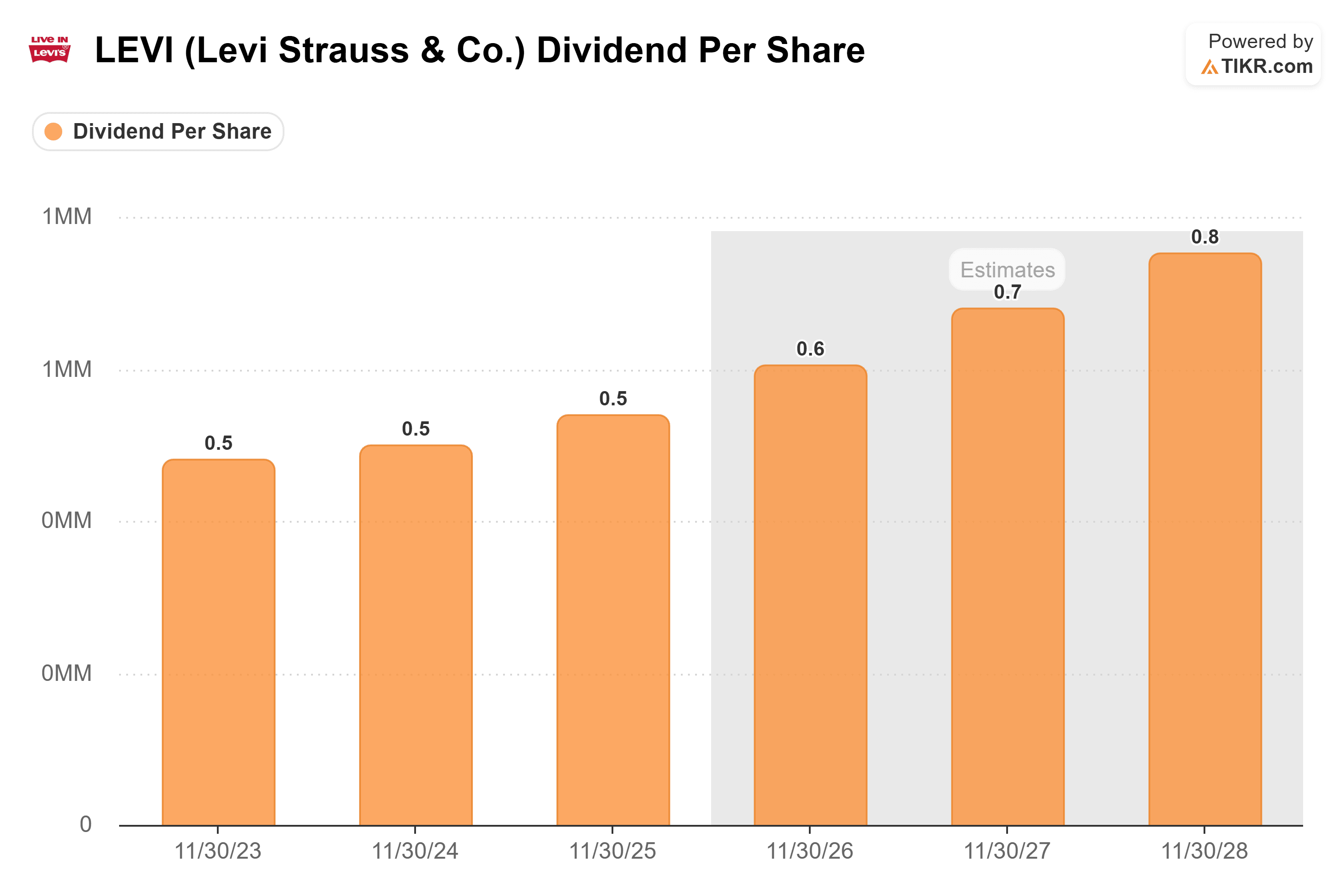
The company’s dividend per share sat at $0.50 for three straight fiscal years through fiscal 2025, which ended last November. Analysts now expect it to step up to $0.60 in fiscal 2026, $0.70 in fiscal 2027, and $0.80 in fiscal 2028. The expected fiscal 2027 raise of about 17% is the largest percentage increase of the three stocks here.
Why it matters
A 3.6% COLA is welcome news, but after Medicare premiums take their share, it shrinks. And by design, it only helps retirees tread water against inflation.
Dividend growers play a different role. The income itself can compound, year after year, at a pace set by real businesses rather than a government formula. These dividend figures are analyst estimates, and estimates can change. No dividend is guaranteed, either. But if the forecasts are anywhere close, each of these three payouts will grow far faster in 2027 than Social Security’s adjustment will.
Start dividend-hunting today
Want to find your own dividend stocks? Run a screen on TIKR to see every stock that passed your standards, then adjust it to fit your goals. Raise the yield floor if you need more income today, add a valuation or free cash flow filter, or drop the sector exclusions to see what else turns up.