Key Takeaways
- Coca-Cola (KO) stock surged 11.9% from October 2 to November 2, reaching a 52-week high as strong earnings and demand for defensive stocks supported shares.
- PepsiCo (PEP) also gained approximately 12% during the period, despite reducing its 2026 earnings outlook and losing KFC’s U.S. beverage agreement to Coca-Cola.
- Coca-Cola reported 11% comparable EPS growth to $0.91 in Q3, beating the $0.88 estimate, and raised its full-year comparable EPS growth outlook to at least 11%.
- At 27.1x forward earnings, with an average analyst price target near $98, Coca-Cola appears fairly valued to slightly overvalued following its rally.
What Happened?
Coca-Cola (KO) stock climbed 11.9% in the month ended November 2, rising from $85.65 to $95.83 and reaching a 52-week high as investors favored consumer staples amid technology-sector weakness.
The rally followed Coca-Cola’s October 27 earnings report, when comparable EPS increased 11% to $0.91, beating the $0.88 estimate. Revenue grew 7% to $13.4 billion, while global unit case volume rose 5%, supported by India, China, Mexico, and Brazil.
Price/mix increased 1%, suggesting higher beverage consumption helped support growth without relying heavily on additional price increases.
CEO Henrique Braun highlighted the company’s affordability strategy during the earnings call, stating, “Affordability is working.”
Management raised its 2026 outlook for the third time, projecting comparable EPS growth of at least 11%, organic revenue growth of at least 5%, and free cash flow of at least $13 billion, up from its previous $12.4 billion forecast.
Despite the earnings beat, Coca-Cola shares declined 1.6% on October 27, suggesting investors had already anticipated much of the improvement. Management’s updated comparable EPS guidance implied a minimum of approximately $3.33, compared with analysts’ pre-report expectation of $3.31.
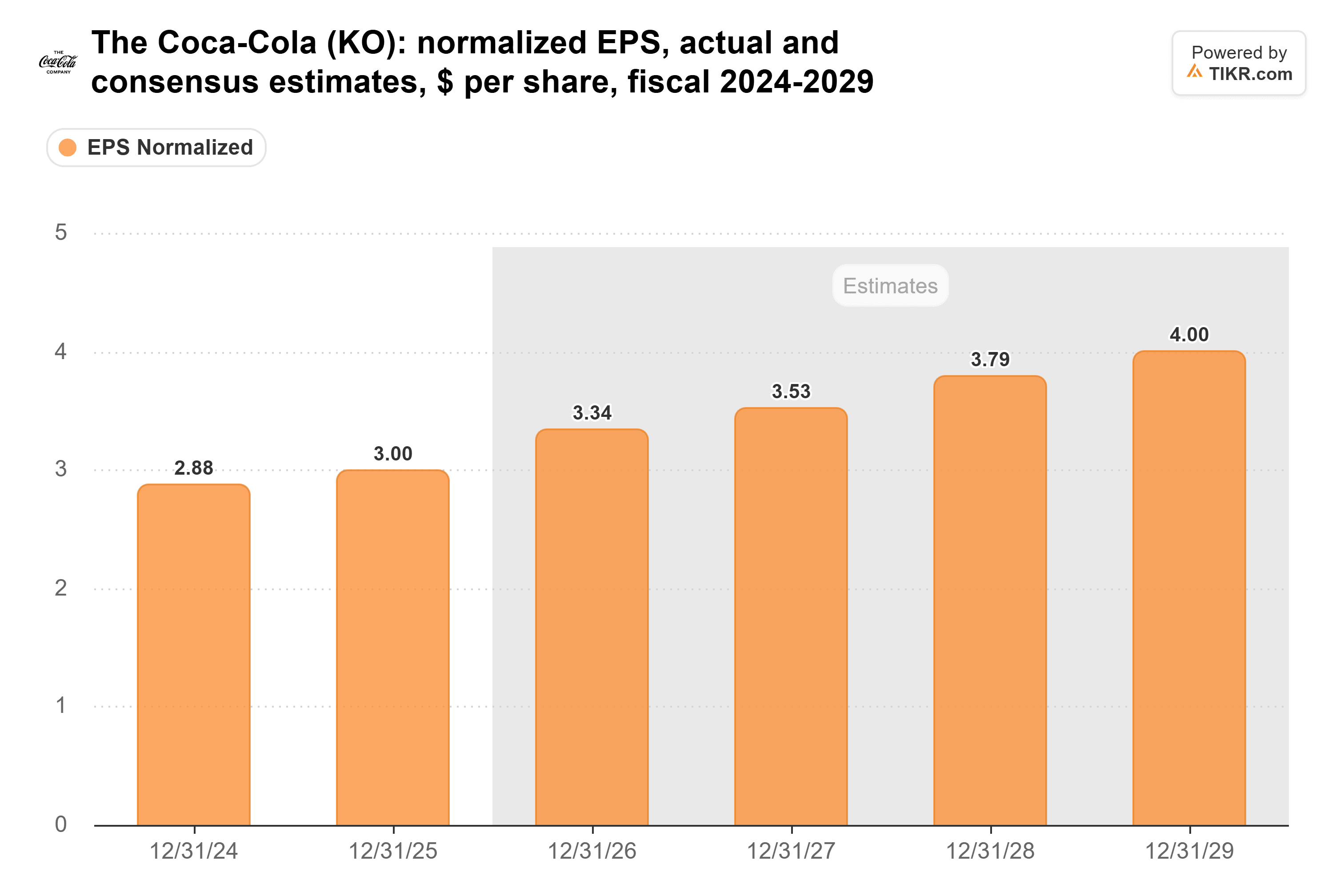
TIKR’s October 30 consensus estimates projected normalized EPS of $3.34 in 2026, $3.53 in 2027, and $3.79 in 2028, implying approximately 6.5% annualized growth between 2026 and 2028.
Another growth catalyst emerged when KFC announced plans to switch approximately 3,718 U.S. restaurants from PepsiCo to Coca-Cola beverages by spring 2027.
The agreement strengthens Coca-Cola’s food-service presence as PepsiCo faces weaker domestic beverage demand.
According to PepsiCo’s Q3 results, North American beverage volume declined 2%, while management lowered its 2026 core EPS growth outlook to 2.5%-3.5% from the previous low end of 5%-7%.
PepsiCo retained its larger Taco Bell beverage relationship through 2036, however, and its comparable stock rally suggests broader investor demand for consumer staples also contributed to Coca-Cola’s gains.
Is Coca-Cola Stock Undervalued or Overvalued?
Coca-Cola appears fairly valued to slightly overvalued following its rally, with improving earnings expectations already reflected in its premium valuation.
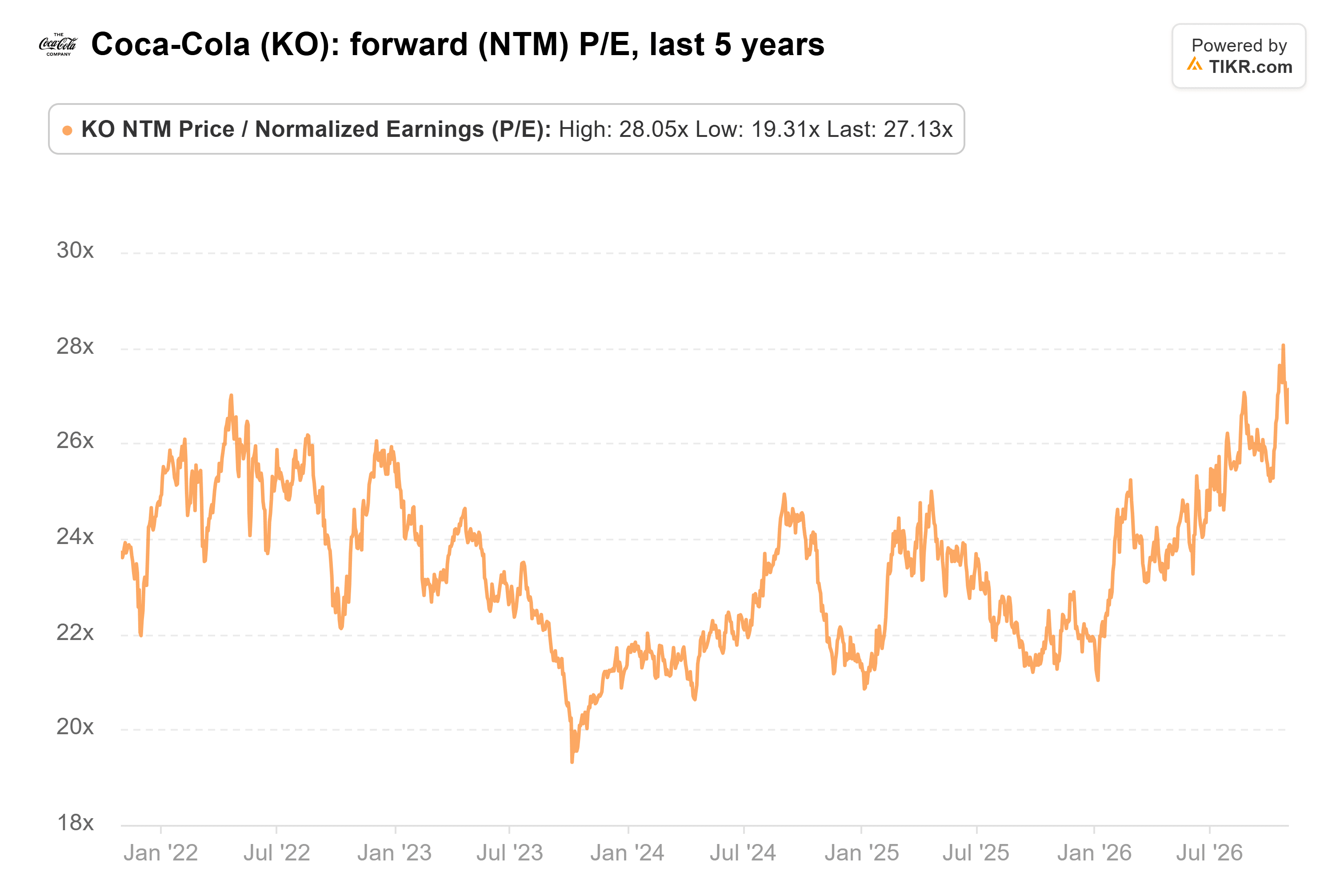
At 27.1x forward earnings on October 30, Coca-Cola traded above its five-year average of 23.4x and near its five-year peak of 28.1x, suggesting limited room for additional multiple expansion.

Wall Street’s average price target of $97.75 implied approximately 2% upside from the November 2 closing price of $95.83, despite analysts raising their expectations following the report.
Over the next 12 months, Coca-Cola’s performance will depend on sustained beverage demand, volume growth, and the KFC transition. However, fourth-quarter destocking and six fewer selling days could create near-term pressure, while the planned Coca-Cola Beverages Africa sale is expected to create an approximately 8% headwind to comparable net revenues in 2027, assuming the transaction closes as planned.
According to Coca-Cola’s third-quarter regulatory filing, the company faces uncertainty from its ongoing IRS tax dispute, with approximately $6 billion already deposited and potentially $14 billion in additional tax and interest exposure for 2010 through 2025 if its appeal ultimately fails.
With earnings projected to grow approximately 6%-7% annually through 2028, Coca-Cola’s premium valuation leaves limited room for disappointment. A pullback or stronger-than-expected 2027 guidance could offer a more attractive entry point.
So what is Coca-Cola stock actually worth?
TIKR lets you forecast the future price of any stock in less than a minute. Just enter a few assumptions into TIKR’s valuation model and see what Coca-Cola could be worth. Start from Wall Street consensus estimates, or adjust the inputs to reflect your own view of the business. It’s free to use.
Disclaimer:
Please note that the articles on TIKR are not intended to serve as investment or financial advice from TIKR or our content team, nor are they recommendations to buy or sell any stocks. We create our content based on TIKR Terminal’s investment data and analysts’ estimates. Our analysis might not include recent company news or important updates. TIKR has no position in any of the stocks mentioned. Thank you for reading, and happy investing!