Key Takeaways
- Charter Communications shares jumped 11% after it offered to spend up to $1.5 billion buying back low-coupon notes due as late as 2062.
- Charter will buy those notes below face value, so each dollar it spends retires more than a dollar of debt.
- After the Cox deal, Charter’s own measure puts its leverage at 3.93x, against a 3.5x target.
- The offers expire Nov. 17, and Charter expects to end 2026 below 3.9x.
Charter Communications (CHTR) is up 11% today, on a down day for the market, after offering to buy back up to $1.5 billion of its longest-dated debt.
And this one is all Charter. Comcast barely moved, while other cable operators Altice USA and Cable One fell 8% and 15%.
Buying debt on sale
The eight series of senior secured notes pay just 3.5% to 4.8% a year and don’t come due until 2041 to 2062. Together they total $11.6 billion.
The price is set at a yield 2.05 to 2.5 percentage points over Treasuries. That’s far more than these notes pay, so Charter will buy them well below face value.
Cheap for a reason
Analysts still expect Charter to earn more. Consensus has normalized EPS slipping to $34.83 in fiscal 2026 from $36.21 in fiscal 2025, then climbing to about $41 in fiscal 2027:
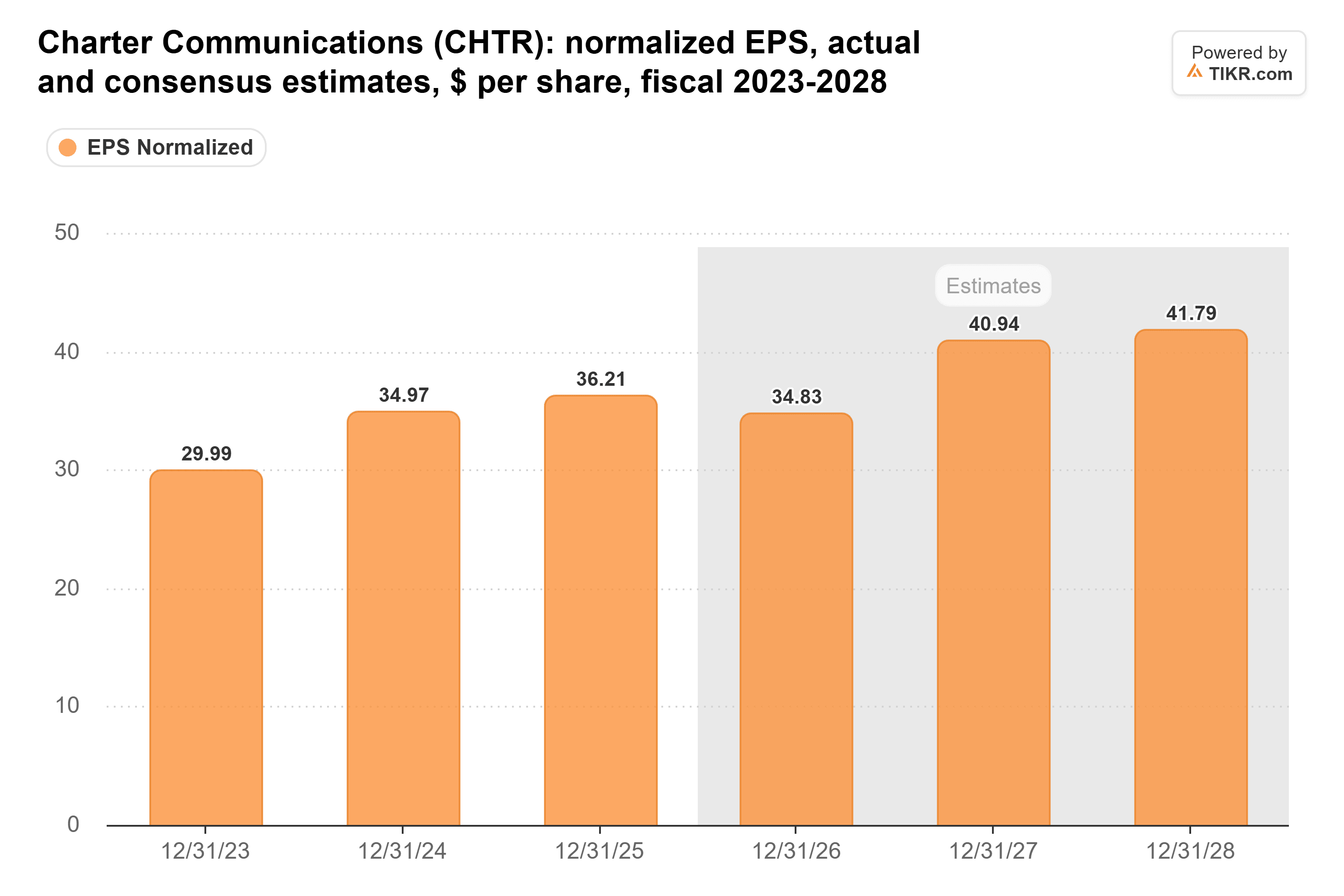
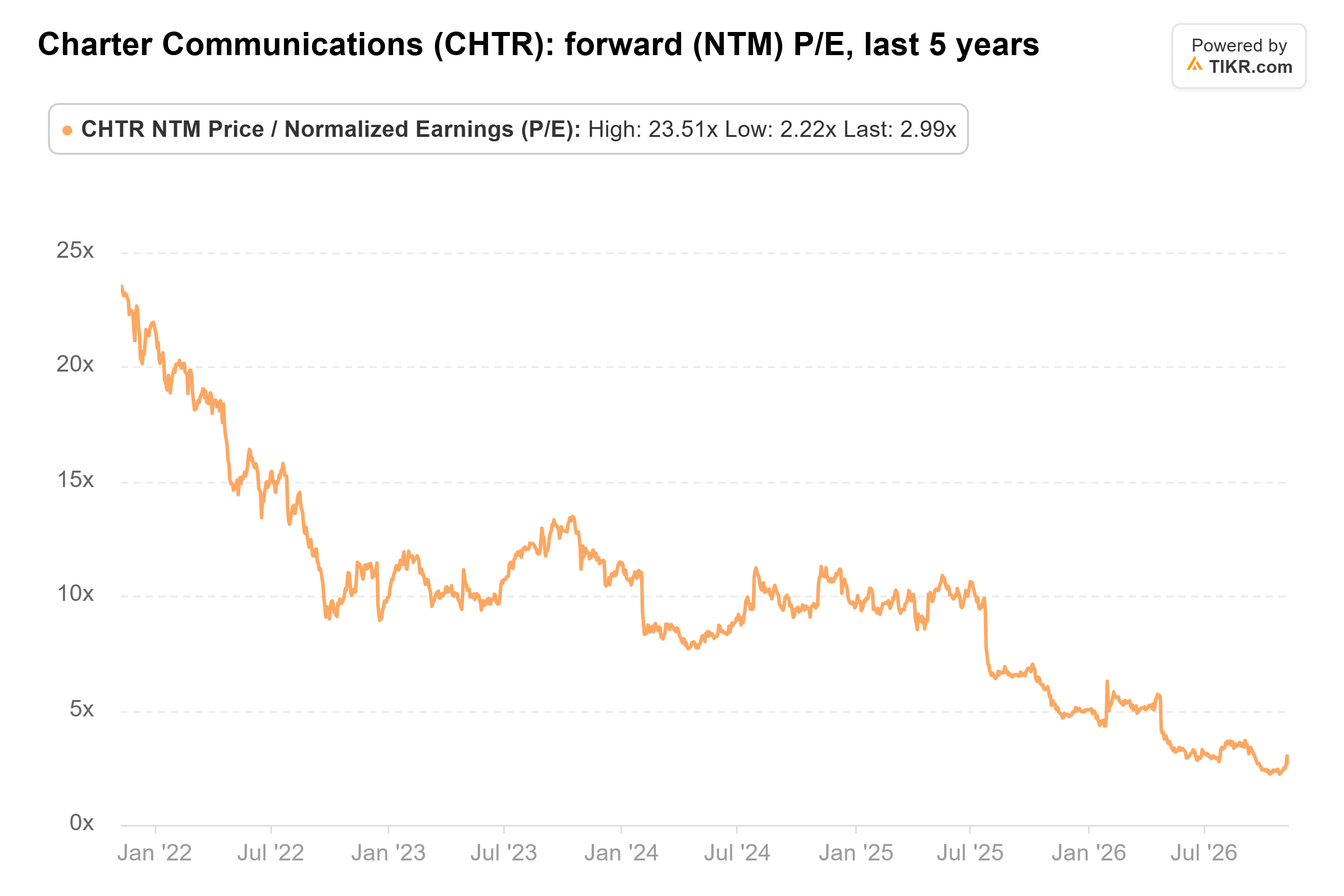
Even so, at the last close the stock traded at just 3.0x forward earnings, against a five-year average of 10x. Today’s jump only takes it to about 3x.
The reason is the debt. On reported figures, net debt to EBITDA jumped to 5.0x in the quarter to Sept. 30, the first to include Cox:
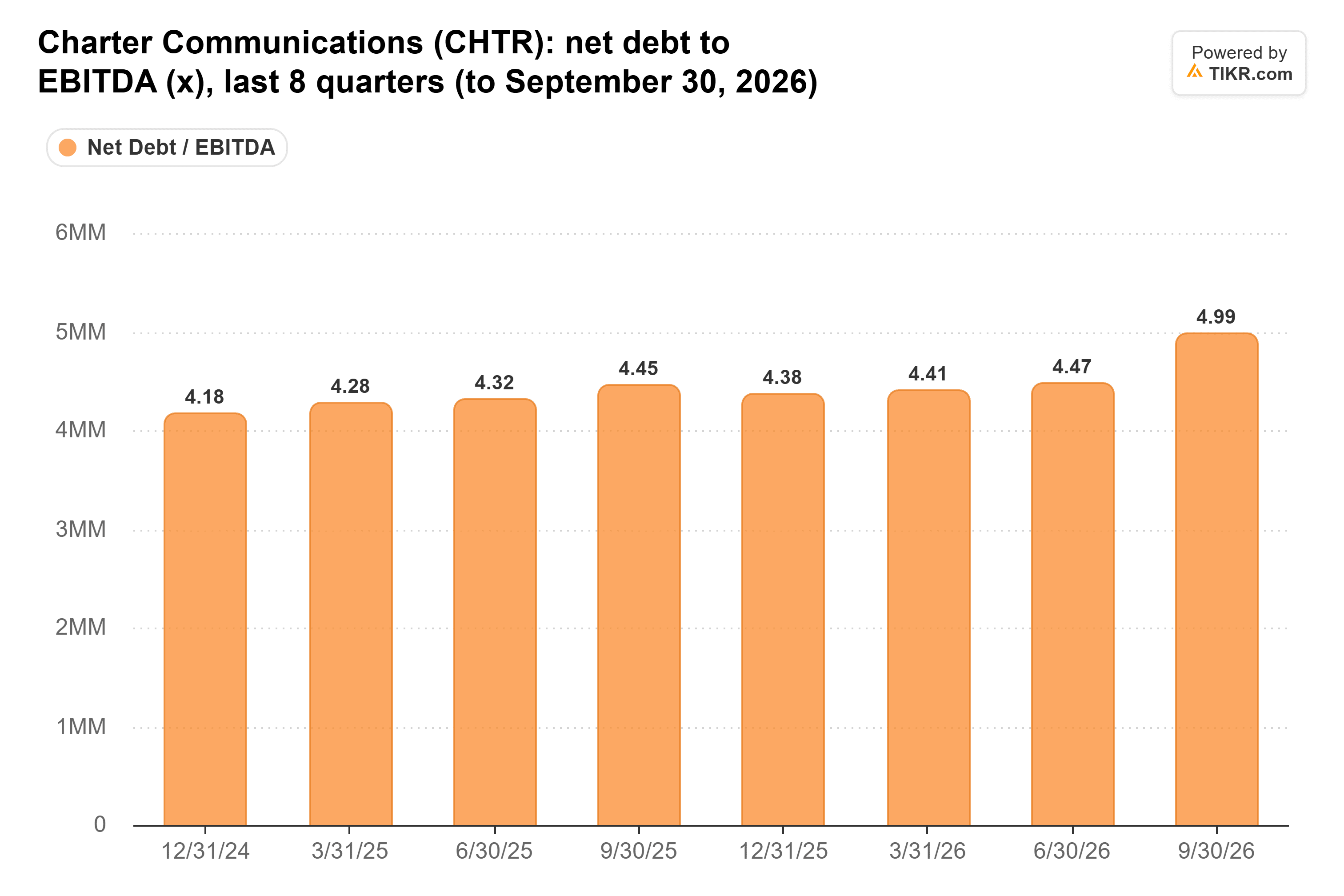
Charter’s own measure, which counts a full year of Cox’s EBITDA, is 3.93x.
TIKR tracks 21 analysts on Charter Communications. How many say “Buy”?
See the full breakdown of Buy, Hold, and Sell ratings on Charter Communications, along with Wall Street’s revenue and earnings estimates, all in one place. More than 500,000 investors use TIKR to research stocks like this one. See Charter Communications’ Analyst Ratings
Shareholders should like this
$1.5 billion is a small slice of Charter’s $108.6 billion of debt principal. But the whole company’s stock is worth only about a fifth of that debt, so each dollar of discount Charter captures is a real gain for shareholders.
The way I see it, investors won’t pay much more than 3x earnings until the debt comes down, and buying it back below face value is the cheapest way to get there. The catch: free cash flow was just $674 million in the third quarter, so how fast the debt falls depends on that recovering.
After the offers expire on Nov. 17, we’ll know how much Charter bought and how deep a discount it got.
So what is Charter stock actually worth?
TIKR lets you forecast the future price of any stock in less than a minute. Just enter a few assumptions into TIKR’s valuation model and see what Charter could be worth. Start from Wall Street consensus estimates, or adjust the inputs to reflect your own view of the business. It’s free to use.
Disclaimer:
Please note that the articles on TIKR are not intended to serve as investment or financial advice from TIKR or our content team, nor are they recommendations to buy or sell any stocks. We create our content based on TIKR Terminal’s investment data and analysts’ estimates. Our analysis might not include recent company news or important updates. TIKR has no position in any of the stocks mentioned. Thank you for reading, and happy investing!