Key Takeaways
- Alibaba stock closed Nov. 9 at $105, down about 36% over the past year. Goldman Sachs reiterated its Buy rating and $177 target that day, implying about 68% upside.
- Spending on quick commerce, AI and the cloud cut Alibaba’s normalized earnings by more than half in fiscal 2026 and turned its free cash flow negative.
- Goldman’s $177 works out to about 22x forward earnings, against a 5-year average of 13x. Goldman’s own base case has cash flow turning positive only in mid-2028.
- Reaching $177 within a year looks unlikely unless the Nov. 19 report shows stronger cloud margins and a smaller loss at the Qwen unit.
Alibaba (BABA) stock closed Nov. 9 at $105.38, down about 36% over the past year, and Goldman Sachs still thinks it’s a buy. The firm reiterated its Buy rating and $177 price target that day, about 68% above that close.
That target sits almost exactly where the stock closed on Jan. 22 ($177.18), its high for the past year. Goldman is calling for a full round trip.
The AI bill came due
Alibaba’s capital spending nearly quadrupled in two years, to RMB 126.1 billion (about $18 billion) in fiscal 2026. Normalized earnings fell 59% that year as quick commerce and technology spending ate into profit, to RMB 26.80 per ADS (about $4) from RMB 65.41 (about $9) in fiscal 2025. Analysts expect them back near fiscal 2024’s level by fiscal 2028.
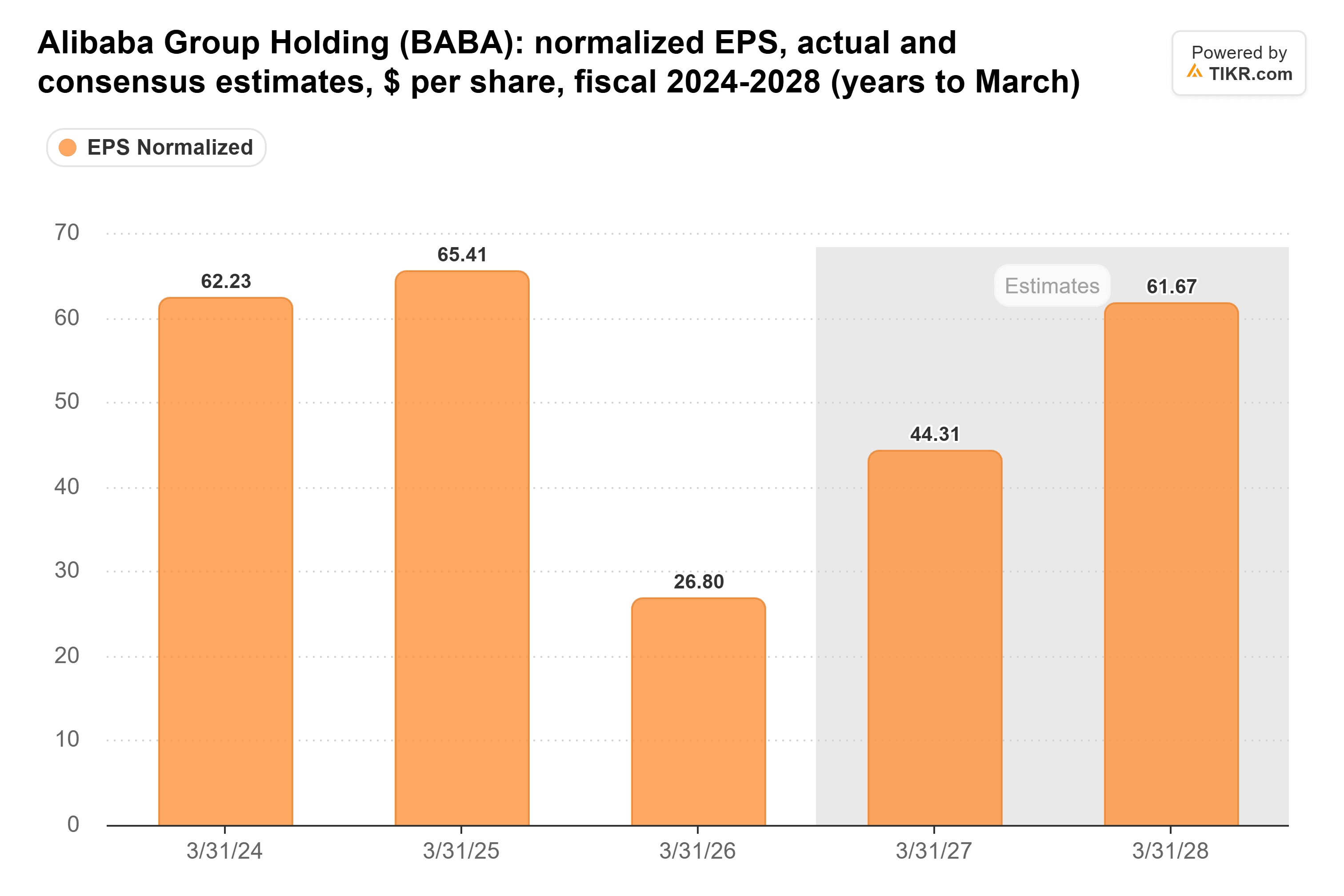
The June quarter, reported Aug. 20, was rough. Adjusted EBITA fell 30% to RMB 27.3 billion (about $4 billion), the AI Labs and Applications unit behind the Qwen app lost RMB 13.9 billion (about $2 billion), and free cash flow was an outflow of RMB 44.7 billion (about $6.6 billion). Days later, Alibaba sold HK$80 billion (about $10.2 billion) of new shares to fund AI, after spending RMB 311.4 billion (about $44 billion) on buybacks from fiscal 2022 to fiscal 2025. The raise split analysts over the optics of dilution.
Goldman is betting on the cash
Goldman’s target has been $177 since September, and after the June quarter it called cloud growth a “bright spot.” The numbers back that up: cloud revenue grew 45% in the quarter, and the segment’s adjusted EBITA margin rose to 11.6% from 7.2% a year earlier.
The Nov. 9 note turns to cash. In Goldman’s base case, the gap between what Alibaba spends and what it brings in narrows by the end of 2027 and turns positive by mid-2028. The firm thinks estimate cuts have likely bottomed, says Alibaba has no equity-financing plans for the remainder of fiscal 2027, and sees the next 12 months playing out like Amazon’s past year of upgrades.
TIKR Tracks 41 Analysts on Alibaba. How Many Say “Buy”?
See the full breakdown of Buy, Hold, and Sell ratings on Alibaba, along with Wall Street’s revenue and earnings estimates, all in one place. More than 500,000 investors use TIKR to research stocks like this one. See Alibaba’s Analyst Ratings
Does $177 add up?
The rest of the Street is even more bullish. The average target is $184, in a range of $96 to $222. That’s the same average as at the end of September 2025, when the stock closed near $179, though the stock is down 41% since. Estimates for fiscal 2027 and 2028 have held steady over the past 90 days, backing Goldman’s view that cuts are done.
The multiple is the hard part. At the Nov. 9 close, Alibaba traded at about 13.2x forward earnings, just above its 5-year average of 13x and about half its January peak of 25x.
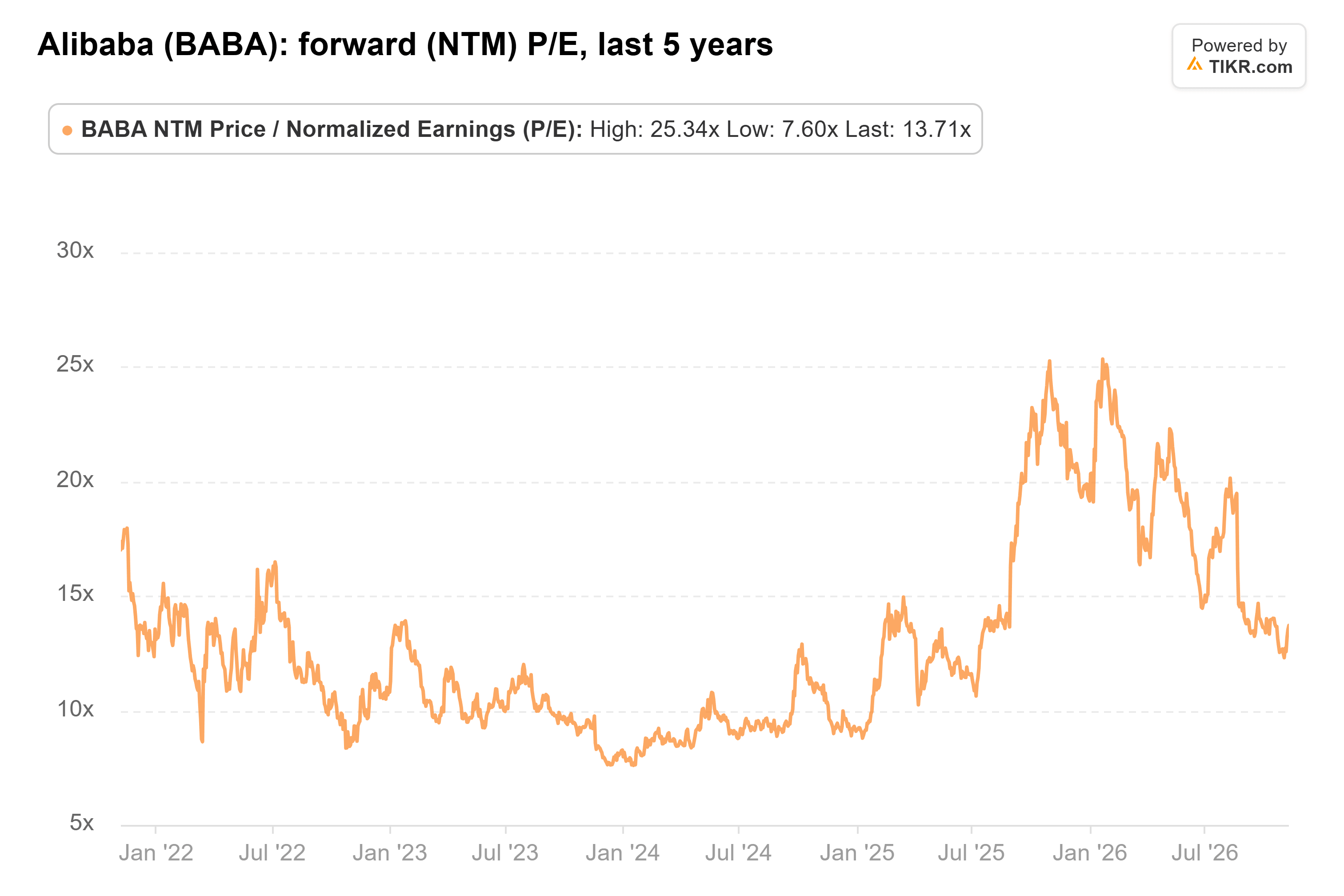
On the roughly $8 a share analysts expect over the next 12 months, $177 is 22x. Earnings growth would bring that down a year from now: on analysts’ fiscal 2028 estimate of RMB 61.65 per ADS (about $9), $177 is about 20x, still well above the 13x average. And even in Goldman’s base case, Alibaba doesn’t bring in more cash than it spends until mid-2028, well past a 12-month target.
What Alibaba has to show on Nov. 19
I like where Alibaba’s cloud is headed, but I wouldn’t count on $177 within a year. At about 20x analysts’ fiscal 2028 estimate, the target is still demanding next to Alibaba’s 5-year average of 13x, and Goldman’s own base case doesn’t have cash covering spending until mid-2028. The September-quarter report on Nov. 19 is the first real test: a cloud margin above June’s 11.6% and a smaller Qwen loss would put $177 a lot closer.
So What Is Alibaba Stock Actually Worth?
TIKR lets you forecast the future price of any stock in less than a minute. Just enter a few assumptions into TIKR’s valuation model and see what Alibaba could be worth. Start from Wall Street consensus estimates, or adjust the inputs to reflect your own view of the business. It’s free to use.
Disclaimer:
Please note that the articles on TIKR are not intended to serve as investment or financial advice from TIKR or our content team, nor are they recommendations to buy or sell any stocks. We create our content based on TIKR Terminal’s investment data and analysts’ estimates. Our analysis might not include recent company news or important updates. TIKR has no position in any of the stocks mentioned. Thank you for reading, and happy investing!