Key Takeaways
- Affirm’s revenue rose 35% to $1.26 billion and GMV climbed 34% to $14.4 billion, yet shares lost 7% over the week.
- Affirm Card GMV jumped 117% to $3.3 billion, and Nexi now plans a BNPL partnership with Affirm as it divests Ratepay.
- Loans 30 or more days past due rose to 2.9%, and warrant expense pulled the GAAP margin guide below expectations.
- The fiscal second-quarter report, expected around February 4, will show whether delinquencies stabilize through the holidays.
Affirm Holdings (AFRM) beat on nearly every growth line last Thursday. The stock still lost 7% over the week.
Shares closed at $68 on Friday, 25% below their 52-week high of $90. The average analyst target of about $98 sits 44% above that.
Monday brought a new door into Europe. Nexi (NEXI), the Italian payments group, said it is divesting its Ratepay BNPL business and plans a strategic BNPL partnership with Affirm. Neither side gave financial terms.
That adds to a busy stretch of distribution wins, including an exclusive multiyear deal with Sam’s Club in October.
The worry now is credit.
Thirty percent is the floor
Fiscal first-quarter results were strong across the board:
- Revenue rose 35% to $1.26 billion, beating the $1.21 billion consensus.
- GMV climbed 34% to $14.4 billion, the 12th straight quarter above 30% growth.
- Net income more than doubled to $164 million, or $0.47 per share.
Affirm raised its fiscal 2027 GMV forecast to more than $65.25 billion, from more than $64 billion. For the December quarter, it guided GMV to $17.9 billion to $18.2 billion and revenue to $1.435 billion to $1.465 billion.
CEO Max Levchin told analysts that “30-plus” growth has long been the internal minimum. Early second-quarter trends are running in the high 30s.
Analysts already expect growth to keep compounding…
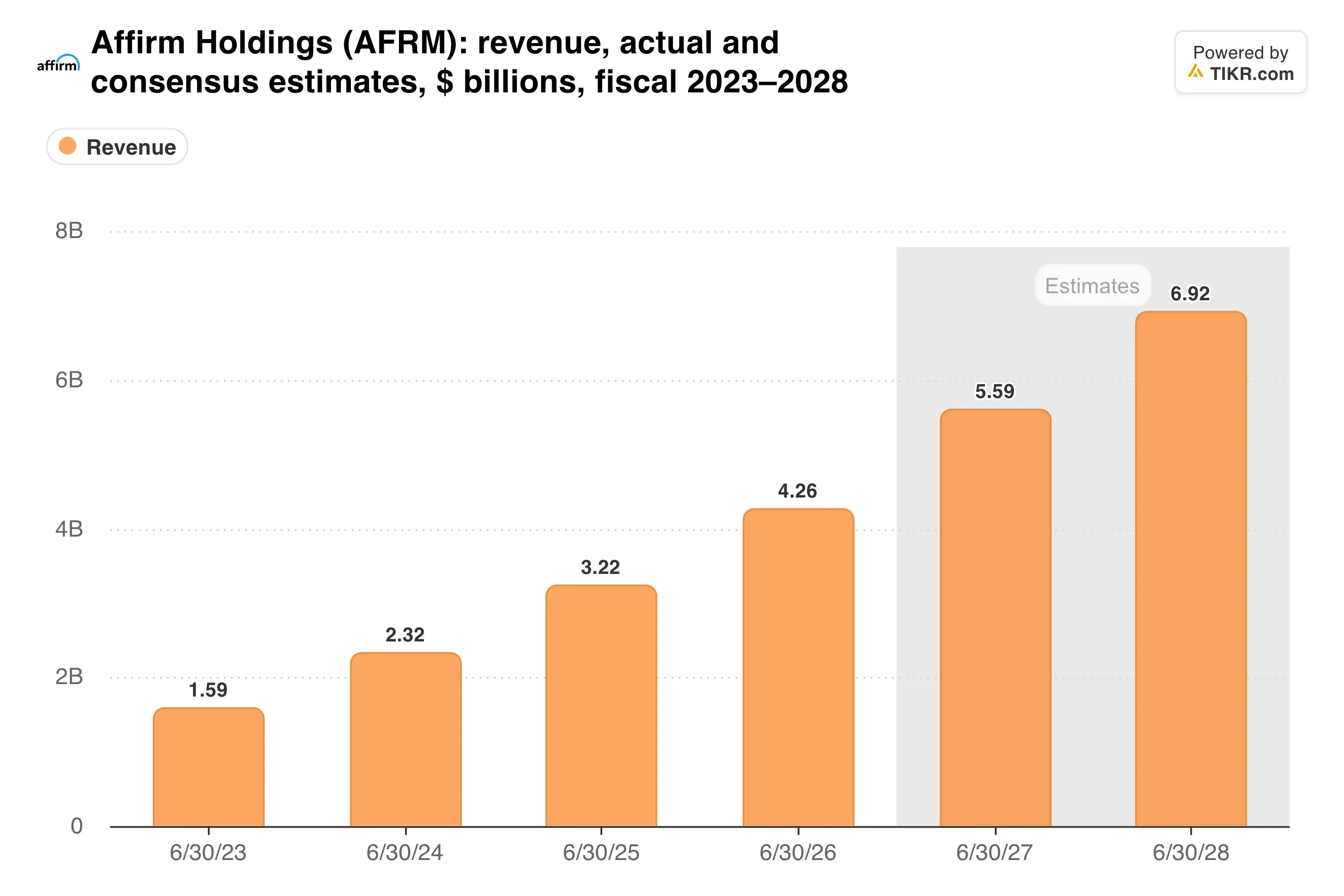
The guide nudges those estimates up only modestly, which may explain the muted reaction.
The card is the engine
Affirm Card GMV jumped 117% to $3.3 billion, now 23% of total volume. Active cardholders rose 112% to 6 million.
The card also reduces Affirm’s dependence on a handful of merchants. Its top five partners now generate 40% of GMV, down from 44% a year ago.
There’s a trade-off. Card interchange pays less than Affirm’s merchant fees, and card spending skews toward interest-bearing loans that sit on the balance sheet. A new underwriting model that lifted completed purchases 3.4% in tests should help, but more lending means more credit exposure.
That shows up on the balance sheet:
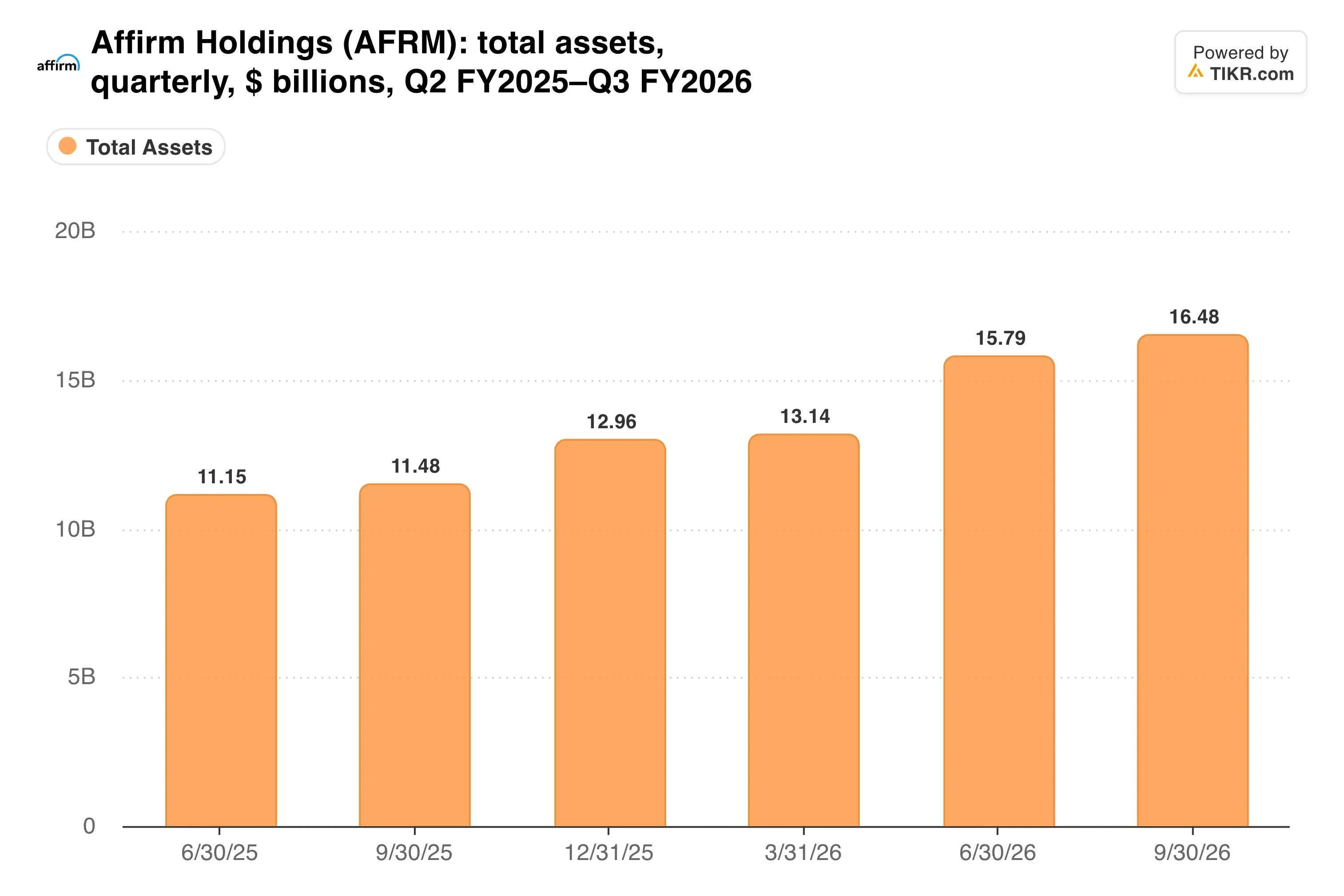
Total assets have grown 48% since June 2025, to $16.5 billion. A bigger balance sheet is the price of the card’s growth, which is why credit now matters more than GMV.
TIKR tracks 34 analysts on Affirm. How many say “Buy”?
See the full breakdown of Buy, Hold, and Sell ratings on Affirm, along with Wall Street’s revenue and earnings estimates, all in one place. More than 500,000 investors use TIKR to research stocks like this one. See Affirm’s Analyst Ratings
Credit is the line to watch
Loans 30 or more days past due rose 35 basis points from the prior quarter to 2.9%. Management tied part of the increase to September approval tests it kept on its own balance sheet.
Funding costs rose 27 basis points as well. And the second-quarter GAAP operating margin guide of 11.5% to 13.5% came in below expectations. Management blamed partner warrant expense tied to new users in the U.K.
Warrants and taxes already hit this quarter. Affirm booked $51.1 million of enterprise partner warrant expense, and income tax expense jumped to $40.9 million from $2.3 million.
So what are investors paying for all this?
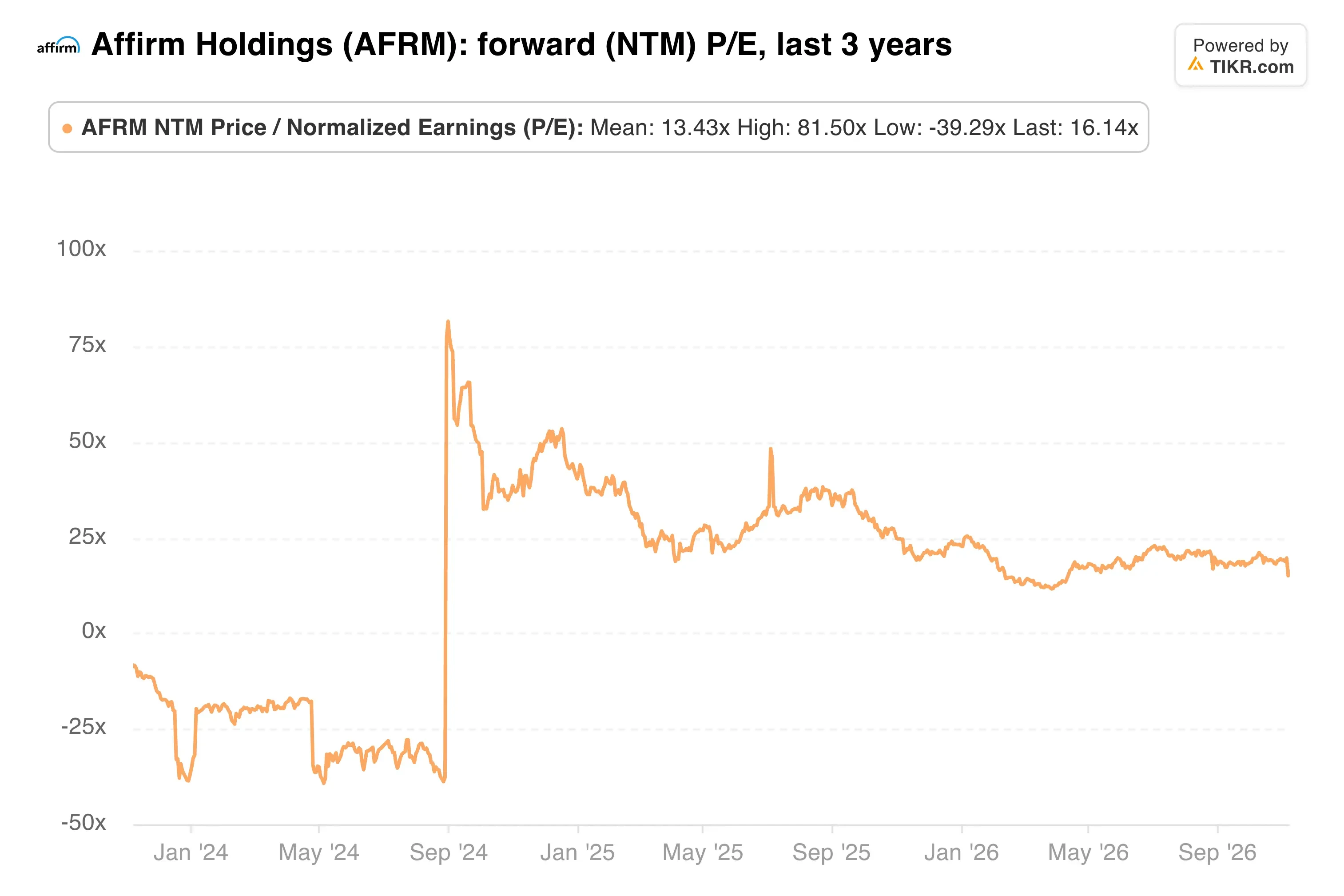
At 16.1x forward earnings, the stock prices Affirm like a lender with a credit question, even with GMV growing above 30%.
My take: The growth engine is intact, and a credit uptick tied to deliberate tests is easier to forgive than one from consumer stress. Still, this is the first quarter in a while where management had to explain credit at all. I’d buy on weakness only after seeing delinquencies stabilize through the holiday quarter.
The next checkpoint is the fiscal second-quarter report, expected around February 4. It will cover the holidays and show whether the 2.9% delinquency rate was a test-driven blip or the start of a trend.
So what is Affirm stock actually worth?
TIKR lets you forecast the future price of any stock in less than a minute. Just enter a few assumptions into TIKR’s valuation model and see what Affirm could be worth. Start from Wall Street consensus estimates, or adjust the inputs to reflect your own view of the business. It’s free to use.
Disclaimer:
Please note that the articles on TIKR are not intended to serve as investment or financial advice from TIKR or our content team, nor are they recommendations to buy or sell any stocks. We create our content based on TIKR Terminal’s investment data and analysts’ estimates. Our analysis might not include recent company news or important updates. TIKR has no position in any stocks mentioned. Thank you for reading, and happy investing!