Key Takeaways
- KR Capital, a $1.17 billion fund, opened a new position in Microsoft and added to Amazon and Gildan Activewear in the third quarter, its latest 13F shows.
- Amazon’s cloud business is growing at its fastest pace in nearly five years, but analysts don’t expect its free cash flow to turn positive again until 2028.
- Gildan is the cheapest of the three and the riskiest, after it cut its 2026 guidance and withdrew its targets through 2028.
- Microsoft’s numbers back the buy best: Azure growth beat the company’s own forecast, analysts’ average target sits at its high for the year, and the stock trades below its five-year average multiple.
KR Capital LP, a fund that manages $1.17 billion, just showed its hand. Its 13F for the quarter ended Sept. 30, filed Nov. 16, shows a new stake in Microsoft (MSFT), 32% more shares of Amazon (AMZN) and more than twice as many shares of Gildan Activewear (GIL).
Those were its three biggest new or added positions, and all three are down since Sept. 30, Gildan by 23%. So for anyone thinking of following the fund, the question is which of these bets still holds up.
Microsoft is the only brand-new name
The fund held 77,777 Microsoft shares at Sept. 30, worth $40 million. That’s 3.4% of its 13F stocks and its fifth-largest position. It owned none a quarter earlier.
Microsoft’s latest quarter backs the bet. In the quarter ended Sept. 30, Azure revenue grew 48%, ahead of Microsoft’s own forecast of 44% to 45%, and analysts’ average price target has climbed to its highest point of the past year:
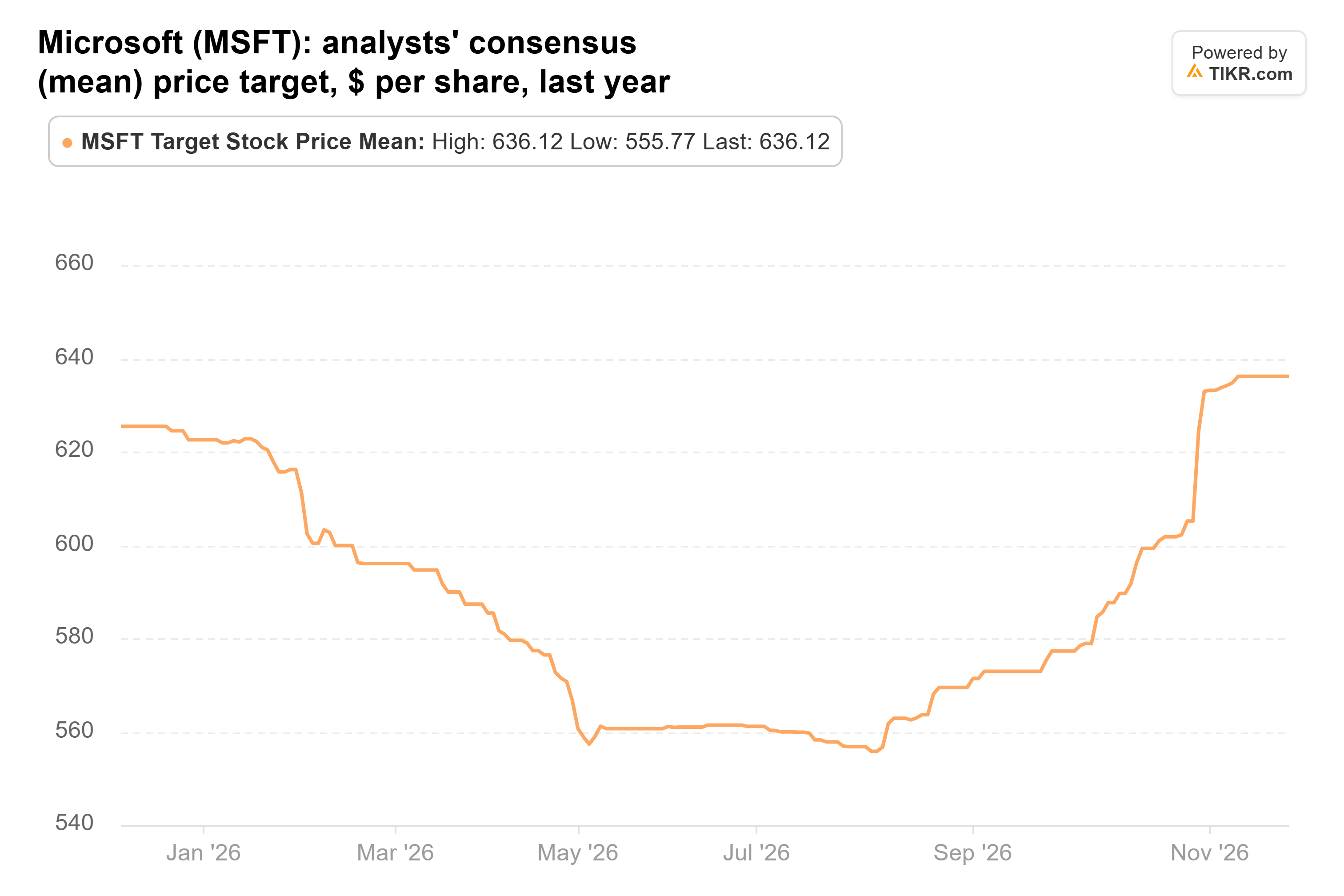
At $636.12, that average is 31% above the last close, across the 58 analysts who rate Microsoft on TIKR. With the stock down 6% since Sept. 30, that gap has only widened.
TIKR tracks 58 analysts on Microsoft. How many say “Buy”?
See the full breakdown of Buy, Hold, and Sell ratings on Microsoft, along with Wall Street’s revenue and earnings estimates, all in one place. More than 500,000 investors use TIKR to research stocks like this one. See Microsoft’s Analyst Ratings
Amazon’s cloud is flying, and the cash will take a while
Amazon is the fund’s second-largest holding: 249,099 shares at Sept. 30, worth $62 million, or 5.3% of its 13F stocks, after it added 32% more shares in the quarter. The stock has barely moved since, down 0.9%.
Amazon’s Oct. 29 report gave the fund plenty to like. AWS revenue grew 39% to $46.0 billion, its fastest growth in nearly five years, and Amazon’s GAAP operating margin hit a record 13.9%. CEO Andy Jassy said in the release that the AWS investment “is working,” pointing to “projected revenue growth rates of over 40% both in 2027 and in 2028.”
The bill is the catch. Jassy plans to spend meaningfully more than $220 billion next year, and consensus has free cash flow at a $41.2 billion outflow in 2026 before it turns positive in 2028. Dan Loeb’s Third Point went the other way, exiting Amazon in the same quarter and opening a Microsoft position.
Analysts are sticking with Amazon anyway. Their average target is up over the past year and sits just below its October high:
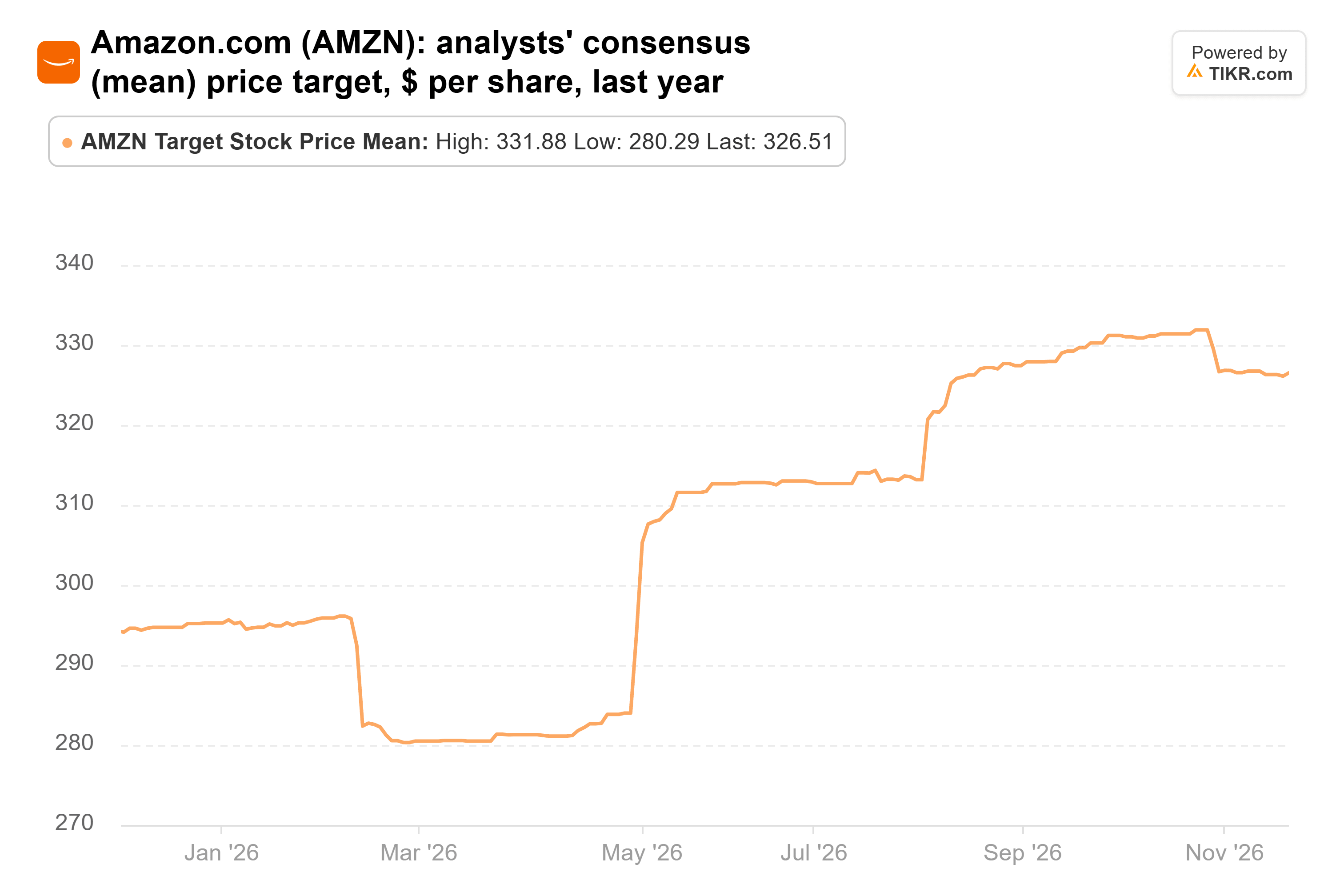
That $326.51 average is 32% above the last close, across the 62 analysts who rate Amazon on TIKR. And at about 25x forward earnings, the stock trades below 27x, the lowest multiple it has ended a quarter at since TIKR’s record began in 2014.
Gildan is the cheap one, for a reason
The fund added the most to Gildan, lifting its stake 153% to 718,830 shares at Sept. 30. Those shares were worth $31 million, or 2.6% of its 13F stocks.
Then came Gildan’s Nov. 5 report. Third-quarter sales of $1.47 billion missed its guidance of about $1.65 billion. It cut its 2026 adjusted EPS guidance to $3.70-$3.80 from $4.65-$4.75 and withdrew its targets through 2028, with a new outlook due in spring 2027. CEO Glenn Chamandy said in the release that “the demand recovery we had anticipated has not materialized as expected.” The stock is now 55% below its 52-week high.
Analysts have cut along with the company. Their average target hit its low for the past year on Nov. 10, five days after the report:
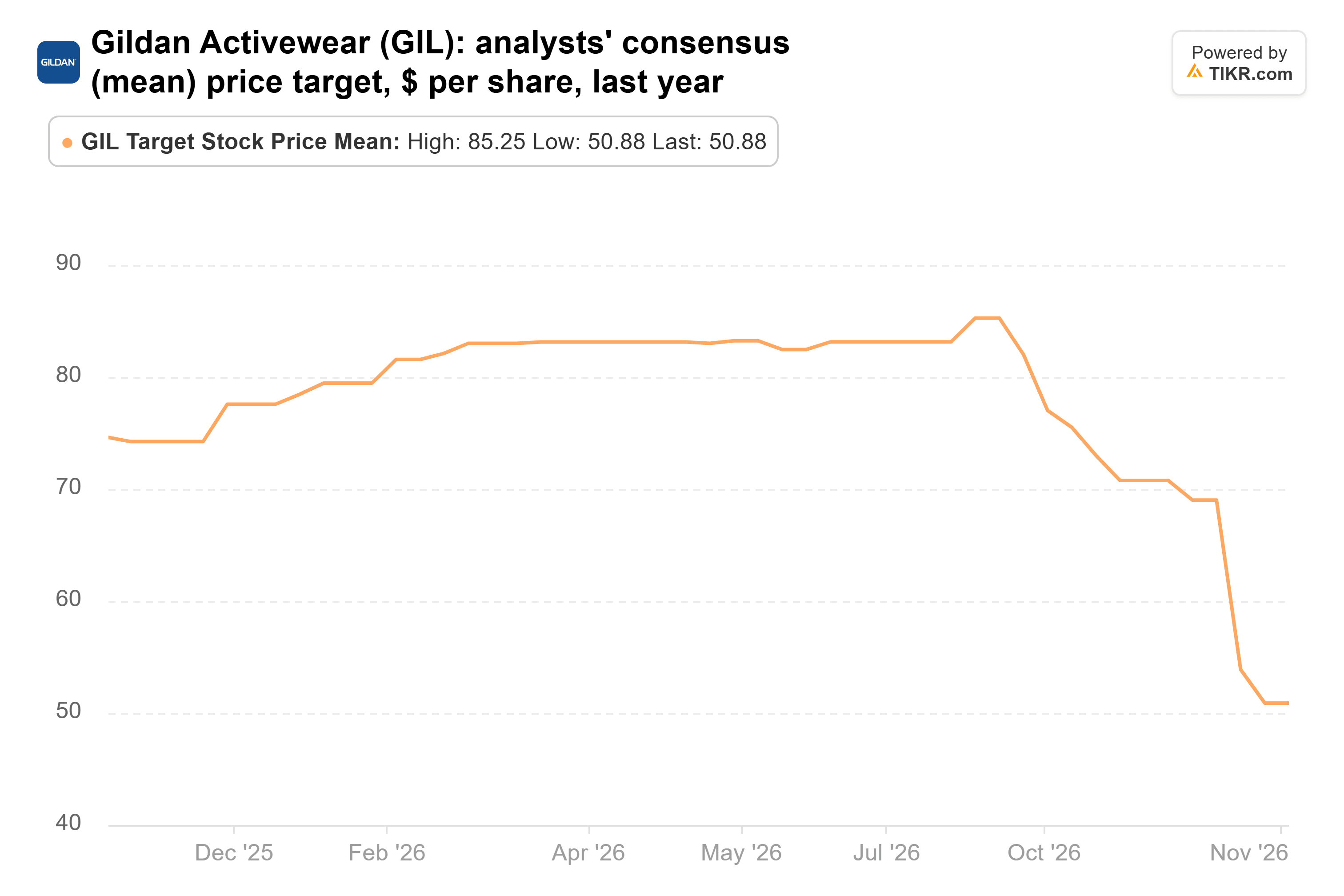
Even at $50.88, that average is 54% above the last close. On paper, Gildan looks cheap: about 8x forward earnings, with 2026 free cash flow guided to $700 million-$750 million, more than a tenth of its $6.12 billion market value. But after buying HanesBrands, it carries $4.14 billion of net debt, 2.7x its adjusted EBITDA. Tariff refunds also helped its third-quarter margins.
Microsoft is the one I’d follow
All three stocks sit well below analysts’ average targets, so the question is how much has to go right for each.
Microsoft needs the least. It trades at about 23x forward earnings, below its five-year quarter-end average of about 30x, while Azure beats forecasts and the average target keeps rising. It faces the same spending risk as Amazon: consensus for its fiscal 2027 free cash flow has been cut three times, to $32.0 billion.
Amazon comes next. Its multiple is the lowest in years, but its cash will take longer to come back. Gildan is the one I’d pass on for now: estimates are still falling, and management has stopped giving long-term targets until the spring.
Microsoft’s December-quarter report, due in late January, is the next test, and Azure growth short of its 49% to 50% guide would weaken the case. The fund’s next 13F, due by mid-February, will show whether it held on to all three.
So what is Microsoft stock actually worth?
TIKR lets you forecast the future price of any stock in less than a minute. Just enter a few assumptions into TIKR’s valuation model and see what Microsoft could be worth. Start from Wall Street consensus estimates, or adjust the inputs to reflect your own view of the business. It’s free to use.
Disclaimer:
Please note that the articles on TIKR are not intended to serve as investment or financial advice from TIKR or our content team, nor are they recommendations to buy or sell any stocks. We create our content based on TIKR Terminal’s investment data and analysts’ estimates. Our analysis might not include recent company news or important updates. TIKR has no position in any of the stocks mentioned. Thank you for reading, and happy investing!