Key Takeaways
- Texas governor-elect Gina Hinojosa plans to make newly permitted data centers pay taxes, avoid raising consumer power prices and use union labor.
- Gene Munster puts soft costs at about 15% of a data center’s bill, so a 30% jump in them raises the total only about 5%.
- I think the backlash will fall flat: Microsoft, Alphabet, Meta and Amazon can absorb a few percent more and keep buying Nvidia’s chips.
- The bigger risk is new sites failing to win approval, though Texas plans to let every currently permitted data center finish.
Investors are worried the midterms just put a ceiling on the AI build-out. That’s a problem for the hyperscalers paying for it, Microsoft (MSFT), Alphabet (GOOG), Meta Platforms (META) and Amazon (AMZN). It’s also a problem for Nvidia (NVDA), whose chips fill those buildings.
The latest worry is Texas. Governor-elect Gina Hinojosa plans laws requiring newly permitted data centers to “pay taxes, commit to no increase in power prices for consumers,” protect water supplies and “be constructed with union labor,” Atreides’ Gavin Baker wrote on X.
Every one of those costs money. But on this week’s episode of the RiskReversal Pod, Deepwater Asset Management’s Gene Munster ran the numbers:
“about 85% of the cost of a data center comes in the hard costs like chips. 15% is soft. … If that 15% piece goes up by 30%, then the overall cost of the data center goes up by 5%. That to me is a trade that these hyperscalers are still going to want to make.”
Not exactly a deal-breaker.
TIKR tracks 58 analysts on Microsoft. How many say “Buy”?
See the full breakdown of Buy, Hold, and Sell ratings on Microsoft, along with Wall Street’s revenue and earnings estimates, all in one place. More than 500,000 investors use TIKR to research stocks like this one. See Microsoft’s Analyst Ratings
The small slice of the bill
Munster’s whole argument rests on that split, so it’s worth checking. He puts labor, provisioning and subsidies to communities in the soft-cost slice, which is 15% of a data center’s bill. A 30% jump in that slice adds 4.5% to the total (15% times 30%), which he rounds up to 5%.
The other 85% is hard costs like the chips, and a big chunk of that ends up as Nvidia’s revenue. Analysts expect Nvidia’s revenue to climb from $216 billion in its last fiscal year to $904 billion within three years:
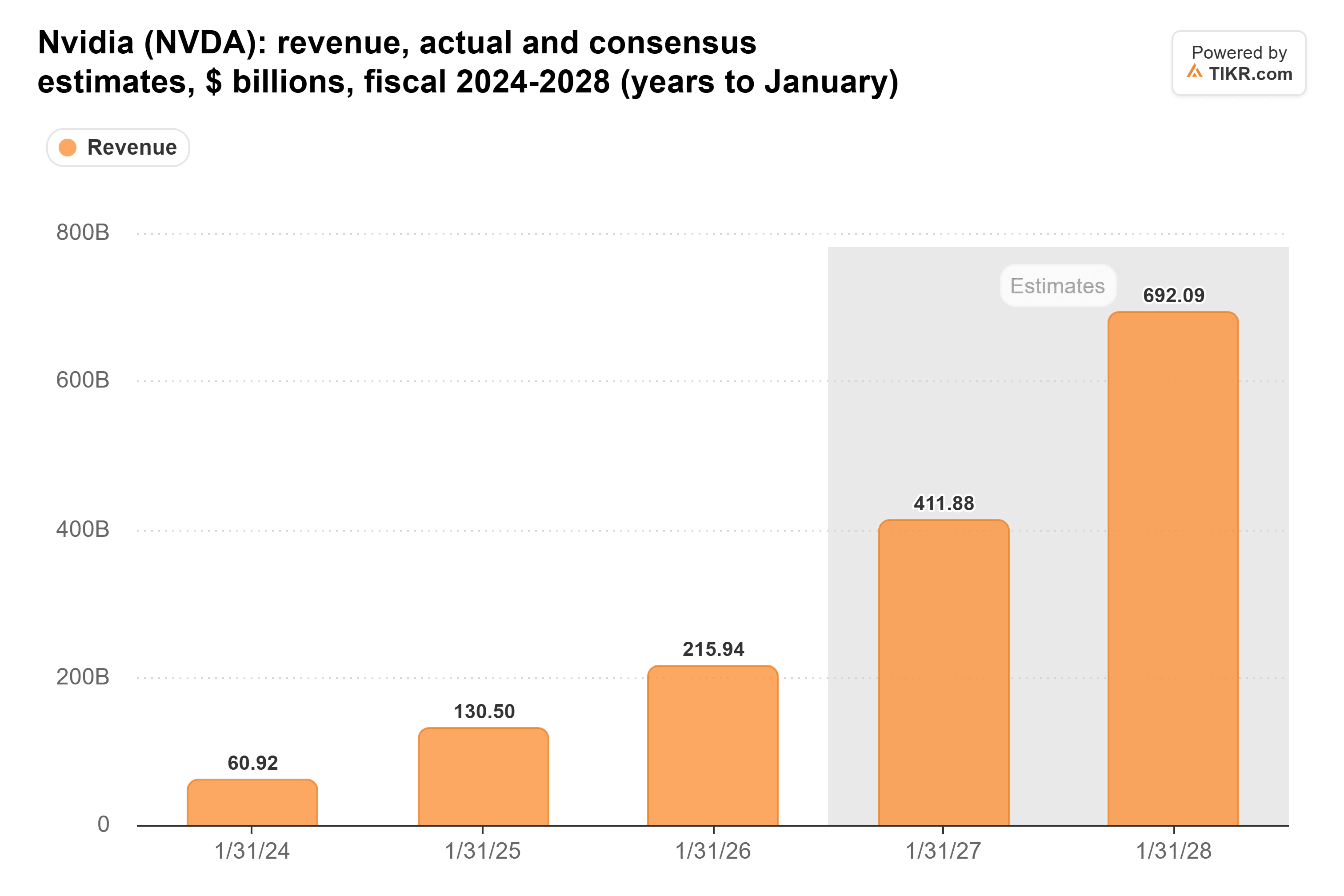
I don’t see a few percent more on labor, taxes and hookups pulling those estimates down much.
The hyperscalers can afford it
Now compare that 5% with what these companies already spend. Microsoft’s capital spending went from $23.9 billion in fiscal 2022 to $116 billion in fiscal 2026 (years to June):
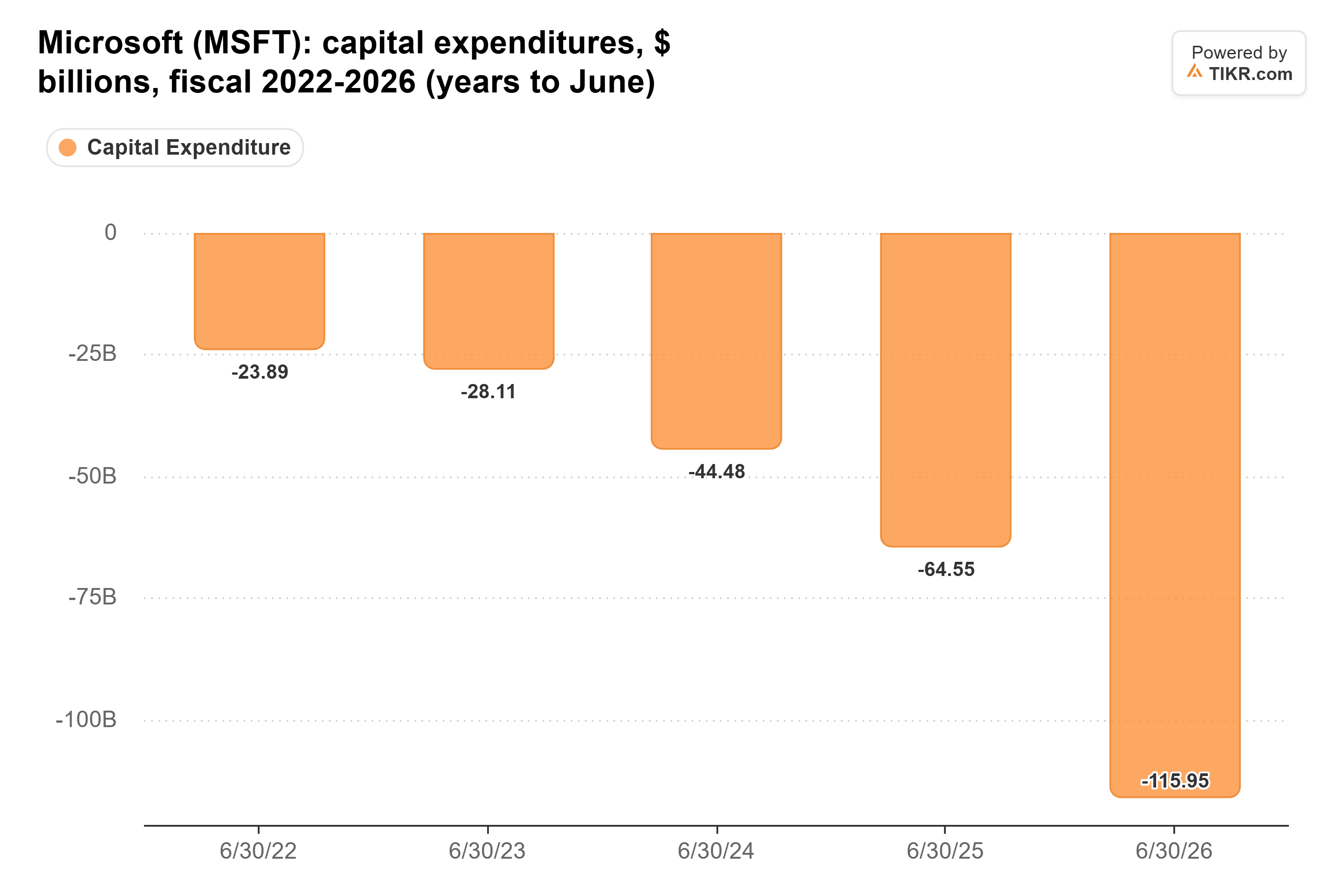
Analysts expect it to reach $193.7 billion in fiscal 2027. A company planning a jump that big isn’t going to blink at a few percent more on the soft costs. Plus, Microsoft pledged in January to pay the full cost of power for its US data centers, which is a lot like one of Texas’ demands, and it signed up for that on its own.
The cash is there, too. Alphabet’s free cash flow rose from $67.0 billion in 2021 to $73.3 billion in 2025, despite all its data center spending:
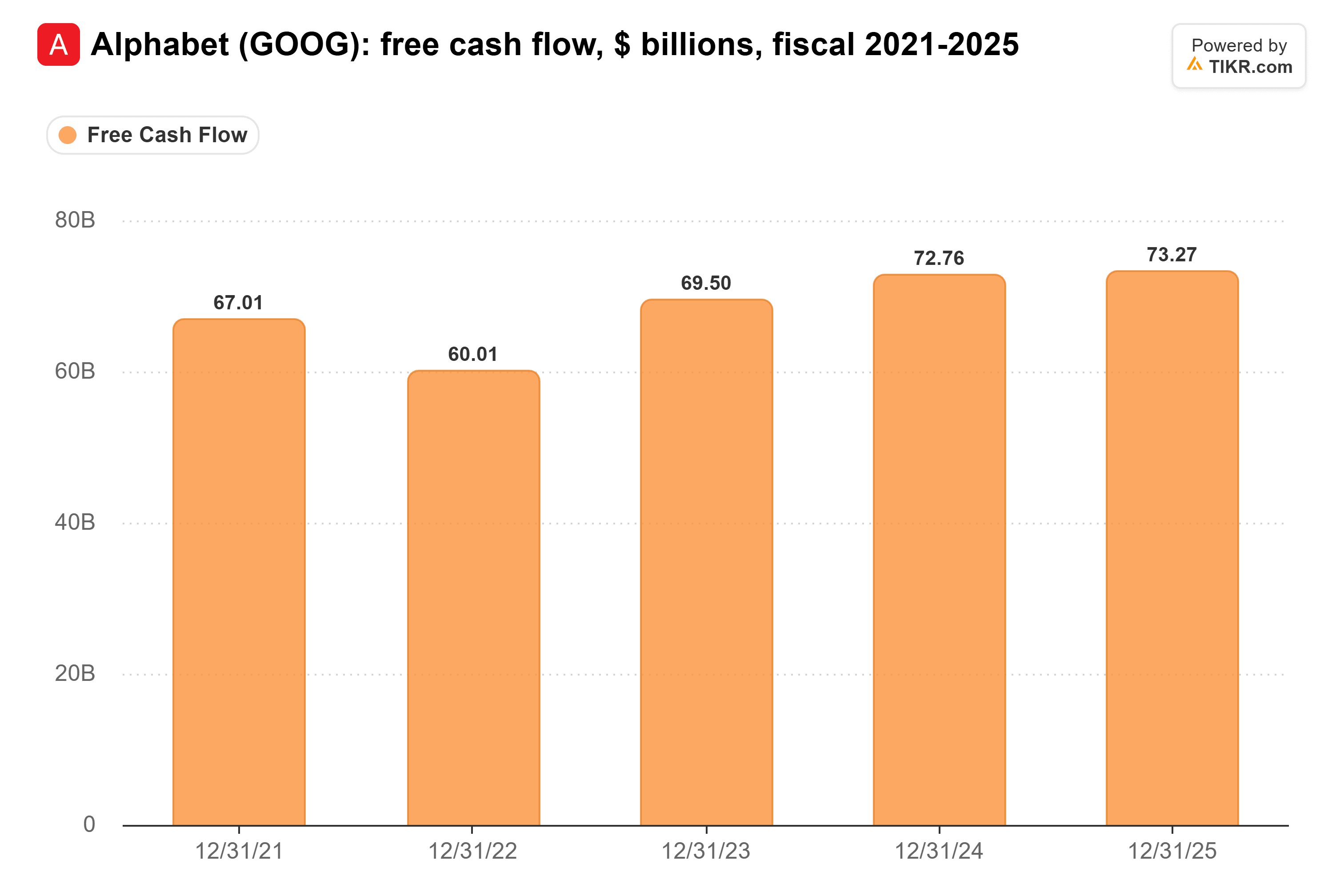
On top of that, Alphabet, Amazon and Meta haven’t bought back a share in 2026. They’d rather spend that cash on data centers, which tells you how badly they want the capacity.
Permits are the real fight
What would actually worry me is approvals. A 5% premium doesn’t matter if a town votes a site down or a state stops issuing permits. Munster himself grants that the new governorship “does have an impact.”
But Texas isn’t shutting the door. Hinojosa has said every currently permitted data center in Texas can finish construction, and Baker figures that covers all of 2027 and likely well into 2028. Her conditions apply to new sites meant for delivery in 2028 and 2029, and Baker thinks she wants those built too: “She doesn’t want to lose a lot of good blue collar jobs and property taxes for small towns in rural Texas.”
That makes her terms the price of a new permit, and Munster’s numbers show the hyperscalers can afford to pay it.
Bottom line: I think the backlash ends up as a line item in the budget, and the build-out keeps going, with Nvidia’s chips inside. (Of course, with the Jensen spy scandal heating up…who knows?)
So what is Nvidia stock actually worth?
TIKR lets you forecast the future price of any stock in less than a minute. Just enter a few assumptions into TIKR’s valuation model and see what Nvidia could be worth. Start from Wall Street consensus estimates, or adjust the inputs to reflect your own view of the business. It’s free to use.
Disclaimer:
Please note that the articles on TIKR are not intended to serve as investment or financial advice from TIKR or our content team, nor are they recommendations to buy or sell any stocks. We create our content based on TIKR Terminal’s investment data and analysts’ estimates. Our analysis might not include recent company news or important updates. TIKR has no position in any of the stocks mentioned. Thank you for reading, and happy investing!