Key Takeaways
- Netflix reports third-quarter results after the close today. The stock is down about 25% in 2026, and President Trump bought shares four times in August.
- Bloomberg Intelligence’s Geetha Ranganathan says the Street is worried that Netflix’s roughly $20 billion content budget won’t produce the big hits it needs.
- Nielsen data shows Netflix’s share of US TV viewing fell to 7.8% in July, from 8.8% a year earlier, while YouTube keeps taking viewers’ time.
- At about 20x forward earnings, close to its three-year low, the stock is already priced for a long dry spell. Advertising and engagement are what to watch tonight.
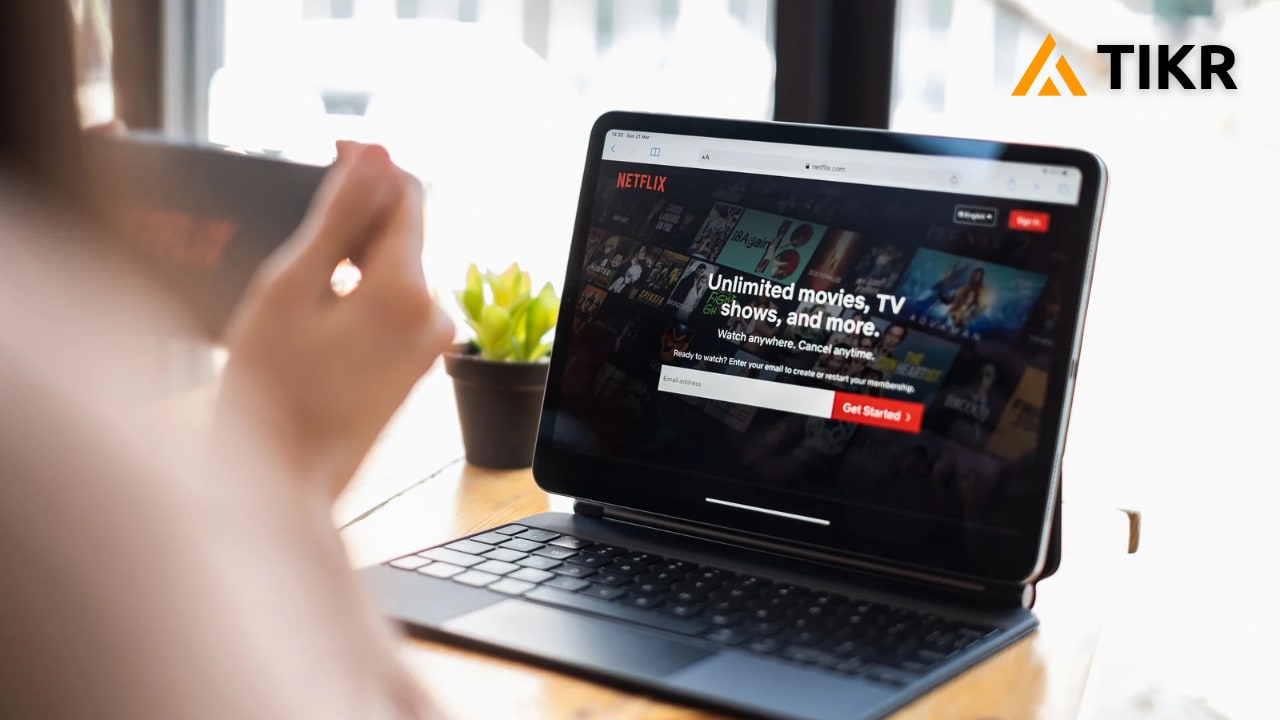
Netflix (NFLX) reports its third quarter after the close today. It goes into the report with an unusual new shareholder: the President of the United States.
President Donald Trump bought Netflix four times in August, according to his [latest financial disclosure](LINK NEEDED), filed Oct. 8. (The White House says outside financial firms manage his portfolio, so don’t read too much into it.)
They were buying a stock that was already falling. Netflix is down about 25% in 2026 (through Friday’s close). Bloomberg Intelligence analyst Geetha Ranganathan explained why on Bloomberg’s The Tape podcast last week. She said Netflix raised its content budget by 10% this year, to about $20 billion, and that’s what has the Street nervous:
“if with 20 billion, you’re not able to come up with two or three big hits, what is going to be the future of Netflix?”
It’s a fair question.
TIKR tracks 52 analysts on Netflix. How many say “Buy”?
See the full breakdown of Buy, Hold, and Sell ratings on Netflix, along with Wall Street’s revenue and earnings estimates, all in one place. More than 500,000 investors use TIKR to research stocks like this one. See Netflix’s Analyst Ratings
The hits haven’t shown up
Last year, KPop Demon Hunters, Happy Gilmore 2 and a third season of Squid Game carried Netflix. This year it has had no breakthrough like 2025’s Adolescence, Bloomberg reported on Monday. His & Hers and The Rip each drew more than 100 million views in the first half, but neither caught on the way Stranger Things did.
Netflix has also lost some of the people who make hits. The Duffer brothers, who created Stranger Things, have left, and so have Shawn Levy and David Fincher.
The hits matter because Netflix is now fighting for viewers’ time against everything people watch. On another episode the next day, Ranganathan called YouTube, owned by Alphabet (GOOG), Netflix’s “biggest competitor.”
The numbers back her up. Netflix’s share of US TV viewing fell to 7.8% in July from 8.8% a year earlier, according to Nielsen. Netflix’s viewing hours grew just 2% in the first half of the year.
So far, the spending has paid
Netflix’s content spending has worked out very well up to now. Its operating margin fell to 17.8% in 2022, then rose every year to reach 29.5% in 2025…

…and a run of expensive misses would eat into that margin.
Ads and live sports help, up to a point
Plus: Netflix has other ways to grow besides a breakout show. It expects advertising revenue to roughly double this year, to about $3 billion. It’s also leaning on live events to keep growing. Management says six of its top 10 sign-up days over the past five years came from live events.
Analysts still expect revenue to climb every year through 2028.

That’s double-digit growth each year, slowing to about 10% by 2028. The forecast already assumes a slowdown. Analysts’ estimate for tonight’s quarter, $12.88 billion of revenue, is right in line with Netflix’s own forecast.
Ads and sports both need people watching, though. Advertising depends on engagement, and engagement is exactly where Alphabet’s YouTube keeps winning. Sports cost a lot, too. Ranganathan says Netflix is negotiating for the US rights to the FIFA World Cup, and that they’ll cost “somewhere upwards of $2 billion per tournament.” This year’s tournament went for about $485 million. That’s another big bill that has to earn its keep, just like the shows.
At 20x, the market already expects a dry spell
Netflix now trades at about 20x forward earnings. That’s barely above its three-year low of 19.4x, set on Oct. 2, and well below its three-year average of 33.4x.

(It was above 50x as recently as June 2025!)
My take: Netflix needs its hits back, but the stock is already priced as if they won’t come. Revenue is still growing at double digits and margins are close to 30%. At this price, one or two breakouts plus a halt to the slide in viewing share could go a long way.
Of course, new content chief Peter Rice doesn’t start until Oct. 26. One Netflix insider told Bloomberg that any changes he makes will take two or three years to show results. Tonight, watch whether ads are on track for $3 billion, and what Netflix says about engagement and its 2027 content budget.
So what is Netflix stock actually worth?
TIKR lets you forecast the future price of any stock in less than a minute. Just enter a few assumptions into TIKR’s valuation model and see what Netflix could be worth. Start from Wall Street consensus estimates, or adjust the inputs to reflect your own view of the business. It’s free to use.
Disclaimer:
Please note that the articles on TIKR are not intended to serve as investment or financial advice from TIKR or our content team, nor are they recommendations to buy or sell any stocks. We create our content based on TIKR Terminal’s investment data and analysts’ estimates. Our analysis might not include recent company news or important updates. TIKR has no position in any of the stocks mentioned. Thank you for reading, and happy investing!