Key Takeaways
- Strategy stock dropped 42% in the past month as bitcoin slid from above $80,000 to around $60,000, and Coinbase, Circle and MARA fell with it.
- Strategy’s stock now trades below the break-even its share sales need, so it’s spending more on buying back its STRC preferred stock than on bitcoin.
- MSCI removes Strategy from its indexes after the Nov. 30 close, and JPMorgan sees about $2.8 billion of index selling as a result.
- Strategy looks cheap on book, but it’s worth waiting until the weekly filings show share sales buying bitcoin again.
Strategy (MSTR) stock is down 42% in the past month, as bitcoin broke below $60,000 and the company’s own funding plan turned against its shareholders.
The whole crypto group sold off: Coinbase (COIN) fell 34%, Circle Internet Group (CRCL) 39% and MARA Holdings (MARA) 21%. But Strategy fell about twice as far as MARA, and the gap comes down to how it pays for its bitcoin.
TIKR tracks 16 analysts on Strategy. How many say “Buy”?
See the full breakdown of Buy, Hold, and Sell ratings on Strategy, along with Wall Street’s revenue and earnings estimates, all in one place. More than 500,000 investors use TIKR to research stocks like this one. See Strategy’s Analyst Ratings
Bitcoin did most of the damage
Strategy’s third-quarter report on Oct. 29 said CFO Andrew Kang would step down. Hours later, Binance disclosed a breach it estimated at a record $6.3 billion, which knocked bitcoin below $80,000. The real slide came in November, when bitcoin fell below $60,000. Strategy shares bounced on Nov. 23, the day Nvidia reinstated Jensen Huang, but the gain faded the next day.
Strategy marks its bitcoin to market, so every drop hits its earnings. Consensus has it losing about $17 a share in 2026 and earning about $17 a share in 2027:
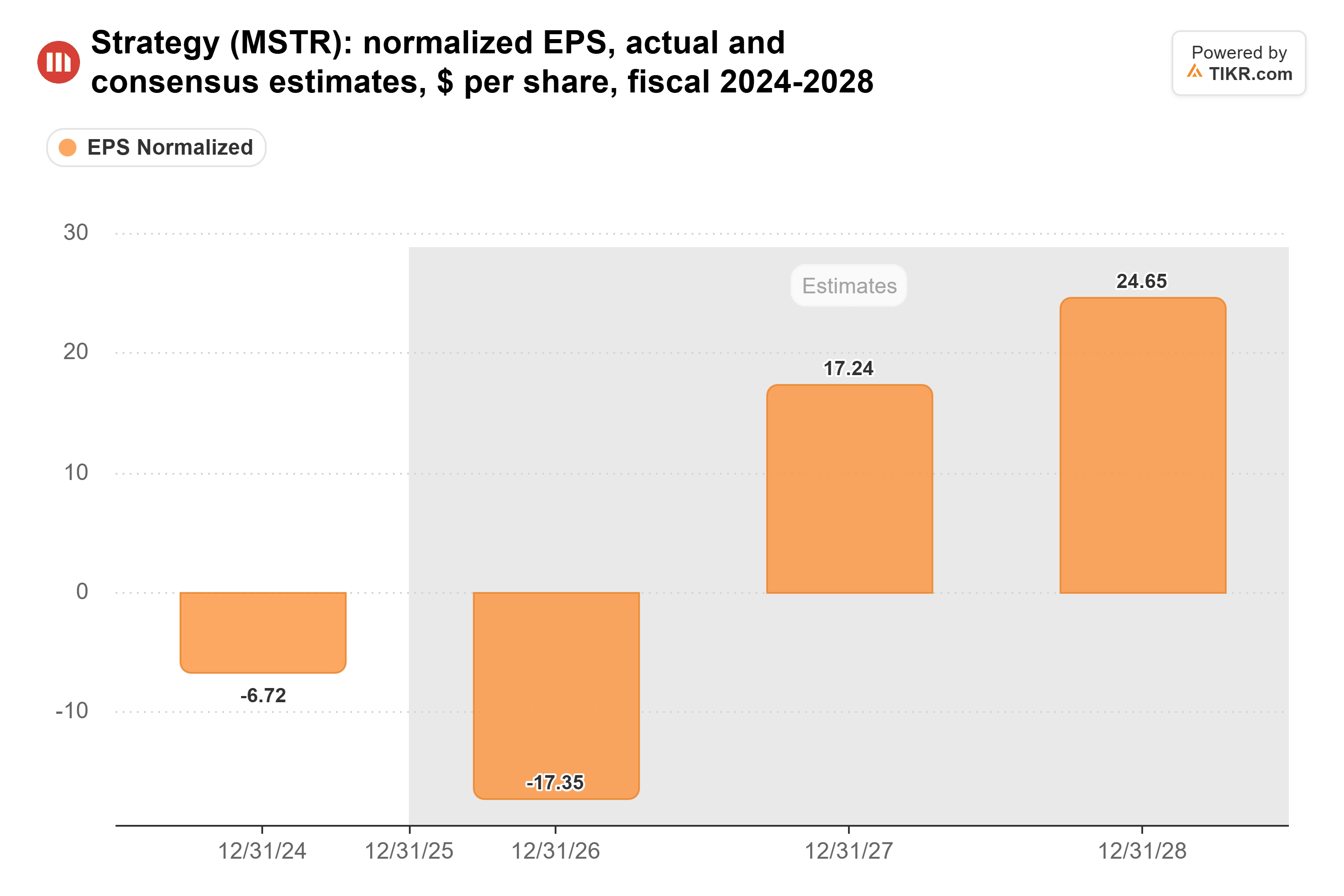
Those estimates largely predate bitcoin’s break below $60,000, so the 2026 loss could widen.
Coinbase and MARA feel the same price directly. Coinbase’s third-quarter transaction revenue fell 44% from a year earlier, to $590 million, and its February report will show how much further trading slowed. MARA earns less on every coin it mines. But after the third quarter it sold 13,597 bitcoin at around $81,039 and paid off its bitcoin-backed loans, so it went into the slide with less debt riding on the price.
Circle’s problem is rates. Most of its revenue is interest on the reserves behind USDC. In the third quarter, its reserve income fell 8% from a year earlier as its return rate dropped, and USDC in circulation was flat at $73.9 billion.
The premium is gone, and STRC gets the money
Strategy adds bitcoin per share only by selling stock for more than the bitcoin behind it. On its first-quarter call, management put that break-even at about 1.22x mNAV (its enterprise value over its bitcoin). Today the company’s market value sits below the bitcoin it holds, and the stock trades at 0.6x book value, far below its five-year average of 3.6x:
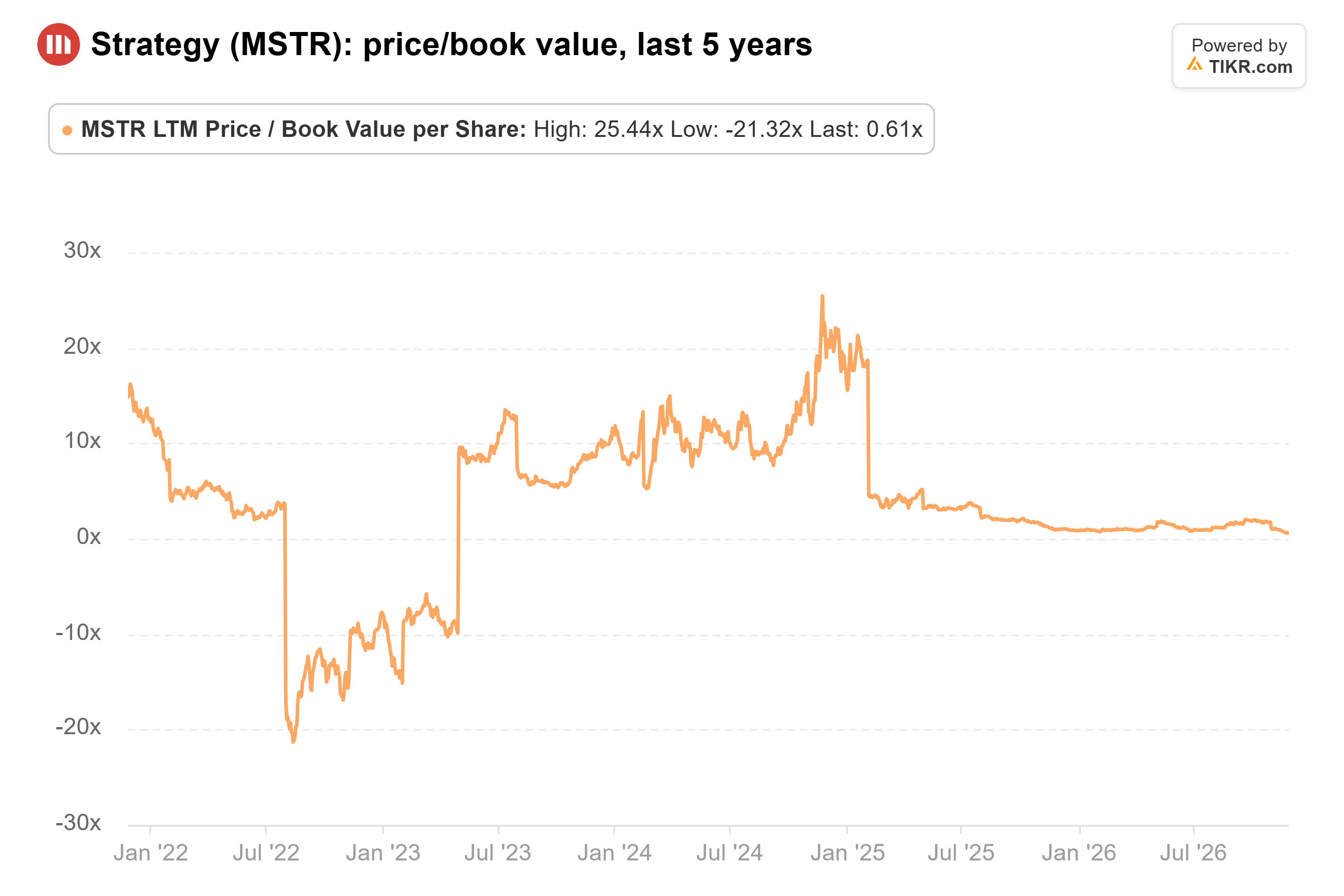
(That’s on Sept. 30 book value, before bitcoin’s slide, so the real discount is smaller.)
So the money goes to STRC, Strategy’s preferred stock, which trades below its $100 stated amount. At the Nov. 19 investor update, CEO Phong Le said Strategy had bought back $3 billion of STRC for less than it issued it for. Executive Chairman Michael Saylor described the approach: “What we are doing right now is a gentle, continuous auction to buy back and stabilize the credit.”
Common holders pay for that auction. In the week to Nov. 22, $211.8 million went to STRC, $147 million of it from new share sales, against $29.6 million of bitcoin. Strategy also raised its preferred-stock buyback authorization to $4 billion from $3 billion. Every share sold below that 1.22x break-even lowers bitcoin per share. The company also moved $1 billion out of its USD reserve for dividends and interest into a separate cash account, leaving $3.73 billion in the reserve and $1.09 billion in cash.
The index exit is the first test
MSCI removes Strategy from its indexes after the Nov. 30 close, and JPMorgan sees index funds selling about $2.8 billion of the stock as a result.
Wall Street’s average target has fallen to about $233 from about $517 a year ago. That’s still nearly 3x the stock’s Nov. 27 close of $81.62:
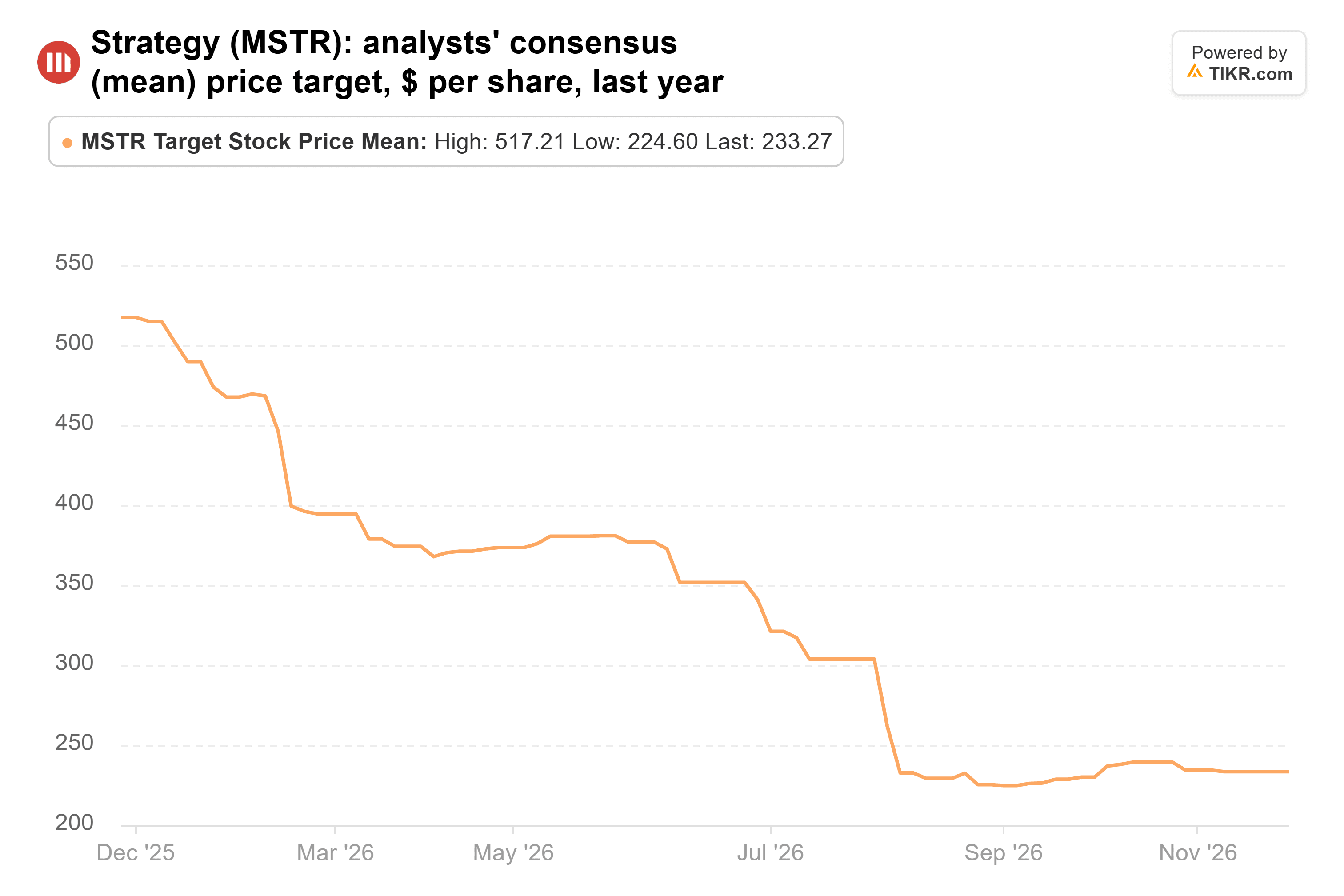
Most of those targets were also set before the drop. Cantor Fitzgerald’s $208 target assumes bitcoin at $112,000. On the other side, Monness Crespi cut the stock to Sell from Neutral on Nov. 18, then lowered its target to $59 from $65 on Nov. 23 and told investors to “fade the rally.”
Strategy looks cheap on book, but that book value predates bitcoin’s slide. The cleaner signal is the index selling passing and the Monday 8-Ks showing share sales buying more bitcoin than STRC. A bitcoin rebound toward Strategy’s $75,446 average cost would change that picture fast.
So what is Strategy stock actually worth?
TIKR lets you forecast the future price of any stock in less than a minute. Just enter a few assumptions into TIKR’s valuation model and see what Strategy could be worth. Start from Wall Street consensus estimates, or adjust the inputs to reflect your own view of the business. It’s free to use.
Disclaimer:
Please note that the articles on TIKR are not intended to serve as investment or financial advice from TIKR or our content team, nor are they recommendations to buy or sell any stocks. We create our content based on TIKR Terminal’s investment data and analysts’ estimates. Our analysis might not include recent company news or important updates. TIKR has no position in any of the stocks mentioned. Thank you for reading, and happy investing!