


Key Takeaways
- MSCI is removing Strategy from its MSCI USA Index at the close of Nov. 30.
- JPMorgan estimated last year that an MSCI exit could mean about $2.8 billion of index-fund selling.
- The bigger risk is to Strategy’s funding, since the stock trades below book value.
Strategy (MSTR) is about to lose a group of shareholders who never had a choice about owning it: index funds.
MSCI said on Nov. 11 that it will drop Strategy from its MSCI USA Index at the close of Nov. 30, under new rules for non-operating companies. The stock fell 6.5% the next day, to $114.
Strategy Saw This One Coming
This review is the first to use the screen MSCI adopted on Oct. 15. It marked six companies for deletion, and by Unchained’s count Strategy is the only one of 24 MSCI USA deletions not moving into MSCI’s US small-cap index. Strategy said in its late-October quarterly report that it expected to be excluded, and Executive Chairman Michael Saylor called MSCI’s rules biased against digital assets in an Oct. 13 Bloomberg interview.
The Selling Is the Smaller Problem
JPMorgan analysts led by Nikolaos Panigirtzoglou estimated in November 2025 that an MSCI exit could bring about $2.8 billion of passive outflows, and $8.8 billion more if other index providers followed. That note covered an earlier proposal, which MSCI shelved in January. By Strategy’s count, MSCI-tracking funds hold about 13 million shares, or 3.1% of its basic shares. At $114, that’s about $1.5 billion.
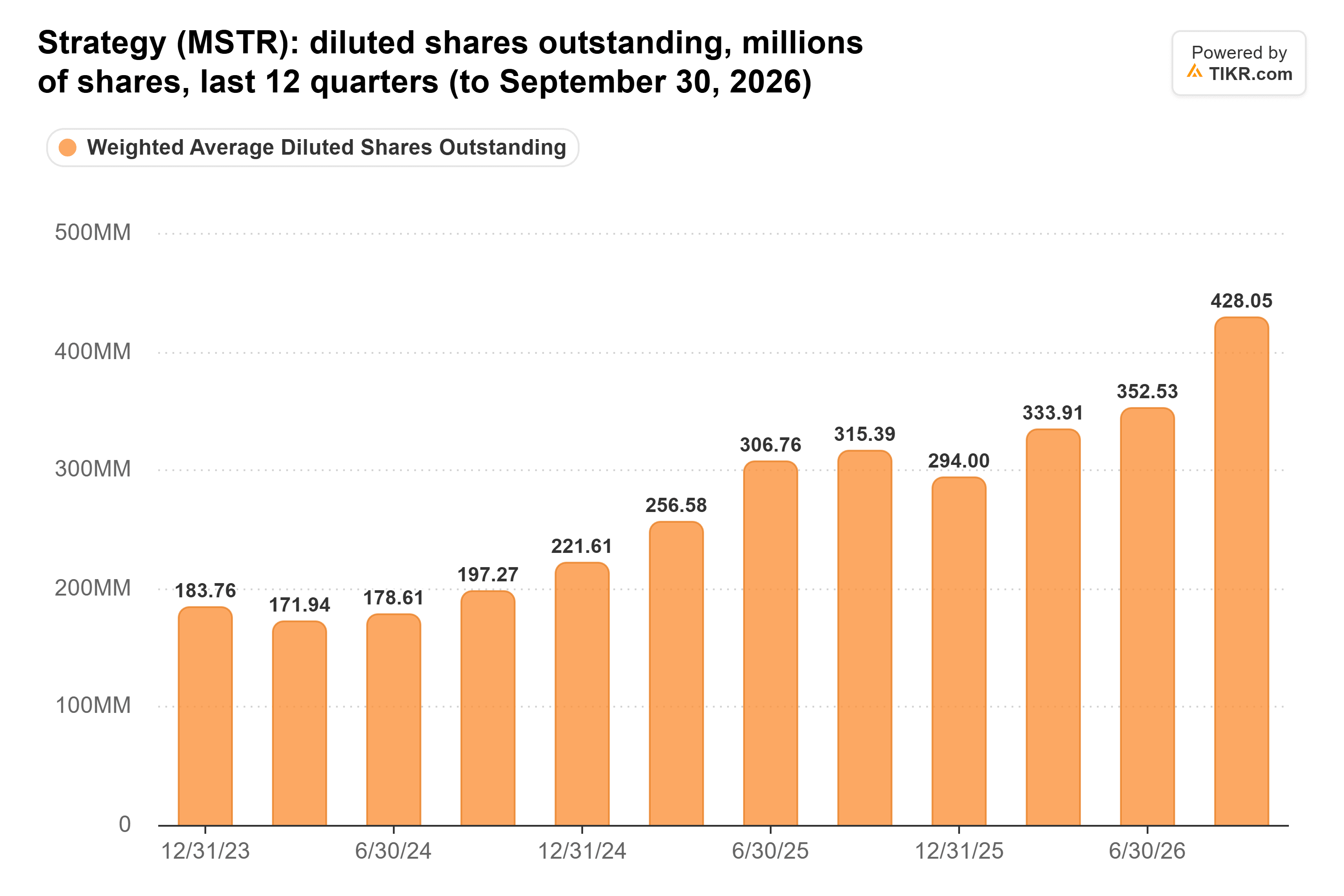
The real damage is to funding: JPMorgan said losing index status could raise doubts about Strategy’s ability to raise equity or debt. Strategy pays for bitcoin, and lately for STRC preferred buybacks, mostly by selling common stock. Its Class A share count is up 38% this year, to 402.7 million on Oct. 25, and diluted shares have more than doubled since late 2023:
TIKR Tracks 16 Analysts on Strategy. How Many Say “Buy”?
See the full breakdown of Buy, Hold, and Sell ratings on Strategy, along with Wall Street’s revenue and earnings estimates, all in one place. More than 500,000 investors use TIKR to research stocks like this one. See Strategy’s Analyst Ratings
Strategy Needs a Premium It Doesn’t Have
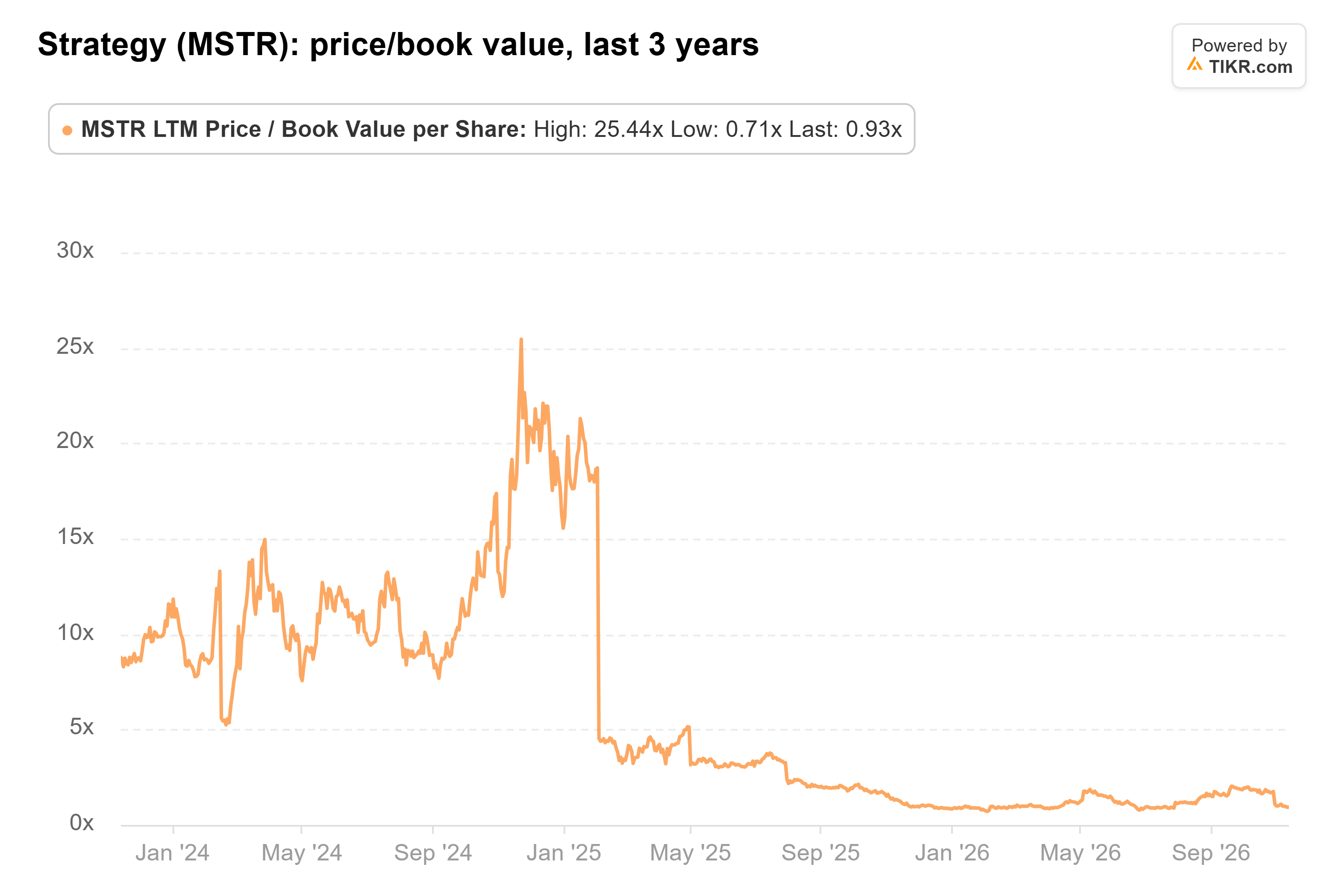
Selling stock only adds bitcoin per share when investors pay more than the bitcoin behind it. In May, management put that break-even at about 1.22x mNAV (enterprise value, including debt and preferred stock, over its bitcoin’s value). Bitcoin was 91.8% of Strategy’s assets at Sept. 30, and on a simpler measure, the stock trades at 0.9x book value, against a three-year average of 6.1x:
So bitcoin per share has gone backward: Strategy’s BTC Yield was negative 3.7% this year through Oct. 25. In the week to Nov. 8, it put $188.3 million into STRC buybacks and $81.9 million into bitcoin, according to its Nov. 9 filing.
The Cash Buys Time
At Sept. 30, Strategy held $5.91 billion of cash and short-term investments against $6.78 billion of total debt:
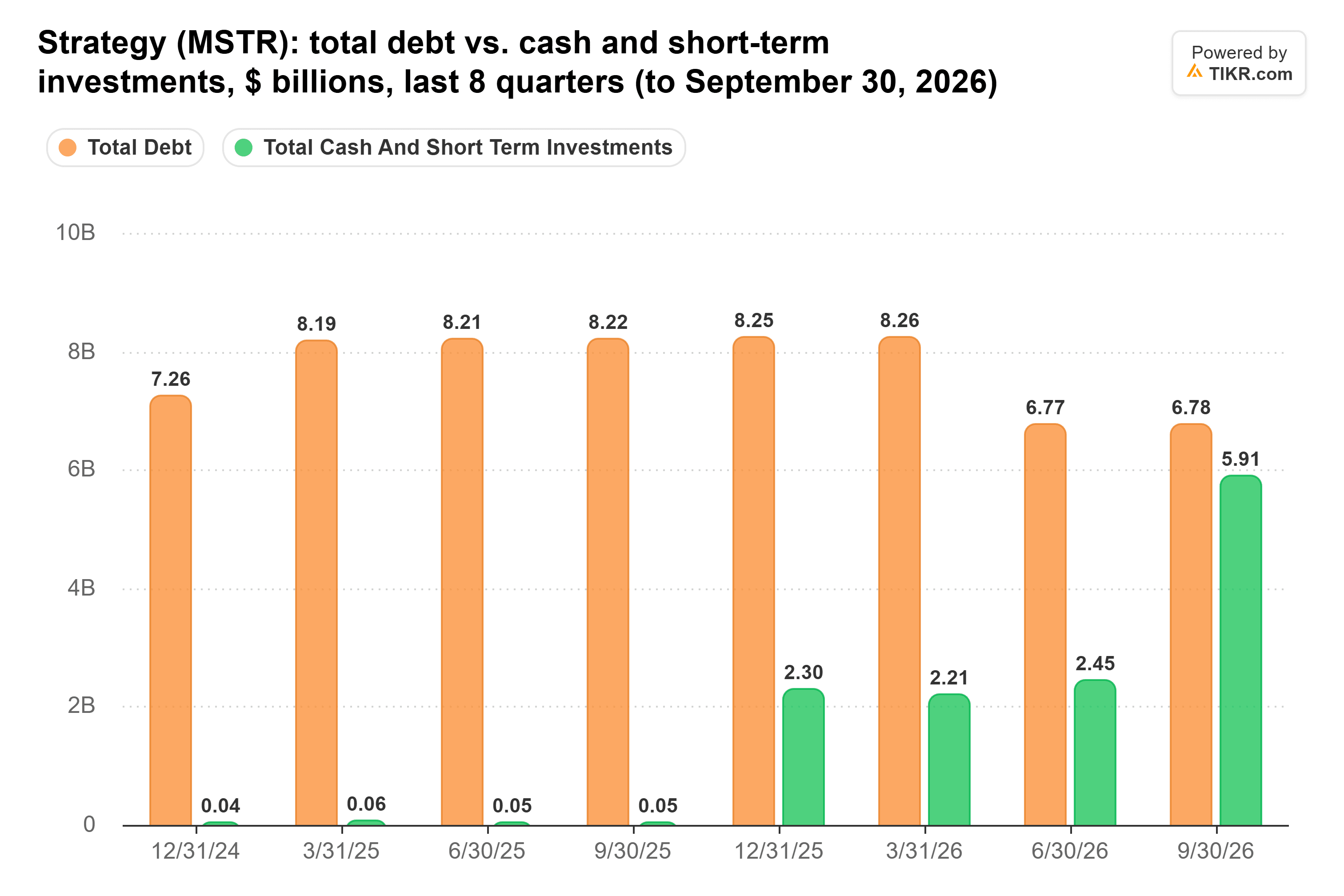
By Nov. 8, its USD Reserve and USD Cash were down to about $4.9 billion after more than $1 billion of STRC buybacks since October. Holders can also put $5.9 billion of its $6.7 billion in convertible notes back to it for cash from September 2027.
Strategy’s Premium Matters More Than the Selling
The index exit is a one-time hit, and it doesn’t force a bitcoin sale. But Strategy already sold 5,552 coins in the third quarter to fund dividends and buybacks, and bitcoin now trades below the $75,456 average it paid. Without a big enough premium, selling common stock to buy bitcoin dilutes bitcoin per share, and the index exit removes a steady buyer. I’d want to see that premium come back before buying this dip.
The weekly filings after Nov. 30 will show whether Strategy is still selling stock to buy bitcoin.
So What Is Strategy Stock Actually Worth?
TIKR lets you forecast the future price of any stock in less than a minute. Just enter a few assumptions into TIKR’s valuation model and see what Strategy could be worth. Start from Wall Street consensus estimates, or adjust the inputs to reflect your own view of the business. It’s free to use.
Disclaimer:
Please note that the articles on TIKR are not intended to serve as investment or financial advice from TIKR or our content team, nor are they recommendations to buy or sell any stocks. We create our content based on TIKR Terminal’s investment data and analysts’ estimates. Our analysis might not include recent company news or important updates. TIKR has no position in any of the stocks mentioned. Thank you for reading, and happy investing!


