Key Takeaways
- Stanley Druckenmiller’s Duquesne Family Office and 11 other big funds bought AppLovin in the third quarter, and 18 sold, with Lone Pine Capital’s exit the biggest sale.
- The biggest buyers made real bets: Spruce House Investment Management put a quarter of its 13F stocks in AppLovin.
- Analysts expect AppLovin’s normalized EPS to more than double from 2025 to 2028, but the stock trades below its five-year average multiple.
- The numbers back the buyers, though the Street’s average target is just 10% above the last close.
Big funds couldn’t agree on AppLovin (APP) last quarter.
So far, 456 big funds have filed 13Fs for the quarter ended Sept. 30. These are funds readers know, or funds with $1 billion or more of US stocks, with quant and index funds left out. Of those, 12 bought AppLovin, meaning they opened a position or added 20% or more to one. Eighteen sold out or cut their stake by 20% or more, and 31 held it at the quarter’s end.
Druckenmiller made a start, and two funds went big
Stanley Druckenmiller’s Duquesne Family Office opened a position of 109,460 shares, according to its 13F filed Nov. 16. That’s $32 million at quarter-end prices, or 0.8% of the $4.15 billion of US stocks its 13F holds, so it’s a starter stake. The bigger bets came from funds with lower profiles. Spruce House Investment Management, which manages $5.2 billion, added 57% to its stake. That took it to 2.81 million shares worth $817 million, which is 25.0% of its 13F stocks and its largest holding. And Chris Davis’ Davis Advisors, which manages $30 billion, took its stake from 315,539 shares to 1.46 million, adding about $331 million worth at quarter-end prices.
TIKR tracks 32 analysts on AppLovin. How many say “Buy”?
See the full breakdown of Buy, Hold, and Sell ratings on AppLovin, along with Wall Street’s revenue and earnings estimates, all in one place. More than 500,000 investors use TIKR to research stocks like this one. See AppLovin’s Analyst Ratings
Lone Pine sold every share
On the other side, Lone Pine Capital, a $22 billion hedge fund, sold all 1.04 million of its shares. At the end of June that stake was worth $537 million, or 3.3% of its 13F stocks. Blue Whale Capital sold out of a stake that was 2.7% of its 13F stocks at the end of June. Sands Capital, which manages $44 billion, cut its shares by 33%, to 556,237. Ken Fisher’s Fisher Investments sold out too, but its 815 shares were worth only about $420,000, too small to read much into. Eleven of the 18 sellers bought Intel in the same quarter.
A 13F can’t say when in the quarter a fund traded, or why. Here’s what the stock has done since. AppLovin is up 43% from its Sept. 30 close, when the buyers’ filings show them holding. It’s also 19% below its June 30 close, the last date the funds that sold out were on record owning it. Those figures only track the stock price, since no 13F shows what a fund paid.
The earnings are heading the right way
The buyers have the business on their side. AppLovin’s third-quarter revenue grew 55% and beat its own guidance, and its fourth-quarter guidance came in above consensus. The stock soared 44% in two days after the Nov. 4 report.
Analysts expect normalized EPS to climb from $10.64 in 2025 to $17.35 this year, $20.86 in 2027 and $25.32 in 2028:
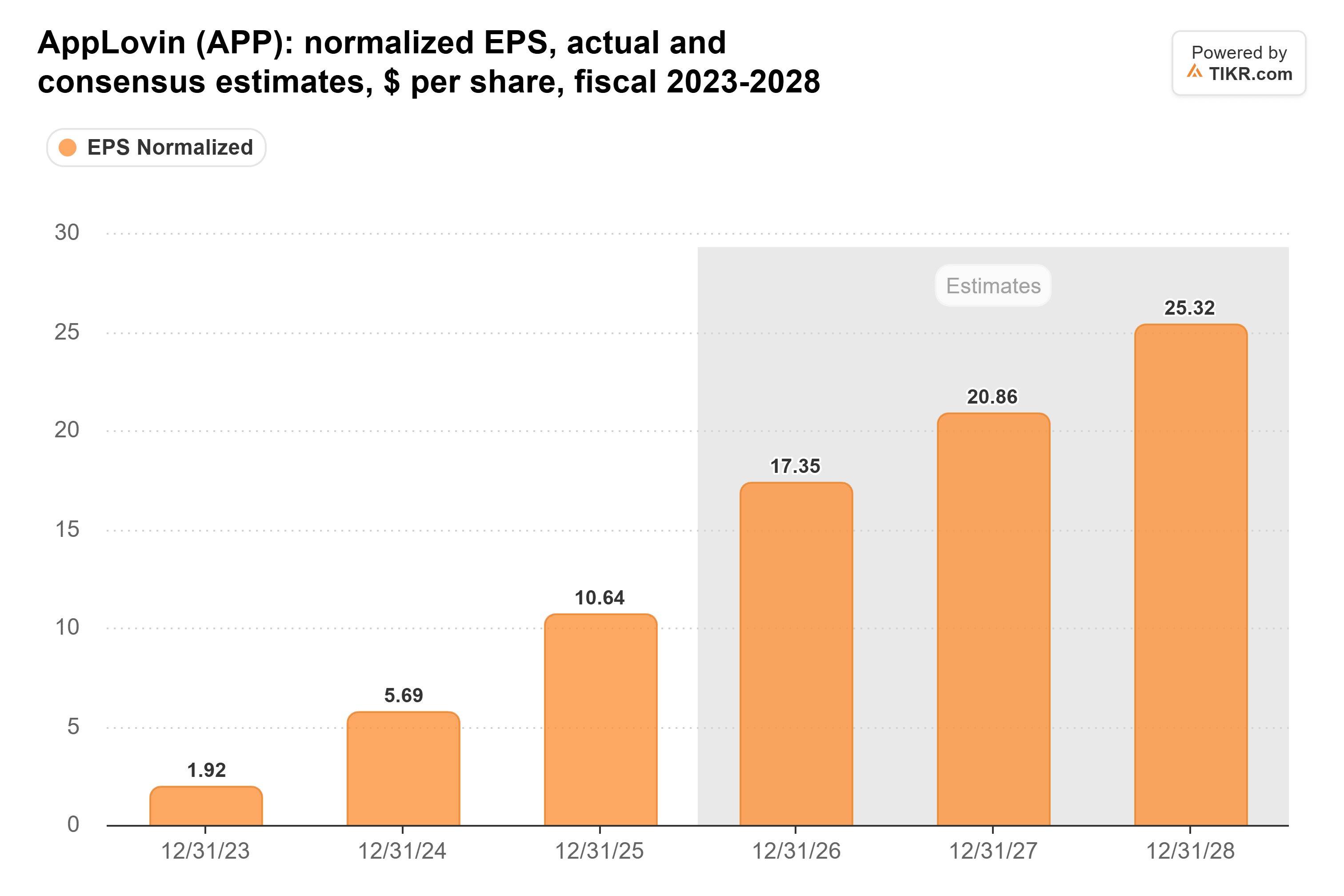
The 2026 estimate has risen from $16.59 in late October, and nothing in the quarter points to cuts ahead. Only four to six analysts make each year’s EPS estimate, though.
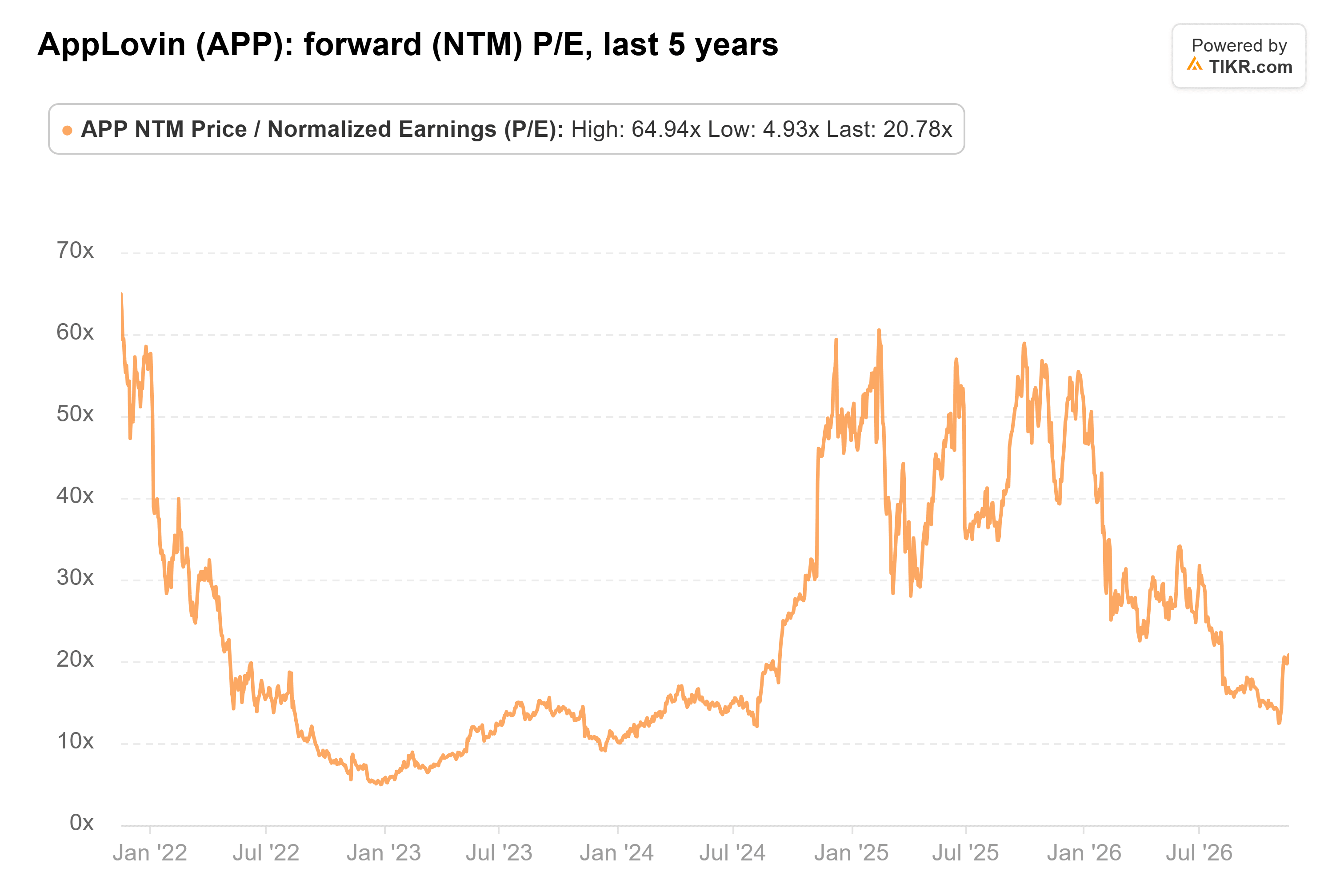
Investors are also paying less than usual for that growth. AppLovin trades at 21x forward earnings, below its five-year average of 25x:
The sellers’ best argument is the Street’s average price target, which has fallen from $714 a year ago to $456 now:
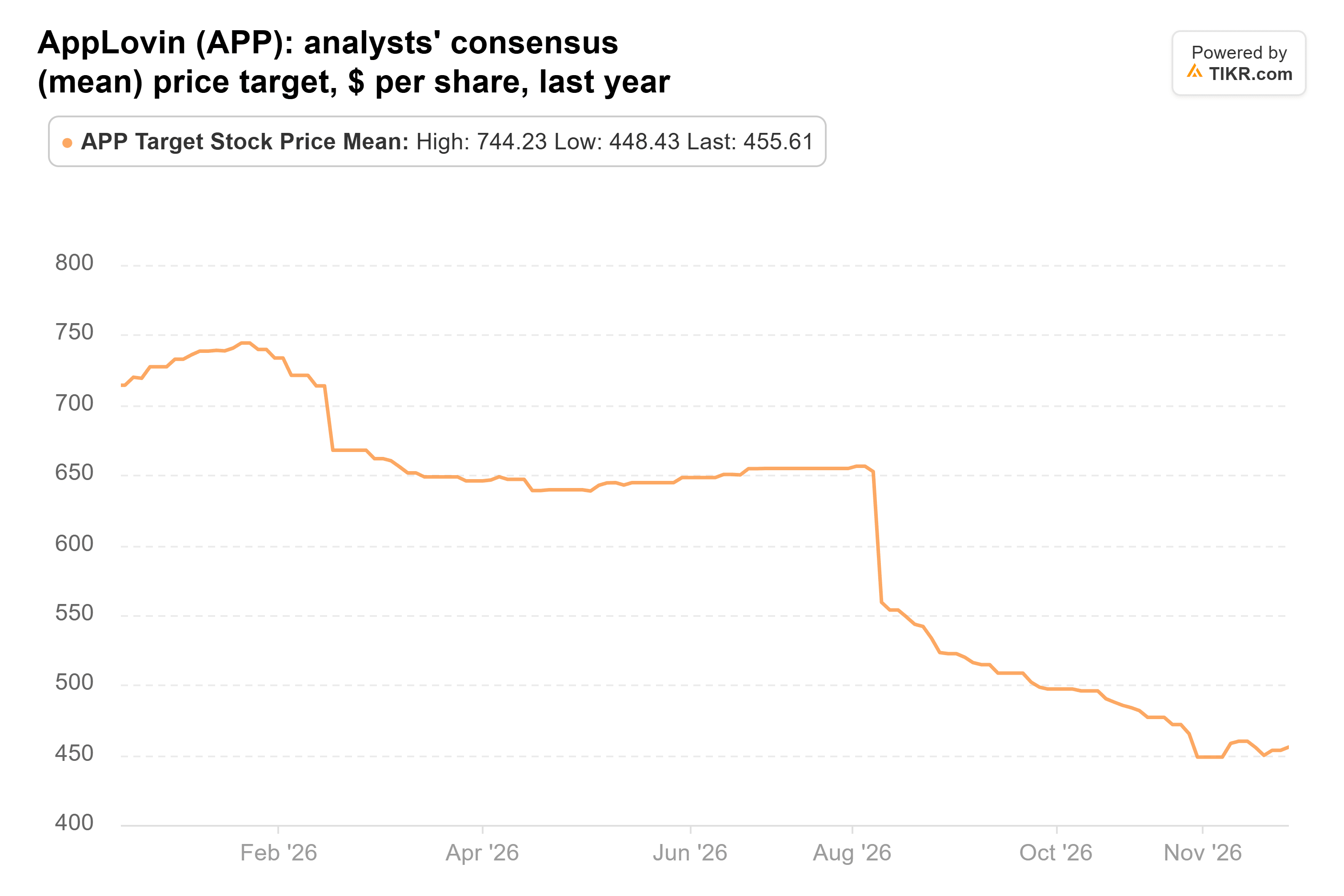
That’s just 10% above the last close. Individual targets from the 32 analysts covering the stock run from $347 to $600.
The buyers have the better case
Even after the bounce, AppLovin is 44% below its 52-week high, and some of the worries behind that drop are still open. AppLovin still hasn’t said that the video tool its consumer advertisers need is live for all of them. Unity’s rival ad engine keeps growing fast. And a class action over how the company described its model gains is pending (its claims are unproven).
Still, I’m with the buyers. Analysts are raising their earnings estimates, and the stock trades below its usual multiple anyway. Lone Pine’s exit was the biggest move on either side. But its 13F doesn’t say why it sold, and the business has delivered a strong quarter since. If estimates keep climbing, I’d expect that 10% gap to the Street’s average target to widen as targets move up.
Of course, CEO Adam Foroughi has said the gains from AppLovin’s models won’t arrive on a neat quarterly schedule. That means the fourth-quarter report in February has to show the growth holding up. The next round of 13Fs, due in mid-February, will show us whether Druckenmiller added to his starter stake.
So what is AppLovin stock actually worth?
TIKR lets you forecast the future price of any stock in less than a minute. Just enter a few assumptions into TIKR’s valuation model and see what AppLovin could be worth. Start from Wall Street consensus estimates, or adjust the inputs to reflect your own view of the business. It’s free to use.
Disclaimer:
Please note that the articles on TIKR are not intended to serve as investment or financial advice from TIKR or our content team, nor are they recommendations to buy or sell any stocks. We create our content based on TIKR Terminal’s investment data and analysts’ estimates. Our analysis might not include recent company news or important updates. TIKR has no position in any of the stocks mentioned. Thank you for reading, and happy investing!