Key Takeaways
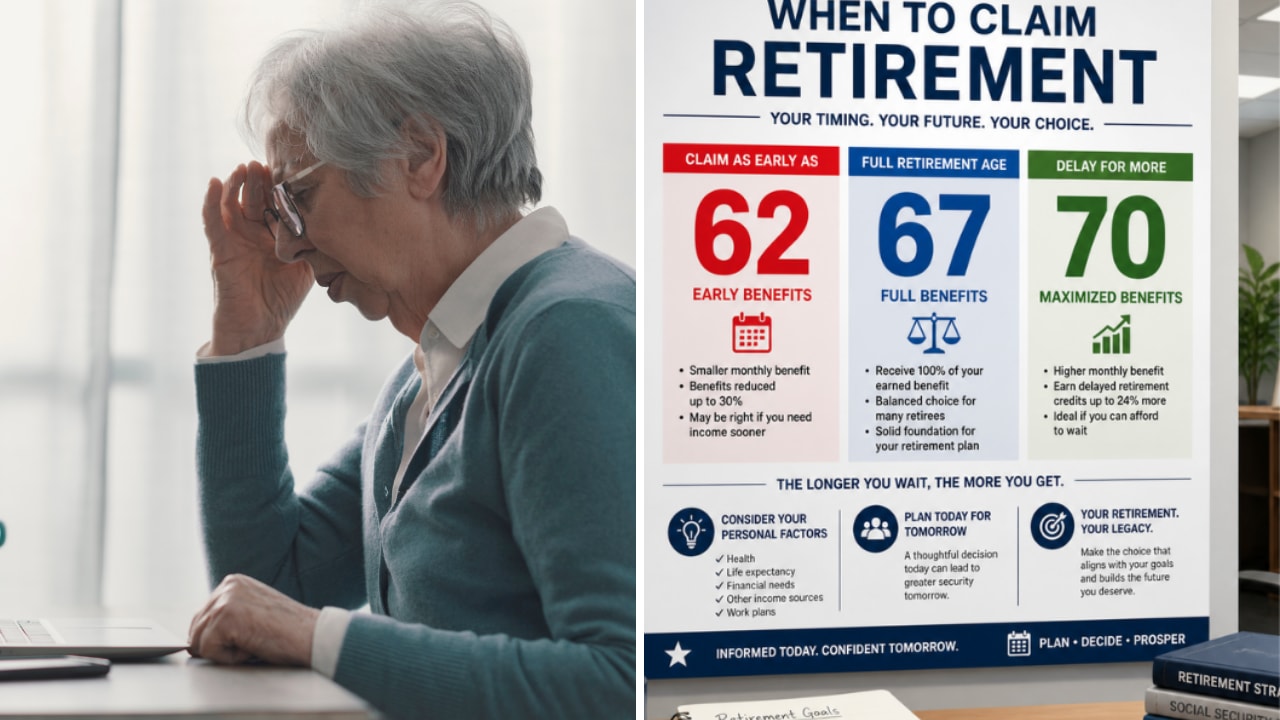
- A widow can start Social Security survivor benefits at 60, at a reduction of 28.5% of her late husband’s full benefit.
- A 60-year-old widow earning $60,000 whose late husband’s full benefit was $2,500 a month would be due $21,450 next year, but the earnings test holds back $17,220 of it and leaves her $4,230.
- The withheld months come back as a higher monthly benefit at full retirement age, or as early as 62 for a widow, but she never gets them as a lump sum.
- If her paycheck covers her bills, waiting to claim until she stops working or earns less looks like the better plan.
Social Security lets a widow start collecting survivor benefits as early as age 60. For someone who’s just lost a spouse, that check can be a lifeline. But if she’s still working, Social Security can hold back most of it, and the bigger her paycheck, the less of the benefit she actually sees.
A $2,500 benefit becomes $1,787.50 at 60
Let’s take a hypothetical 60-year-old widow who earns $60,000 a year at her job. Her late husband’s full benefit was $2,500 a month, and she’s thinking about claiming her survivor benefit next year rather than waiting.
Because she’s claiming at 60, Social Security cuts her benefit by the most it ever cuts a survivor benefit: 28.5% of her husband’s full benefit. So instead of $2,500, she’d get $1,787.50 a month, or $21,450 over a full year of checks. That’s real money for anyone, let alone someone who has just lost a household income. Before full retirement age, though, how much of it she actually receives depends on what she earns.
6 safe dividend stocks paying retirees 6%+ yields
There are over 100 stocks paying 6%+ annual dividends today.
But after an extensive investment review leveraging TIKR’s proprietary data, we now believe only six of them are truly safe for retirees.
They’re all yours for free as part of our new investment report, which you can access right here.
Then Social Security looks at her paycheck
Survivor benefits fall under the same earnings test as retirement benefits for anyone collecting before full retirement age. Social Security holds back $1 of benefits for every $2 a claimant earns above the limit, which is $25,560 for 2027. Her $60,000 salary is $34,440 over that line, and half of that is $17,220. Take that out of her $21,450 for the year, and she’s left with $4,230 of survivor benefits next year, on top of her paycheck.
Ouch. She’d be taking the deepest reduction Social Security makes on a survivor benefit, then collecting less than a fifth of it. And as long as she keeps earning well above the limit before full retirement age, she’d face a big holdback every year she works.
Fortunately, those months come back to her
The $17,220 doesn’t simply vanish. Once she reaches full retirement age, Social Security recalculates her benefit with the same reduction formula, but leaves out the months it withheld, so her monthly check goes up from then on. For a widow, it can also make that adjustment at 62, so she wouldn’t have to wait until full retirement age to see the first of that credit. She doesn’t have to apply for either one.
She gets no lump sum, though. Social Security credits the withheld months as a bigger monthly check, figured as though she hadn’t been paid early for those months. And it keeps the reduction for every month it does pay her before full retirement age, since she collected those months early.
What I’d do in her shoes
That leaves her with a choice next year: claim at 60 and collect $4,230 on top of her salary, or hold off until she stops working or earns less. If she waits, she’ll have fewer early months on her record and a bigger survivor check once she does start. If she claims, she has some money in hand now, and most of what Social Security holds back returns to her later as a higher monthly benefit.
Frankly, if her paycheck covers her bills, I’d wait. $4,230 is nice to have, but every month Social Security pays her at 60 shrinks her survivor check for good. If money’s tight, though, claiming now is a fine move, and the $17,220 holdback shouldn’t scare her off.
Either way, her salary is the number to watch. If she cuts back to part-time and earns $25,560 or less next year, Social Security holds back nothing, and she keeps the full $21,450.
Enjoy your retirement in style with these safe 6%+ dividend yields
Dividends can hold the key to enormous wealth. But only if you buy the right ones.
Picking the right high-yield dividend stock can be the difference between a dream retirement…and scraping by every month, waiting for the next Social Security check to clear.
We’ve identified six stocks yielding 6%+ that we believe every retiree should know about right now.
Disclaimer:
Please note that the articles on TIKR are not intended to serve as investment or financial advice from TIKR or our content team, nor are they recommendations to buy or sell any stocks. We create our content based on TIKR Terminal’s investment data and analysts’ estimates. Our analysis might not include recent company news or important updates. TIKR has no position in any of the stocks mentioned. Thank you for reading, and happy investing!