Key Takeaways
- Goldman Sachs cut its Robinhood price target to $115 from $128 on Nov. 13 and kept its Buy rating. That’s 41% above the Nov. 12 close of $81.35.
- Robinhood stock is down 39% over the past year. In the third quarter, crypto revenue fell 55% and revenue growth slowed to 12%.
- At 26x forward earnings, the stock trades near the low end of its range since mid-2023. $115 needs a return to its three-year average of 36x on current forward earnings.
- A 2027 earnings jump would make $115 reachable, but most of Robinhood’s revenue still depends on customers trading.
Robinhood Markets (HOOD) stock is down 39% over the past year, and Goldman Sachs just trimmed its expectations again.
On Nov. 13, Goldman analyst James Yaro cut his price target to $115 from $128 and kept his Buy rating. Even after the cut, that’s 41% above the Nov. 12 close of $81.35.
Crypto Dried Up, and Robinhood’s Growth Slowed With It
In its third-quarter report on Oct. 27, Robinhood grew revenue 12% to a record $1.42 billion, down from 32% growth in the second quarter. Crypto revenue fell 55% to $120 million, and net interest revenue fell 9%. Operating expenses rose 16%, faster than revenue, and diluted EPS dropped 16% to $0.51.
Then a crypto-led selloff knocked the stock down 10% on Nov. 5. Prediction markets carry their own risk. Politico reported on Nov. 10 that the CFTC had warned Kalshi it could face charges, and InGame estimated this summer that about 60% of Robinhood’s prediction-market volume went to Kalshi.
Goldman’s Second Cut in Two Weeks
Yaro had already lowered his target to $128 from $145 on Oct. 28, the day after the report. In September, Goldman’s case leaned on Rothera, Robinhood’s prediction-market exchange with Susquehanna. So far it has delivered, passing $100 million in annualized revenue in its first full quarter. Cantor Fitzgerald cut too, to $120 from $150 on Nov. 2. Goldman now sits 11% below the $129 consensus target.
TIKR Tracks 32 Analysts on Robinhood. How Many Say “Buy”?
See the full breakdown of Buy, Hold, and Sell ratings on Robinhood, along with Wall Street’s revenue and earnings estimates, all in one place. More than 500,000 investors use TIKR to research stocks like this one. See Robinhood’s Analyst Ratings
Does $115 Add Up for Robinhood Stock?
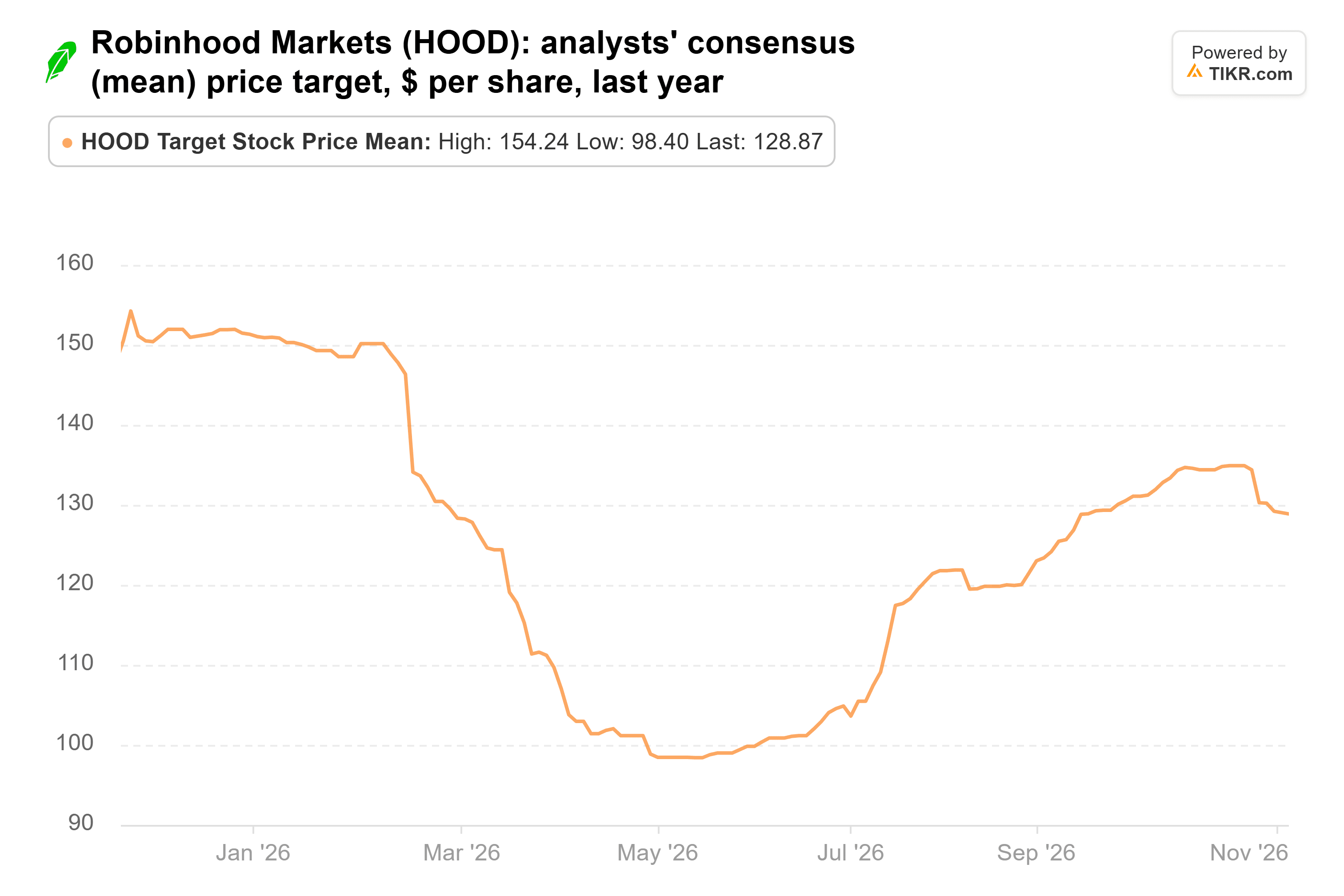
The consensus target has fallen from $151 to $129 over the past year. It bottomed at $98 in May before analysts lifted it again over the summer, and targets now run from $59 to $170.
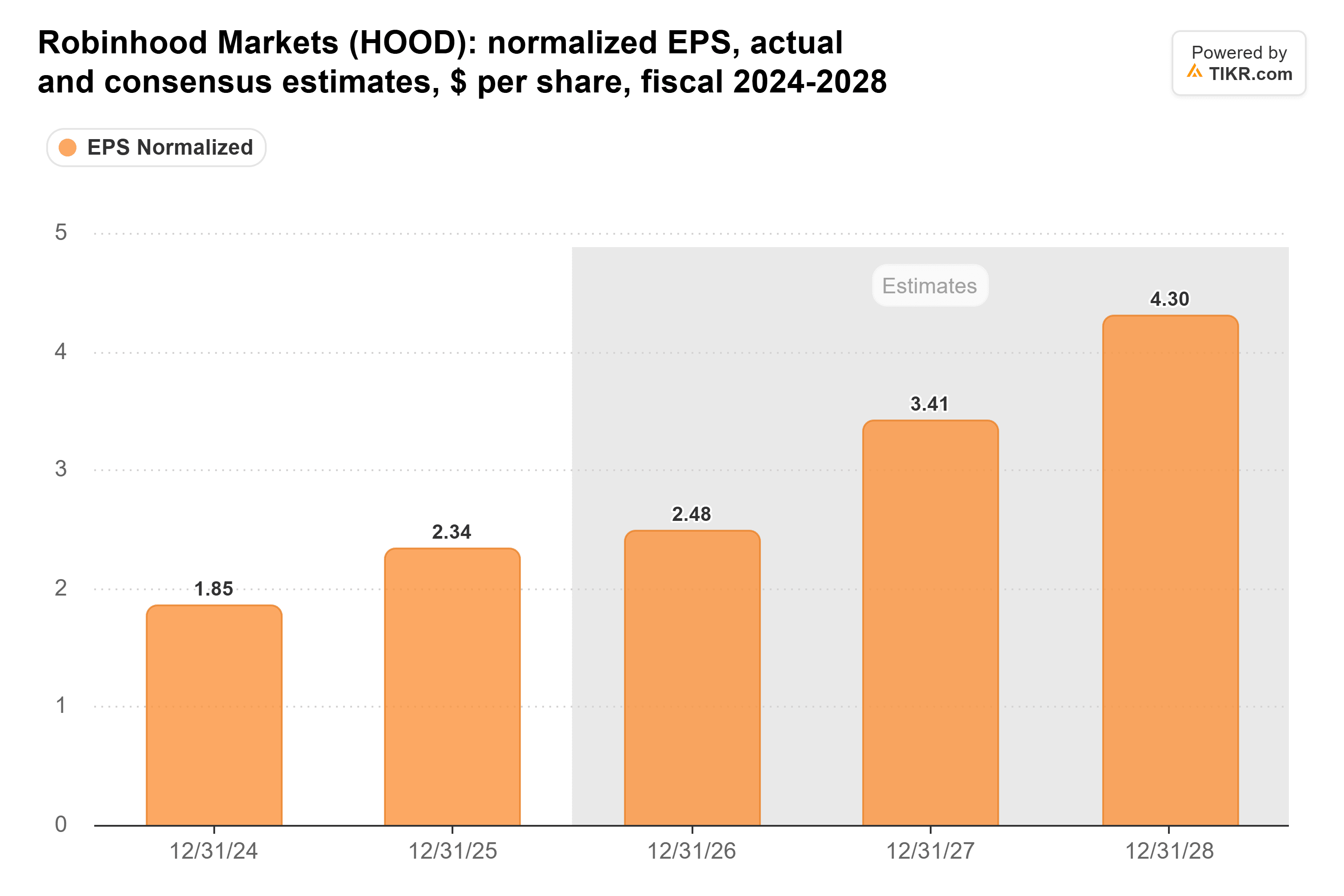
Earnings estimates have gone the other way. Analysts expect normalized EPS to climb from $2.48 this year to $3.41 in 2027:
A wider consensus agrees: its 2027 estimate rose to $2.93 from $2.70 over three months, while this year’s $2.10 has barely moved.
At $81.35, Robinhood trades at 26x the $3.14 a share analysts expect over the next 12 months, near the low end of its range since mid-2023. For $115 to work on those same forward earnings, the multiple has to climb back to about 36x, its three-year average. Hold today’s 26x instead, and forward earnings would need to rise 41%.
The Bottom Line on Robinhood’s $115 Target
The catch is that Robinhood earned that 36x average while revenue grew 52% in 2025. At 12% growth, that multiple is harder to win back. It also still lives on trading: $867 million of its $1.42 billion in third-quarter revenue came from transactions, leaving it exposed to weaker customer trading activity.
Still, $115 sits below the consensus, and the earnings growth is already in the estimates. I think the target is realistic within a year if the 2027 earnings jump shows up, growth stops slowing, and investors pay more than today’s 26x again. Fourth-quarter results early next year are the next check, especially whether revenue growth picks back up from 12%.
So What Is Robinhood Stock Actually Worth?
TIKR lets you forecast the future price of any stock in less than a minute. Just enter a few assumptions into TIKR’s valuation model and see what Robinhood could be worth. Start from Wall Street consensus estimates, or adjust the inputs to reflect your own view of the business. It’s free to use.
Disclaimer:
Please note that the articles on TIKR are not intended to serve as investment or financial advice from TIKR or our content team, nor are they recommendations to buy or sell any stocks. We create our content based on TIKR Terminal’s investment data and analysts’ estimates. Our analysis might not include recent company news or important updates. TIKR has no position in any of the stocks mentioned. Thank you for reading, and happy investing!