Key Takeaways
- Peter Schiff says banks hold $2 trillion of unrealized mortgage losses as the 10-year yield nears 5%.
- Bank of America’s paper losses topped $109 billion, and its capital is the pressure point.
- JPMorgan trades near its high multiple of tangible book.
The 10-year Treasury yield is back near 5% after a hot inflation report on Nov. 10, and Peter Schiff says that’s a bigger problem for banks than it looks. Big holders of low-rate mortgage bonds like Bank of America (BAC) feel it first, and it tests how much bad news JPMorgan Chase (JPM) holders have priced in.
Schiff, chief economist at Euro Pacific Asset Management, posted on X that banks have “$2 Trillion in Mortgage Losses.” Then he added: “The banks are losing money on 100% of their mortgages, even if not one of them defaults.”
Schiff’s Number Is Six Times the FDIC’s
The FDIC put banks’ unrealized losses on securities at $326.7 billion at the end of June, about a sixth of Schiff’s figure. But Schiff is talking about mortgages overall, not just the bonds in banks’ securities portfolios, so the two numbers aren’t directly comparable. A 3% mortgage is worth less when the 10-year pays 5%, even without a missed payment.
Bank of America’s unrealized losses on debt securities topped $109 billion in the third quarter, up 28% from the end of June, according to its filings. Most of those bonds are held to maturity, so their losses don’t touch book value unless sold. Tangible book value per share rose 3% in a year, to $29.14.
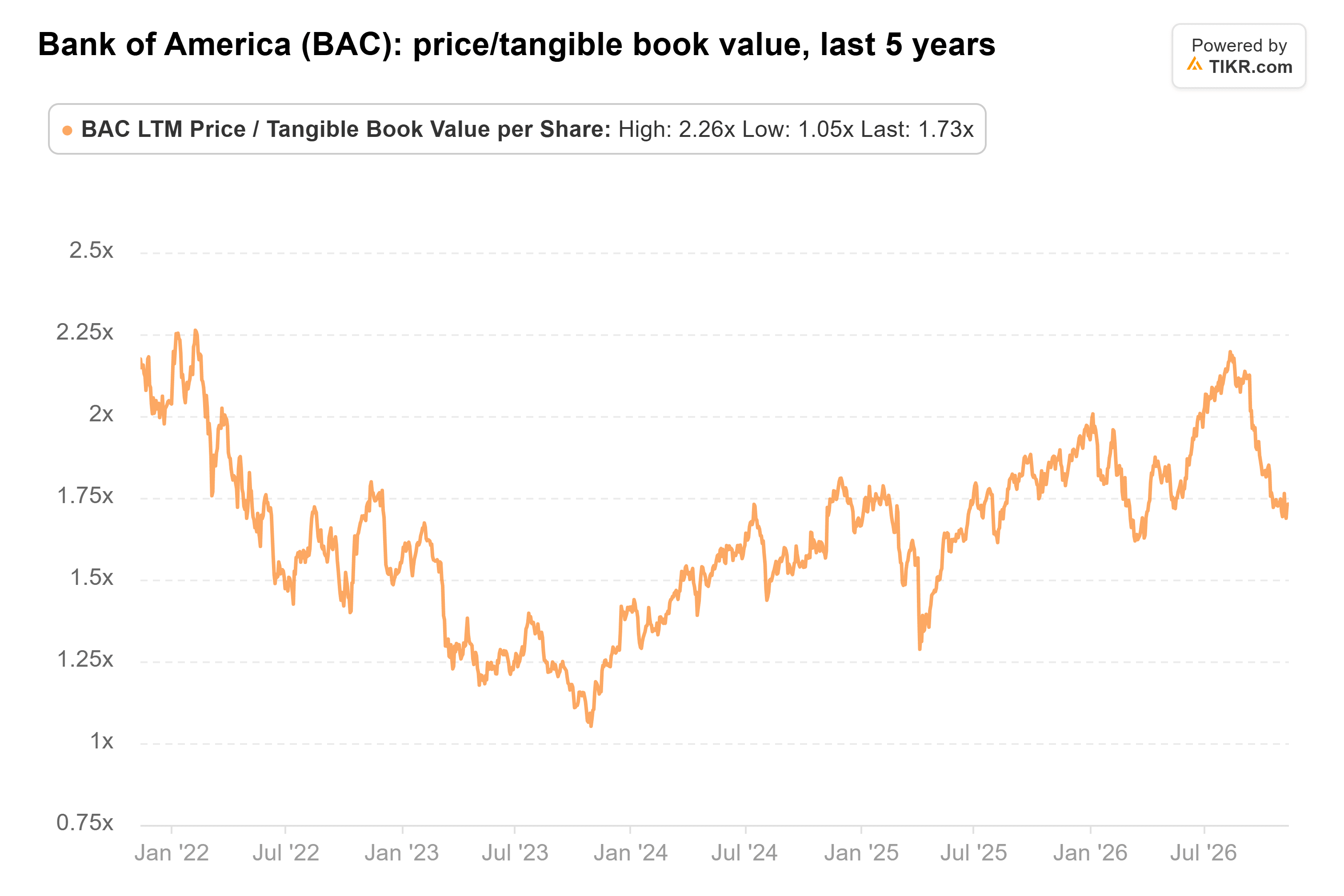
The stock trades at 1.7x tangible book, close to its five-year average of 1.6x. It bottomed at 1.1x in October 2023, when these losses topped $131 billion:
The Losses Come Due as Lost Income
The real cost is the income Bank of America gave up by locking in low yields, and it shrinks as those bonds pay off. Management said in January that $12 billion to $15 billion of mortgage securities and loans would roll off each quarter this year, allowing reinvestment at yields 150 to 200 basis points higher or repayment of expensive short-term debt. Net interest income rose 8% in the third quarter, to $16.4 billion.
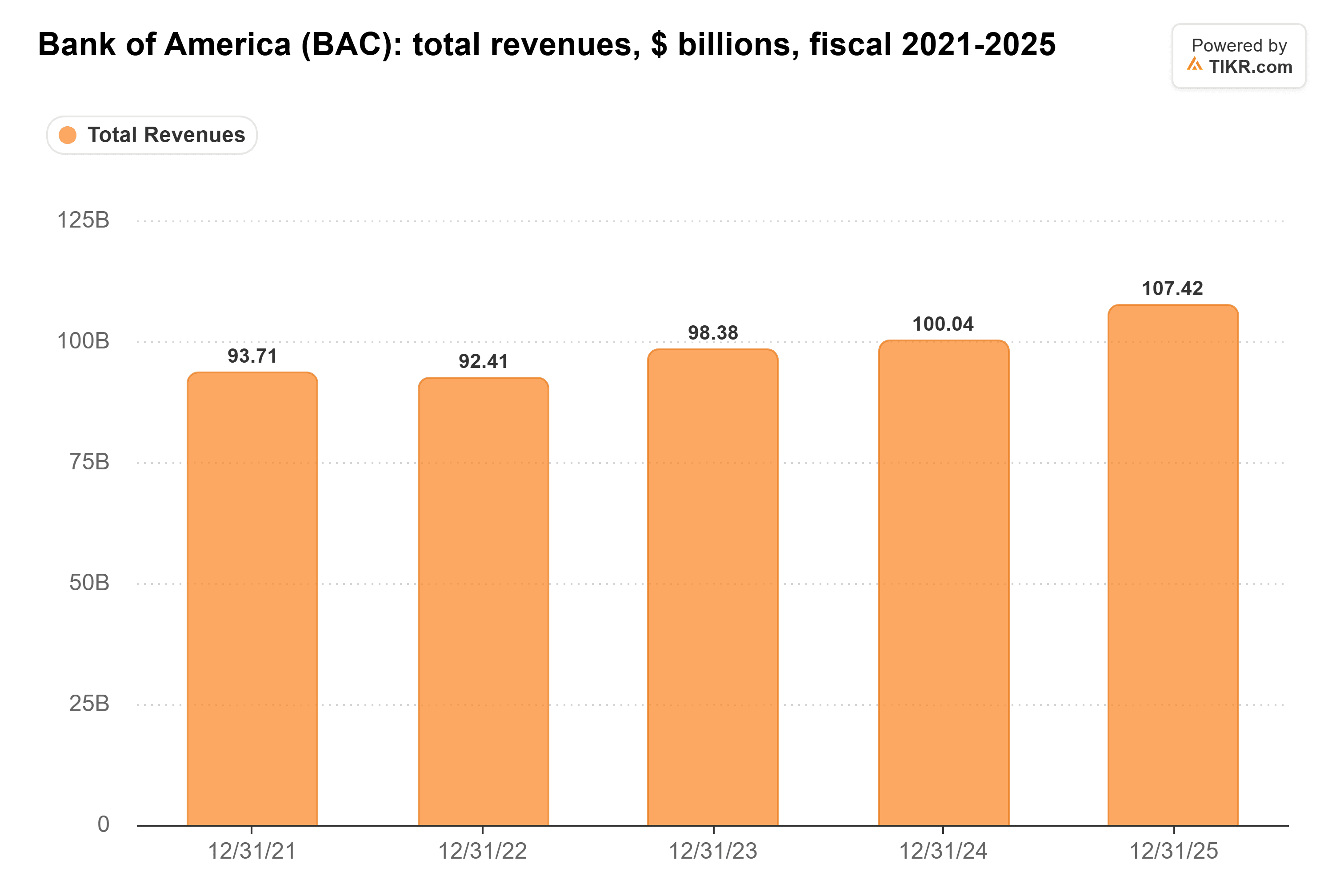
Total revenue grew from $92.4 billion in 2022 to $107 billion in 2025:
TIKR Tracks 25 Analysts on Bank of America. How Many Say “Buy”?
See the full breakdown of Buy, Hold, and Sell ratings on Bank of America, along with Wall Street’s revenue and earnings estimates, all in one place. More than 500,000 investors use TIKR to research stocks like this one. See Bank of America’s Analyst Ratings
Bank of America’s Capital Is the Pressure Point
Bank of America’s CET1 ratio fell to 10.9%, from 11.6% a year earlier, and CET1 capital fell $3.2 billion from June. On Jan. 1, its minimum rises to 10.5%, and management’s 50-basis-point cushion points to 11.0%. That leaves less room for the $6 billion a quarter it has been spending on buybacks.
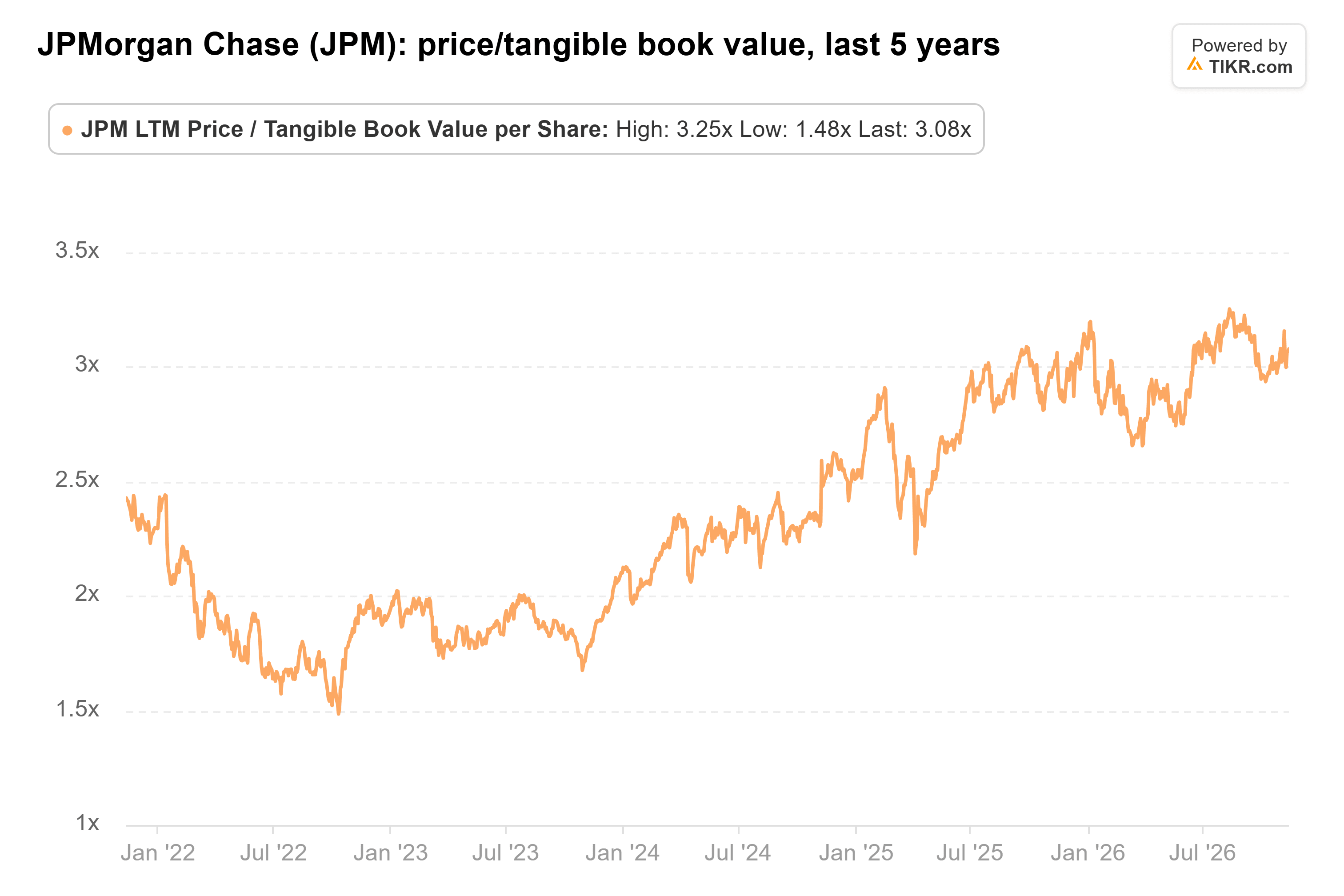
JPMorgan is far stronger, with a 13.9% CET1 ratio and tangible book value per share up 7%, to $112.64. It cut net buybacks to $664 million last quarter. Investors pay for that: at 3.1x tangible book, JPMorgan trades well above its five-year average of 2.3x and close to its 3.3x high from August:
Schiff’s Bank Losses Are a Slow Leak
Schiff is right that banks are paying for cheap mortgages they piled into, and a 5% 10-year raises the bill. But they pay it over years, in lower income and slower buybacks. Bank of America’s held-to-maturity losses mainly represent an earnings opportunity cost; its tighter capital cushion reflects separate pressures, including available-for-sale securities losses, shareholder payouts and loan growth. At 1.7x tangible book, I think its stock reflects some of that risk. JPMorgan’s balance sheet can absorb Schiff’s losses. At 3.1x, its stock can’t absorb much else going wrong.
Bank of America’s mid-January report will show whether its capital can keep up if the 10-year stays above 5%.
So What is Bank of America Stock Actually Worth?
TIKR lets you forecast the future price of any stock in less than a minute. Just enter a few assumptions into TIKR’s valuation model and see what Bank of America could be worth. Start from Wall Street consensus estimates, or adjust the inputs to reflect your own view of the business. It’s free to use.
Value Bank of America for free
Disclaimer:
Please note that the articles on TIKR are not intended to serve as investment or financial advice from TIKR or our content team, nor are they recommendations to buy or sell any stocks. We create our content based on TIKR Terminal’s investment data and analysts’ estimates. Our analysis might not include recent company news or important updates. TIKR has no position in any of the stocks mentioned. Thank you for reading, and happy investing!