Key Takeaways
- Oracle stock is down 47% in 2026 and hit a fresh 52-week low as the cost of insuring its debt against default reached a record.
- The same AI credit fears have hit CoreWeave, whose debt insurance also hit a record, and Nvidia, which sells both companies their chips.
- A bankruptcy call goes too far: Oracle says its OpenAI contract is fully funded, and its operating income covers its interest nearly 5x.
- Analysts expect $17.5 billion of free cash flow in fiscal 2029, well short of Oracle’s target of more than $30 billion, so the mid-December report is the next test.
Oracle (ORCL) stock is down 47% in 2026, and it hit a fresh 52-week low on Wednesday after the cost of insuring its debt against default hit a record overnight.
The cost of insuring CoreWeave (CRWV) debt hit a record too. CoreWeave is down 41% in 2026, and Nvidia (NVDA), which sells the chips both companies are borrowing to buy, is down 20%.
George Noble, managing partner of Noble Capital Advisors and former manager of the Fidelity Overseas Fund, went further on this week’s episode of the Prof G Markets podcast: “I think there’s a reasonable chance Oracle goes bankrupt.” (He’s also said on X that his firm went short Oracle last December.)
TIKR tracks 42 analysts on Oracle. How many say “Buy”?
See the full breakdown of Buy, Hold, and Sell ratings on Oracle, along with Wall Street’s revenue and earnings estimates, all in one place. More than 500,000 investors use TIKR to research stocks like this one. See Oracle’s Analyst Ratings
A credit story since June
Oracle’s slide started with its fourth-quarter report in June. Fiscal 2026 free cash flow was negative $23.7 billion as capex rose 162% to $55.7 billion, and Oracle planned to raise about $40 billion, including $20 billion of stock.
Growth didn’t fix it. Cloud infrastructure revenue rose 121% in the quarter ended Aug. 31, and remaining performance obligations reached $664 billion, but free cash flow was still negative $5 billion.
Then November piled on. Oracle sold $20 billion of stock and bonds on Nov. 2, the whole cap on new raises through fiscal 2030 that it set at its Oct. 28 Investor Day. It also cancelled a Tencent deal worth about $7 billion, the Financial Times reported, and Bloomberg reported that Microsoft is winding down a deal to rent older chips from Oracle.
Analysts don’t expect free cash flow to turn positive until fiscal 2029:
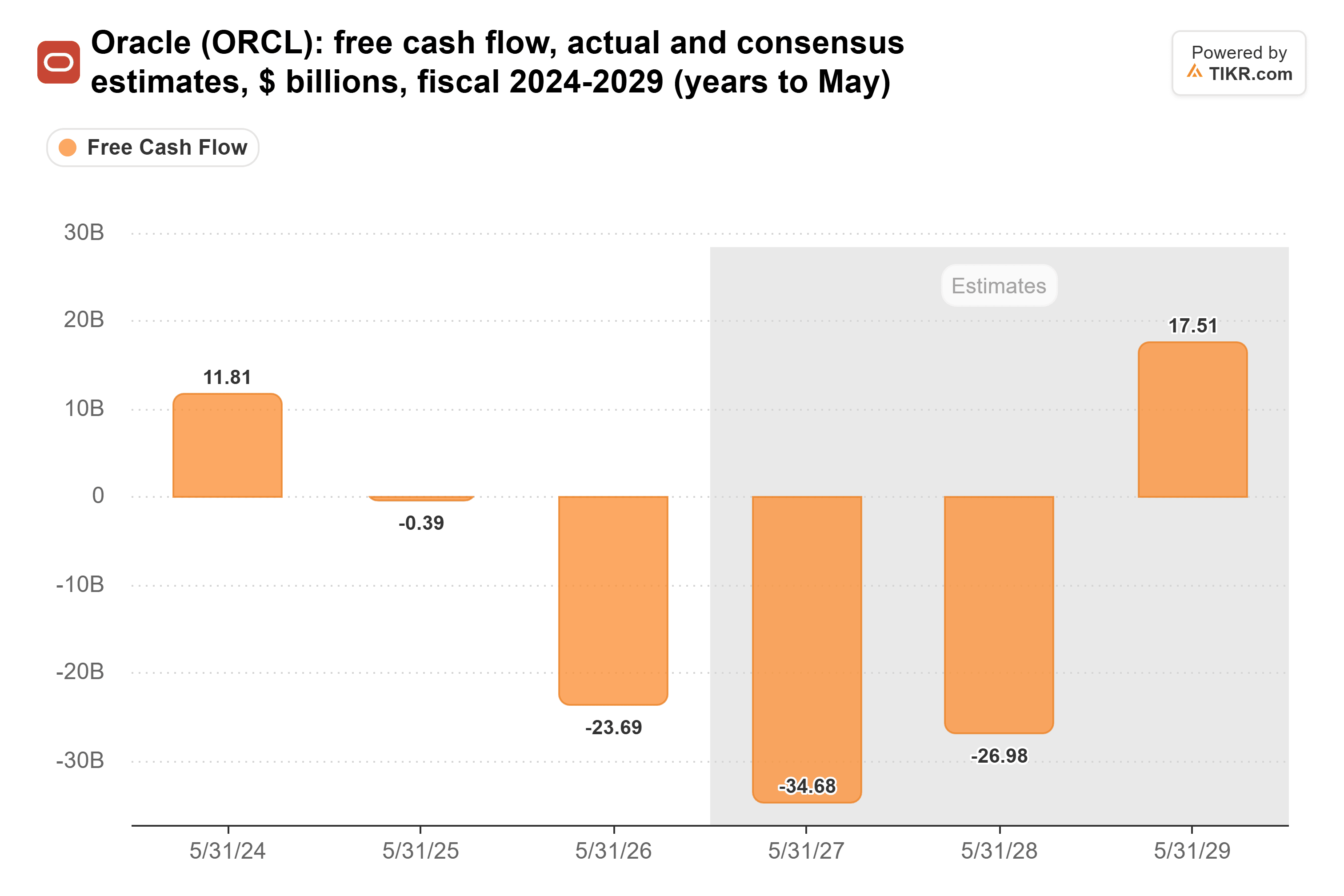
And their $17.5 billion for that year is well short of Oracle’s target of more than $30 billion.
Oracle has the OpenAI build paid for
On Nov. 20, Oracle said its OpenAI contract is fully funded after what it called its final raise, and it called reports saying otherwise “incorrect and wrong.” At Investor Day, it set the second half of fiscal 2028 as the date for positive free cash flow and promised more than $30 billion of it in fiscal 2029.
And Oracle still earns its interest several times over. In the quarter ended Aug. 31, GAAP operating income of $6.7 billion was nearly 5x its $1.4 billion of interest expense. CoreWeave’s third-quarter operating income of $207 million didn’t cover its $846 million of net interest expense, so it needs its lenders far more than Oracle does.
Still, total debt, leases included, reached $167 billion in fiscal 2026. S&P rates Oracle BBB-, one notch above junk, and S&P has said about half of Oracle’s backlog is OpenAI. That’s why Nvidia matters here: as finance chief, Colette Kress reportedly opposed a proposed $250 billion credit backstop for OpenAI. Now that Jensen Huang is back as CEO, investors will want to know whether that support comes back.
December’s report is the next test
Oracle traded at about 13x forward earnings before Wednesday’s drop, well below its five-year average of 21x:
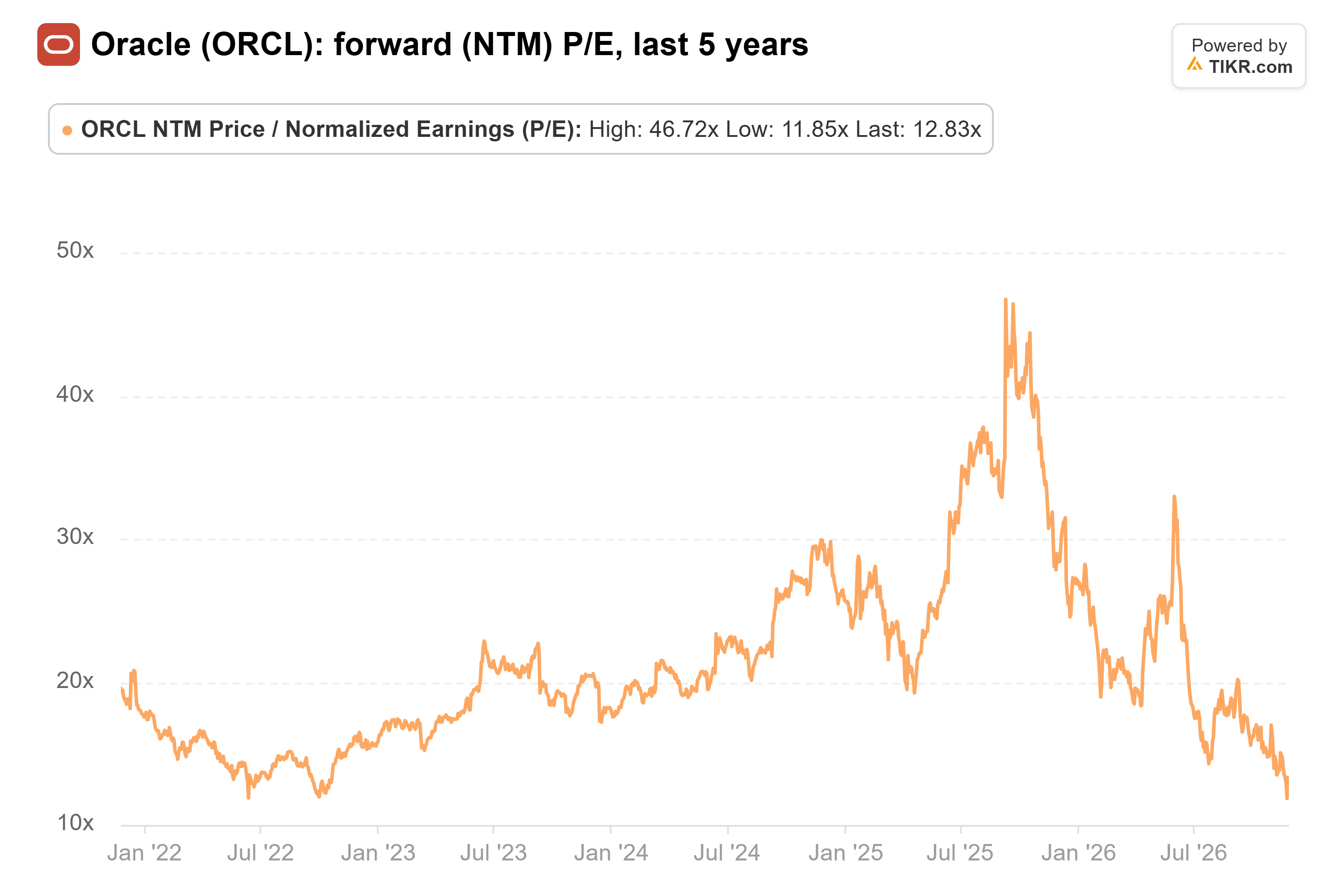
Analysts’ average price target of $236 is more than twice the current price.
The way I see it, Noble’s bankruptcy call goes too far. But consensus still sits $12.5 billion below Oracle’s fiscal 2029 cash target. At under 13x earnings, the stock is a buy only for investors comfortable betting that management hits its own dates.
Oracle reports its fiscal second quarter in mid-December, guiding for revenue growth of 30% to 34% and cloud growth of 65% to 71%. Results inside those ranges, would keep the plan on track. Of course, an S&P cut would push Oracle’s bonds below investment grade and change the math fast.
So what is Oracle stock actually worth?
TIKR lets you forecast the future price of any stock in less than a minute. Just enter a few assumptions into TIKR’s valuation model and see what Oracle could be worth. Start from Wall Street consensus estimates, or adjust the inputs to reflect your own view of the business. It’s free to use.
Disclaimer:
Please note that the articles on TIKR are not intended to serve as investment or financial advice from TIKR or our content team, nor are they recommendations to buy or sell any stocks. We create our content based on TIKR Terminal’s investment data and analysts’ estimates. Our analysis might not include recent company news or important updates. TIKR has no position in any of the stocks mentioned. Thank you for reading, and happy investing!