Key Takeaways
- The Information reports that Nvidia’s interim CEO, Colette Kress, pushed back on a proposed $250 billion credit backstop for OpenAI while she was finance chief, and that Nvidia is expected to slow its AI investment strategy.
- Oracle has the most at stake: Steve Eisman puts about half of its $664 billion backlog with OpenAI, and its free cash flow was negative $23.7 billion in the year ended May 2026.
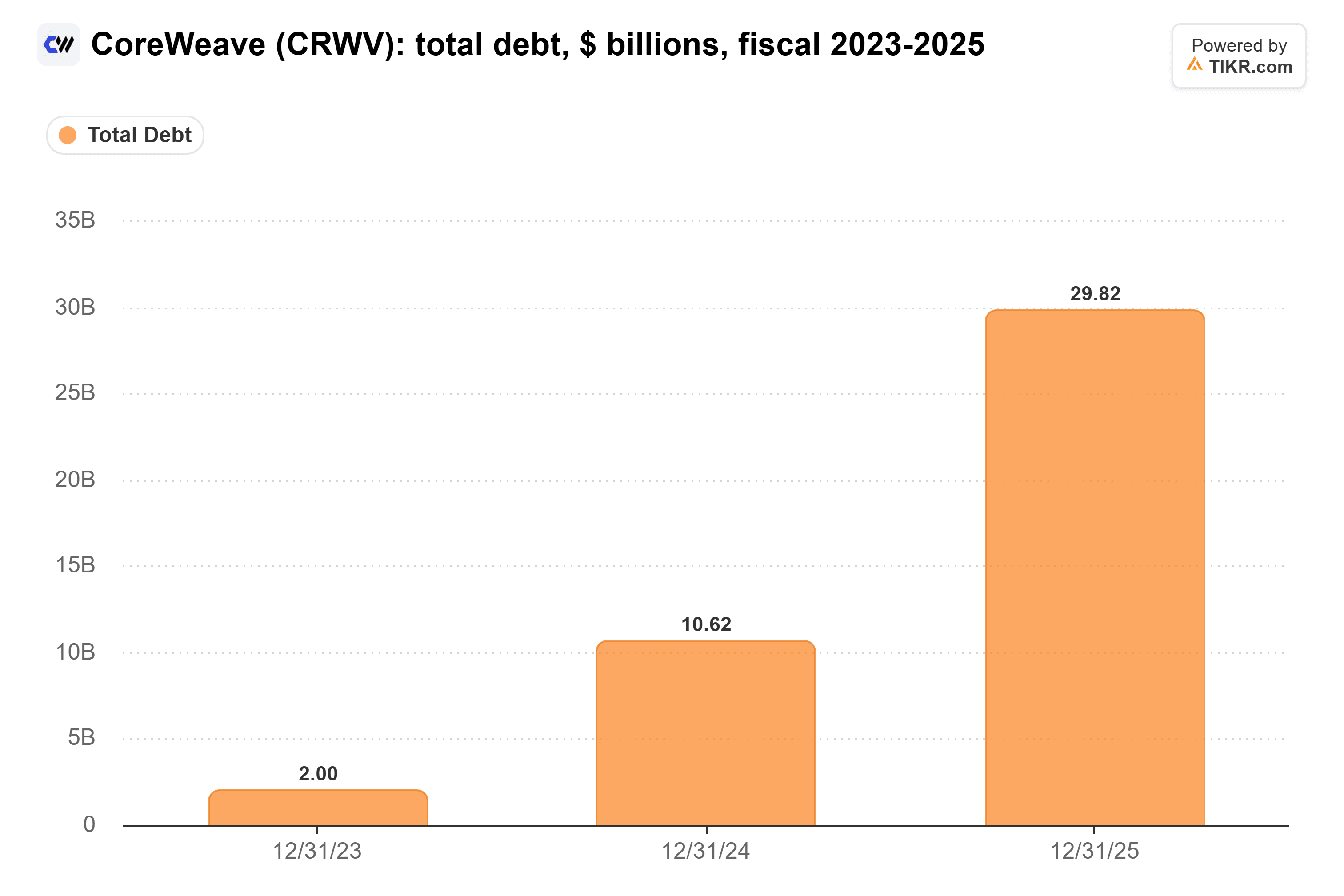
- CoreWeave has less of its order book tied to OpenAI, but its total debt rose to $29.8 billion at the end of 2025.
- The backstop was only a proposal, so the next thing to watch is what Kress says about Nvidia’s financing plans when it reports on Nov. 17.
Nvidia (NVDA) has a new boss, and she reportedly wasn’t a fan of one of Jensen Huang’s biggest bets.
As Nvidia’s finance chief, Colette Kress “pushed back on a proposed $250 billion credit backstop for OpenAI that Jensen Huang had championed,” The Information reported on Nov. 12, the day she became interim CEO. It also reports that Nvidia is expected to slow its aggressive AI investment strategy now that Huang is gone.
The companies with the most to lose are the ones building OpenAI’s compute: Oracle (ORCL), whose backlog leans heavily on OpenAI, and CoreWeave (CRWV), which took on billions in debt to do it.
TIKR tracks 61 analysts on Nvidia. How many say “Buy”?
See the full breakdown of Buy, Hold, and Sell ratings on Nvidia, along with Wall Street’s revenue and earnings estimates, all in one place. More than 500,000 investors use TIKR to research stocks like this one. See Nvidia’s Analyst Ratings
Nvidia had become AI’s lender of last resort
Huang could afford to play banker because Nvidia’s free cash flow rose from $3.8 billion in the year ended January 2023 to $96.7 billion in the year ended January 2026:
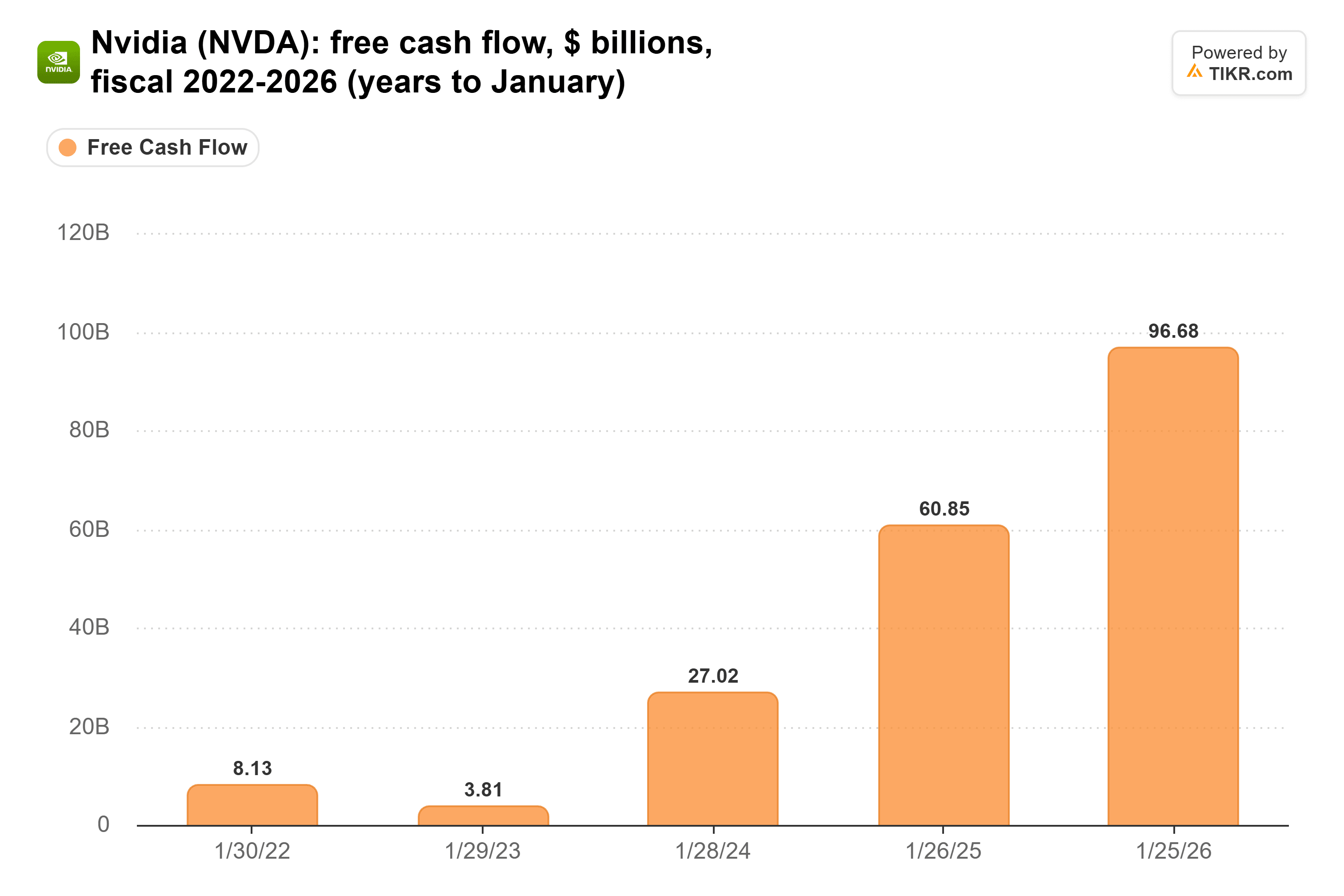
Plenty of that cash went back out to customers. On July 26, Nvidia held $99 billion of investments and had committed another $25 billion. Its latest 10-Q puts its maximum exposure on a guarantee of OpenAI’s Ohio data center leases with SB Energy at $105 billion.
Huang’s bigger plan was to bring in outside money through a $500 billion partnership with six asset managers. Bloomberg reported that the partnership “has not resulted in any deals after months, with some customers and partners calling for the company to boost the size of its financing backstop.”
So customers were asking Nvidia for more help just as its new boss looks set to offer less.
Oracle has the most riding on OpenAI
Oracle’s remaining performance obligations reached $664 billion at the end of its fiscal first quarter on Aug. 31. And as Steve Eisman said on The Real Eisman Playbook, “around 50% of that backlog is from OpenAI alone.”
Oracle builds the capacity for that backlog before it gets paid. Its free cash flow went from $11.8 billion in the year ended May 2024 to negative $23.7 billion in the year ended May 2026:
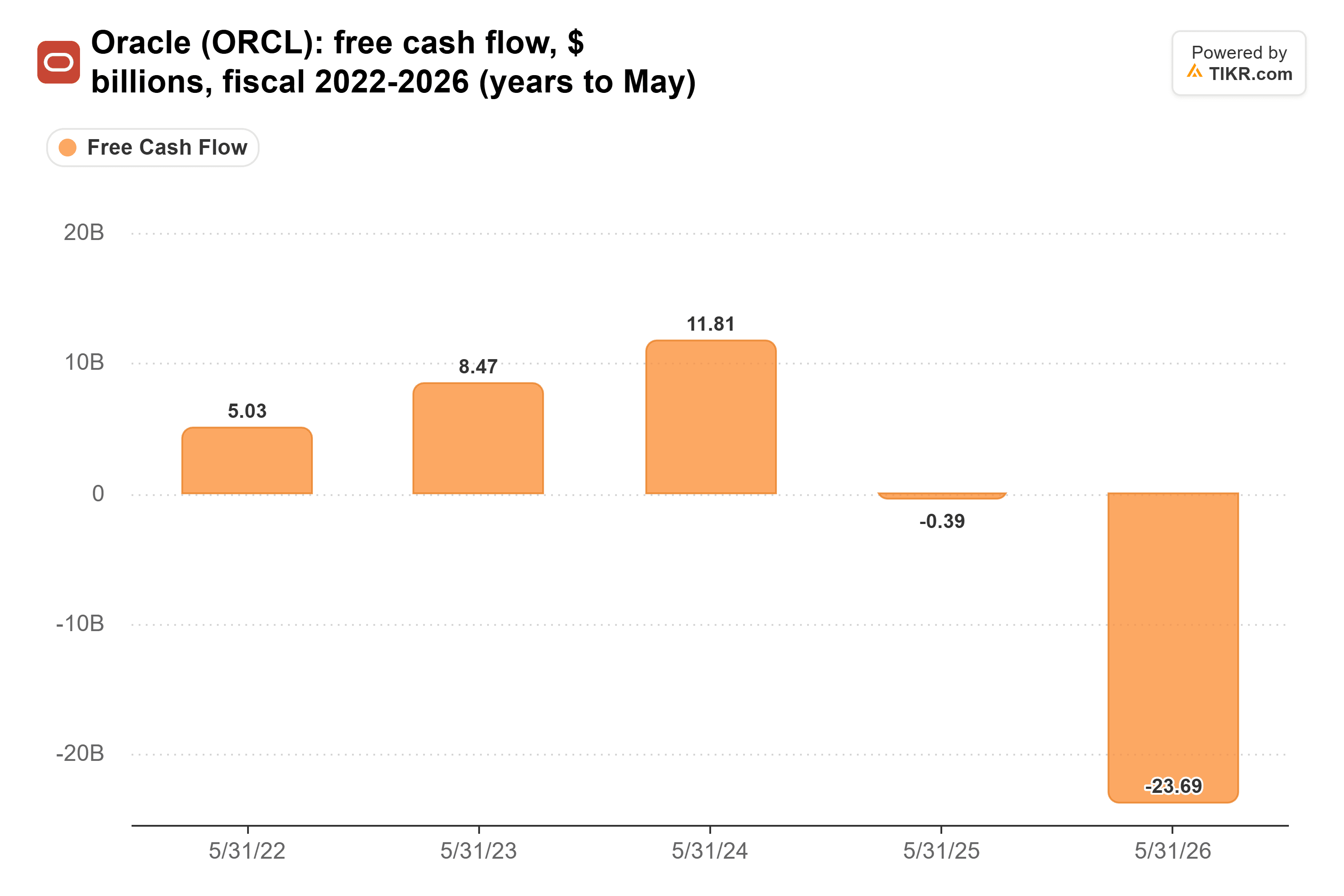
Oracle also finished selling $20 billion of stock through an at-the-market offering in its fiscal first quarter. So it’s already asking shareholders to help pay for a backlog that leans on one customer.
CoreWeave is in a similar spot, with less of its order book tied to OpenAI. Eisman puts OpenAI at over 20% of CoreWeave’s contracted order book. But CoreWeave’s total debt went from $2.0 billion at the end of 2023 to $29.8 billion at the end of 2025:
That’s a lot of borrowing to carry if OpenAI’s commitments start to look less certain.
OpenAI still has other money, for now
The $250 billion backstop was only ever a proposal, so losing it doesn’t change a dollar of what OpenAI owes Oracle or CoreWeave today. Oracle is also pushing more of the risk onto its customers. “We closed more than $30 billion of additional AI contracts in Q1 without requiring additional capital from Oracle,” co-CEO Clay Magouyrk said when Oracle reported its fiscal first quarter in September.
But the private money behind OpenAI looks thinner than it did. Dylan Patel, founder and CEO of SemiAnalysis, said on TBPN that the labs are going public, and that “OpenAI probably just did their last round. It wasn’t that great.”
I suspect lenders will ask OpenAI for more without Nvidia’s balance sheet behind it. Every extra dollar OpenAI spends on borrowing is a dollar it can’t spend on Oracle’s capacity.
Oracle is the one to watch
Oracle has the most at stake here. It has the biggest backlog tied to OpenAI, its free cash flow is deep in the red from building for it, and it has already sold new stock to help pay for it. CoreWeave’s debt has grown fast, but less of its business depends on OpenAI.
The way I see it, Oracle’s $664 billion backlog is only as good as OpenAI’s ability to pay, and Nvidia now looks a lot less likely to help make sure it can.
Nvidia reports on Nov. 17. What Kress says then about the asset-manager partnership and the OpenAI guarantee should show how far the pullback goes. Of course, she’s the interim CEO, and a permanent one could see it differently.
So what is Oracle stock actually worth?
TIKR lets you forecast the future price of any stock in less than a minute. Just enter a few assumptions into TIKR’s valuation model and see what Oracle could be worth. Start from Wall Street consensus estimates, or adjust the inputs to reflect your own view of the business. It’s free to use.
Disclaimer:
Please note that the articles on TIKR are not intended to serve as investment or financial advice from TIKR or our content team, nor are they recommendations to buy or sell any stocks. We create our content based on TIKR Terminal’s investment data and analysts’ estimates. Our analysis might not include recent company news or important updates. TIKR has no position in any of the stocks mentioned. Thank you for reading, and happy investing!