Key Takeaways
- Jensen Huang reportedly called Nvidia’s wafer and memory commitments an “avalanche.” Michael Burry reads it as chips flooding Nvidia.
- Nvidia’s supply commitments more than doubled in a quarter to $279 billion, and labs it finances should contribute toward roughly a quarter of next year’s business.
- If that financing slows, a glut hits inventory and margin first.
Nvidia (NVDA) announced on Nov. 12 that Jensen Huang had resigned as CEO. Now we know what worried him.
The Wall Street Journal reported that at an August meeting, Huang said the wafers and memory Nvidia had committed to buy were coming at him like an “avalanche.” Those wafers come from Taiwan Semiconductor Manufacturing (TSM), which counted on Nvidia for about 19% of its 2025 sales.
Michael Burry responded on X: “the real story is not hard to see – an avalanche of chips flooding NVIDIA even as cloud customers run from those same chips.”
Nvidia’s Own Money Helped Build the Demand
Anissa Gardizy put it plainly on X: “Nvidia’s plans to fund the AI boom with its balance sheet were running into problems.” Nvidia has put nearly $50 billion into frontier AI labs and guaranteed up to $105 billion of OpenAI’s Ohio leases. In August, management said labs it backs with its balance sheet should contribute toward roughly a quarter of next year’s business.
The Information reported that Nvidia is expected to slow its AI investments after Huang’s exit, putting startup funding and credit guarantees at risk.
Analysts expect normalized EPS to more than triple, from $4.77 in the year ended January 2026 to $15.85 in the year ending January 2028.
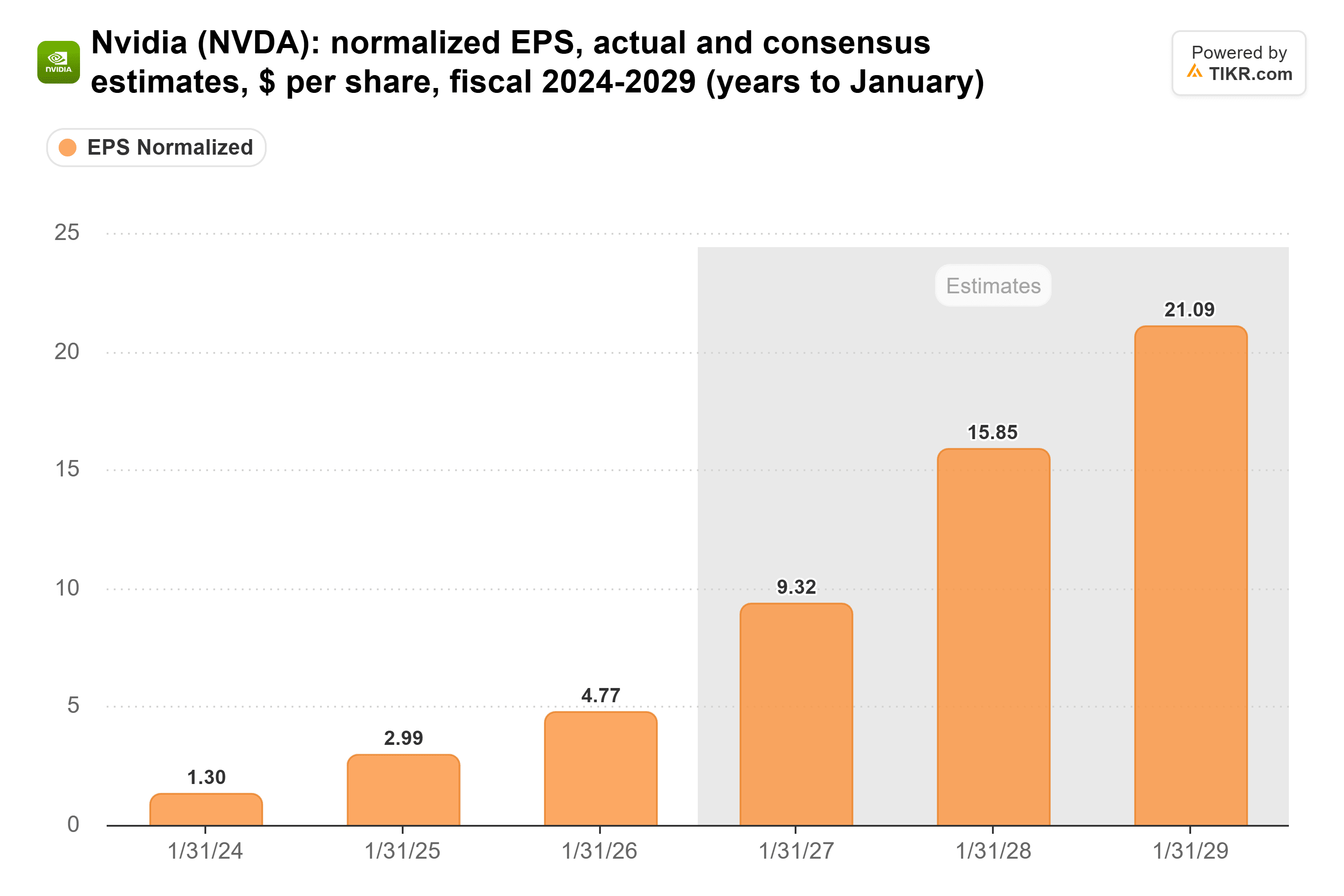
With a quarter of that year’s business tied to labs Nvidia finances, $15.85 is the number I’d watch.
TIKR Tracks 61 Analysts on Nvidia. How Many Say “Buy”?
See the full breakdown of Buy, Hold, and Sell ratings on Nvidia, along with Wall Street’s revenue and earnings estimates, all in one place. More than 500,000 investors use TIKR to research stocks like this one. See Nvidia’s Analyst Ratings
The Avalanche Lands on Nvidia’s Balance Sheet
Inventory has more than quadrupled in under two years, to $31.6 billion on July 26, 2026.
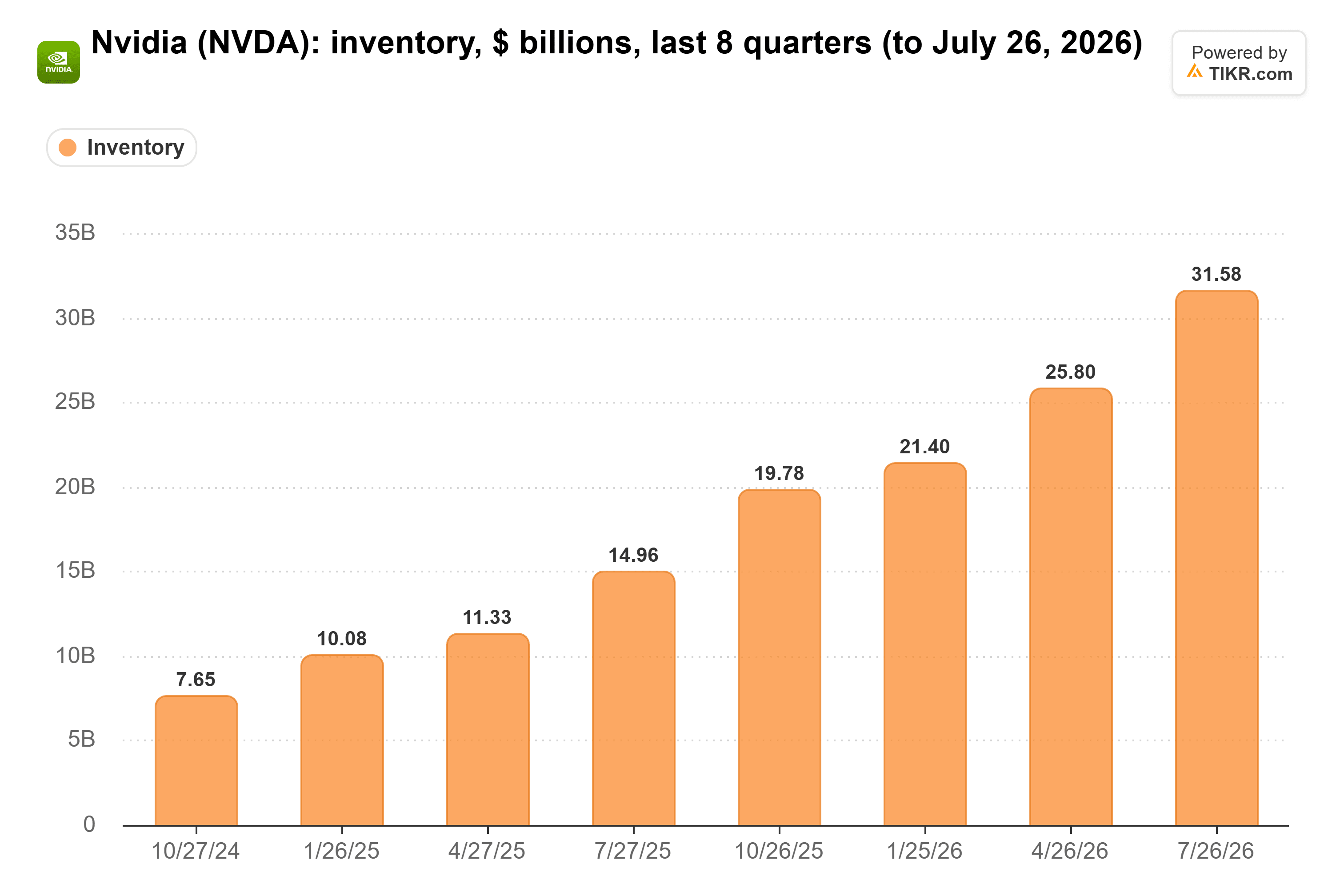
Still, it rose 111% year over year in the July quarter, in line with revenue’s 106%.
The commitments are bigger: $279 billion on July 26, up from $119 billion three months earlier, with $175 billion due over the following two fiscal years. Some can be rescheduled, but they’re Nvidia’s obligations, not its customers’. If the labs buy less, chips pile up at Nvidia, and TSMC sees smaller orders later.
Nvidia’s 75% Margin Has the Most to Lose
Gross margin has held around 75% for three quarters, after one big dip.
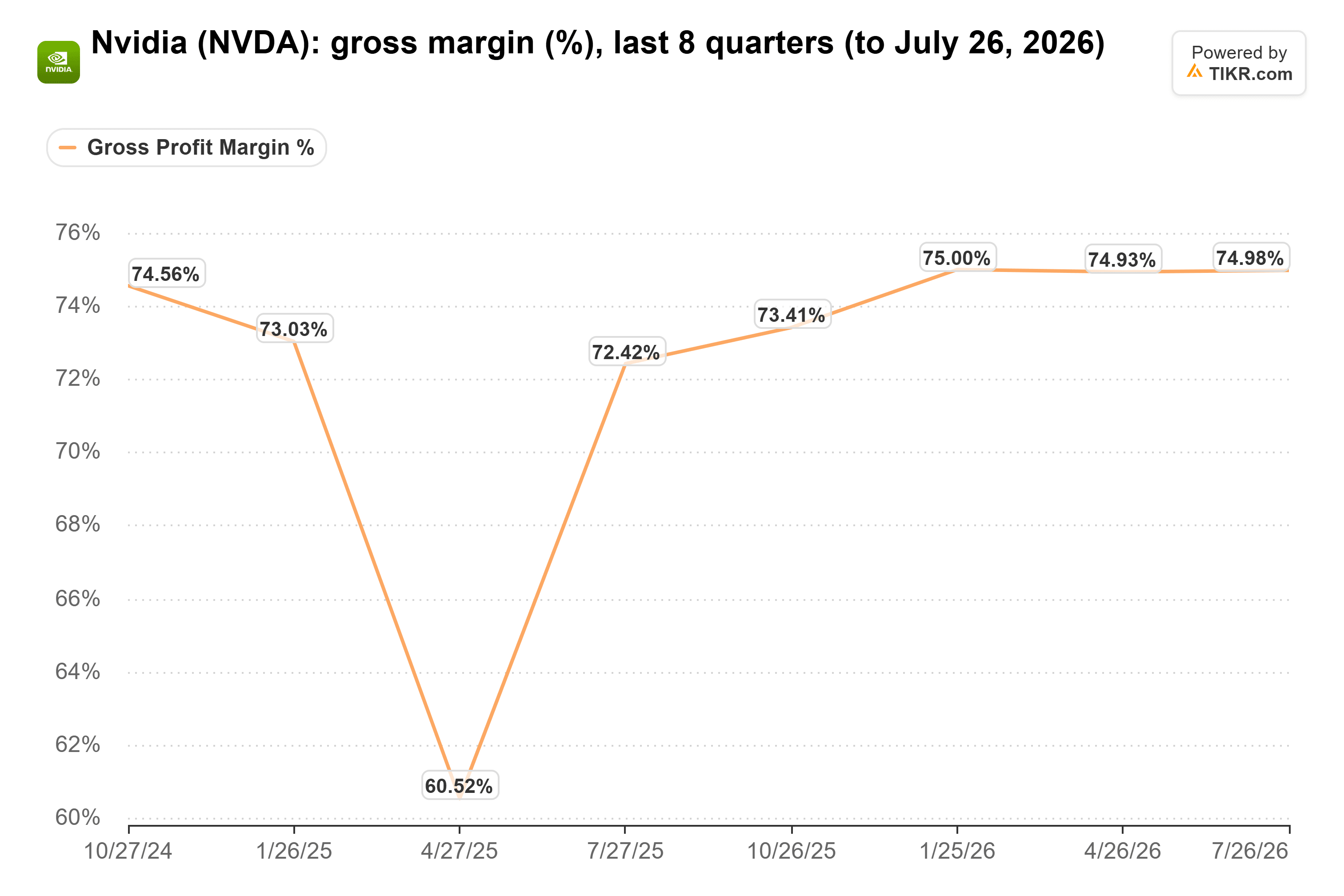
The 60.5% quarter, to April 27, 2025, carried a $4.5 billion H20 inventory and purchase obligations charge after export rules shut those chips out of China. That’s what unsold chips cost.
The margin was already set to slip: management sees a 71% to 72% bottom in the January 2027 quarter on memory prices, then 72% to 73% next fiscal year. A write-down would land on top.
Nvidia Still Says It Can’t Make Enough
The best case against Burry is Nvidia’s guidance: revenue up about 70% next fiscal year, capped by supply. Hyperscale revenue jumped 102% to $48.7 billion in the July quarter, hard to square with cloud customers running away. But that growth doesn’t remove the financing risk: labs backed by Nvidia’s balance sheet should contribute toward roughly a quarter of fiscal 2028 business.
What Nvidia’s Nov. 17 Report Has to Show
Burry is right about where the risk sits. If the financing slows, Nvidia still owns the commitments, and any discount to move chips comes out of that 75% margin. If commitments come down from $279 billion on Nov. 17 and the January-quarter guide holds at 71% to 72%, the avalanche looks a lot smaller.
So What Is Nvidia Stock Actually Worth?
TIKR lets you forecast the future price of any stock in less than a minute. Just enter a few assumptions into TIKR’s valuation model and see what Nvidia could be worth. Start from Wall Street consensus estimates, or adjust the inputs to reflect your own view of the business. It’s free to use.
Disclaimer:
Please note that the articles on TIKR are not intended to serve as investment or financial advice from TIKR or our content team, nor are they recommendations to buy or sell any stocks. We create our content based on TIKR Terminal’s investment data and analysts’ estimates. Our analysis might not include recent company news or important updates. TIKR has no position in any of the stocks mentioned. Thank you for reading, and happy investing!