Key Takeaways
- United Airlines CEO Scott Kirby called Starlink Wi-Fi “the biggest near-term competitive advantage” in United’s 100-year history and said it’s bringing in customers who want to try it.
- United plans to have Starlink on its whole fleet by the end of 2027. Delta chose Amazon’s Leo service instead, and Delta’s Leo rollout isn’t expected to begin until 2028.
- Airlines now compete on Starlink, so SpaceX gets a group of business customers that grows as carriers race to keep up with each other. That matters because each of its consumer subscribers pays less than a year ago.
- Aviation is still a small part of SpaceX’s revenue. But about 12,000 aircraft are under contract, against just over 3,800 equipped at Sept. 30.
United Airlines (UAL) CEO Scott Kirby gave SpaceX (SPCX) the kind of review most suppliers can only dream of.
He was speaking at Yahoo Finance Invest on Nov. 12:
“[Wi-Fi is] the No. 1 reason that people pick an airline flight. I think it’s the biggest near-term competitive advantage that we’ve ever had in United’s 100-year history. Eventually everyone’s going to have a competitive product, but we have a huge lead.”
He added that Starlink “really is something that’s causing customers to try United because they want Starlink.”
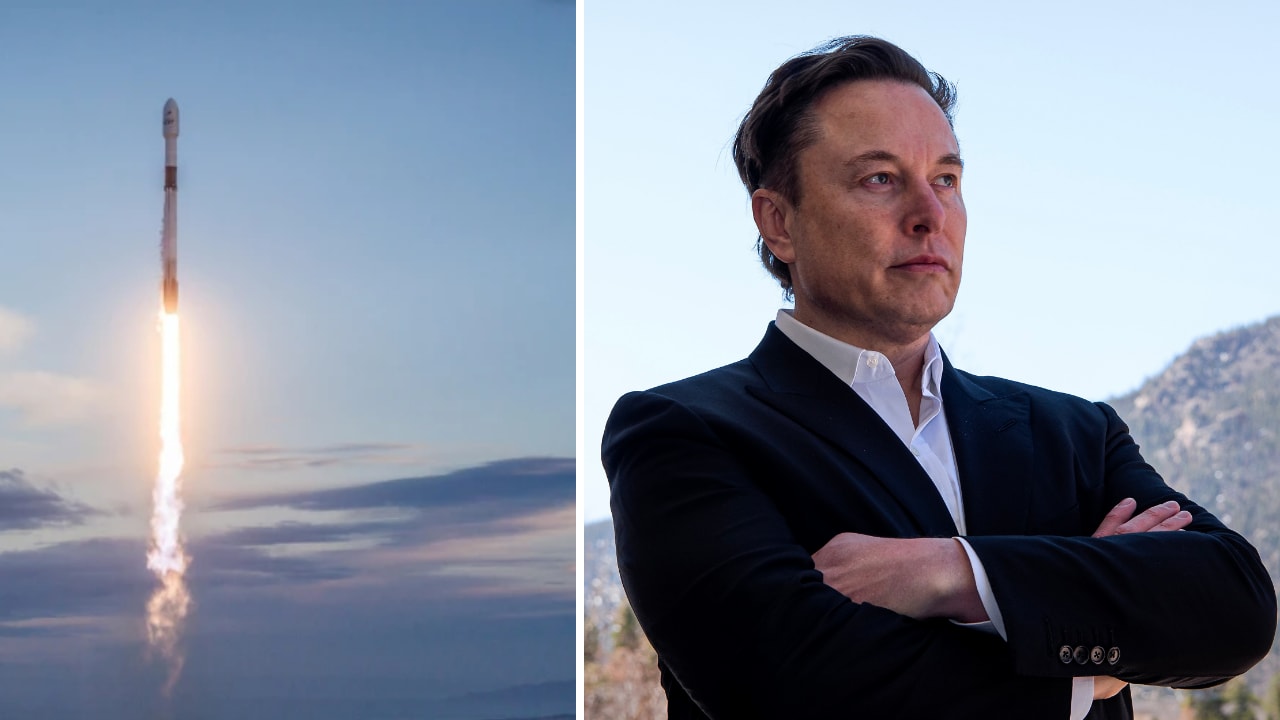
When the clip spread on X, SpaceX CEO Elon Musk replied with one word: “Starlink.”
For SpaceX shareholders, what happens next is the bigger news. Once one big airline sells tickets on Starlink, its rivals have to respond. That gives SpaceX a growing set of business customers just as each consumer subscriber pays less than a year ago.
TIKR tracks 40 analysts on SpaceX. How many say “Buy”?
See the full breakdown of Buy, Hold, and Sell ratings on SpaceX, along with Wall Street’s revenue and earnings estimates, all in one place. More than 500,000 investors use TIKR to research stocks like this one. See SpaceX’s Analyst Ratings
United is going all in
Kirby said United expects half its mainline fleet to have Starlink by year-end. That rises to 87% by the end of next summer and the whole fleet by the end of 2027. When United starts flying out of JFK, every one of those flights will have it. He also believes Starlink is already giving United’s revenue a lift.
Delta Air Lines (DAL) went the other way. It’s one of the few major airlines to sign up for Leo, the satellite service from Amazon (AMZN), and its Leo rollout isn’t expected to begin until 2028. Kirby said he has “a lot of respect” for Delta, but he was blunt about the decision: “I think Leo is a mistake.”
So United has a couple of years to sell Starlink against a big rival whose satellite upgrade won’t start until 2028. Every airline that hasn’t decided yet gets to watch what that does to bookings.
Airlines buy more when they compete
Starlink’s consumer business is growing by adding customers. Subscribers rose 89% to 13.6 million in the year to Sept. 30. But average revenue per user fell to $69 a month in the third quarter, from $83 a year earlier, though it ticked up from $66 in the second quarter. Management has said that expanding into more countries may push the blended figure lower over time.
Airlines are a different kind of buyer. When one signs, Starlink often goes on a whole fleet. SpaceX said in its IPO prospectus that no Starlink enterprise customer paying more than $750,000 a year has voluntarily left since 2023. Enterprise and government revenue, which includes aviation, rose 91% to $2.13 billion in the third quarter. Consumer revenue grew 57%.
There’s plenty of room left, too. SpaceX said with its third-quarter results that it has about 12,000 aircraft under contract, against just over 3,800 equipped at Sept. 30. The number of planes it serves could roughly triple from deals already signed.
Every airline that holds out gives United something to advertise, and every airline that signs to keep up adds to SpaceX’s list.
Airline Wi-Fi won’t carry the stock by itself
That said, aviation is still a small piece of SpaceX. The company doesn’t report aviation revenue separately. The whole enterprise and government line was smaller than consumer revenue, which was $3.12 billion in the third quarter. Both now sit next to AI compute, which brought in $7.56 billion of the quarter’s $14.6 billion in revenue.
Analysts expect SpaceX’s revenue to nearly quadruple, from about $49 billion this year to about $181 billion in 2027:
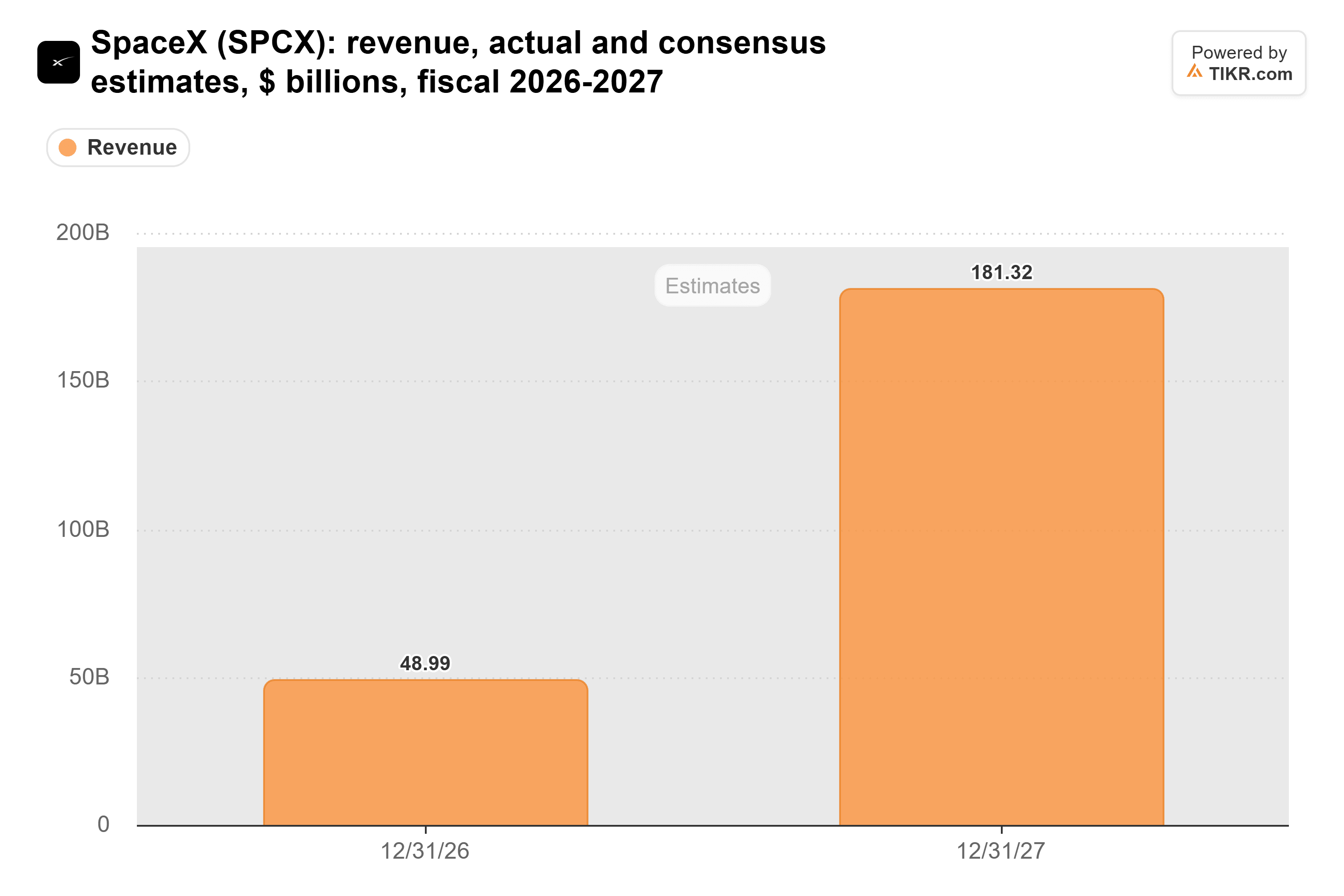
Most of that depends on the compute business keeping up its pace, so nothing Kirby said should move those estimates.
What airlines do add is Starlink revenue that grows as carriers compete with each other. The consumer side, where each new subscriber pays less, can’t offer that.
United’s lead won’t last forever
Kirby’s claim holds up for United, at least until Delta’s Leo planes arrive. Its rivals can either lose travelers who pick their flights based on Wi-Fi, or pay SpaceX to catch up. Plenty of them are likely to pay, which makes United’s bragging the best sales pitch Starlink’s aviation business could ask for.
Of course, Kirby himself admitted that rivals will eventually have a competitive product. Delta’s 2028 Leo start gives it, and any airline that waits, another option. The next thing to watch is how many of those contracted planes SpaceX reports as equipped when it posts fourth-quarter results early next year.
So what is SpaceX stock actually worth?
TIKR lets you forecast the future price of any stock in less than a minute. Just enter a few assumptions into TIKR’s valuation model and see what SpaceX could be worth. Start from Wall Street consensus estimates, or adjust the inputs to reflect your own view of the business. It’s free to use.
Disclaimer:
Please note that the articles on TIKR are not intended to serve as investment or financial advice from TIKR or our content team, nor are they recommendations to buy or sell any stocks. We create our content based on TIKR Terminal’s investment data and analysts’ estimates. Our analysis might not include recent company news or important updates. TIKR has no position in any of the stocks mentioned. Thank you for reading, and happy investing!