
Key Takeaways
- Michael Burry compared Oracle to WorldCom over the weekend, saying Oracle’s capital-intense AI strategy is cannibalizing its cash flow and margins, openly and without fraud.
- Credit markets are starting to price Oracle as a real risk: Its bonds are yielding 8%+.
- A downgrade to junk could push roughly $120 billion of Oracle’s bonds out of investment-grade indexes.
Michael Burry (of The Big Short fame) spent the weekend comparing Oracle (ORCL) to one of the most infamous blowups in corporate history.
It started when an X user, @castlewoodcb, replied to Burry that Oracle “has extensive levels of debt a lot of which doesn’t show up on their balance sheet.”
Burry’s response on Sunday?
“Yes Oracle acquired Cerner, WorldCom acquired MCI. Oracle is allowing a capital intense strategy to cannibalize its cash flow and margins much like WorldCom did. Oracle is not committing fraud. It is doing it out in the open and people are not analyzing it correctly.”
Out in the open. That’s the part that should make Oracle shareholders sit up.
(For the younger crowd: WorldCom was the telecom giant that collapsed in 2002 amid a massive accounting scandal. Burry is explicitly not accusing Oracle of that. His charge is that the spending itself is eating the business.)
The bond market is already worried
Burry isn’t alone here. The credit market seems to agree with him.
Oracle’s long-term bonds are now yielding over 8%, and its five-year credit default swaps have surged to more than 220 basis points, up from around 30 a year ago.
That’s more than 7x the price in a year(!).
Scott Galloway made the same point on Monday’s episode of his Prof G Markets podcast. Oracle’s force majeure notice leans on what’s essentially an “act of God” clause, and as Galloway put it, “what they’re really saying is that the God is credit markets.”
His verdict: “This isn’t an existential event. This is the market saying, you’re out over your skis.”
Oracle is still investment grade as of now but a downgrade to junk could force billions of dollars of its bonds out of investment-grade indexes. (Many bond funds can only hold investment-grade debt, so a downgrade can mean forced selling.)
And Burry had a reminder for anyone who thinks that can’t happen fast: “In 2002, WorldCom went from investment grade to bankrupt overnight.”
It’s all in the filings
Burry’s point is that you don’t need to go hunting for a scandal. Just look at the spending…
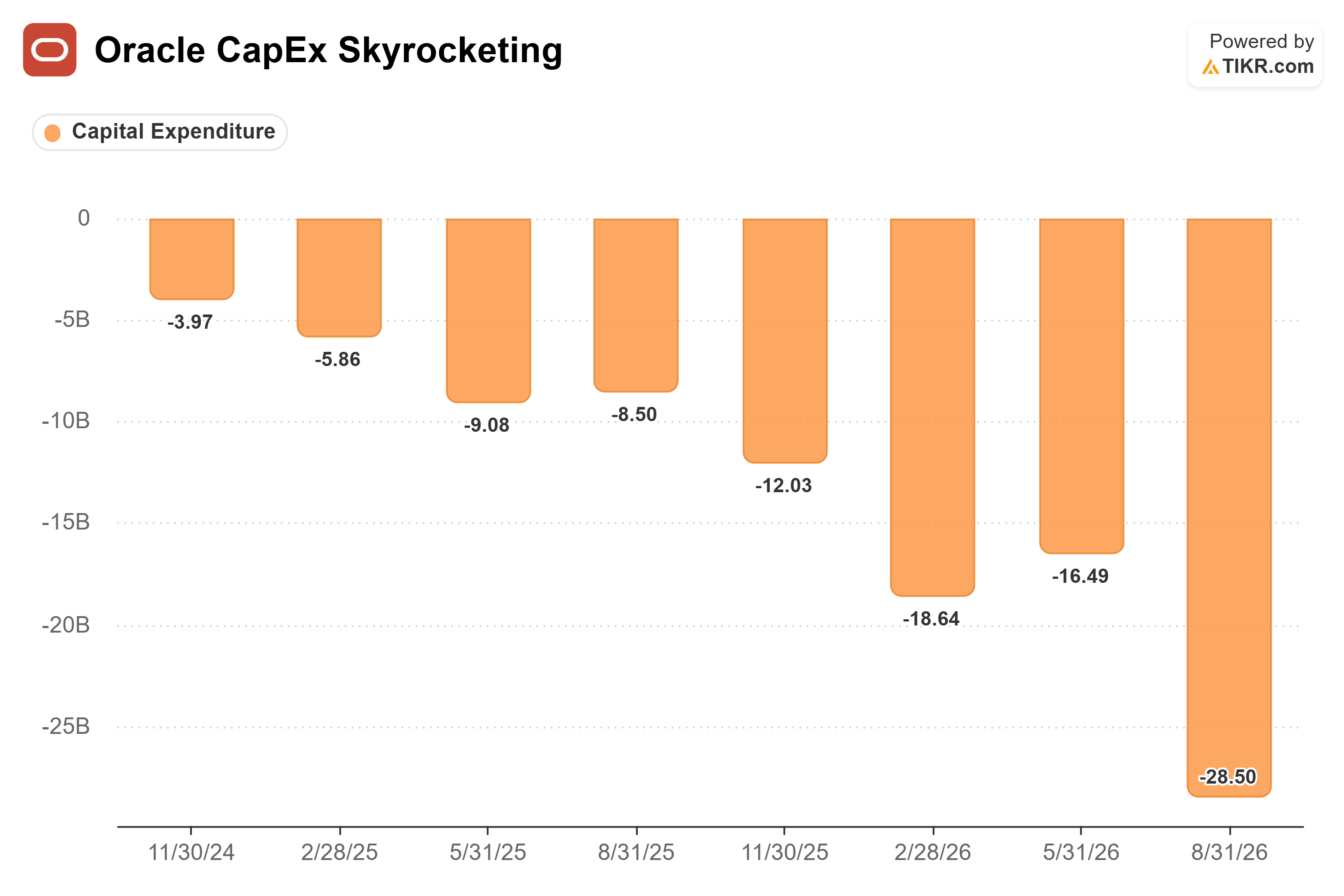
…and how Oracle has paid for it, with a mix of debt and capital leases:
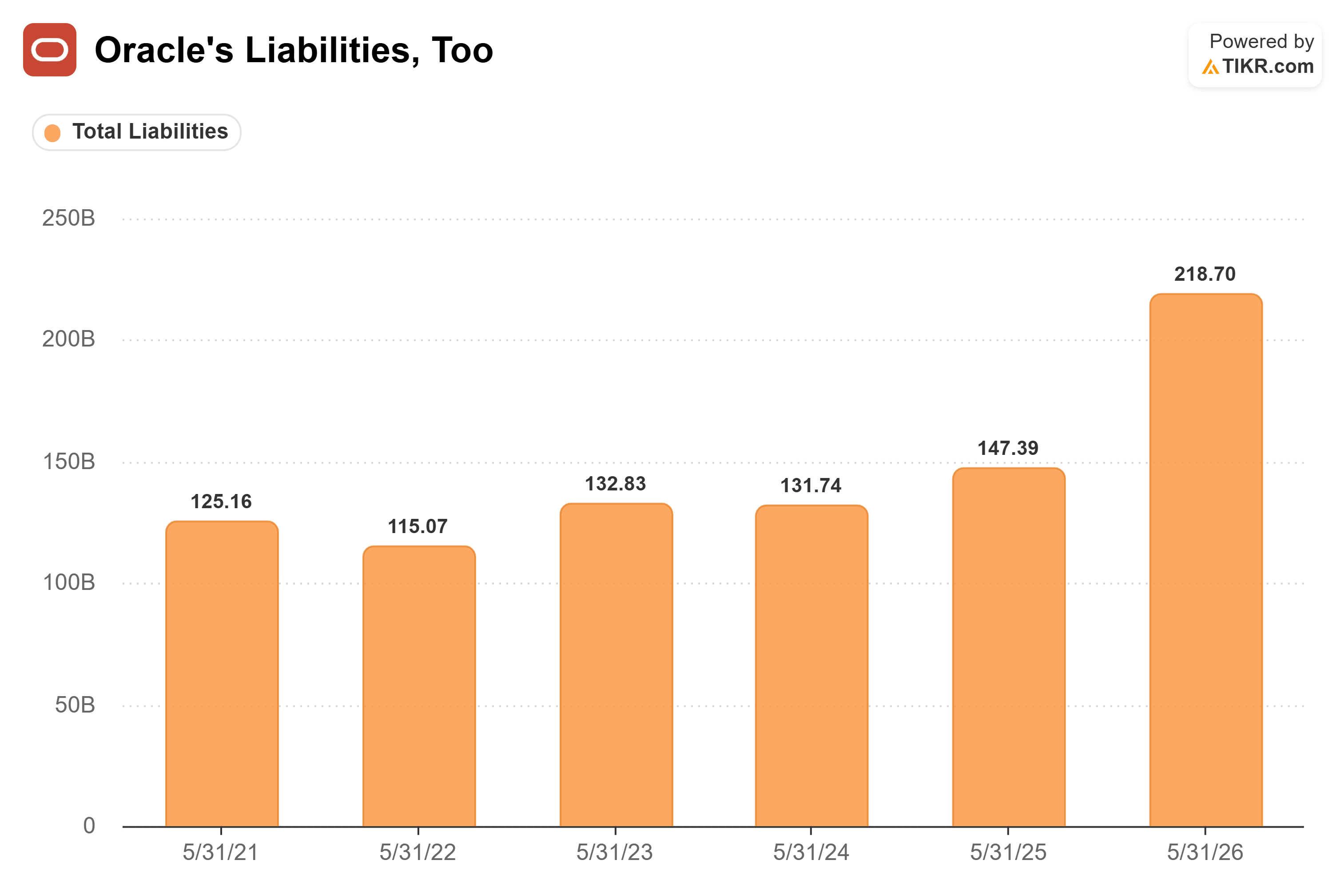
That’s a lot of levering up.
But isn’t Oracle cheap?
Here’s the obvious pushback, and it’s a fair one:
Unlike WorldCom, Oracle’s customers prepay for capacity that’s in short supply. And the stock trades at about 16x forward earnings with revenue and earnings growing at a good clip. That doesn’t sound like a company in trouble.
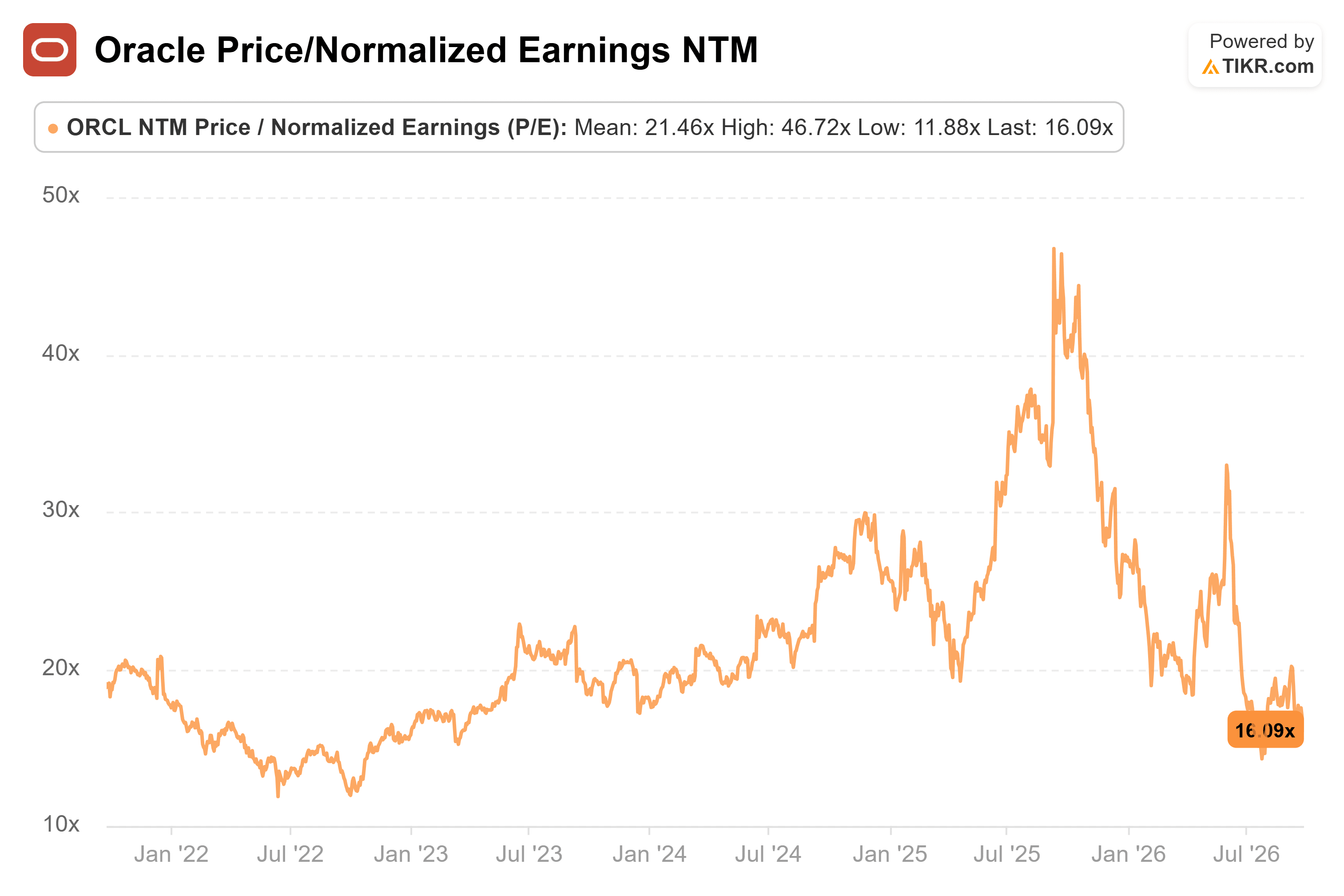
Of course, at its core, the issue here is really about timing more than anything else. Galloway pointed back to the dot-com build-out. Money piled into fiber companies like Global Crossing, and those companies went bankrupt or lost 90% of their value, even though the internet turned out just fine. “It was just early.”
I’m not great at predicting the future – I think anyone who claims they “know” how things will go is deeply mistaken.
But as for me, I’m seeing a lot of risks starting to pile up. Whenever the bond market gets nervous, I take notice – because that’s a lot of smart people who I generally don’t want on the other side of a trade I’m making. So, personally, I’m steering clear of this one.
Of course, risk premium is what you get paid for making hard calls! I’m just not sure this one is priced correctly.
So what’s Oracle stock actually worth?
That depends a lot on whether you trust the stock market or the bond market right now. (For the bull case, see this recent TIKR breakdown.)
I personally prefer to use TIKR.com’s proprietary modeling tool, which requires just three inputs, to get a full financial model for what the stock could be worth in three years.
It’s simple, straightforward, and robust – using institutional-quality data…and it’s free, too.
Disclaimer:
Please note that the articles on TIKR are not intended to serve as investment or financial advice from TIKR or our content team, nor are they recommendations to buy or sell any stocks. We create our content based on TIKR Terminal’s investment data and analysts’ estimates. Our analysis might not include recent company news or important updates. TIKR has no position in any of the stocks mentioned. Thank you for reading, and happy investing!