Key Stats for Meta Stock
- Current Price: $642.62
- Target Price (Mid): ~$1,137
- Street Target: ~$843
- Potential Total Return: ~77%
- Annualized IRR: ~15% / year
Now Live: Discover how much upside your favorite stocks could have using TIKR’s new Valuation Model (It’s free) >>>
What Happened?
Meta Platforms (META) beat third-quarter revenue estimates on October 21, then fell 6.98% on October 22 and another 0.96% on October 23 to close at $642.62. Revenue rose 26% to $64.6 billion against the $63.4 billion Street estimate, and the $73 billion to $76 billion fourth-quarter guide came in above consensus. The selling hit AI spenders broadly, but Meta’s call also put numbers on how one of its newest costs, the Muse AI agent, comes down.
Meta Put a Number on Muse’s Cost Curve
Muse, Meta’s personal AI agent, is growing fast and is expensive to serve. More than 10 million people in the U.S. and Canada set it up in about six weeks, and about 25% use it on any given day. Meta has held back a global launch partly because the service is compute-intensive to run, though CEO Mark Zuckerberg expects a smaller model within a year to match its frontier Muse Wonder model “at a fraction of the cost.”
Zuckerberg gave that cost a target: “we expect to improve its cost efficiency by more than 10x in the next year.” He also said Meta will “work on monetization somewhat sooner on this than our normal playbook,” with fees and subscriptions among the paths. CFO Susan Li said Meta expects its new AI businesses can “begin contributing incremental revenue in 2027,” and Meta One, the subscription service it expanded globally in September, has passed 15 million subscriptions and trials.
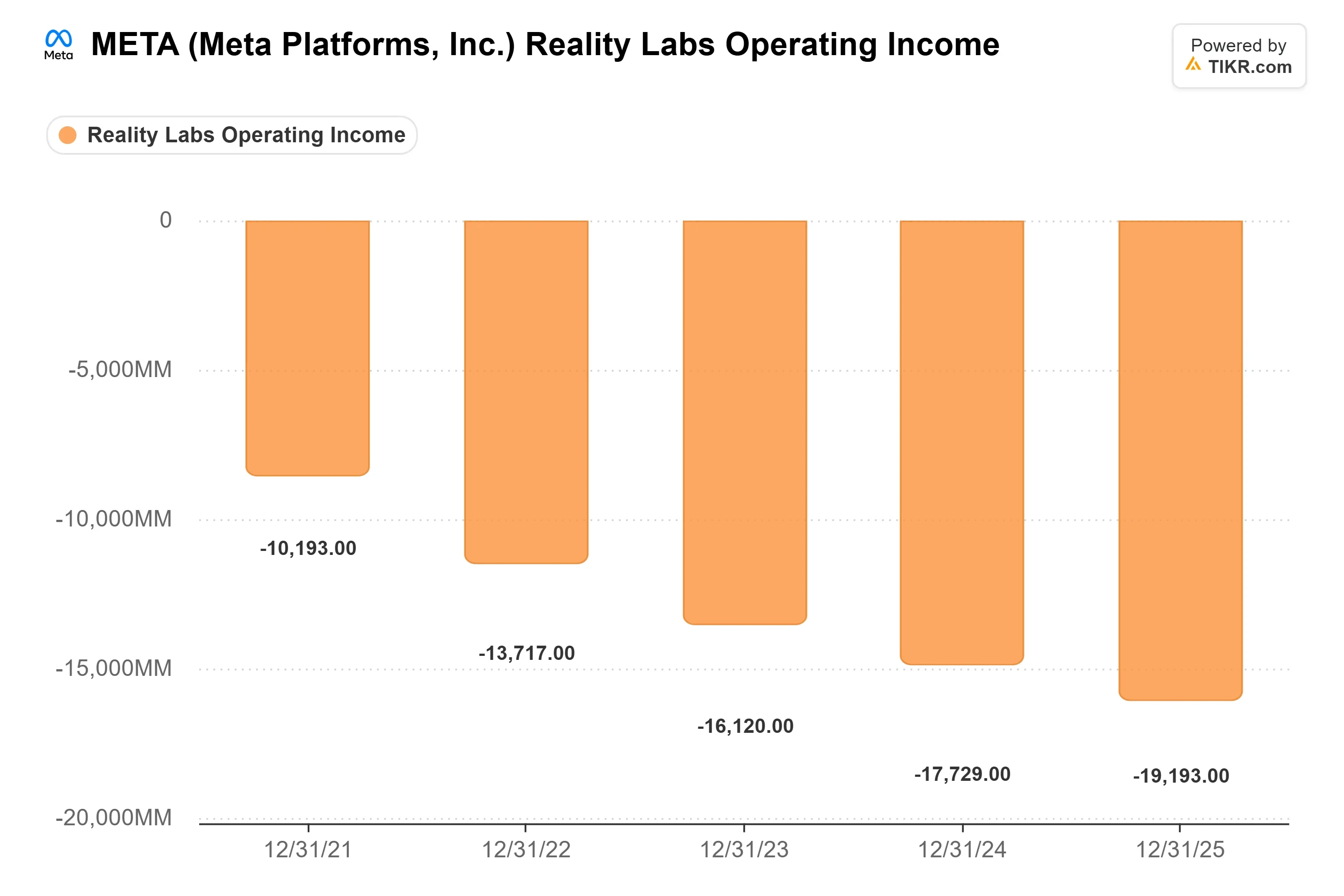
Older cost lines are shrinking too. Zuckerberg guided Reality Labs’ operating loss to around $15 billion in 2027, down from the $18 billion to $19 billion expected for 2026 and $19.2 billion in 2025. Li added that moving content-understanding models onto the Muse model family is reducing per-unit processing costs by more than 80%, based on offline evaluations. Muse also reaches Meta’s glasses starting in November, tying Reality Labs to the same product.
TIKR tracks 63 analysts on Meta Platforms. How many say “Buy”?
See the full breakdown of Buy, Hold, and Sell ratings on Meta Platforms, along with Wall Street’s revenue and earnings estimates, all in one place. More than 500,000 investors use TIKR to research stocks like this one. See Meta Platforms’ Analyst Ratings
Estimates Rose as the Stock Fell
On October 22, the S&P 500 fell 1.2% and the Nasdaq had its worst day since June as AI spending fears hit Meta and chipmakers while oil prices jumped. Meta-specific pressure came from third-quarter capital expenditures of $34.9 billion, including finance lease payments, and negative free cash flow, a shift TIKR covered when Meta unveiled its new share class.
GAAP operating income fell 37% to $13 billion, including a $9.9 billion charge tied to the August multistate attorneys general agreement; excluding the charge, it would have grown 11%. On October 21, a New Mexico judge separately ordered Meta to pay $25 billion after a jury found it misled Facebook users about privacy, a ruling Meta plans to appeal. Meta also flagged upcoming youth-related trials.
UBS raised its target to $892 from $884, while Wells Fargo trimmed to $995 from $1,000 and TD Cowen to $830 from $865. TIKR data shows consensus 2027 revenue at $311.4 billion on October 24, up from $306.4 billion on September 30, and the forward P/E on normalized earnings at about 20x, down from about 22x on September 30 and below Alphabet (GOOGL) at about 24x.

TIKR Advanced Model Analysis
- Current Price: $642.62
- Target Price (Mid): ~$1,137
- Potential Total Return: ~77%
- Annualized IRR: ~15% / year

The mid case needs no re-rating: its 2025 to 2035 forecast inputs assume revenue grows around 16% a year, net margins near 28%, and a P/E that shrinks about 2% a year. That margin sits well below Meta’s 38% normalized level in 2025 but close to the roughly 29% Wall Street expects for 2030. The target is a scenario, not a forecast.
Upside comes if new AI revenue arrives in 2027 as management expects. The primary risk is that Muse’s serving costs fall slower than usage grows, forcing more spending or Class C stock sales; Meta says it has no specific financing plans yet. Per-share figures are pre-split; the Class C dividend, with trading expected to begin in late January 2027, works like a 2-for-1 split.
TIKR’s mid case implies around 15% annually from $642.62 at about 20x forward earnings, which favors adding over selling only if Muse’s cost curve bends. The checkpoint is Meta’s fourth-quarter report, expected in late January after last year’s January 28 release: it needs progress toward the 10x efficiency target and an early AI revenue line. A 2027 capex guide well above Wells Fargo’s estimate of about $250 billion without either would break the thesis.
So what is Meta stock actually worth?
TIKR lets you forecast the future price of any stock in less than a minute. Just enter a few assumptions into TIKR’s valuation model and see what Meta could be worth. Start from Wall Street consensus estimates, or adjust the inputs to reflect your own view of the business. It’s free to use.
Disclaimer:
Please note that the articles on TIKR are not intended to serve as investment or financial advice from TIKR or our content team, nor are they recommendations to buy or sell any stocks. We create our content based on TIKR Terminal’s investment data and analysts’ estimates. Our analysis might not include recent company news or important updates. TIKR has no position in any stocks mentioned. Thank you for reading, and happy investing!