Key Takeaways
- The stock rose 12% in the past week as Amazon reportedly held talks to let the company’s Muse agent back into its store.
- A deal would show that Muse has grown too big for Amazon to keep out.
- The company delayed a planned $60 billion stock sale, but a CoreWeave loan for chips for the company is in early talks at less than half of CoreWeave’s own borrowing cost.
- The stock looks like a buy ahead of the company’s 2027 capex plan, expected in late January.
The stock is up 12% in the past week. AI stocks bounced on Nov. 23 as Nvidia reinstated Jensen Huang as CEO, and the company’s own boost came on Nov. 25, when Fortune reported that Amazon (AMZN) and the company behind Muse have held talks to let its Muse shopping agent back into Amazon’s store. And judging by a loan CoreWeave (CRWV) is lining up, lenders still trust the company’s credit.
Muse is getting too big to block
Amazon blocked Muse in September, citing its conditions of use. The bigger problem is ads: an agent can shop on Amazon without its user ever seeing a sponsored listing, and Amazon’s ads brought in $68.6 billion in 2025. Search results and advertising are the sticking points, Fortune reported, and no deal has been announced.
Muse pays off for Meta Platforms (META) even without ads of its own: a senior Meta executive told CNBC on Nov. 24 that it “raises conversions for advertisers.” If Amazon lets it in, it’s because Muse brings too many orders to turn away.
The funding question hasn’t gone away
On Nov. 23, Meta said in an SEC filing that it won’t issue its planned Class C shares while shareholders sue over them, with a trial set for April 19, 2027. Reuters reported that this also holds up a planned $60 billion stock sale.
CoreWeave, though, is lining up a $4.5 billion loan backed by chips for Meta, with early talks putting the yield at 7% to 7.5%, Bloomberg reported on Nov. 25. That’s less than half the 18% yield on CoreWeave’s own 2031 bond. CoreWeave, up 12% in the past week, gets to borrow on Meta’s credit because Meta is the paying customer for those chips.
TIKR tracks 62 analysts on Meta Platforms. How many say “Buy”?
See the full breakdown of Buy, Hold, and Sell ratings on Meta Platforms, along with Wall Street’s revenue and earnings estimates, all in one place. More than 500,000 investors use TIKR to research stocks like this one. See Meta Platforms’ Analyst Ratings
The test comes in January
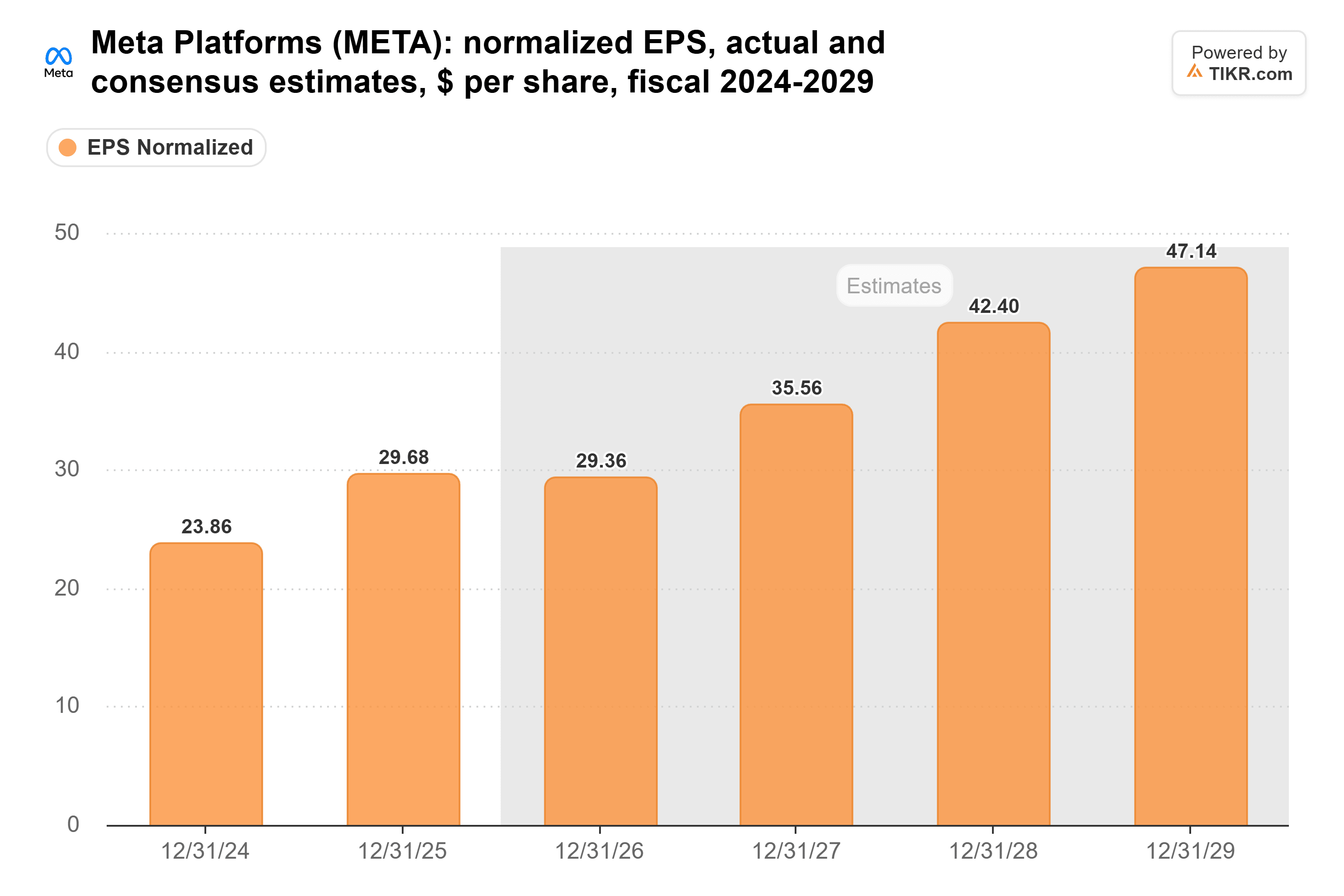
Analysts see normalized EPS staying flat in 2026, then climbing to $42.40 by 2028:
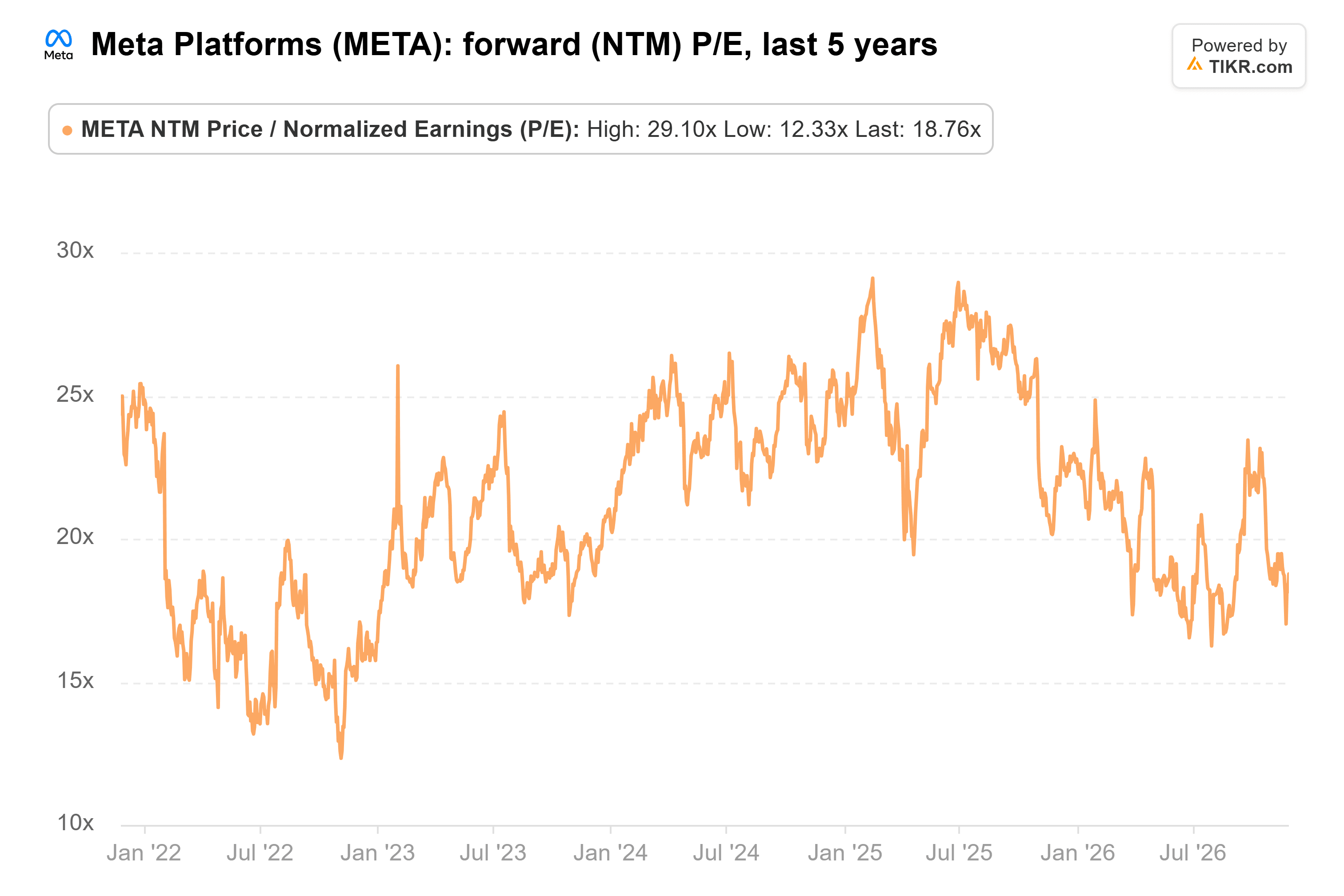
Yet the stock trades at about 19x forward earnings, below its five-year average of 21x:
The catch is free cash flow, which analysts expect to bottom at negative $48.8 billion in 2027:
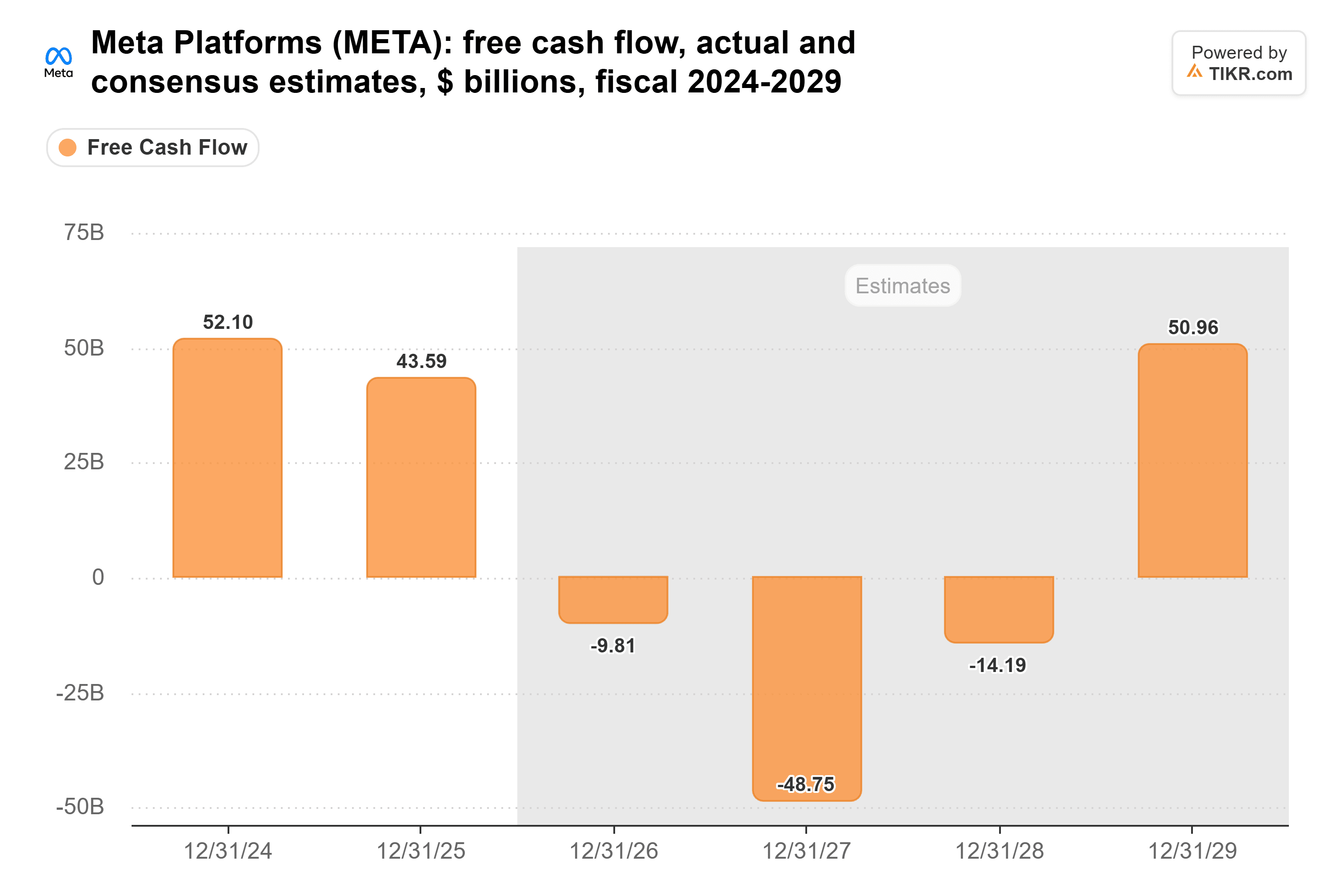
The stock is still 19% below its September high, and at this price it looks like a buy. Investors are paying less than usual for earnings that analysts expect to grow again from 2027, and the Amazon talks make Muse’s payoff more concrete. The test is Meta’s 2027 capex plan, expected on its fourth-quarter call in late January. JPMorgan cut its target to $775 from $940 on Nov. 24 but kept its Overweight rating. A plan near its $255 billion capex estimate would push the turn in cash flow further out, since the Street expects roughly $210 billion.
So what is Meta stock actually worth?
TIKR lets you forecast the future price of any stock in less than a minute. Just enter a few assumptions into TIKR’s valuation model and see what Meta could be worth. Start from Wall Street consensus estimates, or adjust the inputs to reflect your own view of the business. It’s free to use.
Disclaimer:
Please note that the articles on TIKR are not intended to serve as investment or financial advice from TIKR or our content team, nor are they recommendations to buy or sell any stocks. We create our content based on TIKR Terminal’s investment data and analysts’ estimates. Our analysis might not include recent company news or important updates. TIKR has no position in any of the stocks mentioned. Thank you for reading, and happy investing!