Key Takeaways
- A day after Jensen Huang resigned as Nvidia’s CEO, Jim Cramer said Amazon has what “may soon be a $50 billion semiconductor business.”
- Andy Jassy gave that number in April: chips running above $20 billion a year would bring in about $50 billion priced like a standalone chipmaker.
- The bigger payoff is inside AWS, which skips Nvidia’s markup, and Nvidia has kept more than 70% of sales as gross profit for three straight fiscal years.
- Amazon is still adding 2 million Nvidia GPUs and doesn’t report what its own chips earn.
Nvidia (NVDA) lost its founder as CEO. On Nov. 11, the board accepted Jensen Huang’s resignation and named CFO Colette Kress interim CEO. The next day, Jim Cramer pointed to an underrated chip business inside Amazon (AMZN).
On Mad Money, Cramer said Amazon “does have what may soon be a $50 billion semiconductor business.” That morning on Squawk on the Street, he said Andy Jassy should “come out right now and say, I told you I have a $50 billion chip business.”
Jassy already did.
Jassy Put Out the $50 Billion First
In his April shareholder letter, Jassy said Amazon’s chips business (Graviton, Trainium and Nitro) had passed a $20 billion annual run rate. As a standalone chipmaker selling to AWS and others, he said, it would bring in about $50 billion. By the second quarter, the run rate topped $25 billion.
The two figures measure different things: EC2 rental revenue versus chip sales priced like a merchant chipmaker’s, including sales to AWS itself. The saving Jassy does name is capex. At scale, he expects Trainium to “save us tens of billions of capex dollars per year.”
Cramer tied his number to the second half of 2027, when Amazon plans to start selling Trainium outside AWS.
On TBPN, Luminal CEO Joe Fioti said Trainium delivers “pretty phenomenal price performance,” even against Nvidia’s Blackwell Ultra. In late October, Amazon said Trainium and Graviton revenue commitments had each grown more than 20x in a year.
TIKR Tracks 61 Analysts on Amazon. How Many Say “Buy”?
See the full breakdown of Buy, Hold, and Sell ratings on Amazon, along with Wall Street’s revenue and earnings estimates, all in one place. More than 500,000 investors use TIKR to research stocks like this one. See Amazon’s Analyst Ratings
Every Trainium Chip Is a Markup Amazon Keeps
Wall Street expects Amazon’s normalized EPS to nearly double, from $7.17 in 2025 to $13.99 in 2028:
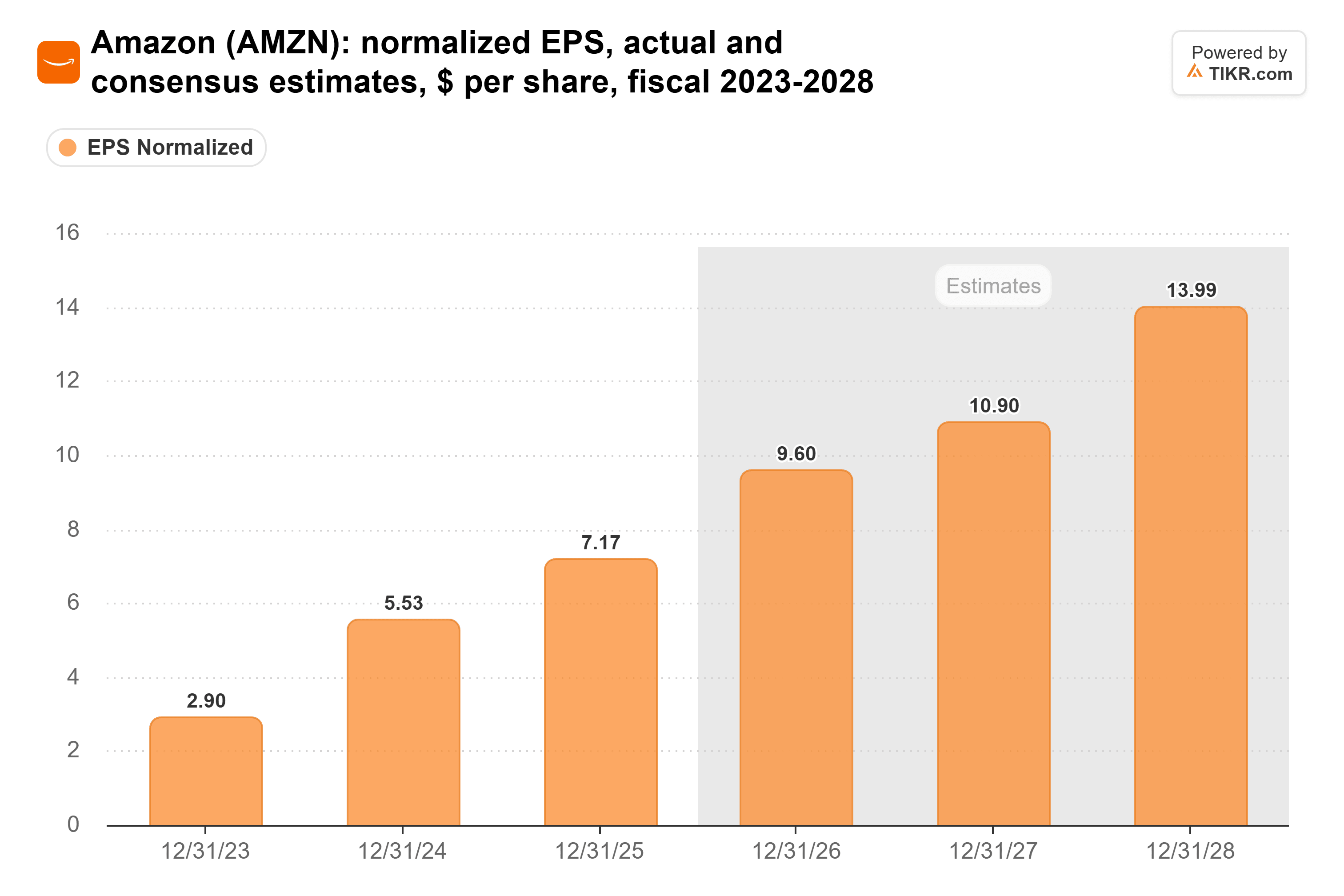
AWS produced 63.3% of Amazon’s operating income in the third quarter, so cheaper compute there carries much of that path.
Nvidia has kept more than 70% of every sales dollar as gross profit for three straight fiscal years:
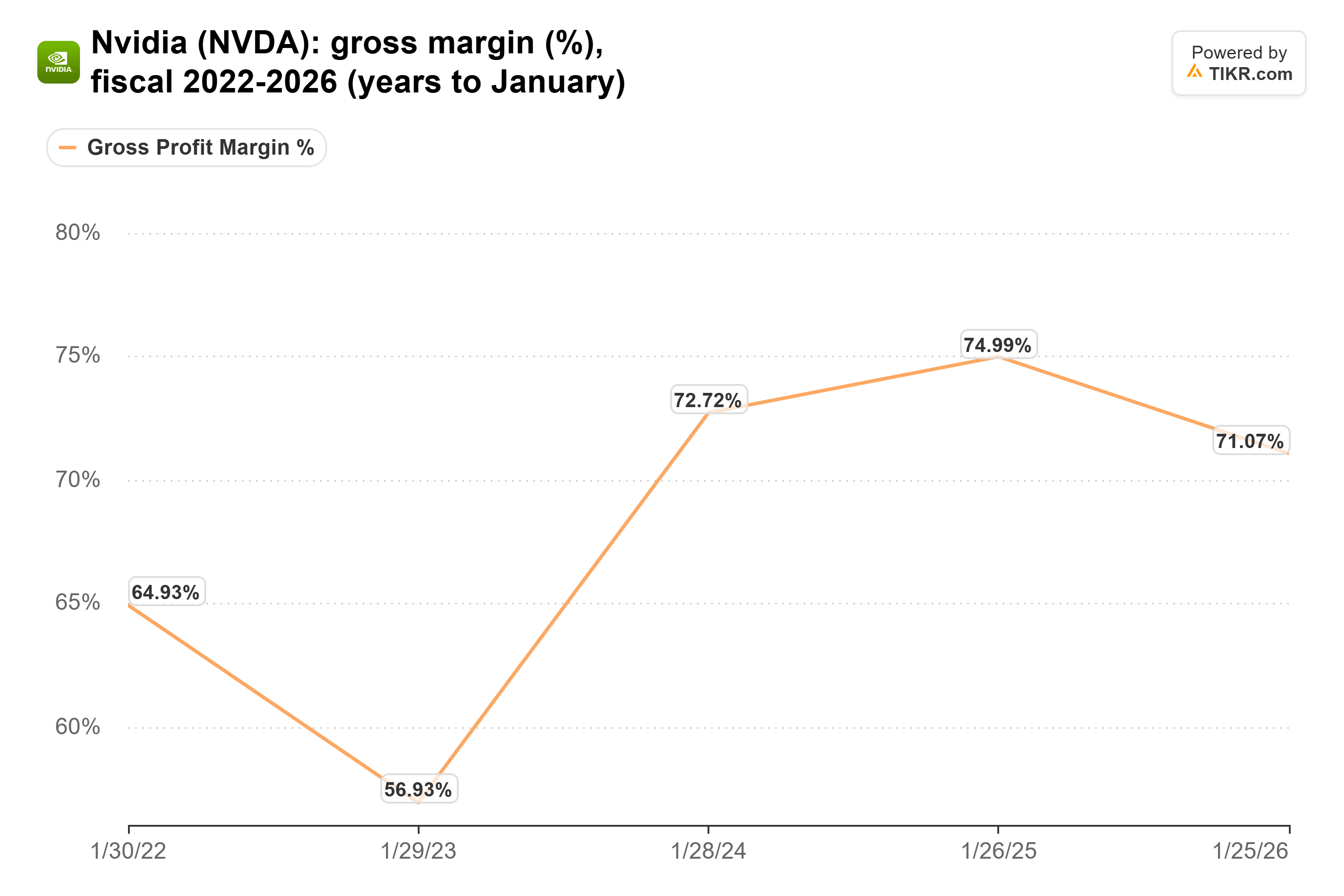
Dan Nathan said on the RiskReversal Pod that a hardware maker “enjoying mid-70s gross margins” has been “taking a huge bite out of their customers.”
Amazon’s margin went the other way:
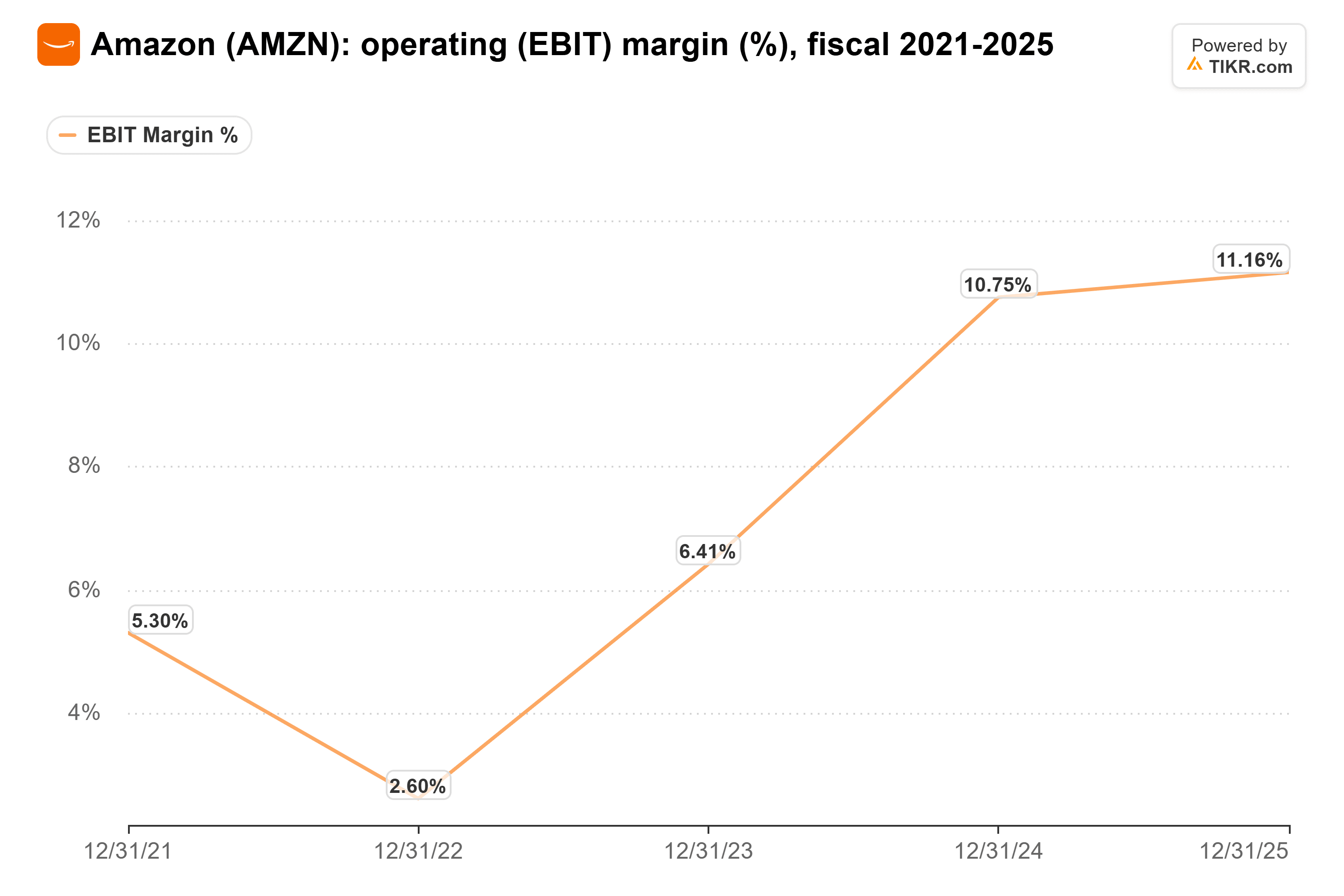
Its third-quarter operating margin hit a record 13.9%. AWS earned $17.8 billion on $46.0 billion of sales, a 38.7% margin, up from $11.4 billion a year earlier. Jassy expects Trainium to provide “several hundred basis points of operating margin advantage” over relying on others’ chips.
Amazon Isn’t Done Buying Nvidia
On Aug. 26, the two companies said AWS will deploy 2 million more Nvidia GPUs in 2027 and 2028. The build is expensive: about $220 billion of capex this year and “meaningfully more” in 2027.
Where Amazon’s Chip Money Shows Up First
The $50 billion is Jassy’s math, not a reported figure, so Cramer is early, not wrong. The payoff lands in AWS’s margin well before outside Trainium sales start, whoever runs Nvidia. Amazon doesn’t break out Trainium’s results, so AWS’s margin is the closest read: holding near 39% as capex climbs in 2027 would back that call.
So What Is Amazon Stock Actually Worth?
TIKR lets you forecast the future price of any stock in less than a minute. Just enter a few assumptions into TIKR’s valuation model and see what Amazon could be worth. Start from Wall Street consensus estimates, or adjust the inputs to reflect your own view of the business. It’s free to use.
Disclaimer:
Please note that the articles on TIKR are not intended to serve as investment or financial advice from TIKR or our content team, nor are they recommendations to buy or sell any stocks. We create our content based on TIKR Terminal’s investment data and analysts’ estimates. Our analysis might not include recent company news or important updates. TIKR has no position in any of the stocks mentioned. Thank you for reading, and happy investing!