Key Takeaways
- Riot Platforms (RIOT) was downgraded by Keefe, Bruyette & Woods (KBW) to Market Perform from Outperform on November 11, even as the firm raised its price target from $20 to $23.
- KBW’s concerns center on Riot’s reliance on Anthropic, which accounts for nearly all of its approximately $38 billion in contracted data center revenue, alongside substantial financing and construction risks.
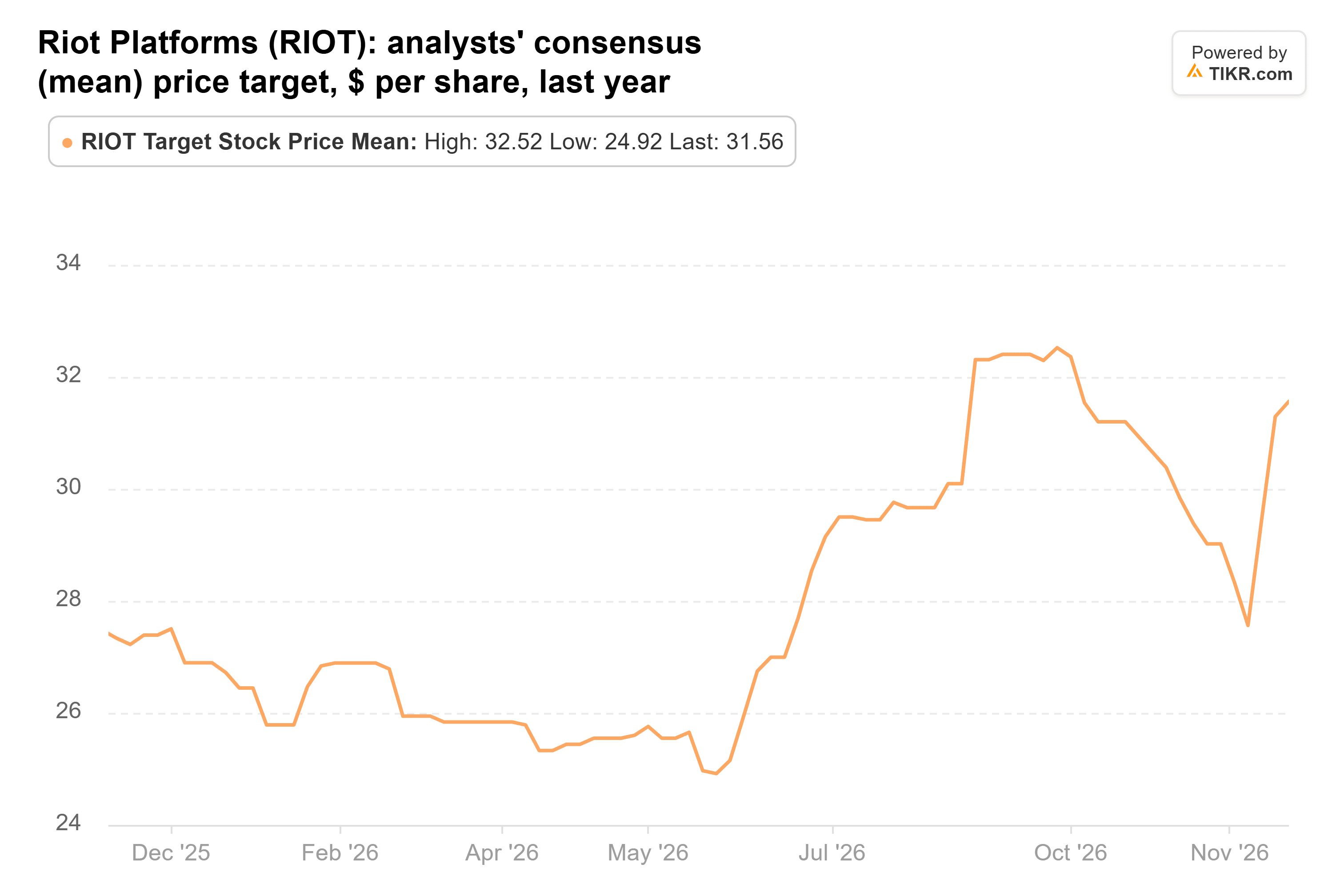
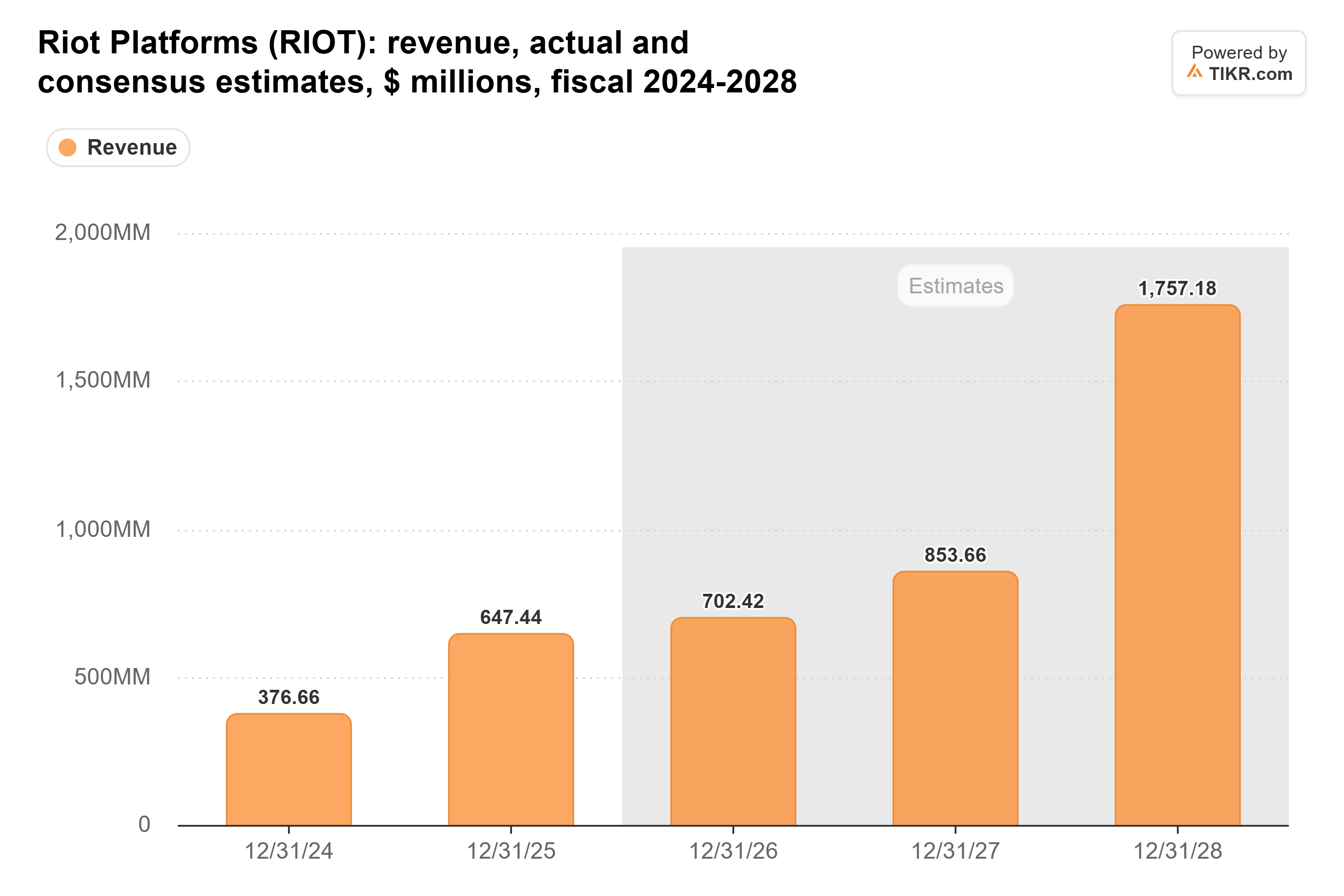
- Wall Street’s average price target stood near $32 in the November 10 research snapshot, while analysts projected Riot’s annual revenue to reach approximately $1.76 billion by 2028.
- Riot appears fairly valued on a risk-adjusted basis, as its premium sales multiple reflects significant growth expectations despite uncertainty surrounding project execution.
What Happened?
Riot Platforms (RIOT) received a downgrade from Keefe, Bruyette & Woods (KBW) on November 11, as analyst Stephen Glagola lowered his rating to Market Perform from Outperform while raising his price target to $23 from $20.
The move followed Riot’s November 4 earnings announcement, which disclosed a 15-year, approximately $28 billion data center lease covering 910 megawatts of critical IT capacity at its Corsicana campus in Texas.
Riot CEO Jason Les described the agreement as “the largest lease in Riot’s history,” highlighting the company’s transition from Bitcoin mining toward AI infrastructure.
However, KBW remains concerned about Riot’s substantial reliance on Anthropic, which also leases 191 MW at Riot’s Rockdale campus.
Together, Riot’s announced data center agreements represent approximately $38 billion in contracted revenue, with Anthropic responsible for nearly all of that amount.
Although these agreements create substantial long-term revenue visibility, Riot must still finance construction and deliver the infrastructure needed to earn the contracted rent.
Under the Corsicana agreement, Riot expects to fund approximately $2 million per IT MW from existing liquidity, while another $4 million per IT MW will be reimbursed to the tenant in phases, primarily through non-recourse project financing.
If financing is unavailable on comparable terms, the tenant can fund the required reimbursements and recover those amounts through future rent credits carrying a contractual 12% annual rate, potentially reducing Riot’s future rental cash receipts.
Riot sold 20,264 bitcoin during the first nine months of 2026 and ended September with approximately $950 million in combined cash and bitcoin.
Management does not currently anticipate issuing equity to finance its announced projects, although securing favorable debt financing remains an important milestone.
Despite KBW’s downgrade, other analysts maintained a more optimistic outlook.
B. Riley raised its price target to $37 from $25 on November 11, while Jefferies upgraded Riot to Buy on November 10 and increased its target to $28 from $13.
The contrasting views highlight the central investment question: whether Riot’s long-term AI infrastructure opportunity can outweigh the financial and execution risks involved in developing its data center portfolio.
Is Riot Platforms Undervalued or Overvalued?
Riot Platforms appears fairly valued on a risk-adjusted basis, despite Wall Street’s average price target of approximately $32 suggesting substantial potential upside from its November 13 closing price of $17.53.
The analyst consensus target has increased from approximately $27 a year earlier, reflecting greater optimism about Riot’s transition toward contracted AI infrastructure revenue.
According to TIKR estimates dated November 10, Riot’s revenue is projected to increase from approximately $854 million in 2027 to $1.76 billion in 2028, representing growth of more than 100%.
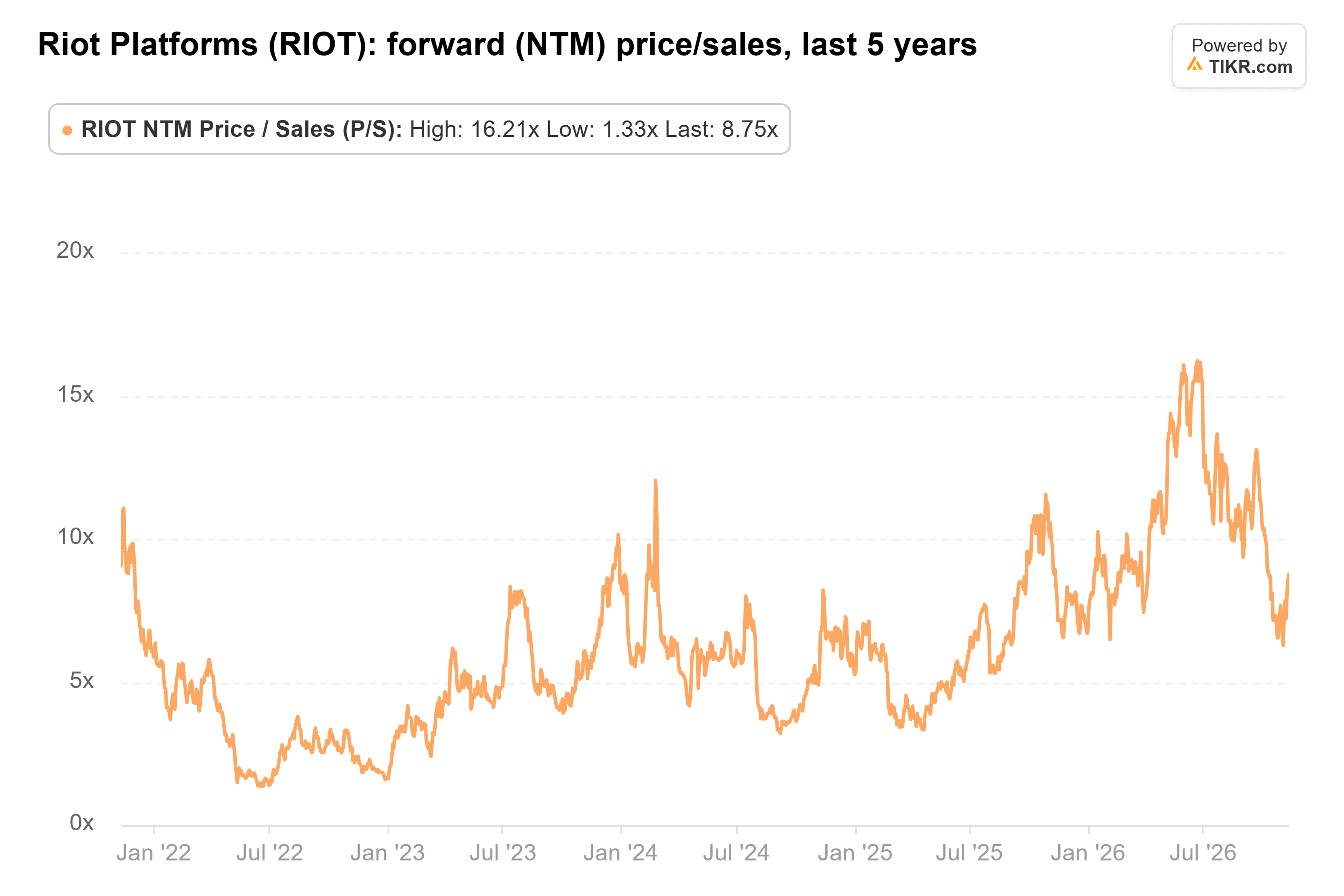
However, Riot traded at approximately 8.8x forward sales on November 10, above its five-year average of 6.2x, suggesting that investors were already assigning a premium to its anticipated growth.
At KBW’s $23 price target, the implied forward sales multiple would reach approximately 11x using the November 10 valuation base, highlighting how much successful execution matters to the investment case.
The bullish argument is supported by Corsicana’s requirement for rent on all 910 MW regardless of utilization, but that protection does not eliminate construction and counterparty risks. Meanwhile, the four-analyst estimate set in the original research shows Riot’s projected 2026 loss widening from approximately $1.25 per share three months earlier to $1.70.
Over the next 12 months, Riot’s ability to secure attractive project financing, complete its first 400 MW of Corsicana capacity by September 2027, and demonstrate sustainable rental cash flow will be critical to supporting its valuation.
KBW’s cautious stance therefore appears justified until Riot provides greater certainty around financing and construction, although successful execution could support the higher valuations anticipated by bullish Wall Street analysts.
So what is Riot Platforms stock actually worth?
TIKR lets you forecast the future price of any stock in less than a minute. Just enter a few assumptions into TIKR’s valuation model and see what Riot Platforms could be worth. Start from Wall Street consensus estimates, or adjust the inputs to reflect your own view of the business. It’s free to use.
Disclaimer:
Please note that the articles on TIKR are not intended to serve as investment or financial advice from TIKR or our content team, nor are they recommendations to buy or sell any stocks. We create our content based on TIKR Terminal’s investment data and analysts’ estimates. Our analysis might not include recent company news or important updates. TIKR has no position in any of the stocks mentioned. Thank you for reading, and happy investing!