Key Takeaways
- Gerard Williams III, Apple’s former chief chip architect, says AI shrank the research phase before chip design at his startup from seven to 12 months down to two or three.
- NVIDIA’s lead depends on launching a new chip every year, and faster design makes it easier for rival chip teams to keep up that pace.
- NVIDIA’s gross margin has stayed above 70% in each of the last three fiscal years. That margin is what a faster rival would go after, and analysts expect Broadcom’s revenue to nearly triple by fiscal 2027.
- NVIDIA still has a huge R&D budget and access to the same AI tools, so its lead gets smaller but doesn’t go away. Its Nov. 17 report is the next test.
Most of the talk about NVIDIA (NVDA) since it announced Jensen Huang’s resignation as CEO on Nov. 12 has been about whether the company slows down without him. But Apple’s former chief chip architect just gave investors a reason to watch how fast everyone else is moving.
Gerard Williams III, now co-founder of the data center chip startup Nuvacore, said on Bloomberg’s Power On podcast that before AI, taking a chip from a clean sheet to a finished product took “two and a half to three years” at best.
He said the research before design work begins has already gotten much shorter at Nuvacore: “what would have taken seven months to 12 months to get to a point where you are ready to start the design process, we’ve actually collapsed that down to a two or three month window.”
That saves up to nine months before anyone starts on the actual design.
TIKR tracks 62 analysts on Nvidia. How many say “Buy”?
See the full breakdown of Buy, Hold, and Sell ratings on Nvidia, along with Wall Street’s revenue and earnings estimates, all in one place. More than 500,000 investors use TIKR to research stocks like this one. See Nvidia’s Analyst Ratings
A new chip every year is the moat
That speed matters because NVIDIA’s lead comes from its pace. As All-In co-host David Sacks said on last week’s episode, “NVIDIA’s success was based on the ability to tape out a new chip design every year.” The same episode warned NVIDIA could “lose a tempo or two” without Huang.
Analysts are counting on that pace holding. They expect normalized EPS to more than triple, from $4.77 in fiscal 2026 to $15.85 in fiscal 2028:
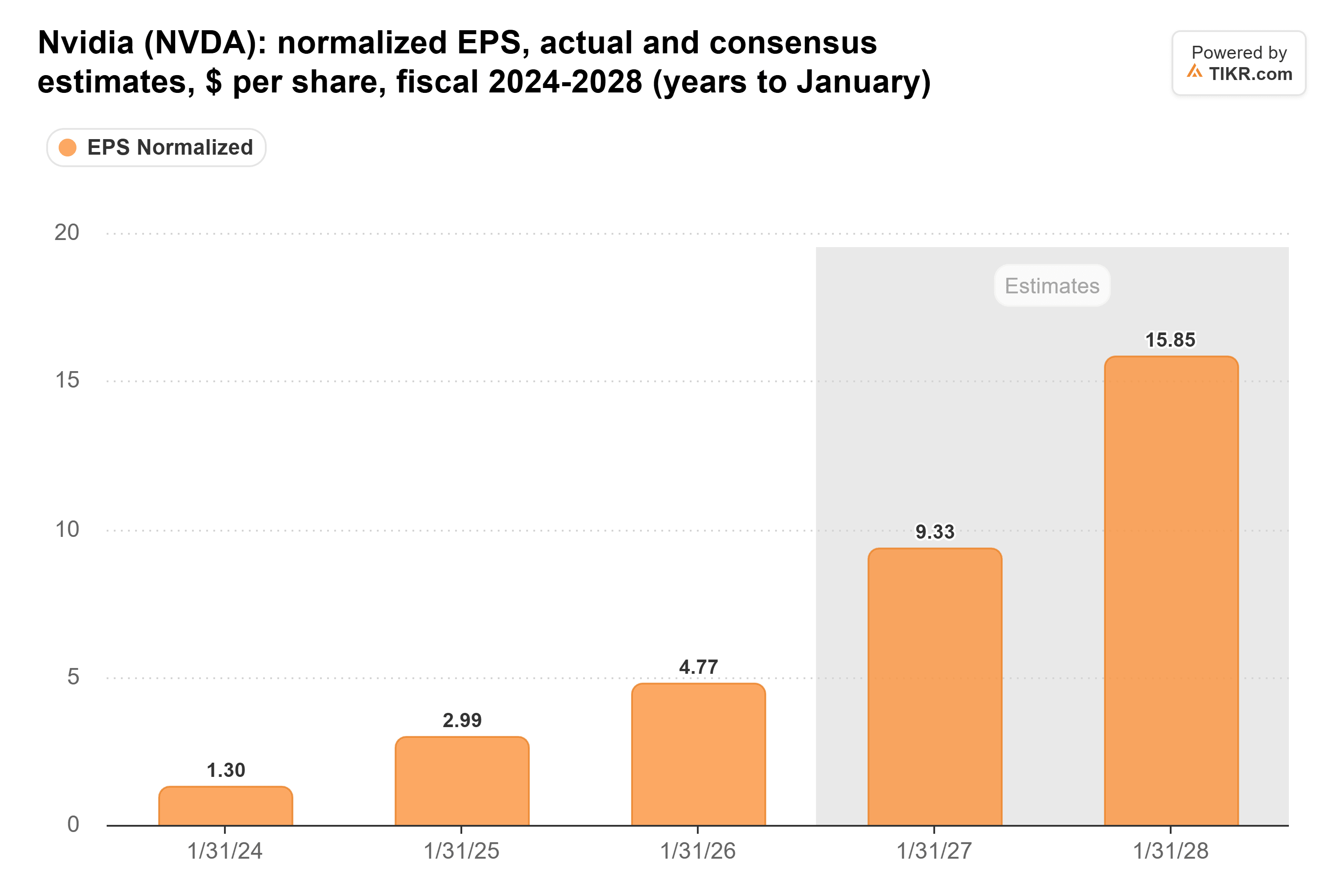
A startup’s CPU research won’t change those estimates before NVIDIA’s next report. The years after fiscal 2028 are the ones to watch, when rivals’ shorter design cycles will have had time to reach the market.
The pace also shows in NVIDIA’s gross margin, which has stayed above 70% in each of the last three fiscal years after dropping to 56.9% in fiscal 2023:
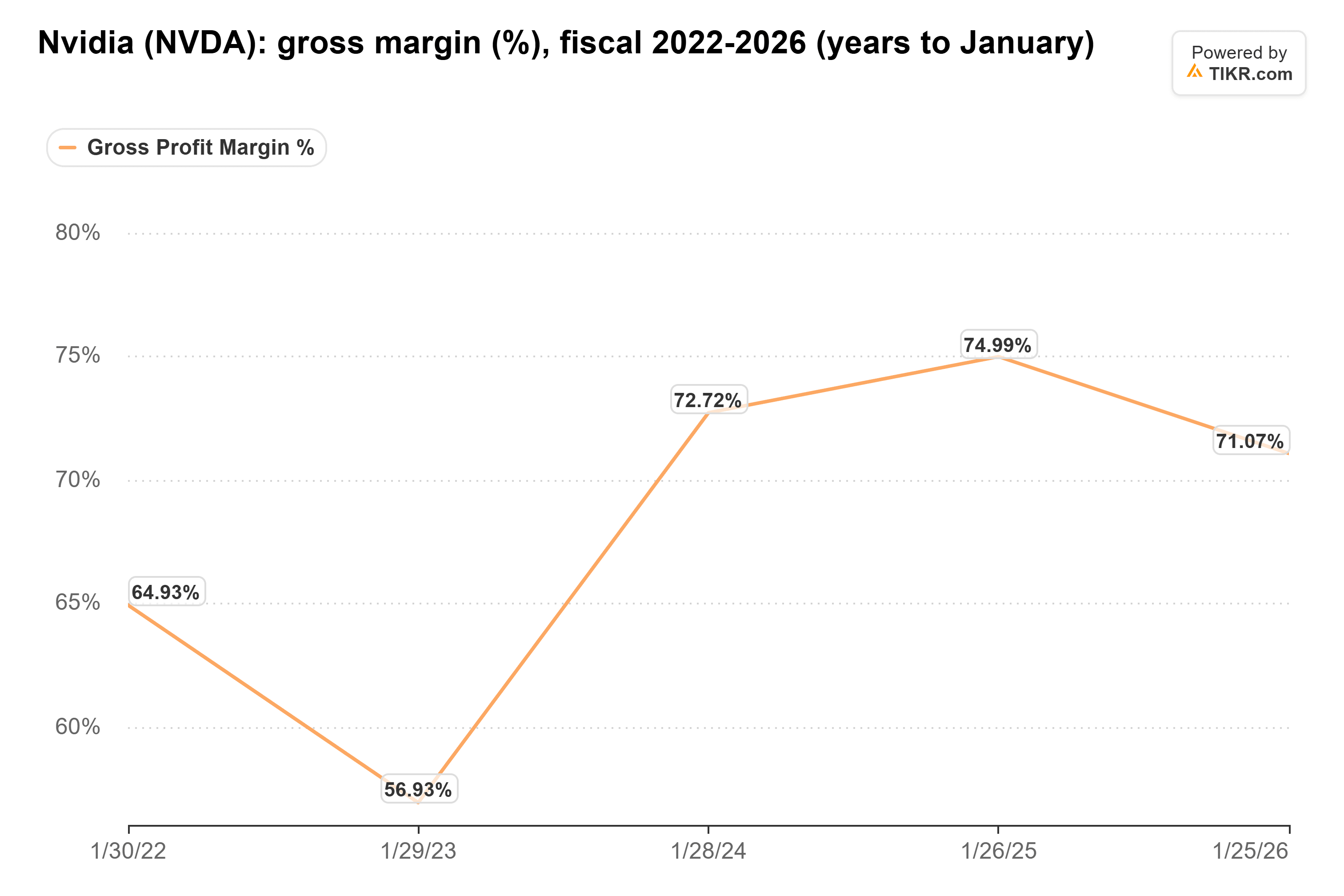
That margin is the prize for any rival that catches up. Morgan Stanley estimates Google’s direct sales of TPU systems will reach $84 billion in 2027, at an assumed 30% gross margin.
NVIDIA gets the same tools
Of course, NVIDIA can use AI to design chips too, and it has plenty to spend: its R&D budget was $18.5 billion in fiscal 2026, up 43%. If the tools cut everyone’s cycle by the same share, NVIDIA could ship even faster and keep its lead.
Smaller teams likely gain more. Williams said the time saved gives his engineers room to “focus on potentially other ideas.” A team NVIDIA’s size already had that room. A startup, or a chip team inside a cloud company, didn’t.
AI had already made NVIDIA’s software easier to leave, when Anthropic’s model taught itself to run on AMD’s chips in three days for one of its models. Now it’s speeding up chip design as well.
The chip teams are coming
Dylan Patel, founder of SemiAnalysis, said on TBPN that Anthropic’s new model got drastically better at chip design in his firm’s testing. He said Anthropic used to pass on making its own chip because “By the time we get a chip out, it’s too slow.” His update: “Now, the model can make the chip.”
In another podcast appearance last week, quoted on Big Technology Podcast, Patel listed who NVIDIA is up against: “NVIDIA is fighting an OpenAI chip team, a Broadcom chip team, a Google chip team, an Anthropic chip team, a Meta chip team.”
Of the five, Broadcom (AVGO) is the only chip company. Analysts expect its revenue to nearly triple, from $63.9 billion in fiscal 2025 to $175 billion in fiscal 2027:
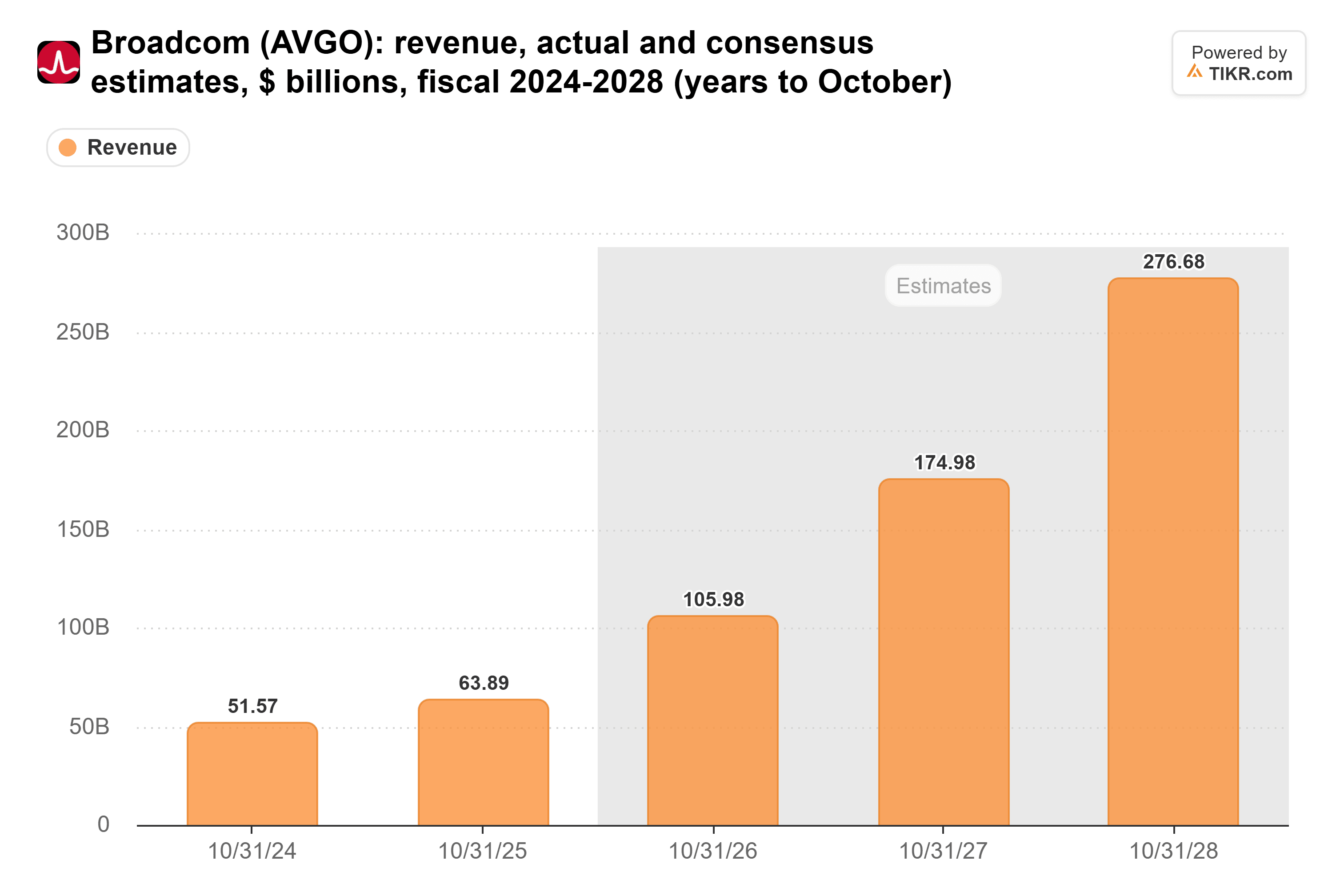
Those estimates show Wall Street betting that more of AI’s chips get designed outside NVIDIA. Every month AI cuts from those teams’ design cycles makes that bet easier to win.
The lead gets smaller
NVIDIA’s edge shrinks because its hardest habit to copy, a new chip every year, just got easier for everyone. It still has the budget, the customers and the same tools, so this is a big lead getting smaller. But a gross margin above 70% only holds while rivals stay a step behind, and AI keeps bringing them closer.
The squeeze is likely to show up in NVIDIA’s margin before it shows up in revenue.
Williams is also describing only one startup’s CPU, still in development, and only the stage before design starts. The next read comes on Nov. 17, when NVIDIA reports and management updates its outlook for a 71% to 72% gross margin in the January 2027 quarter. Management tied that dip to rising memory prices, so a margin that slips further without a memory explanation would be the first real sign of rival pressure.
So what is NVIDIA stock actually worth?
TIKR lets you forecast the future price of any stock in less than a minute. Just enter a few assumptions into TIKR’s valuation model and see what NVIDIA could be worth. Start from Wall Street consensus estimates, or adjust the inputs to reflect your own view of the business. It’s free to use.
Disclaimer:
Please note that the articles on TIKR are not intended to serve as investment or financial advice from TIKR or our content team, nor are they recommendations to buy or sell any stocks. We create our content based on TIKR Terminal’s investment data and analysts’ estimates. Our analysis might not include recent company news or important updates. TIKR has no position in any of the stocks mentioned. Thank you for reading, and happy investing!