


Key Takeaways
- DoorDash agreed to buy Instacart for $65 a share, or about $17 billion, the same day it posted record third-quarter revenue of $4.62 billion, up 34%.
- Instacart also held early talks with Uber, which is already working on a Delivery Hero deal and now faces a much bigger DoorDash in grocery.
- Card data puts DoorDash at 59% of delivery app spending, so antitrust review is the main risk to a deal that may not close until 2028.
- DoorDash lined up a bridge loan of up to $13 billion, and the fourth-quarter report should show how the deal reshapes its balance sheet.
DoorDash already owns the dinner order. Now it wants the weekly grocery run.
On Thursday, DoorDash (DASH) agreed to buy Instacart (CART) for $65 a share, an equity value of about $17 billion. That price is a 26% premium to Instacart’s October 22 close, the day before reports of a sale surfaced. The deal arrived alongside a quarter that set records for revenue, order volume and net income.
Uber (UBER) was the other name in the room. Instacart held early talks with both companies, but the talks with Uber ended. Uber is already working on its roughly $15 billion deal for Delivery Hero, and it now faces a rival that will be far larger in grocery.
DoorDash shares fell about 6% on October 26 as the talks leaked, then recovered. The stock closed Friday at $179, still about 31% below its 52-week high of $258.
The strategy is easy to follow. Getting it past regulators is the hard part.
Records first, then the deal
On any other day, the quarter would have been the headline.
- Revenue rose 34% to $4.62 billion, ahead of the $4.56 billion consensus.
- Marketplace GOV climbed 36% to $33.9 billion on 993 million orders, up 28%.
- Net income jumped 91% to $466 million, and adjusted EBITDA reached $1.06 billion.
Deliveroo, bought last year, lifted growth but trimmed net revenue margin to 13.6% from 13.8%. Free cash flow came in at $787 million, and DoorDash has repurchased $1.0 billion of stock this year.
That’s the base DoorDash is buying from…

Fourth-quarter guidance calls for GOV of $35.4 billion to $36.4 billion, so the core business is still growing into the deal.
Grocery is the real prize
Instacart is smaller but more specialized. It brought in $3.75 billion of revenue last year, compared with $13.72 billion at DoorDash, and its marketplace covers nearly 100,000 stores.
The merger adds more than 50,000 DoorDash stores to that list. Instacart’s brand and app stay, and its shoppers can choose whether to take DoorDash orders too.
The bigger prize may be software. More grocers could run their own websites and retail media networks on Instacart’s tools, which pushes DoorDash deeper into merchant services and advertising. It also moves DoorDash closer to Walmart and Amazon in grocery delivery.
“The boundaries between restaurant, grocery and broader retail delivery have become increasingly blurred,” Michael Gunther of Consumer Edge told Restaurant Business.
Here’s how the three companies compare on profitability:
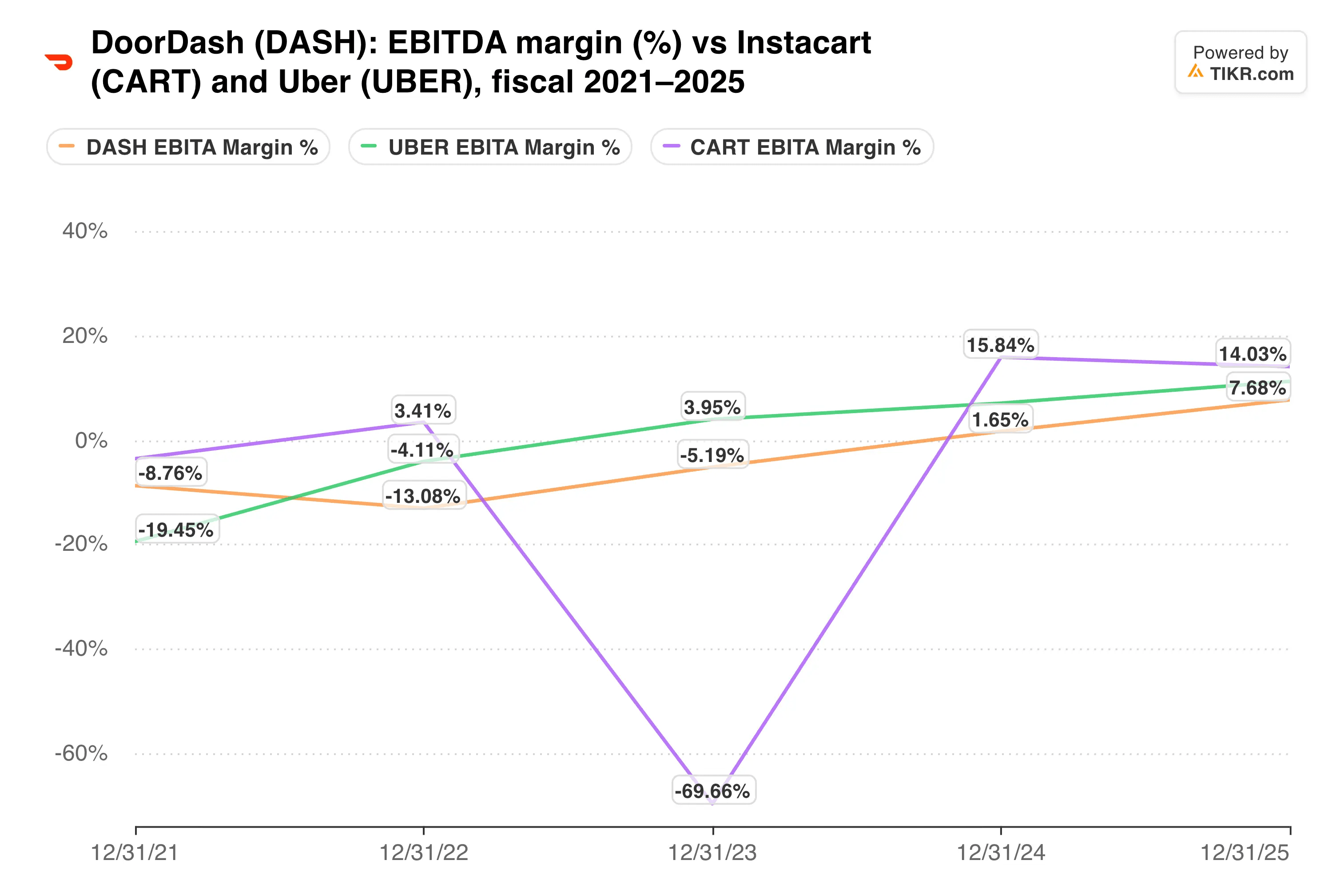
Instacart brings its own profit stream. That matters when DoorDash’s trailing EBIT margin is just 6.2%.
TIKR tracks 45 analysts on DoorDash. How many say “Buy”?
See the full breakdown of Buy, Hold, and Sell ratings on DoorDash, along with Wall Street’s revenue and earnings estimates, all in one place. More than 500,000 investors use TIKR to research stocks like this one. See DoorDash’s Analyst Ratings
The FTC holds the calendar
Antitrust is the main risk. Consumer Edge card data shows DoorDash’s share of spending across major delivery apps rose to 59% in the third quarter, from 44% in 2021. Instacart and Uber Eats held 18% each.
On those figures, the combined company would capture roughly three of every four dollars. That is a tough sell while grocery prices sit at the center of cost-of-living politics.
The timeline is long as well. DoorDash expects to close at the end of 2027 or in the first half of 2028, pending Hart-Scott-Rodino review, an Instacart shareholder vote and approvals in Canada and Israel.
Funding adds weight. DoorDash ended the quarter with $6.8 billion of cash and investments, and at least 75% of the price comes in cash. JPMorgan has committed a 364-day bridge loan of up to $13 billion.
Now watch what that does to the balance sheet.
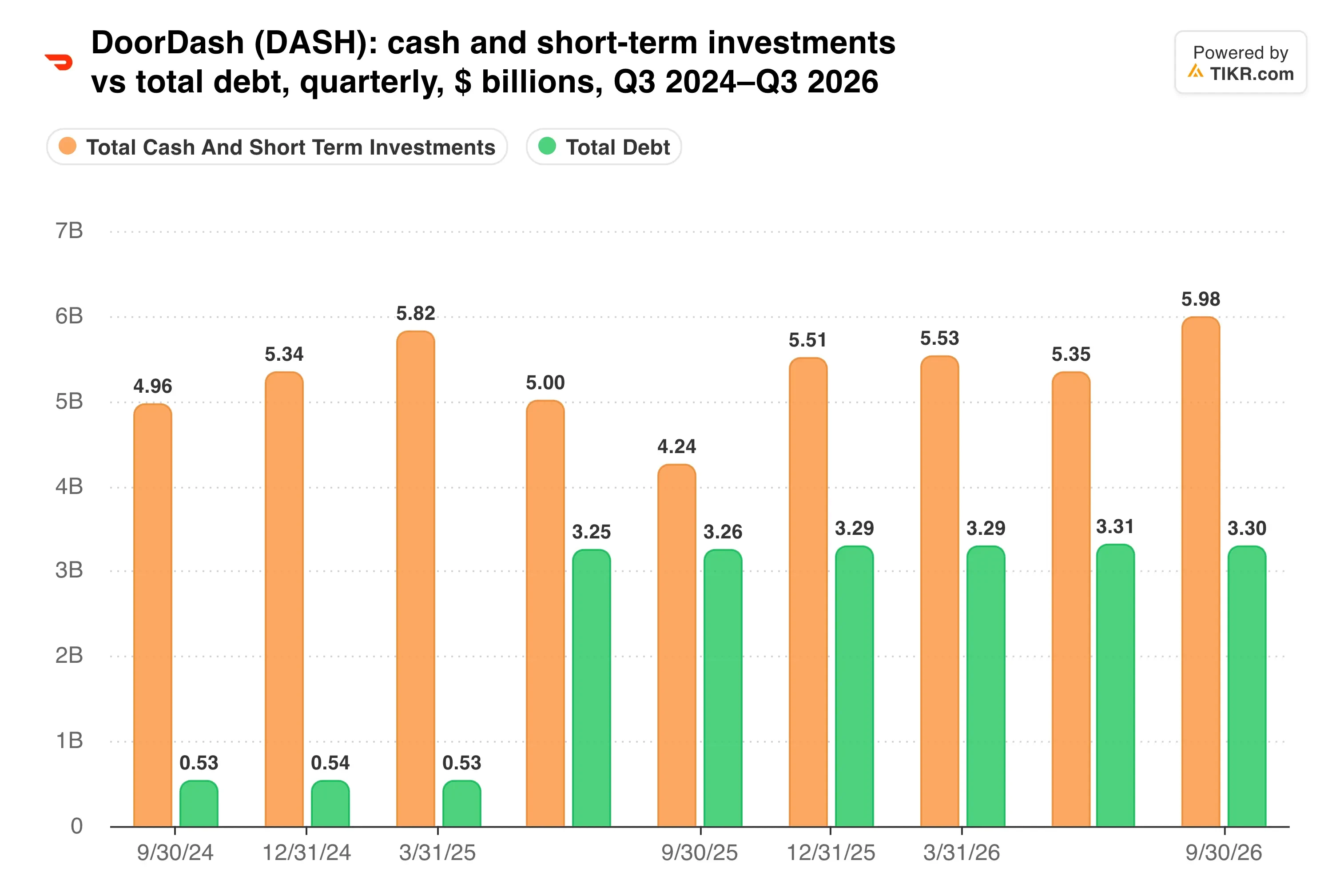
Net cash of about $2.7 billion today would likely swing to sizable net debt at closing.
My take: The deal fits, and the core business looks strong enough to carry it. But at 25.9x forward earnings, investors are paying now for a combination regulators could hold up into 2028. The $254 average target implies 42% upside, yet I’d wait to see how the FTC responds before treating that as the base case.
The first checkpoint is whether regulators issue a second request. After that, the February fourth-quarter report should show how management plans to fund the cash.
So what is DoorDash stock actually worth?
TIKR lets you forecast the future price of any stock in less than a minute. Just enter a few assumptions into TIKR’s valuation model and see what DoorDash could be worth. Start from Wall Street consensus estimates, or adjust the inputs to reflect your own view of the business. It’s free to use.
Disclaimer:
Please note that the articles on TIKR are not intended to serve as investment or financial advice from TIKR or our content team, nor are they recommendations to buy or sell any stocks. We create our content based on TIKR Terminal’s investment data and analysts’ estimates. Our analysis might not include recent company news or important updates. TIKR has no position in any stocks mentioned. Thank you for reading, and happy investing!


