
Key Takeaways
- Stifel reiterated its Buy rating on Rivian on Nov. 9 with a $22 price target, 62% above today’s price.
- Rivian stock is 40% below its 52-week high after a year of new shares, a delayed profit goal and a shrinking US EV market.
- Analysts expect sales to more than double by 2027, but they’ve widened their 2027 loss estimate over the past 90 days.
- Stifel’s target needs only a little more than Rivian’s usual sales multiple, but it leaves out the dilution that Rivian’s cash burn keeps bringing.
Rivian Automotive (RIVN) shares sit 40% below their 52-week high after a year of dilution and delayed profit goals.
On Nov. 9, Stifel analyst Stephen Gengaro reiterated his Buy rating and $22 price target, which implies 62% upside from $13.56.
The selloff came with real reasons
In March, Rivian dropped its goal of positive adjusted EBITDA in 2027 so it could spend more on self-driving. In July, it sold 86.25 million shares at $15.50 apiece, 23% below the prior close. Shares outstanding climbed from 1,240 million at the end of 2025 to 1,460 million on Sept. 30. And R2 launched into a shrinking market: US EV sales fell 30.7% this year through September, according to Motor Intelligence data.
Stifel likes what R2 is doing
The firm said Rivian’s third-quarter results and higher 2026 delivery guidance back its view. It also said R2 orders are converting better than expected. Revenue rose 38% to $2.16 billion, and deliveries jumped 46% to a record 19,248.
TIKR tracks 25 analysts on Rivian. How many say “Buy”?
See the full breakdown of Buy, Hold, and Sell ratings on Rivian, along with Wall Street’s revenue and earnings estimates, all in one place. More than 500,000 investors use TIKR to research stocks like this one. See Rivian’s Analyst Ratings
Does $22 add up?
The Street has warmed up to Rivian even as the stock fell, lifting the consensus target to $18 from $14 a year ago.
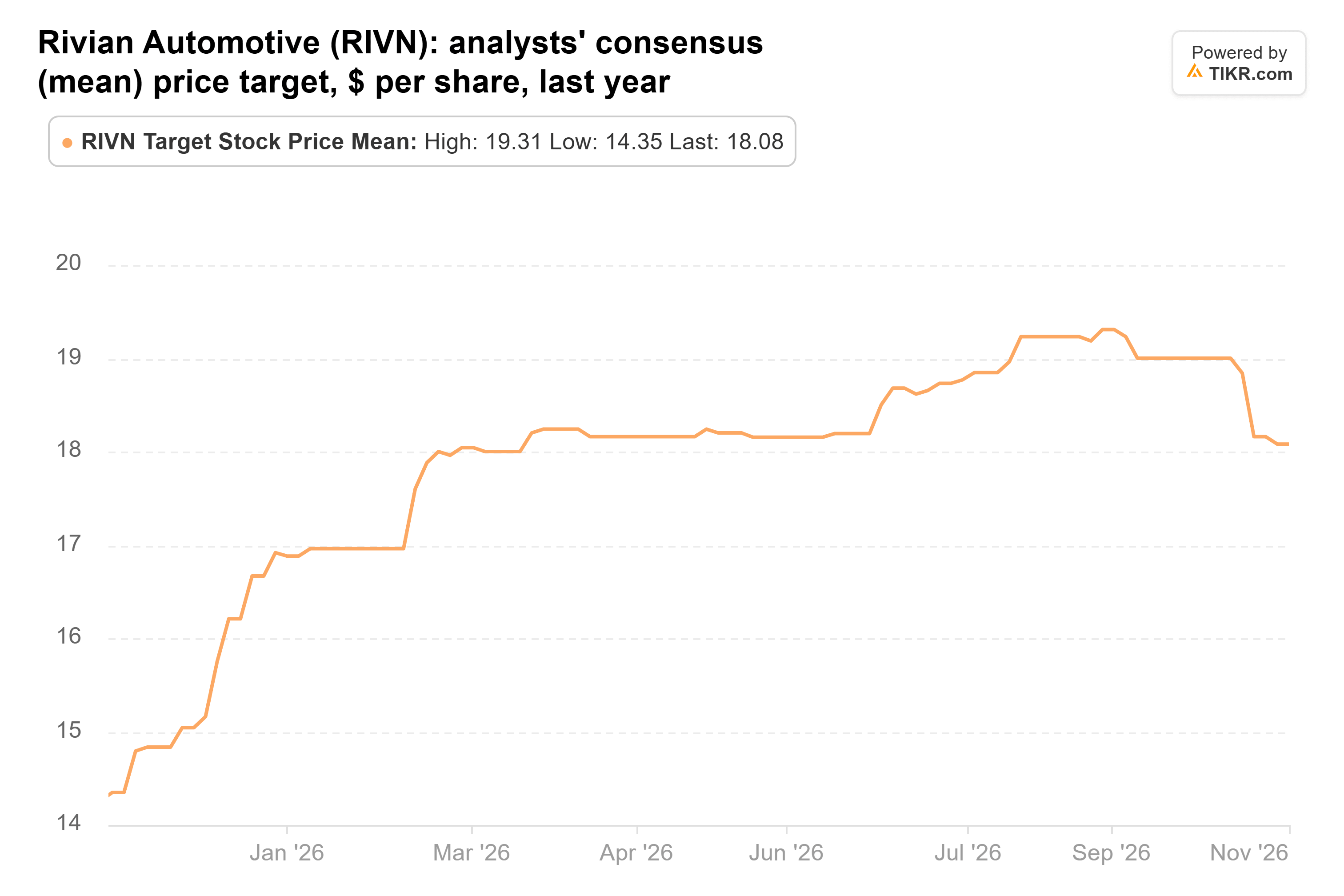
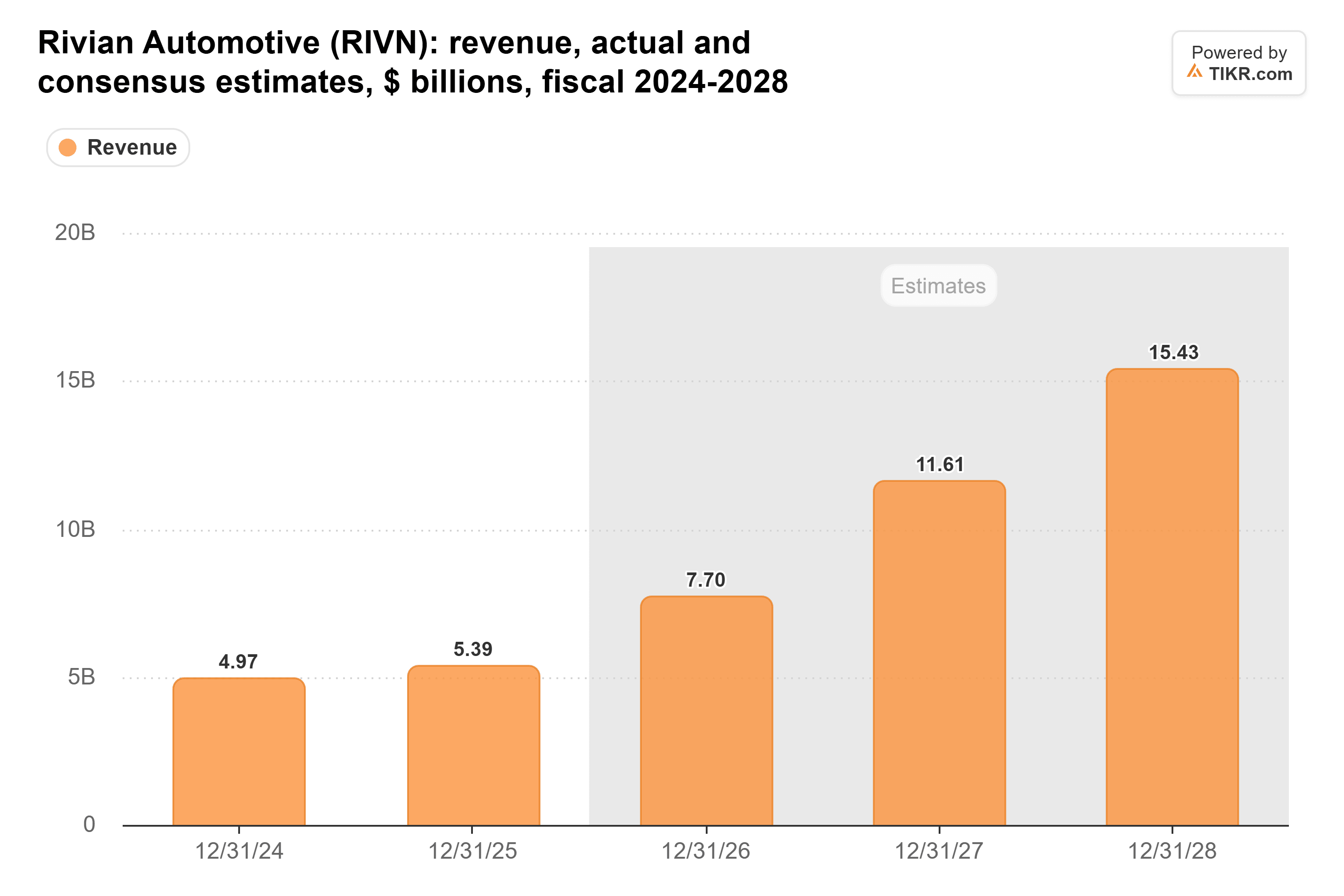
Stifel’s $22 sits 22% above that average, and the highest of the 25 targets is $25. Analysts also expect sales to more than double, from $5.39 billion in 2025 to $11.6 billion in 2027.
But on 2027’s losses, they’ve gone the other way: consensus EPS is -$2.33, from -$2.18 90 days ago.
With no earnings to price, Rivian trades on forward sales. It’s at 1.8x, well below its 2.7x average over the last three years.
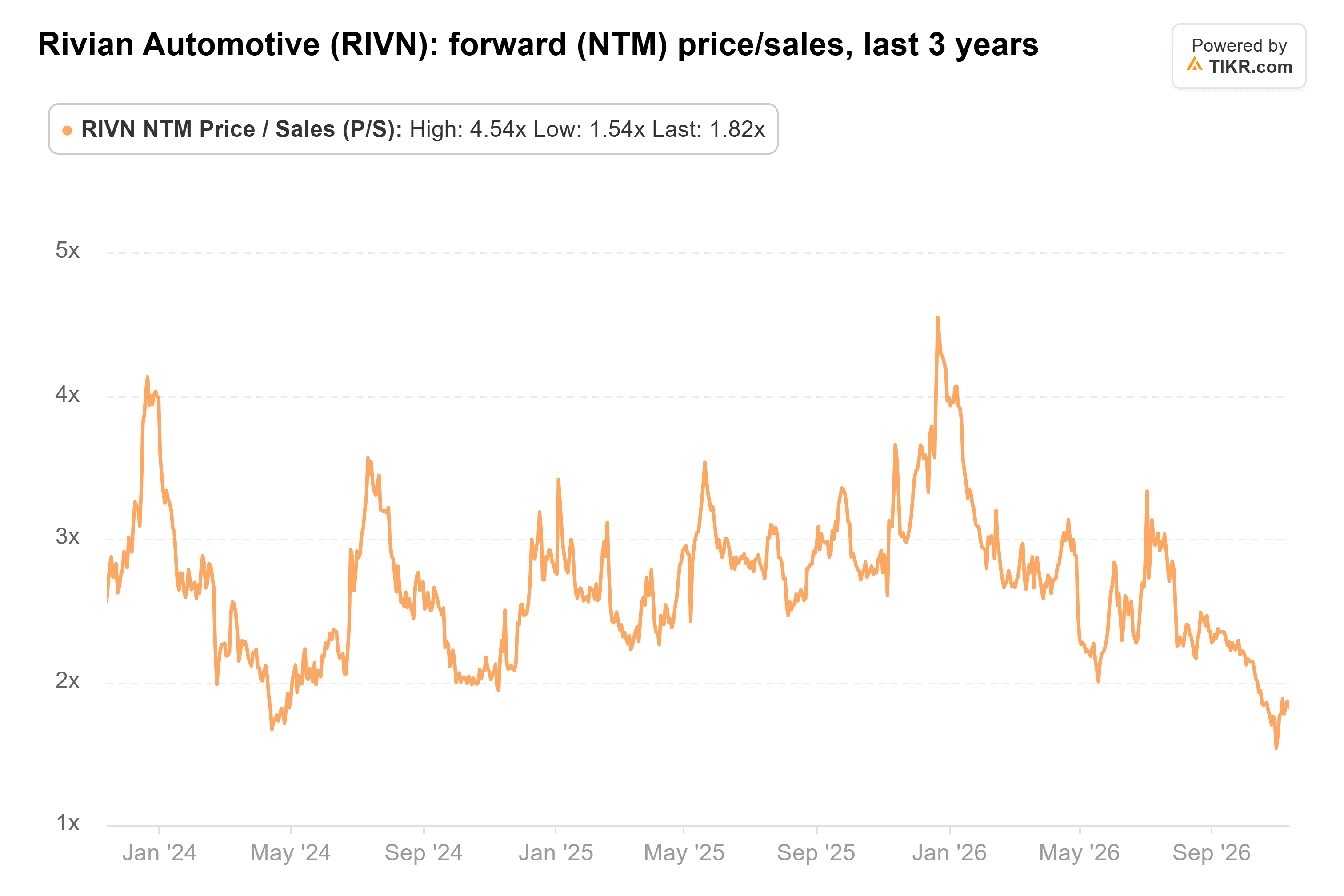
At $22, it would trade at about 2.9x, just above that average. For a company expected to grow this fast, that’s not much to ask.
The share count is the catch
Rivian burned $1.12 billion of free cash flow in the third quarter. It ended the quarter with $5.5 billion of cash and short-term investments. And $22 would sit above the $20.13 conversion price on Rivian’s $1.5 billion of convertible notes due 2029.
Stifel looks right about R2. But to reach $22 in a year, Rivian would need to stop adding shares, and with more than $1 billion of cash going out each quarter, I don’t see that happening. December is the next test: management expects to exit the year at an automotive gross profit, and fourth-quarter results in early 2027 will show whether it did.
So what is Rivian stock actually worth?
TIKR lets you forecast the future price of any stock in less than a minute. Just enter a few assumptions into TIKR’s valuation model and see what Rivian could be worth. Start from Wall Street consensus estimates, or adjust the inputs to reflect your own view of the business. It’s free to use.
Disclaimer:
Please note that the articles on TIKR are not intended to serve as investment or financial advice from TIKR or our content team, nor are they recommendations to buy or sell any stocks. We create our content based on TIKR Terminal’s investment data and analysts’ estimates. Our analysis might not include recent company news or important updates. TIKR has no position in any of the stocks mentioned. Thank you for reading, and happy investing!