Key Takeaways
- Caterpillar (CAT) stock fell 10.3% over the past week, closing at $559 on November 6 despite record third-quarter sales and a $78 billion backlog.
- GE Vernova (GEV) reported 96% organic order growth, while Vertiv (VRT) raised its full-year sales guidance by $650 million, highlighting continued demand for power infrastructure.
- Caterpillar appears potentially undervalued following the selloff, although weaker construction equipment demand, margin pressure, and capacity expansion remain important risks.
What Happened?
Caterpillar (CAT) stock fell 10.3% over the past week, closing at $558.63 on November 6, down from $622.75 on October 30, as investors reassessed its earnings outlook despite record quarterly results.
According to Caterpillar’s third-quarter earnings report, sales increased 17% year over year to a record $20.7 billion, while adjusted earnings per share jumped to $7.20 from $4.95 a year earlier.
The company also reported a record $78 billion backlog, supported by strong demand for power generation equipment serving data centers and other infrastructure projects.
Power infrastructure demand remained strong across the industry.
GE Vernova (GEV) reported approximately $29 billion in quarterly orders, up 96% organically, while Vertiv (VRT) raised its full-year sales guidance by $650 million following 61% quarterly revenue growth.
However, Caterpillar’s guidance raised concerns about its traditional construction equipment business.
Management expects moderate fourth-quarter sales growth, while construction equipment dealers are projected to reduce inventory by approximately $1.6 billion, creating a near-term headwind for shipments.
Profitability also remains a concern.
Caterpillar’s third-quarter adjusted operating margin reached 20.6%, with operating profit benefiting from $128 million in tariff-related recoveries. However, manufacturing investments and other costs remain important factors for future profitability.
During the third-quarter earnings call, CEO Joe Creed described the company’s position relative to its progressively higher margin targets as “skipping along the bottom.”
Meanwhile, several Wall Street firms reduced their Caterpillar price targets following earnings.
Citi lowered its target to $800, while Morgan Stanley set its target at $675, reflecting concerns about valuation despite continued strength in power generation demand.
These revisions highlight investors’ growing caution about Caterpillar’s near-term outlook, even as its record backlog supports longer-term growth.
Is Caterpillar Stock Undervalued or Overvalued?
Caterpillar appears potentially undervalued following its recent selloff, although projected earnings growth remains critical to the investment case.
According to TIKR estimates dated November 2, normalized earnings per share are projected to reach $32.15 in 2027 and $38.68 in 2028, compared with $19.06 in 2025.
The 2027 consensus estimate was approximately 1.3% below its October 23 level of $32.59, suggesting earnings expectations had changed relatively little despite the initial selloff.
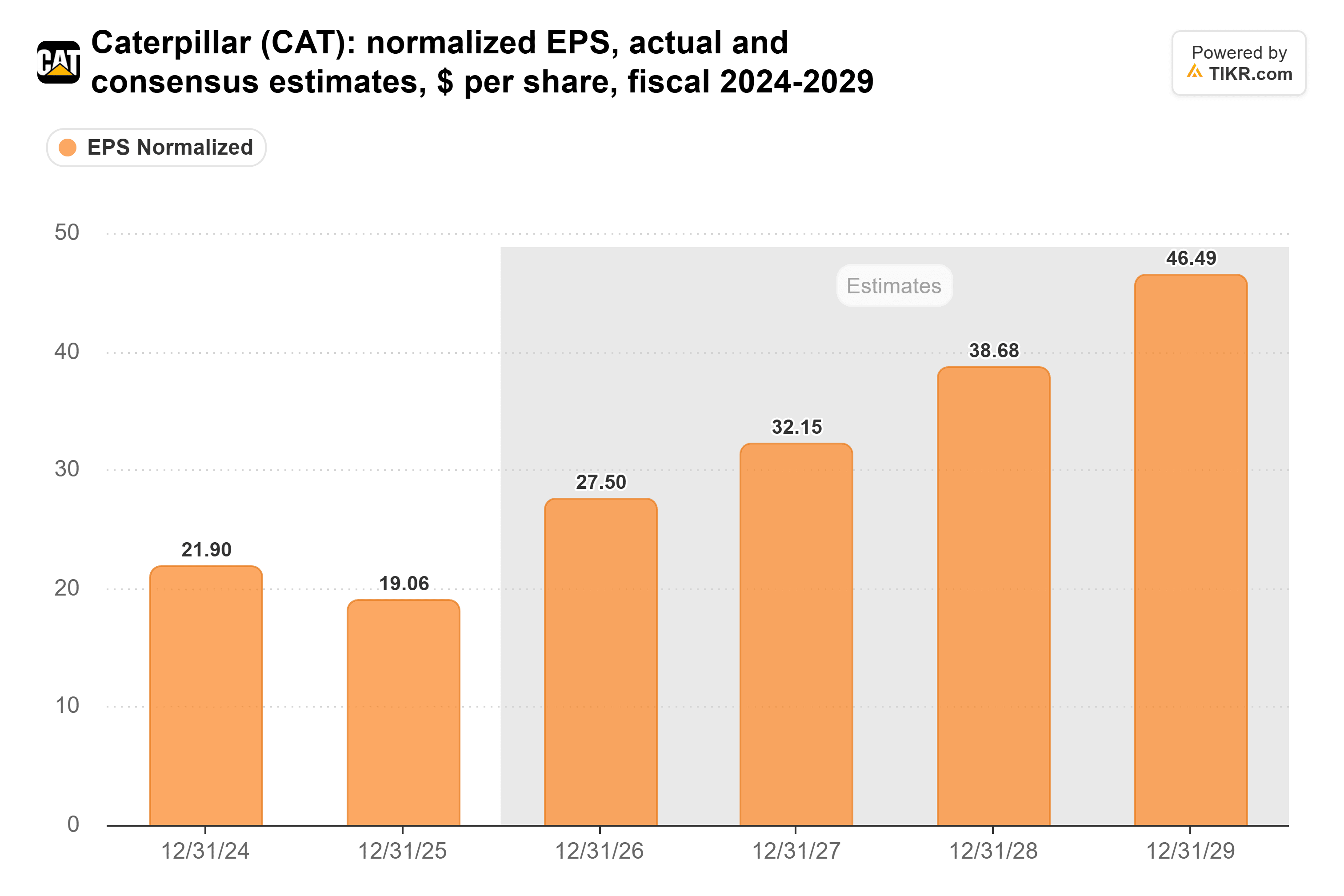
These forecasts suggest analysts expect substantial earnings growth, supported by power generation demand, manufacturing expansion, and Caterpillar’s record backlog.
Meanwhile, Caterpillar’s forward earnings multiple had declined from approximately 42x at its June peak to around 21x by late October, compared with its five-year average of roughly 19x.
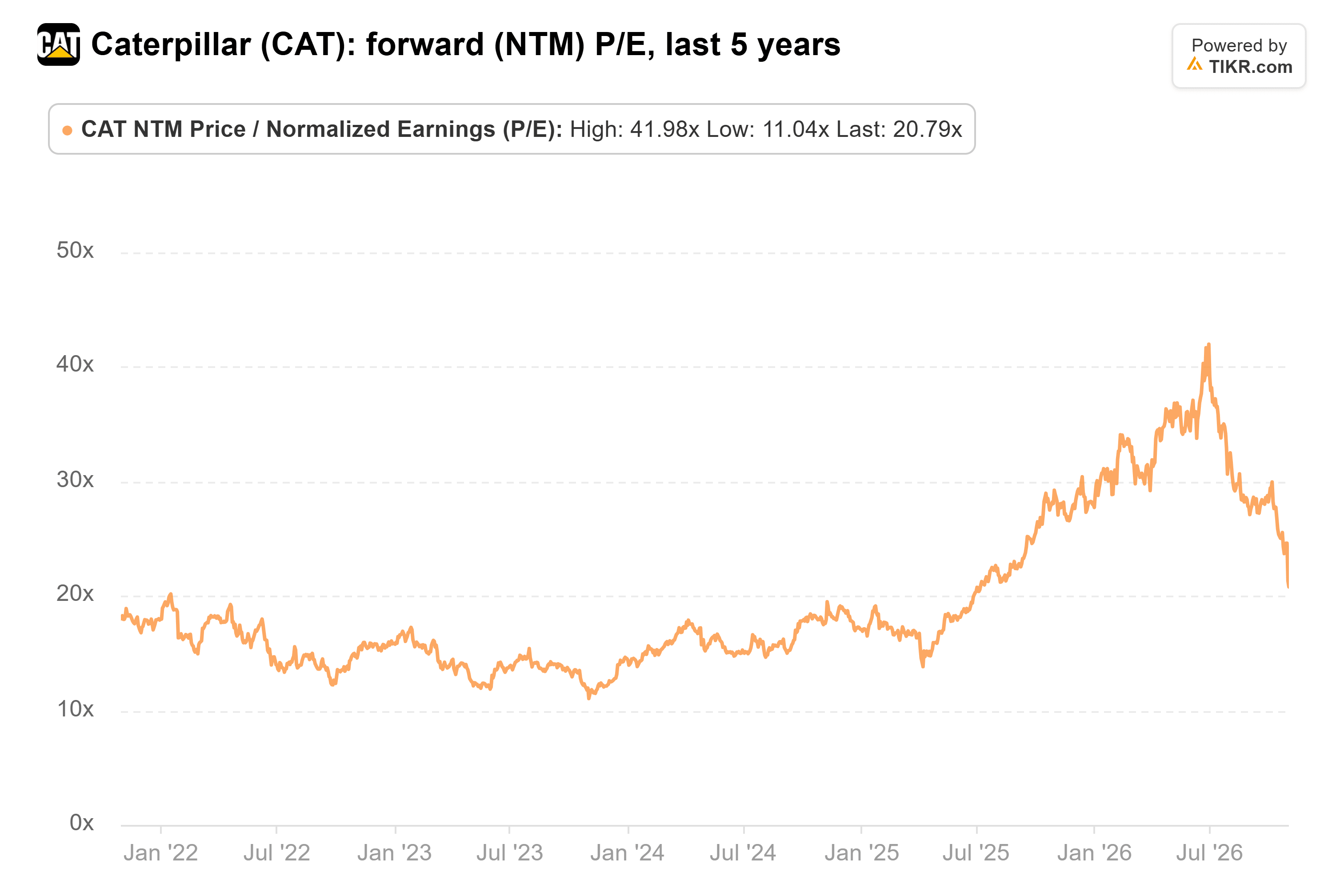
Based on its November 6 closing price of approximately $559 and TIKR’s November 2 consensus forecast of $32.15 in 2027 earnings per share, Caterpillar trades at approximately 17.4x projected full-year 2027 earnings.
That valuation appears more attractive following the selloff, although it depends on Caterpillar achieving its expected earnings growth and improving profitability as new manufacturing capacity comes online.
Manufacturing expansion could pressure margins if equipment demand slows, particularly in 2028 and 2029, while weaker construction sales could limit near-term profitability.
A Fair Price for Patient Buyers
Caterpillar looks potentially undervalued for patient investors, but stronger construction demand, improving margins, and continued execution on its power generation backlog will be essential to sustaining a recovery.
Investors should watch fourth-quarter results and management’s 2027 outlook, expected in January, for evidence that profitability is moving toward the company’s longer-term targets.
So what is Caterpillar stock actually worth?
TIKR lets you forecast the future price of any stock in less than a minute. Just enter a few assumptions into TIKR’s valuation model and see what Caterpillar could be worth. Start from Wall Street consensus estimates, or adjust the inputs to reflect your own view of the business. It’s free to use.
Disclaimer:
Please note that the articles on TIKR are not intended to serve as investment or financial advice from TIKR or our content team, nor are they recommendations to buy or sell any stocks. We create our content based on TIKR Terminal’s investment data and analysts’ estimates. Our analysis might not include recent company news or important updates. TIKR has no position in any of the stocks mentioned. Thank you for reading, and happy investing!