Key Takeaways
- Boeing (BA) director Akhil Johri bought 3,000 shares for $500,067 on Nov. 17, with the stock 36% below its January high.
- The stock slid after Boeing said its 737 ramp is taking longer and set free cash flow targets for 2027 and 2028 below what analysts expected, and GE Aerospace’s (GE) engine shipments depend partly on that pace.
- Analysts’ 2027 EPS estimate has nearly halved in 90 days, to $2.18 a share.
- The buy is a vote for management’s 2029 cash plan, but the stock isn’t cheap on today’s estimates, and Boeing’s January report is the next test.
Boeing stock is 36% below its January high, and one of its directors just bought $500,000 of it.
Akhil Johri has been a Boeing director since 2020 and was United Technologies’ CFO from 2015 to 2019.
His Form 4, filed Nov. 18, shows he bought 3,000 shares on Nov. 17 at an average price of $166.69, or $500,067 in all.
His bet depends on the same thing GE Aerospace needs from Boeing: more 737s out the door, each carrying two LEAP engines from GE’s CFM venture with Safran.
The ramp keeps slipping
Most of the fall came in the past three months, when the stock lost 11% on news from Boeing itself.
On the Oct. 28 Q3 call, CEO Kelly Ortberg said “it is taking us longer than we had expected to demonstrate performance at rate 47,” and Boeing now targets 52 a month in the back half of 2027.
Management also guided to about $3 billion of free cash flow in 2027 and about $6 billion in 2028, against the $5.5 billion and $9.8 billion analysts had expected.
GE Aerospace feels that pace too: its LEAP deliveries rose 26% through the first nine months but only 5% in Q3, though it still raised its 2026 guidance across the board on Oct. 20.
He went from 150 shares to 3,150
Johri held 150 Boeing shares before this buy, so the 3,000 he added make up about 95% of his stake now.
That’s a real commitment of his own money, and he made it after the guidance cut was public. (If you want to follow buys like this one, here’s how to track the stocks insiders are buying.)
TIKR tracks 27 analysts on Boeing. How many say “Buy”?
See the full breakdown of Buy, Hold, and Sell ratings on Boeing, along with Wall Street’s revenue and earnings estimates, all in one place. More than 500,000 investors use TIKR to research stocks like this one. See Boeing’s Analyst Ratings
Does $167 add up?
Analysts still expect Boeing’s earnings to recover, just more slowly than they did three months ago:
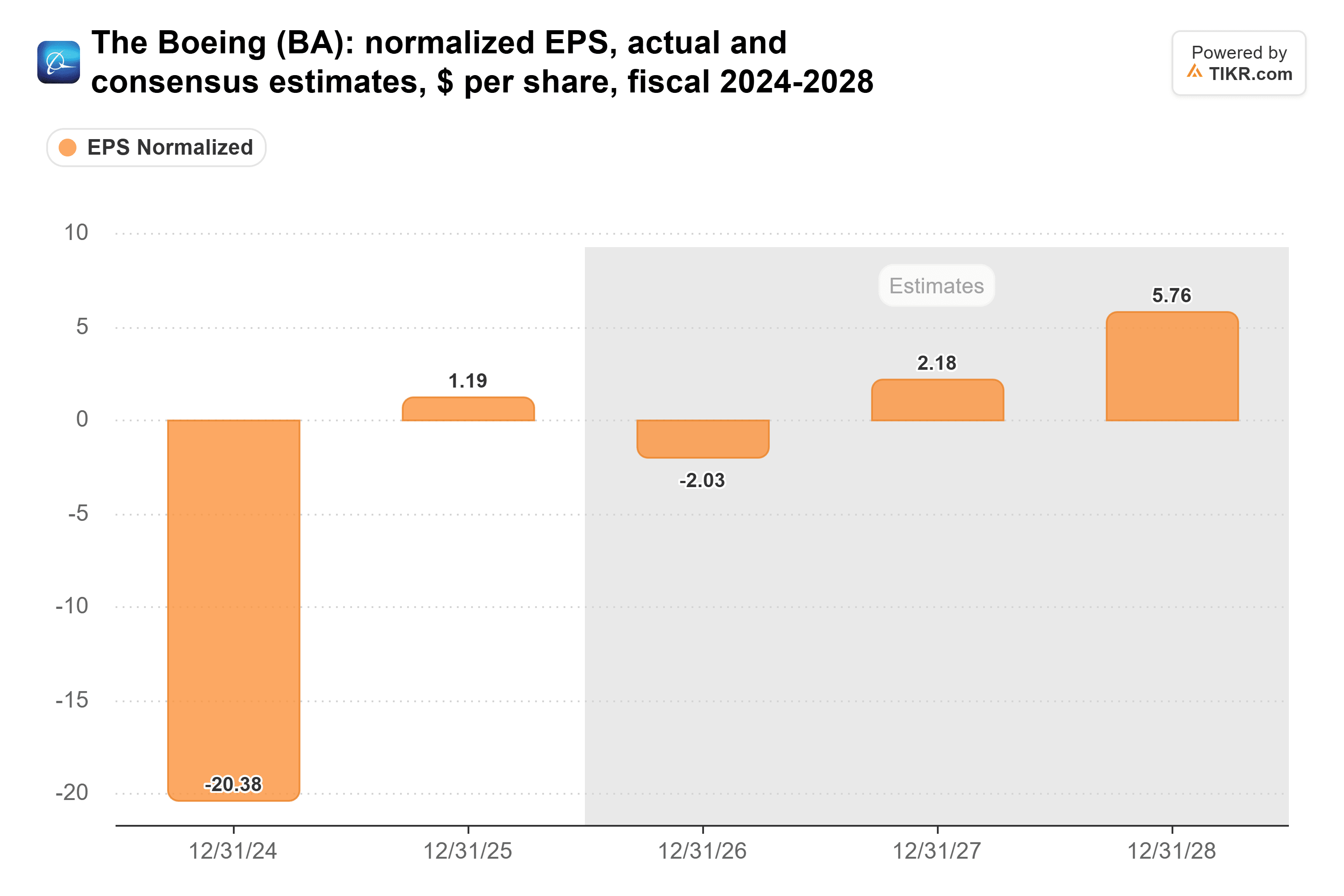
2025’s $1.19 included a $12.47-a-share gain on the sale of Boeing’s Digital Aviation Solutions unit, so the only profitable year on the chart came from a one-time sale.
And the estimates are still falling: the 2027 figure is down to $2.18 from $4.12 90 days ago.
At $162.91, Boeing trades at about 28x the $5.76 analysts expect for 2028. Johri paid about 29x. From 2014 to 2019, Boeing’s forward P/E averaged 19x and peaked at 27x.
The bull case is about cash: management targets $10 billion of free cash flow in 2029, about 8% of Boeing’s $129 billion market value.
Analysts have cut their targets more slowly than the stock has fallen. The average target is down to $233 from its $275 peak in August:
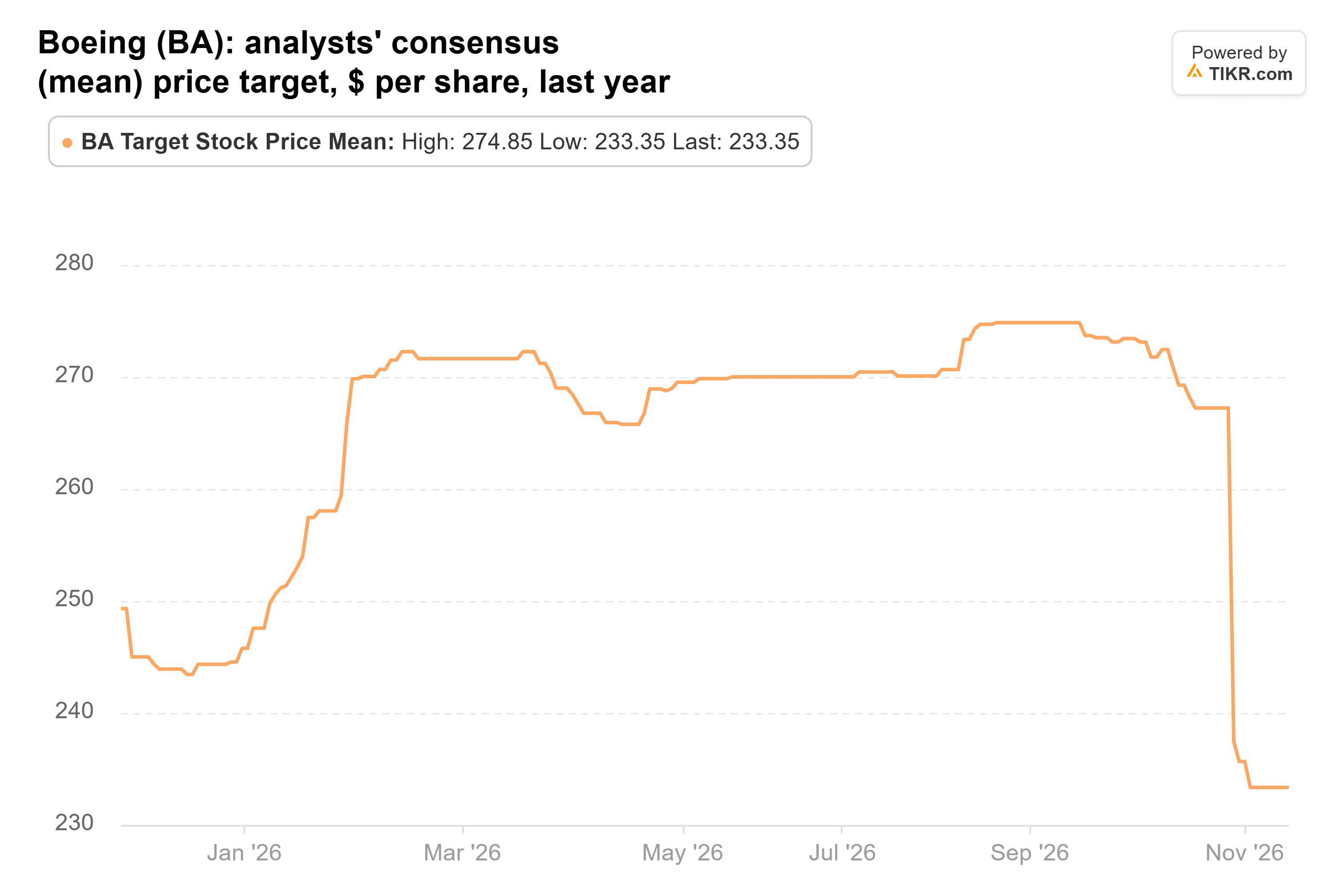
That’s still 43% above today’s price. But on 2028 estimates it works out to about 41x, well above any forward P/E Boeing had from 2014 to 2019.
I’d wait for January
The cash targets assume the 777X is certified by midyear 2027, and CFO Jay Malave called a slip into 2028 “a scenario that would be significant.”
Johri’s buy is a credible vote for management’s 2029 plan. But at about 28x, 2028 earnings that analysts are still cutting, the stock already prices in a recovery that keeps slipping, and I’d want the estimates to stop falling before following him.
Boeing reports its Q4 in January. If management keeps its $3 billion target for 2027 and shows the 737 stable at 47 a month, that could be the sign.
So what is Boeing stock actually worth?
TIKR lets you forecast the future price of any stock in less than a minute. Just enter a few assumptions into TIKR’s valuation model and see what Boeing could be worth. Start from Wall Street consensus estimates, or adjust the inputs to reflect your own view of the business. It’s free to use.
Disclaimer:
Please note that the articles on TIKR are not intended to serve as investment or financial advice from TIKR or our content team, nor are they recommendations to buy or sell any stocks. We create our content based on TIKR Terminal’s investment data and analysts’ estimates. Our analysis might not include recent company news or important updates. TIKR has no position in any of the stocks mentioned. Thank you for reading, and happy investing!