

Key Takeaways
- All-In co-host Chamath Palihapitiya says AI agents like Meta’s Muse put the App Store’s 30% rev share “on notice,” just as Apple is up 10% in a month.
- Mark Zuckerberg says Muse’s business model is to take a small cut of each transaction, so Meta is going after the same toll Apple collects.
- My view: Muse still runs on the iPhone and analysts still expect strong earnings growth, so near-term profits look safe.
- The main risk is the multiple: Apple trades at about 37x forward earnings, near a five-year high, which leaves little room for doubts about services.
Meta Platforms (META) and its new AI agent, Muse, are the week’s big tech story. Meanwhile, Apple (AAPL) is up 10% in a month, which asks what it takes to hit $350.
Billionaire investor Chamath Palihapitiya thinks Muse could make that climb harder.
“Things like GrokBot and Muse really put the App Store and its 30% rev share on notice,” he said on the All-In podcast.
His logic? Agents shop and act for you outside of apps. If the agent does the buying, what exactly is Apple taking 30% of?
Meta wants the toll too
Here’s the kicker: Meta isn’t trying to make commerce free.
On Decoder, Meta CEO Mark Zuckerberg said the long-term plan for Muse is to “take a very small cut of whatever the transaction is.”
So Meta isn’t tearing down the toll booth. It wants its own.
How much rides on that cut?
Apple’s margins have climbed steadily for years:
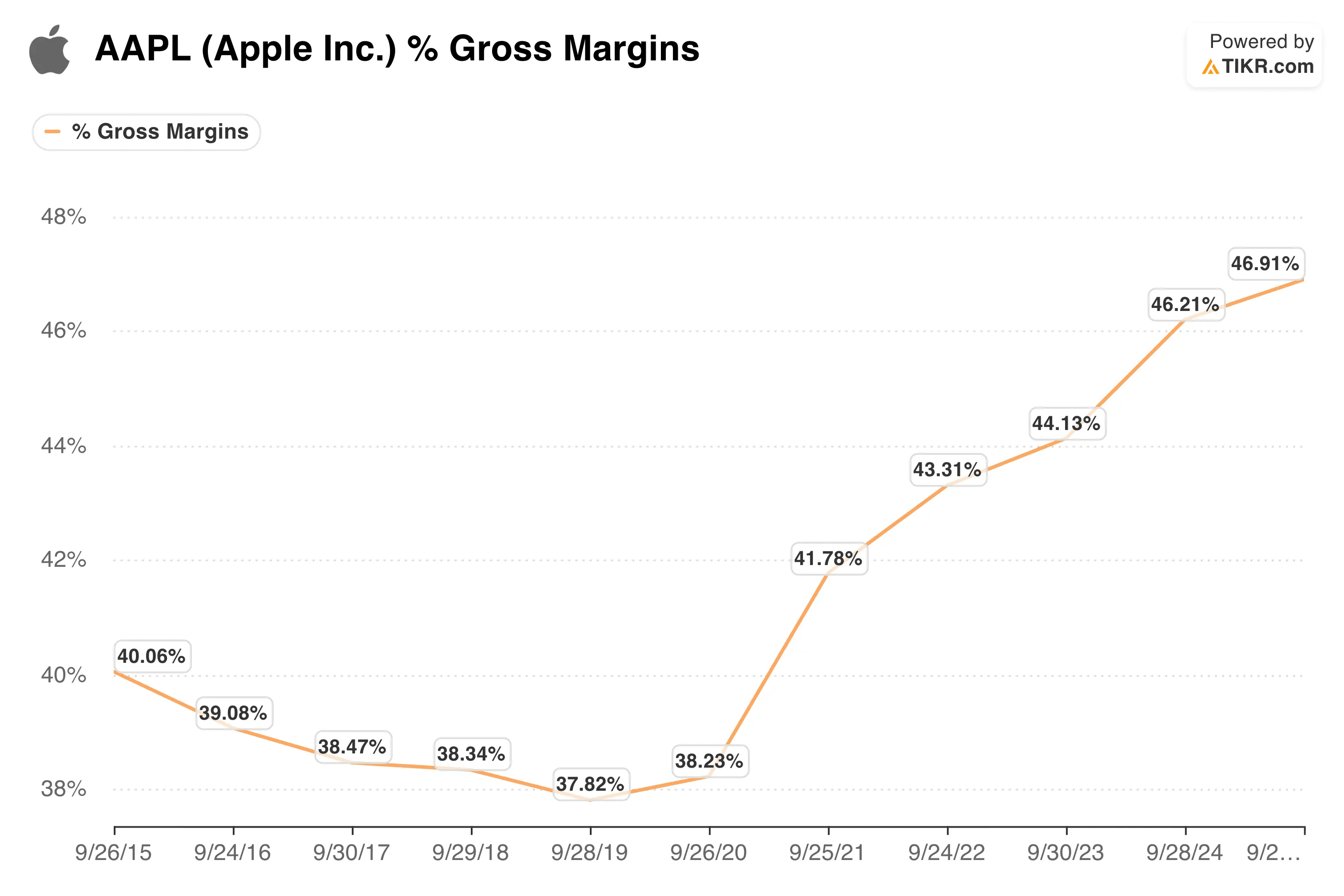
Gross margin bottomed at about 38% in fiscal 2019, then rose every year to about 47% in fiscal 2025. The bull case gives much of the credit to high-margin services like the App Store. (Selling software costs far less than building phones.)
And investors pay up for that mix:
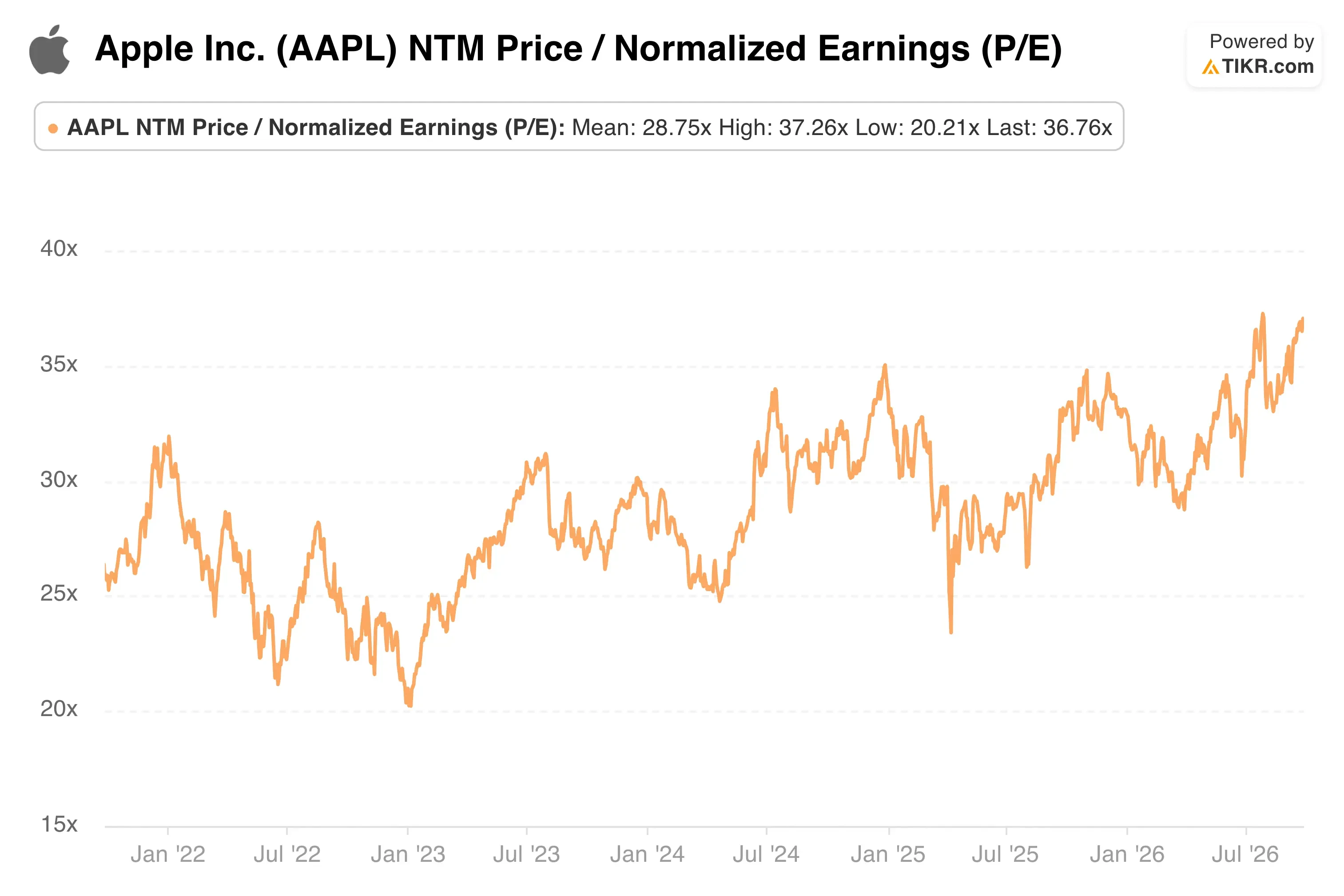
Apple trades at about 37 times forward earnings, right near its five-year high and well above its average of about 29 times.
That’s a lot of faith in the services story.
Here’s the catch
Of course, Muse still runs as an app on the iPhone. So Apple still controls the door Muse walks through.
Bloomberg’s Mark Gurman said on Decoder he expects “a reinvention of the app store coming in the next few years,” built around AI and Siri.
Think of a shopping mall. The stores can change, but the landlord still collects rent.
What’s already priced in?
Analysts don’t seem worried:
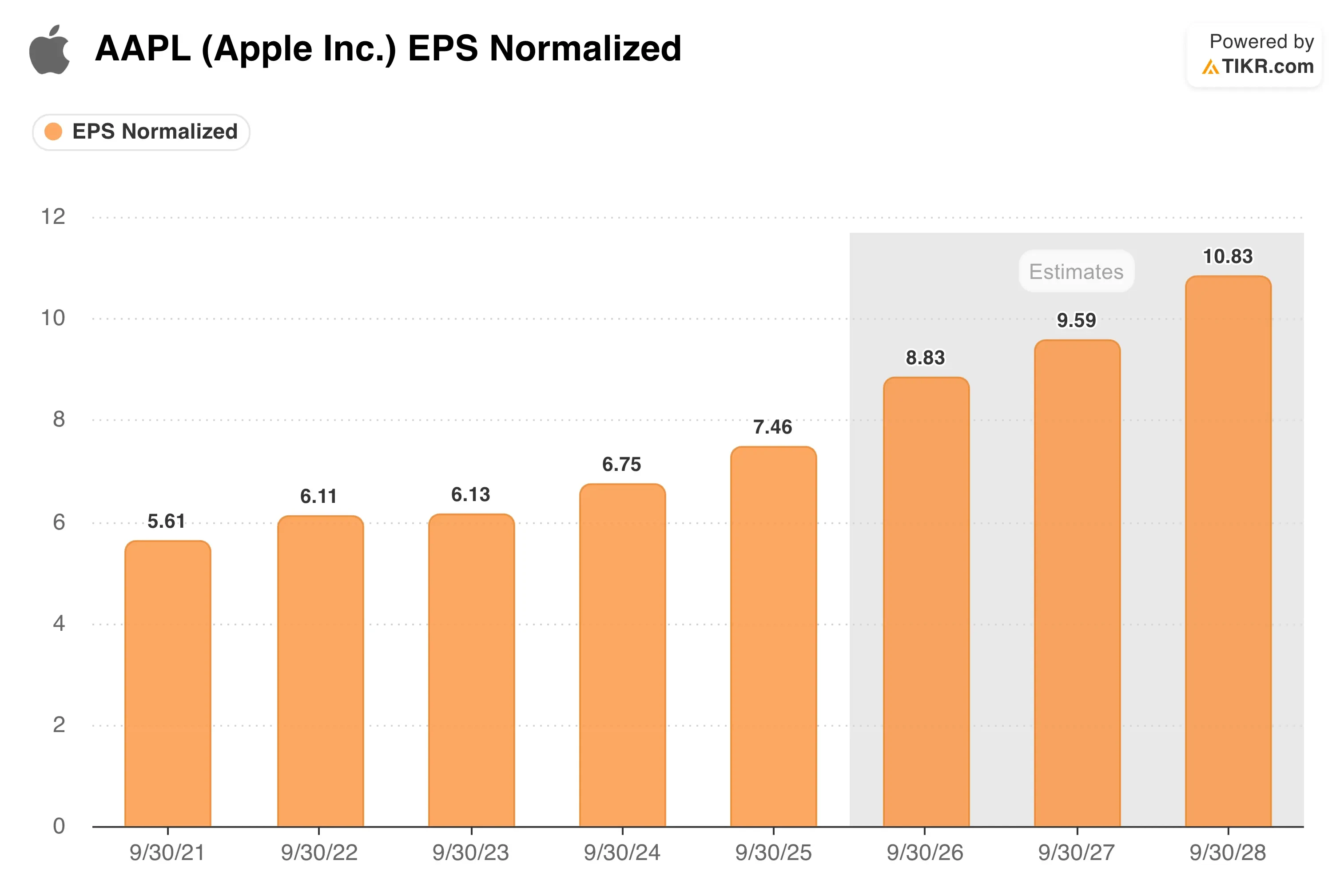
They see normalized EPS rising from $7.46 in fiscal 2025 to $10.83 by fiscal 2028, about 45% growth, with no visible App Store hit.
So if agents chip away at the cut, the risk falls on the multiple first, not near-term earnings.
My view: Chamath is asking the right question, but Apple still owns the device, so near-term earnings look safe. Still, at 37 times, the stock is priced for the toll to last.
So what is Apple stock actually worth?
TIKR lets you forecast the future price of any stock in less than a minute. Just enter a few assumptions into TIKR’s valuation model and see what AAPL could be worth. Start from Wall Street consensus estimates, or adjust the inputs to reflect your own view of the business. It’s free to use. Value AAPL for free.
Disclaimer:
Please note that the articles on TIKR are not intended to serve as investment or financial advice from TIKR or our content team, nor are they recommendations to buy or sell any stocks. We create our content based on TIKR Terminal’s investment data and analysts’ estimates. Our analysis might not include recent company news or important updates. TIKR has no position in any stocks mentioned. Thank you for reading, and happy investing!


