Key Takeaways
- Vail Resorts yields 5.8% and Best Buy yields 3.7%, after a historically bad winter at Vail and a strong quarter at Best Buy.
- Vail paid out 128% of its free cash flow as dividends in fiscal 2026, while Best Buy paid out 45% over the twelve months to Aug. 1.
- Vail’s net debt has climbed to 3.9x EBITDA, and the company faces a proxy fight with Oasis Management in December.
- At its 5-year growth rate, $10,000 in Best Buy would pay about $5,922 in dividends over 10 years, though its latest raise was just 1%.
A 5.8% yield is hard to ignore, and that’s what Vail Resorts (MTN) pays today. Best Buy (BBY) yields 3.7%, but its business is picking up enough that it raised its full-year outlook in August.
Vail is coming off what CEO Rob Katz called “one of the most challenging winters in history across the western U.S. for the ski industry,” and it’s in a proxy fight.
So if I could put my dividend dollars into just one of them for the next 10 years, which would it be?
| Metric | Best Buy (BBY) | Vail Resorts (MTN) |
|---|---|---|
| Dividend yield | 3.7% | 5.8% |
| Annual dividend | $3.84 a share | $8.88 a share |
| Dividend growth | 10.1% a year, fiscal 2021-2026 | Flat at $8.88, fiscal 2025-2026 |
| Cash dividend payout ratio (TTM) | 45% | 128% |
| Net debt/EBITDA | 0.5x | 3.9x |
| Interest coverage | 40.4x | 2.1x |
Source: TIKR and company releases. TTM to Aug. 1, 2026 for Best Buy and July 31, 2026 for Vail.
6 safe dividend stocks paying retirees 6%+ yields
There are over 100 stocks paying 6%+ annual dividends today.
But after an extensive investment review leveraging TIKR’s proprietary data, we now believe only six of them are truly safe for retirees.
They’re all yours as part of our new investment report. Learn more about how to get access right here.
Best Buy is selling more TVs again
Best Buy’s comparable sales rose 4.1% in the quarter ended Aug. 1 against the same quarter a year before. The company raised its fiscal 2027 outlook to $6.70-$6.90 of adjusted EPS, up from $6.30-$6.60. Domestic TV sales grew more than 10%, helped by new RGB TVs.
Free cash flow has topped the dividend in every fiscal year since 2017 but one.
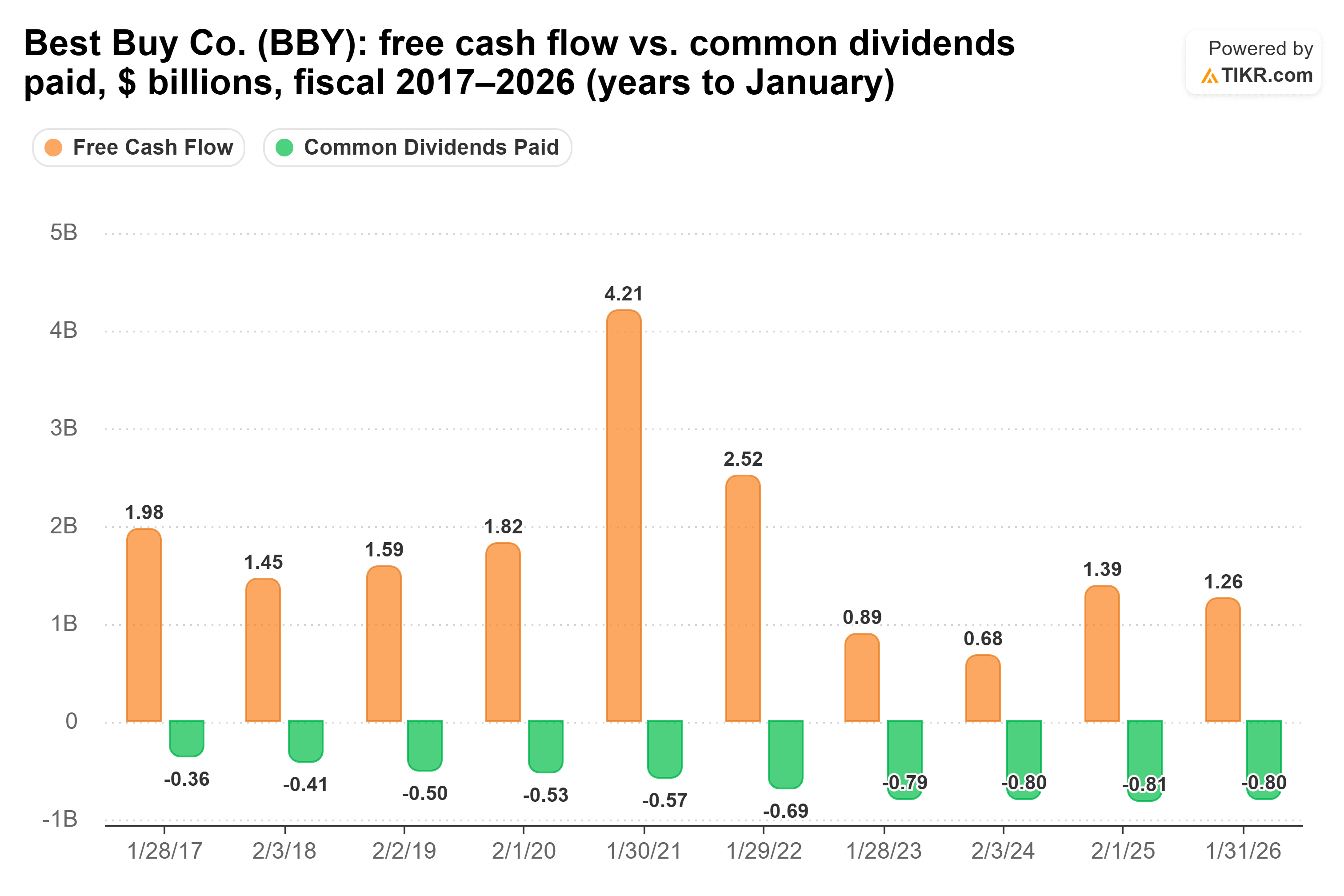
The miss came in fiscal 2024, when free cash flow fell to $0.68 billion against $0.80 billion of dividends. Over the twelve months to Aug. 1, the cash dividend payout ratio was a comfortable 45%.
The pace of raises is the weak spot. Best Buy’s dividend grew 10.1% a year from fiscal 2021 to fiscal 2026, from $2.35 to $3.80 a share, but this year’s raise was just 1%, to $0.96 a quarter. Management said in May that it has raised the quarterly dividend 13 straight years and remains “committed to being a premium dividend payer.” Jason Bonfig took over from Corie Barry as CEO on Nov. 1, so his first raise is the one to watch. The main risk is tariffs.
Vail is paying out more than it brings in
Best Buy’s business picked up this year, and Vail’s took a hit. Resort Reported EBITDA fell to $745.7 million in fiscal 2026, the year to July 31, from $844.1 million the year before. Pass sales for the coming North American season were down about 12% through Sept. 18. Management expects $805 million to $865 million of Resort Reported EBITDA in fiscal 2027.
Free cash flow fell short of the dividend in both fiscal 2025 and fiscal 2026.
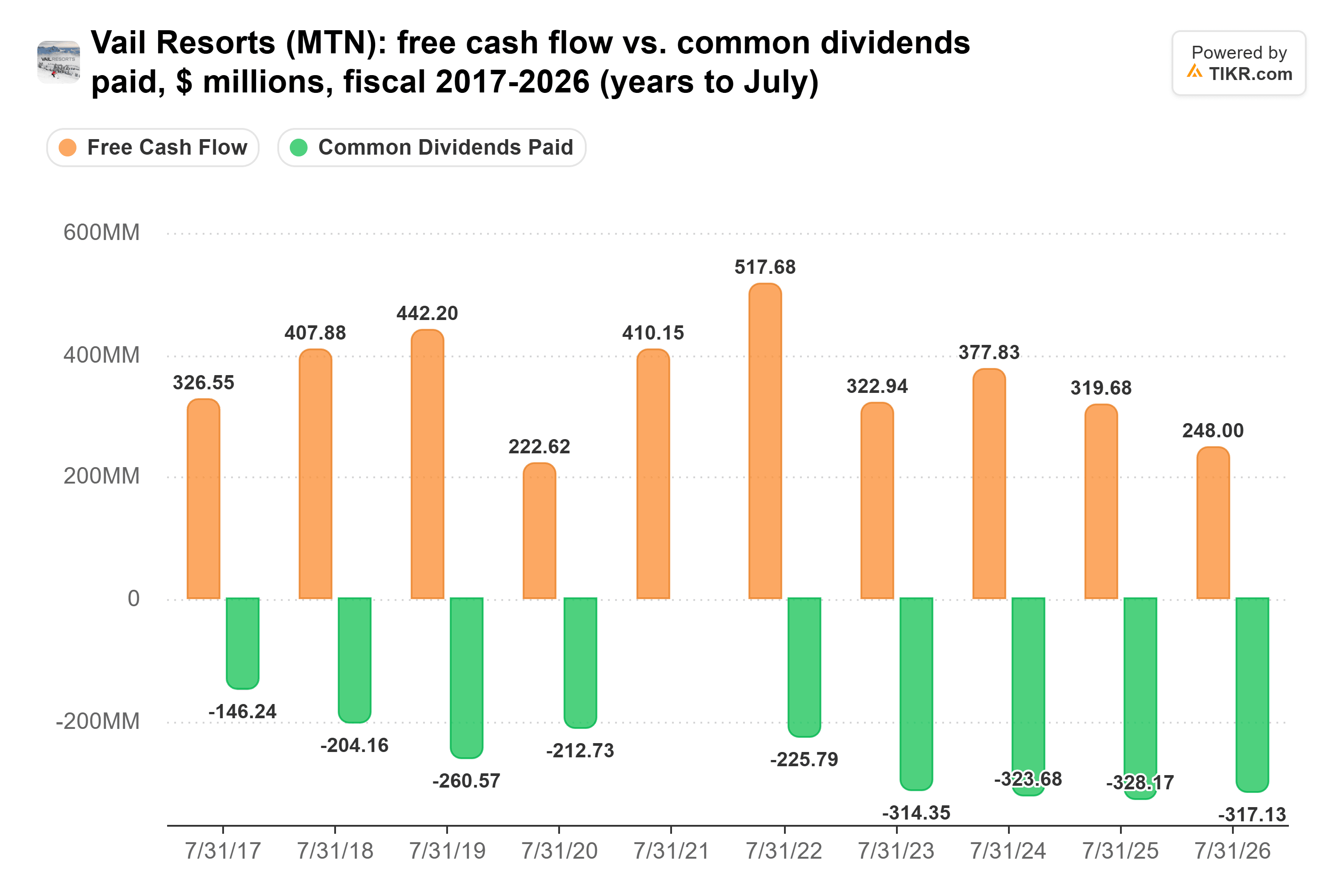
In fiscal 2026, Vail paid $317 million in dividends against $248 million of free cash flow, an uncovered 128%. Management said in September: “Even at the low end of our fiscal 2027 guidance range, we expect to generate positive free cash flow after continuing to fund our capital program and dividends.”
Then there’s the proxy fight. Oasis Management has put up its own board nominees ahead of a December vote. On Oct. 30, Baron Capital, one of Vail’s largest shareholders, backed the board.
So which dividend wins?
My dividend dollars for the next 10 years go to Best Buy. Vail’s bigger check hasn’t been covered by its free cash flow, and its net debt has climbed from 2.1x EBITDA in fiscal 2022 to 3.9x in fiscal 2026.
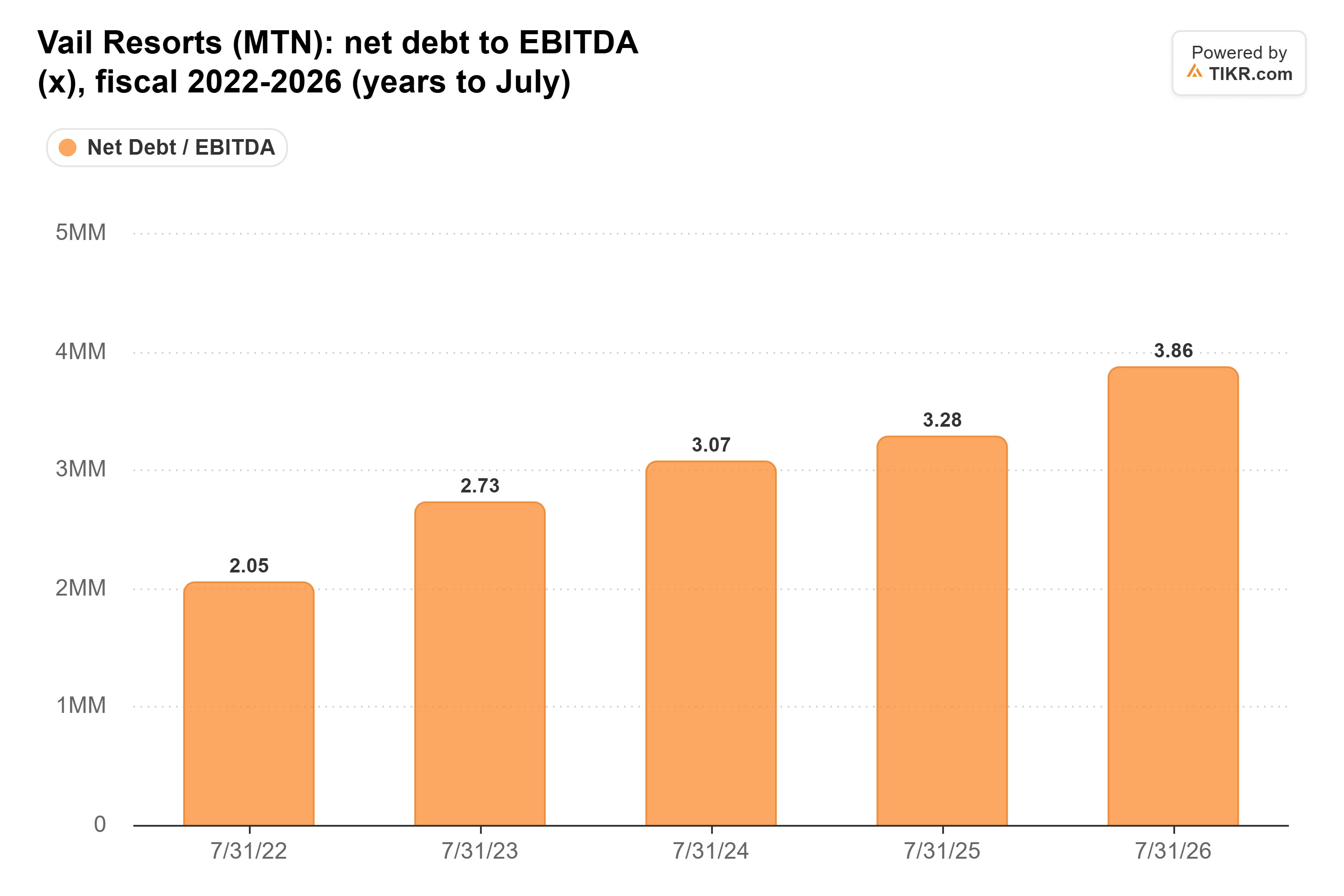
Management expects leverage of about 3.5x by the end of fiscal 2027 if net debt stays where it is. But with EBIT covering interest just 2.1x, Vail doesn’t have much room to keep borrowing for the dividend. Best Buy’s 0.5x and 40.4x leave it plenty.
At its 5-year growth rate, $10,000 in Best Buy pays $370 a year now and about $879 in year 10. That’s about $5,922 over the decade, and an 8.8% yield on the original cash by the end. I’d call that the best case, given this year’s 1% raise.
None of this means Vail’s dividend is about to go. It pays far more today, and the company held the payout through a terrible winter. Over 10 years, though, I trust the check backed by the stronger balance sheet.
Of course, a strong pass season and a decisive December vote would put Vail’s dividend on much firmer ground.
Forget Best Buy: 6 safe 6%+ dividend yields you can buy right now
Dividends can hold the key to enormous wealth. But only if you buy the right ones.
Picking the right high-yield dividend stock can be the difference between a dream retirement…and scraping by every month, waiting for the next Social Security check to clear.
We’ve identified six stocks yielding 6%+ that we believe every retiree should know about right now. (And Best Buy isn’t one of them.)
Disclaimer:
Please note that the articles on TIKR are not intended to serve as investment or financial advice from TIKR or our content team, nor are they recommendations to buy or sell any stocks. We create our content based on TIKR Terminal’s investment data and analysts’ estimates. Our analysis might not include recent company news or important updates. TIKR has no position in any of the stocks mentioned. Thank you for reading, and happy investing!