Key Takeaways
- Apple CEO John Ternus called memory pricing “unprecedented” and said Apple’s manufacturing purchase obligations rose $33 billion from June to September.
- Memory costs look set to weigh on Apple’s gross margin into fiscal 2027, and its price increases only partly offset them.
- Micron and Sandisk earn gross margins of 85% or more, while HP’s PC business earns a 4.6% operating margin.
- At 36x forward earnings against a 29x five-year average, Apple leaves little room for analysts’ 5% EPS growth forecast for fiscal 2027 to slip.
Apple (AAPL) just put a dollar figure on what the AI memory boom costs every company that isn’t building data centers.
On Apple’s fiscal fourth-quarter call, new CEO John Ternus put it bluntly: “What we’re seeing with memory pricing right now is unprecedented.”
Then he had “one more thing” to add: “as we work to improve supply, our manufacturing purchase obligations have increased by $33 billion from June to the September quarter.”
Apple’s 10-Q put those obligations at $57.0 billion on June 27, a jump of nearly 60% in three months.
It’s a windfall for memory makers Micron (MU) and Sandisk (SNDK). HP (HPQ) buys from the same market for its PCs on far thinner margins, so it will show whether the squeeze is Apple’s alone.
The memory bill lands in fiscal 2027
Analysts already expect a slower year. After normalized EPS jumped 20% to $8.98 in fiscal 2026, consensus has it growing about 5% to $9.42 in fiscal 2027:

Memory is the main reason. Apple’s gross margin peaked at 50.1% in the June quarter, then fell to 47.9% in September:
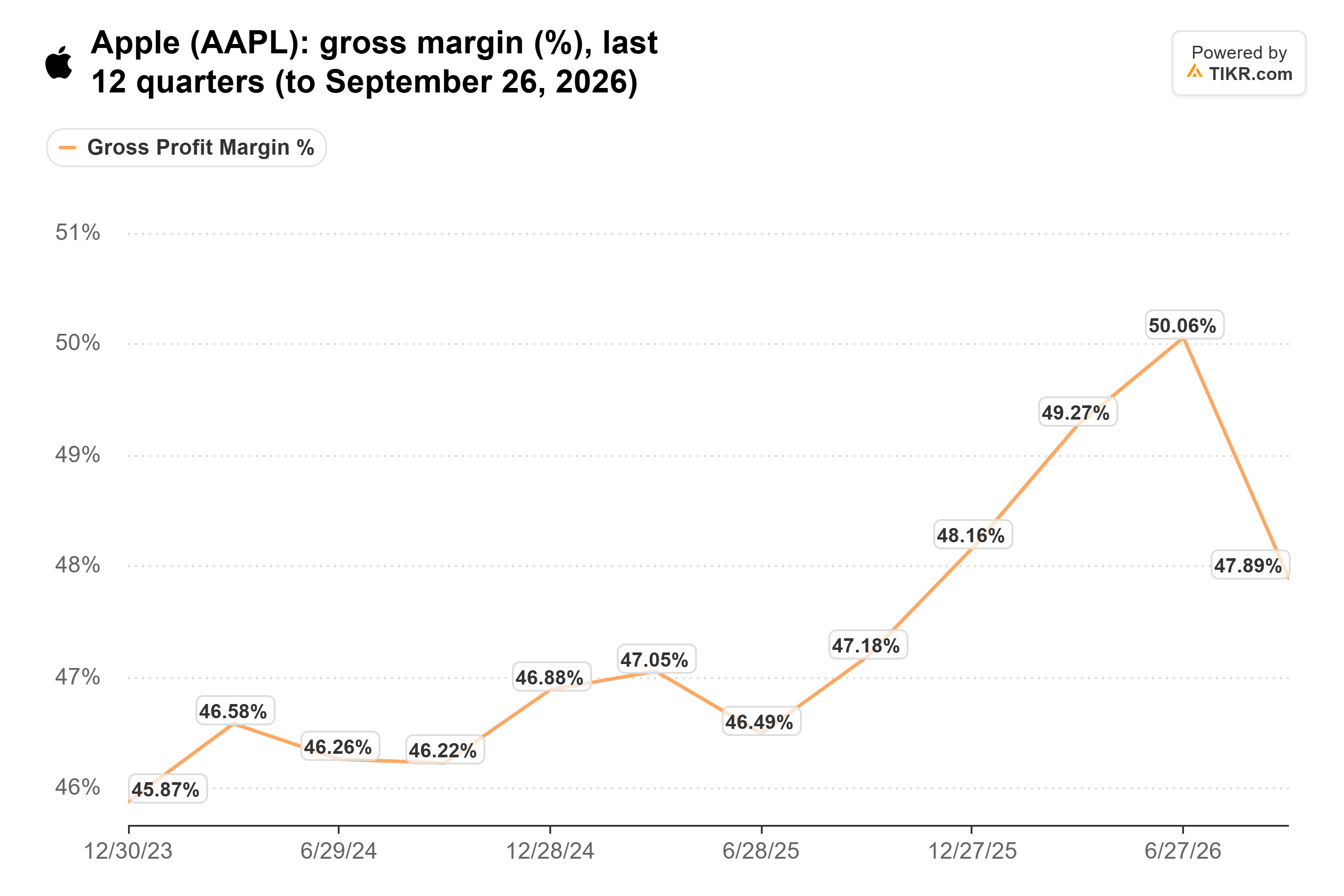
About 2 points of June’s figure came from one-time tariff refunds, and before refunds, gross margin went from 49.3% in the March quarter to 48.1% in June. CFO Kevan Parekh said on Apple’s July call that memory explained more than all of each step down.
Ternus expects “even higher memory costs” in the December quarter, and beyond it, “the pricing for memory purchases continuing to increase.”
TIKR tracks 45 analysts on Apple. How many say “Buy”?
See the full breakdown of Buy, Hold, and Sell ratings on Apple, along with Wall Street’s revenue and earnings estimates, all in one place. More than 500,000 investors use TIKR to research stocks like this one. See Apple’s Analyst Ratings
Apple’s memory bill is the suppliers’ payday
Micron’s Mobile and Client unit, which sells to phone and PC makers, earned a 90% gross margin last quarter, up from 36% a year earlier. Sandisk’s non-GAAP gross margin hit 85.1% in the quarter to Oct. 2, up from 29.9%, and it expects 84.5%-85.5% this quarter.
Other device makers have less room to pay up. HP grew Personal Systems revenue 18% to $11.8 billion in its fiscal third quarter on pricier premium machines, but that business earned a 4.6% operating margin. Apple can give up a point or two of gross margin. HP has far less to give, and it reports next week.
Apple has barely tested its pricing power
Apple does have a lever most hardware makers don’t. As Shawn O’Malley pointed out on We Study Billionaires, for most of the last decade “Apple didn’t increase prices at all” once you adjust for inflation. By his math, the $1,100 iPhone 17 Pro cost about $890 in 2020 dollars, less than the $999 iPhone Pro of 2020. He said that was the strategy: get more iPhones into people’s hands, then sell them high-margin services.
Ternus said Apple raised prices on Mac and iPad in June and on iPhone in September, and that “these price increases provided some offset.”
Note the word “some.”
UBS expects December-quarter iPhone revenue to rise 12% to $95 billion even as units fall 3%. Every price increase from here gives up a little of that services strategy for margin.
At 36x, there’s little room for a slip
None of this would matter as much if Apple were cheap. It trades at 36x forward earnings, against a five-year average of 29x and just below the 38x high it hit on Oct. 22:

The way I see it, Apple is right to overpay for memory rather than run short of iPhones. But 36x is a lot to pay for about 5% earnings growth, especially with memory costs still rising. I’d wait for the margin to find a floor.
Micron reports in mid-December, then Apple reports its December quarter in late January. If gross margin keeps falling from September’s 47.9%, the $9.42 fiscal 2027 estimate will probably be the next number to come down.
So what is Apple stock actually worth?
TIKR lets you forecast the future price of any stock in less than a minute. Just enter a few assumptions into TIKR’s valuation model and see what Apple could be worth. Start from Wall Street consensus estimates, or adjust the inputs to reflect your own view of the business. It’s free to use.
Disclaimer:
Please note that the articles on TIKR are not intended to serve as investment or financial advice from TIKR or our content team, nor are they recommendations to buy or sell any stocks. We create our content based on TIKR Terminal’s investment data and analysts’ estimates. Our analysis might not include recent company news or important updates. TIKR has no position in any of the stocks mentioned. Thank you for reading, and happy investing!