Key Takeaways
- Analysts expect American Express’s normalized EPS to rise 31% from 2025 to 2027, against 11% for PayPal.
- American Express’s higher forward P/E is backed by that faster growth, which makes it the better buy of the two today.
- PayPal’s expected EPS growth comes from a shrinking share count, since consensus has its 2026 net income below 2025’s.
- American Express trades at 17x forward earnings, right around its five-year average, and the health of its cardmembers’ credit is the main thing to watch.
American Express (AXP) is up 10% in the past month but still down 10% in 2026. Even so, investors pay a lot more for each dollar of its expected earnings than they pay for PayPal (PYPL).
That premium only makes sense if American Express grows its earnings faster. And analysts expect it to, by a wide margin.
Both just raised their 2026 outlooks
American Express reported on Oct. 23. Third-quarter revenue rose 9% to a record $20.1 billion and adjusted EPS climbed 13% to $4.68. Management raised its full-year adjusted EPS guidance to $17.60-$17.90 and kept its call for 10% revenue growth in 2026.
PayPal reported four days later. Adjusted EPS came in at $1.45, up 8%, even as revenue of $8.58 billion missed expectations. It raised its 2026 outlook to EPS of about $5.60. Then it called 2027 an investment year and said it expects EPS growth similar to 2026’s.
TIKR tracks 29 analysts on American Express. How many say “Buy”?
See the full breakdown of Buy, Hold, and Sell ratings on American Express, along with Wall Street’s revenue and earnings estimates, all in one place. More than 500,000 investors use TIKR to research stocks like this one. See American Express’ Analyst Ratings
American Express is expected to grow EPS nearly 3x as fast
Analysts expect American Express’s normalized EPS to climb from $15.38 in 2025 to $20.20 in 2027:
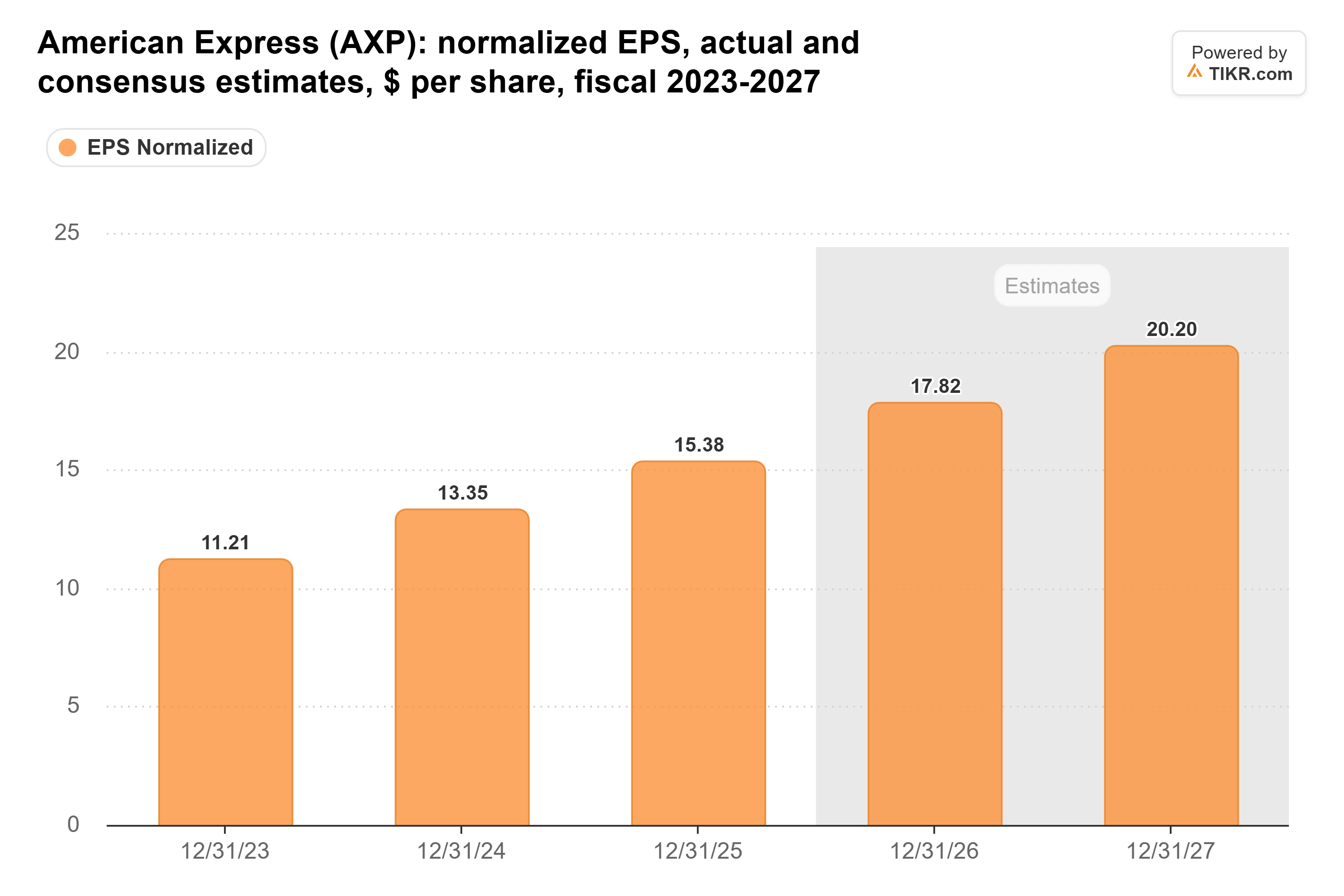
That works out to 31% over two years, or about 15% a year. The 2026 estimate of $17.82 also sits inside management’s new range.
PayPal’s estimates are much flatter:
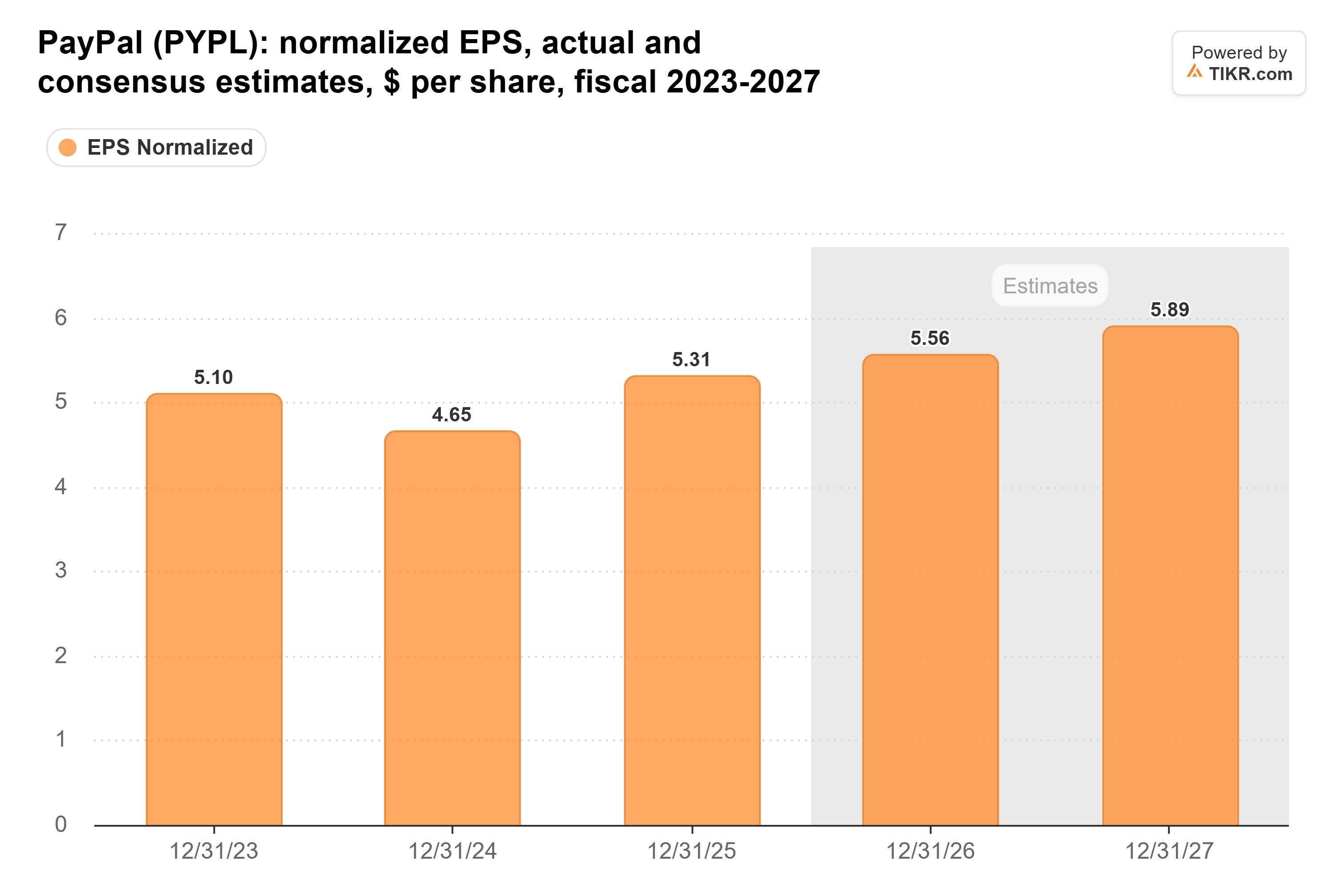
Analysts see PayPal’s normalized EPS rising from $5.31 in 2025 to $5.89 in 2027. That’s 11% in total, or about 5% a year, and it fits management’s call for similar growth in both years.
Most of that growth comes from buybacks. Consensus puts PayPal’s normalized net income at $4.7 billion in 2026, below $5.1 billion in 2025. Meanwhile, diluted shares fell to 882 million in the second quarter of 2026 from 977 million a year earlier.
The gap holds on revenue too. American Express is on track for 10% growth this year. Analysts expect PayPal’s revenue to go from $33.2 billion in 2025 to $36.2 billion in 2027, about 4% a year.
The premium looks cheap for the growth
American Express trades at 17x forward earnings, right around its five-year average and well below its 23x peak in December 2025:
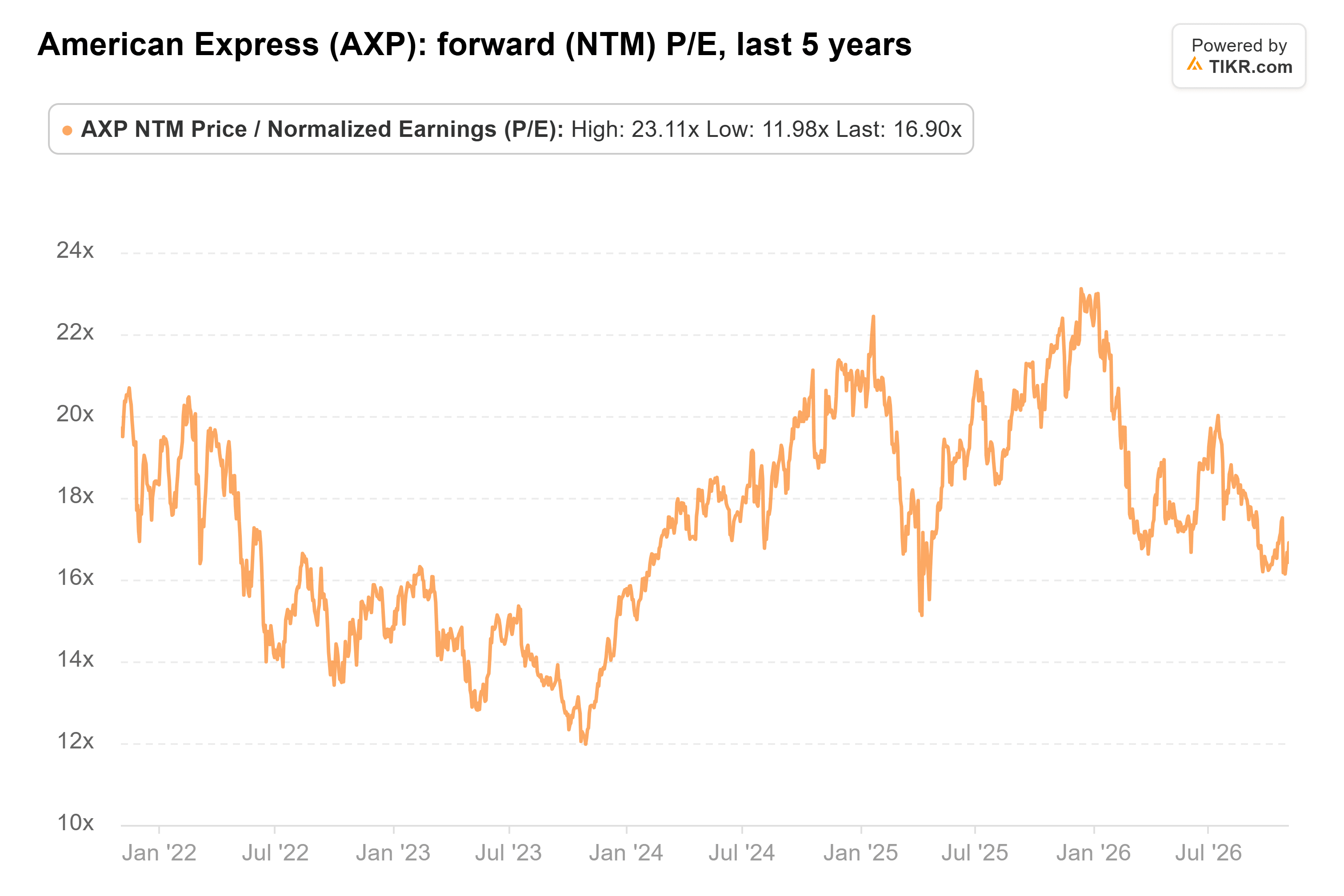
PayPal’s forward P/E sits near the bottom of its range since 2015, below its three-year average of 13x. So on the headline multiple, PayPal is clearly cheaper.
Adjust for growth, though, and it flips. Divide American Express’s 17x by its expected EPS growth of about 15% a year, and investors pay just over 1x earnings for each point of growth. To be that cheap, PayPal would need to trade at about 6x forward earnings. Its lowest quarter-end reading since 2015 was 8.0x.
The two do earn money differently. American Express lends to its cardmembers and carries that credit risk, and a recession would test it. But PayPal is heading the same way. In July, management said financial services, led by buy now, pay later and other credit, already earns close to 20% of PayPal’s transaction margin and is growing by double digits.
American Express has the growth to back its multiple
Wall Street expects American Express to grow faster through 2027, on both revenue and earnings. The gap is wide enough that its premium looks modest. The way I see it, American Express is the better buy of the two at today’s prices. PayPal’s low multiple reflects EPS growth that rests on buybacks until the turnaround starts showing up in profits.
Of course, those American Express estimates assume cardmembers keep paying their bills. Its fourth-quarter report early next year is the next check on that.
So what is American Express stock actually worth?
TIKR lets you forecast the future price of any stock in less than a minute. Just enter a few assumptions into TIKR’s valuation model and see what American Express could be worth. Start from Wall Street consensus estimates, or adjust the inputs to reflect your own view of the business. It’s free to use.
Value American Express for free
Disclaimer:
Please note that the articles on TIKR are not intended to serve as investment or financial advice from TIKR or our content team, nor are they recommendations to buy or sell any stocks. We create our content based on TIKR Terminal’s investment data and analysts’ estimates. Our analysis might not include recent company news or important updates. TIKR has no position in any of the stocks mentioned. Thank you for reading, and happy investing!