Key Takeaways
- Avala Global, which manages $3.8 billion, opened stakes in Microsoft and Sandisk and raised its Intel stake 431% in the third quarter, its latest 13F shows.
- Intel and Sandisk have each lost more than half their value since Sept. 30, while Microsoft is down 6%.
- Analysts still see big upside in all three, though they’ve cut their Intel targets hard since early October.
- Microsoft is the one the numbers back best, with rising estimates and a multiple below its long-run averages.
Avala Global isn’t a household name. But last quarter, it made big bets on three of tech’s most debated stocks.
Avala’s 13F for the quarter ended Sept. 30, filed Nov. 16, shows a new stake in Microsoft (MSFT), a 431% bigger position in Intel (INTC) and a new stake in Sandisk (SNDK). The firm manages $3.8 billion in all, and its 13F lists $3.06 billion of US stocks across 30 positions.
Since the quarter ended, two of the three have been cut in half or worse.
Microsoft is the steady one
Microsoft was Avala’s biggest new position: 400,773 shares worth $206 million at Sept. 30, or 6.7% of its 13F stocks and its third-largest holding. The stock is down 6% since then.
The business hasn’t given investors much to worry about. Revenue rose 19% to $92.3 billion in the September quarter, and Azure grew 48%, ahead of the roughly 45% management had guided. Analysts have raised their normalized EPS estimates since late October, to $20.01 for fiscal 2027 and $24.20 for fiscal 2028.
The consensus target has climbed with them, to $636 from a late-July low of $556:
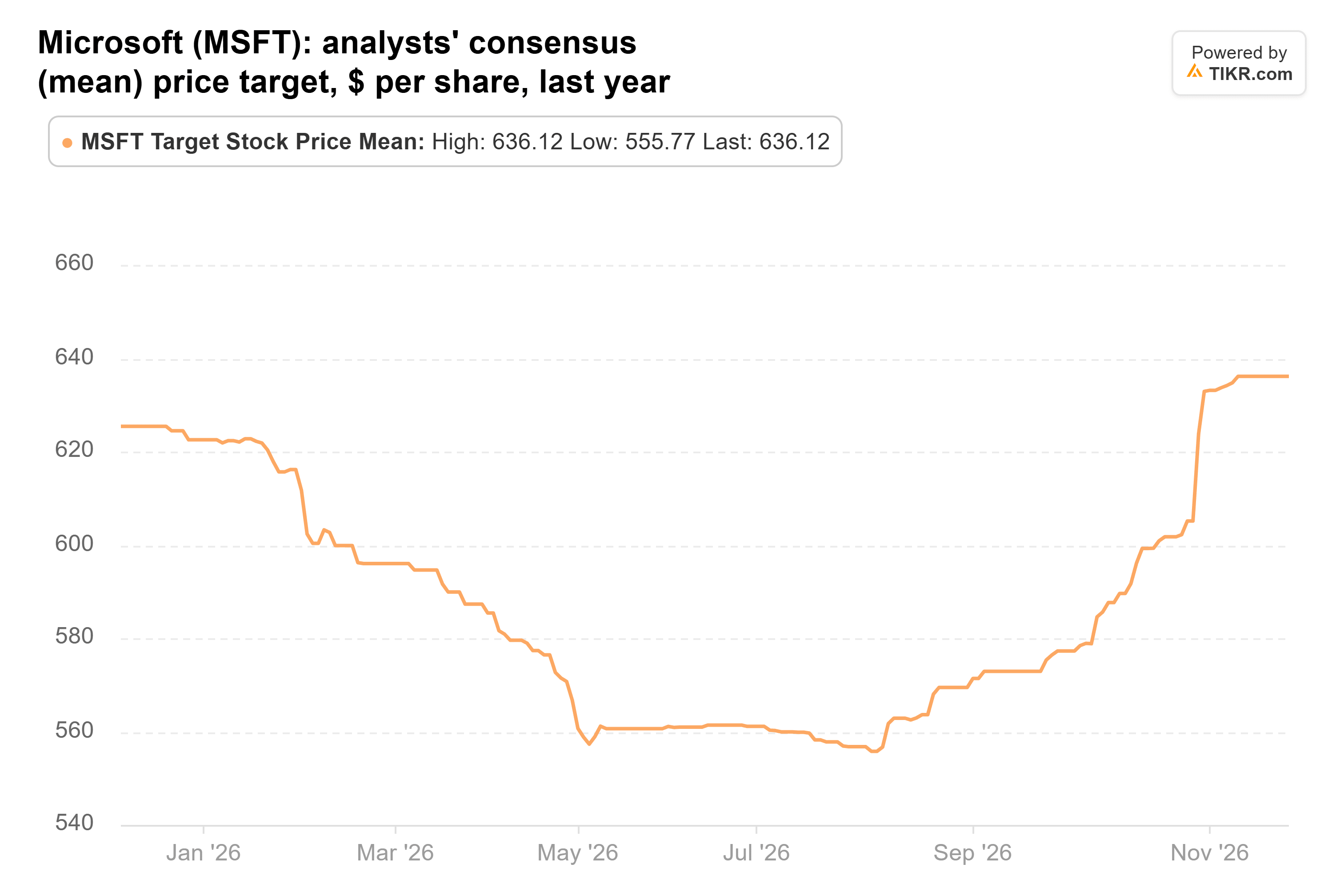
That’s 31% above the last close. And at about 23x forward earnings, Microsoft trades below its 12-year average of 26x and its five-year average of 30x.
TIKR tracks 58 analysts on Microsoft. How many say “Buy”?
See the full breakdown of Buy, Hold, and Sell ratings on Microsoft, along with Wall Street’s revenue and earnings estimates, all in one place. More than 500,000 investors use TIKR to research stocks like this one. See Microsoft’s Analyst Ratings
Intel got cheaper, but it isn’t cheap
Avala raised its Intel stake 431% in the third quarter, to 1.46 million shares worth $176 million, 5.8% of its 13F stocks. Intel is down 57% since Sept. 30.
Investors sold on the outlook. Intel beat its own guidance in the third quarter, with revenue up 21% to $16.5 billion. But it guided fourth-quarter revenue to $15.0 billion-$16.0 billion and its adjusted gross margin to 38%, down from 44.1%, partly on memory shortages. Then Jensen Huang resigned as Nvidia’s CEO on Nov. 12, and Nvidia’s own 13F showed it had cut its Intel stake by about a quarter by Sept. 30.
On Nov. 18, though, CEO Lip-Bu Tan said Intel had signed its first outside customer for its 18A process, and named Microsoft as the first public customer for EMIB, its most advanced packaging.
Analysts have still pulled their targets back hard from their early-October peak of $118:
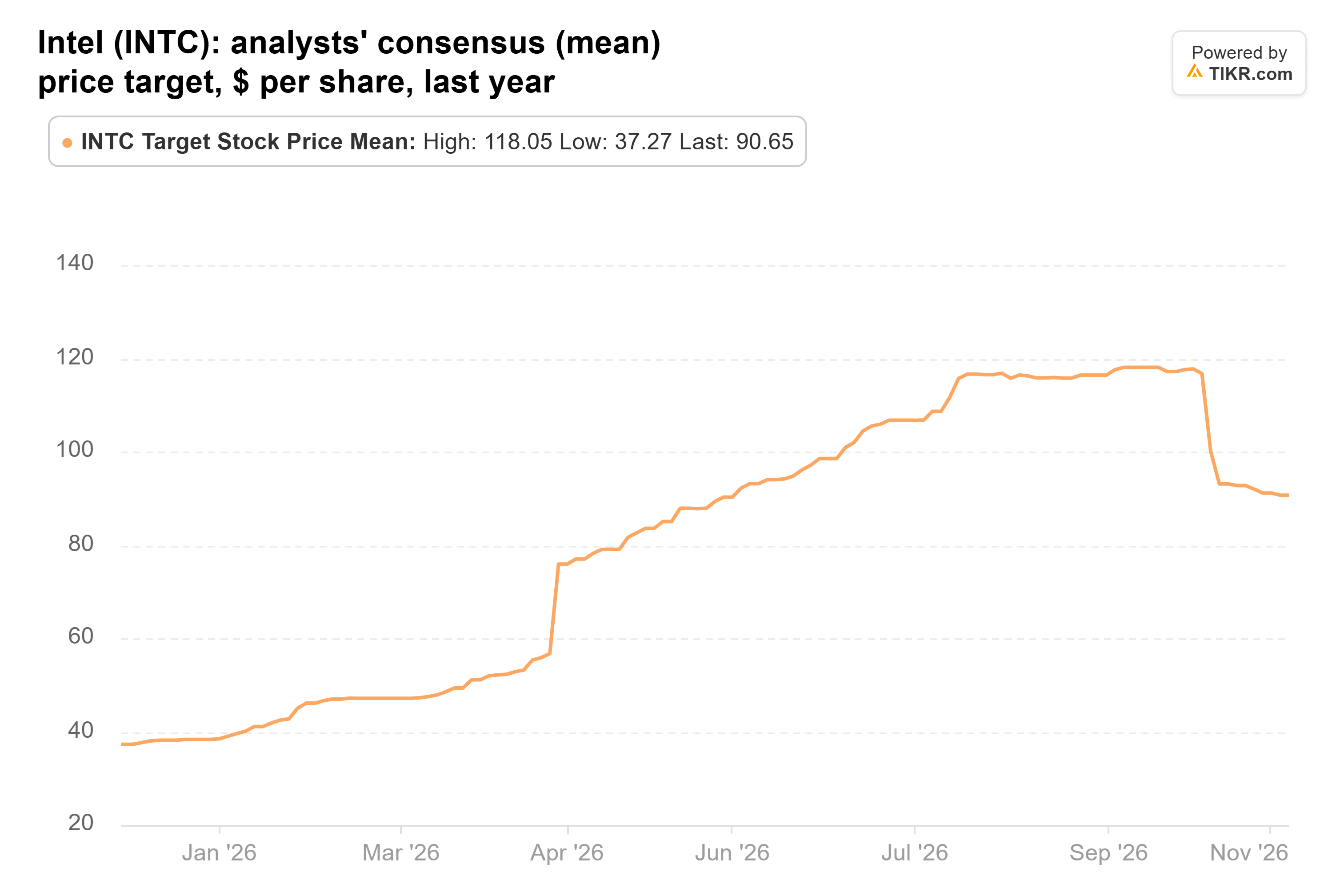
At $91, the consensus target sits 77% above the last close. But analysts have cut their 2027 and 2028 EPS estimates since the third-quarter report. At about 37x forward earnings, Intel also trades far above the 13x it averaged from 2014 to 2022.
Sandisk is priced for the boom to end
Sandisk was new to Avala’s 13F: 92,480 shares worth $161 million at Sept. 30, 5.3% of its 13F stocks. That share count is from before Sandisk’s 8-for-1 split took effect on Nov. 20. Adjusted for the split, the stock is down about 64% since the quarter ended.
The business is still booming. Revenue for the quarter ended Oct. 2 was $11.03 billion, 4.8x the year before, and the non-GAAP gross margin hit 85.1%, up from 29.9%. But Sandisk’s beats are shrinking: revenue topped the high end of its guidance by 24% in its fiscal third quarter of 2026 and by just 2% last quarter. And Kioxia, its fab partner, has seen its flash price gains cool to the mid-20s percent from about 70%.
Analysts haven’t followed the stock down. The consensus target is still close to its July high:
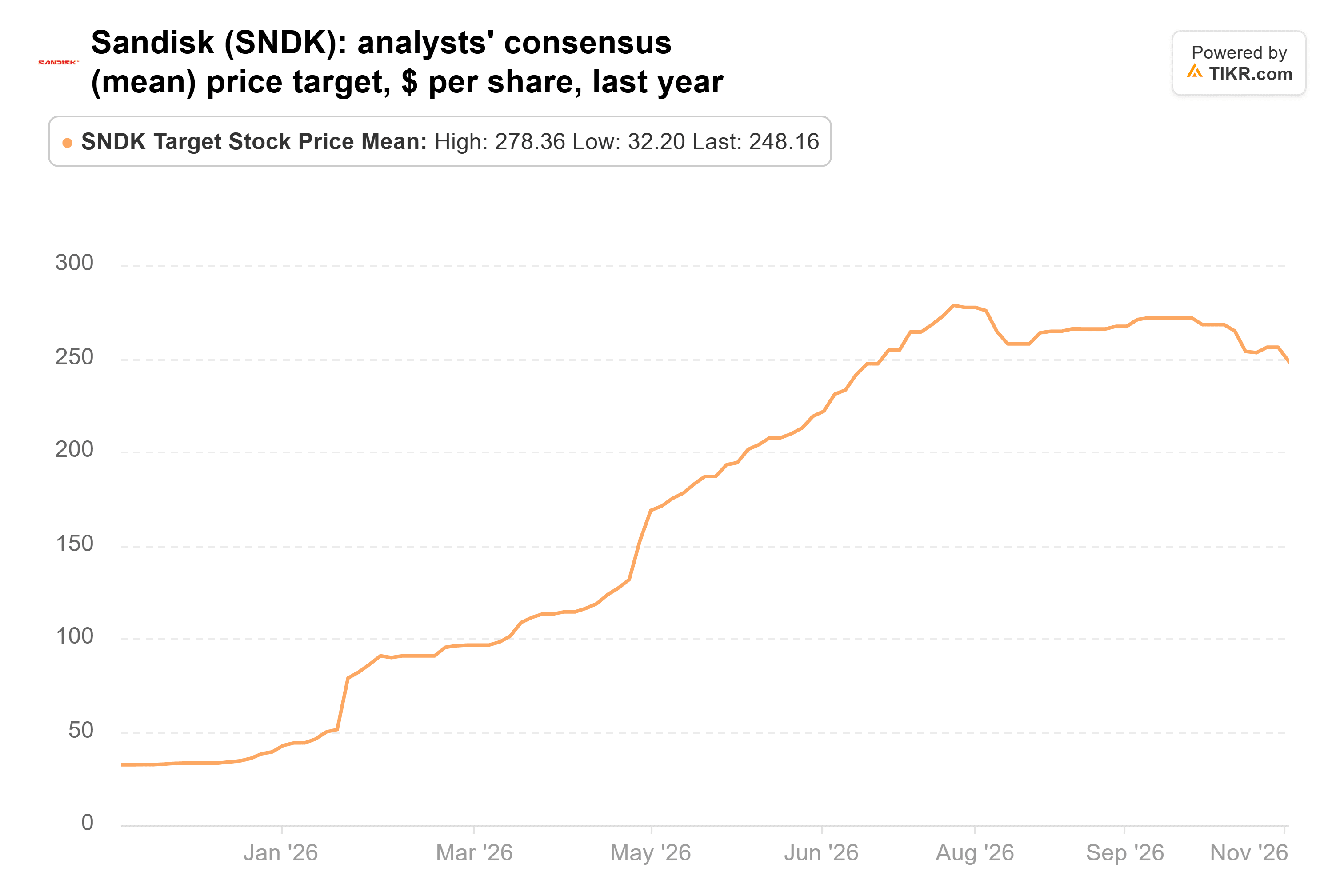
At $248, it’s 213% above the last close. Yet at about 3x forward earnings, investors are pricing in a steep fall in profits. The few analysts who estimate fiscal 2030 expect EPS to drop 49% from fiscal 2029. Sandisk’s answer is its multiyear contracts: $88.9 billion of them at floor prices, which management says still earn a gross margin of about 80%.
Microsoft is the one I’d buy
Avala’s 13F lists only what it held on Sept. 30, so we don’t know what it paid or whether it still owns the shares.
If I could only buy one of these right now, it’d be Microsoft. Its estimates are rising, its target is at a one-year high, and it trades below its usual multiple. The risk is the cash: analysts expect free cash flow of $32.7 billion in fiscal 2027, down from $67.0 billion in fiscal 2026, as AI spending climbs.
Sandisk is the bigger swing. At 3x earnings, a lot of bad news is already in the price, and it pays off if those contracts hold when flash prices fall. Intel, at 37x falling estimates, still asks investors to pay up for a turnaround.
Avala’s next 13F, due by mid-February, will show whether it held on. Before then, Sandisk reports in late January, and its guidance for the March quarter, normally its weakest, is the test. A range at or above the $12.48 billion analysts expect would show demand still outrunning supply.
So what is Microsoft stock actually worth?
TIKR lets you forecast the future price of any stock in less than a minute. Just enter a few assumptions into TIKR’s valuation model and see what Microsoft could be worth. Start from Wall Street consensus estimates, or adjust the inputs to reflect your own view of the business. It’s free to use.
Disclaimer:
Please note that the articles on TIKR are not intended to serve as investment or financial advice from TIKR or our content team, nor are they recommendations to buy or sell any stocks. We create our content based on TIKR Terminal’s investment data and analysts’ estimates. Our analysis might not include recent company news or important updates. TIKR has no position in any of the stocks mentioned. Thank you for reading, and happy investing!