Key Takeaways
- A $2.5 billion fund owned no Circle Internet, Vishay Intertechnology or Moog shares by Sept. 30, after holding all three at June 30.
- By Sept. 30, Microsoft and Alphabet were the fund’s two largest positions, after it added sharply to both.
- Circle’s consensus price target has fallen to $102 from $167 a year ago as analysts keep cutting their 2027 and 2028 earnings estimates.
- The numbers back the Circle exit, but Vishay and Moog both trade below even their lowest analyst targets, and Vishay looks like the best of the three to own today.
When a fund sells a stock down to zero, it’s worth checking whether the numbers agree with it.
Keystone Investors’ 13F for the quarter ended Sept. 30, filed Nov. 16, holds $2.51 billion of US stocks and shows three clean exits: Circle Internet (CRCL), Vishay Intertechnology (VSH) and Moog (MOG.A). The fund held all three at June 30 and none at the end of September. Its biggest bets are two megacaps: Microsoft (MSFT) was its No. 1 position at 15.0% of its 13F stocks, and Alphabet (GOOG) its No. 2 at 11.0%.
TIKR tracks 29 analysts on Circle Internet Group. How many say “Buy”?
See the full breakdown of Buy, Hold, and Sell ratings on Circle Internet Group, along with Wall Street’s revenue and earnings estimates, all in one place. More than 500,000 investors use TIKR to research stocks like this one. See Circle Internet Group’s Analyst Ratings
Circle’s estimates keep sliding
Circle was the biggest of the three exits: 1.20 million shares worth $75 million at June 30, or 4.0% of the fund. The stock is down 15% since Sept. 30 and sits 62% below its 52-week high.
Circle’s third quarter was weak. Leaving out $182 million of one-time Arc token presale revenue, revenue fell to $683 million from $740 million a year earlier. Reserve income dropped 8% as the reserve return rate fell to 3.5%. And its USDC stablecoin in circulation was $73.9 billion at the end of September, flat from a year earlier.
Analysts have followed the business down. Consensus normalized EPS is now $1.42 for 2027 and $1.80 for 2028, down from $2.22 and $3.07 in June. Both sit below the $2.35 Circle earned in 2025. The consensus target has come down with them:
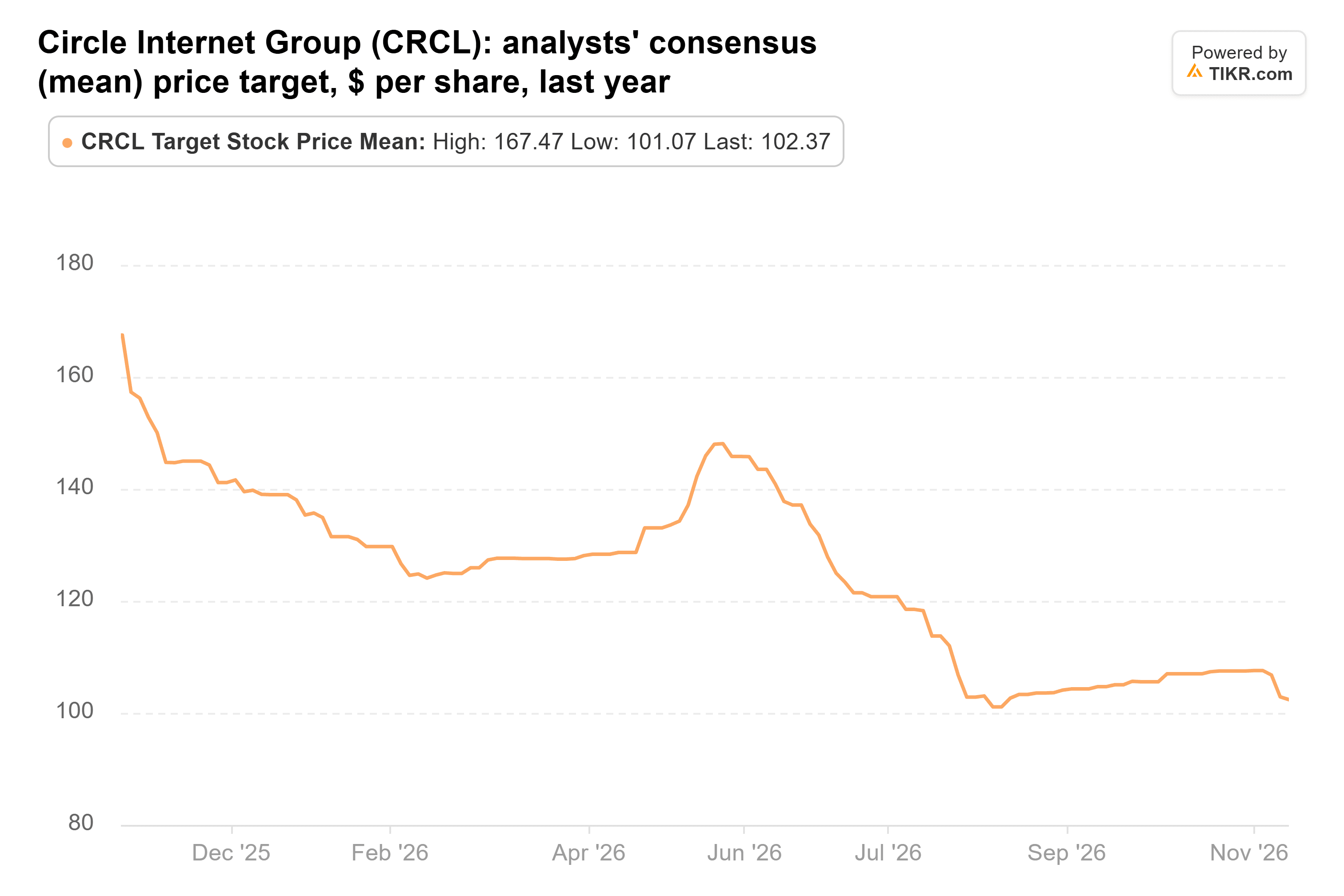
The $102 average target from 29 analysts is 92% above the last close, but it’s about 57x the $1.80 analysts expect for 2028. That’s a steep price for earnings that are still shrinking, so the numbers back this exit.
Vishay’s business is moving the other way
Vishay was a smaller bet: 933,378 shares worth $50 million at June 30, or 2.7% of the fund. The stock has fallen 53% since Sept. 30 and trades 64% below its 52-week high.
The results don’t explain it. In its third-quarter release on Nov. 4, Vishay reported record revenue of $978.9 million, up 24% from a year earlier. Gross margin rose 6 points from a year earlier to 25.5%, and GAAP diluted EPS came in at $0.37. Analysts have barely trimmed their targets:
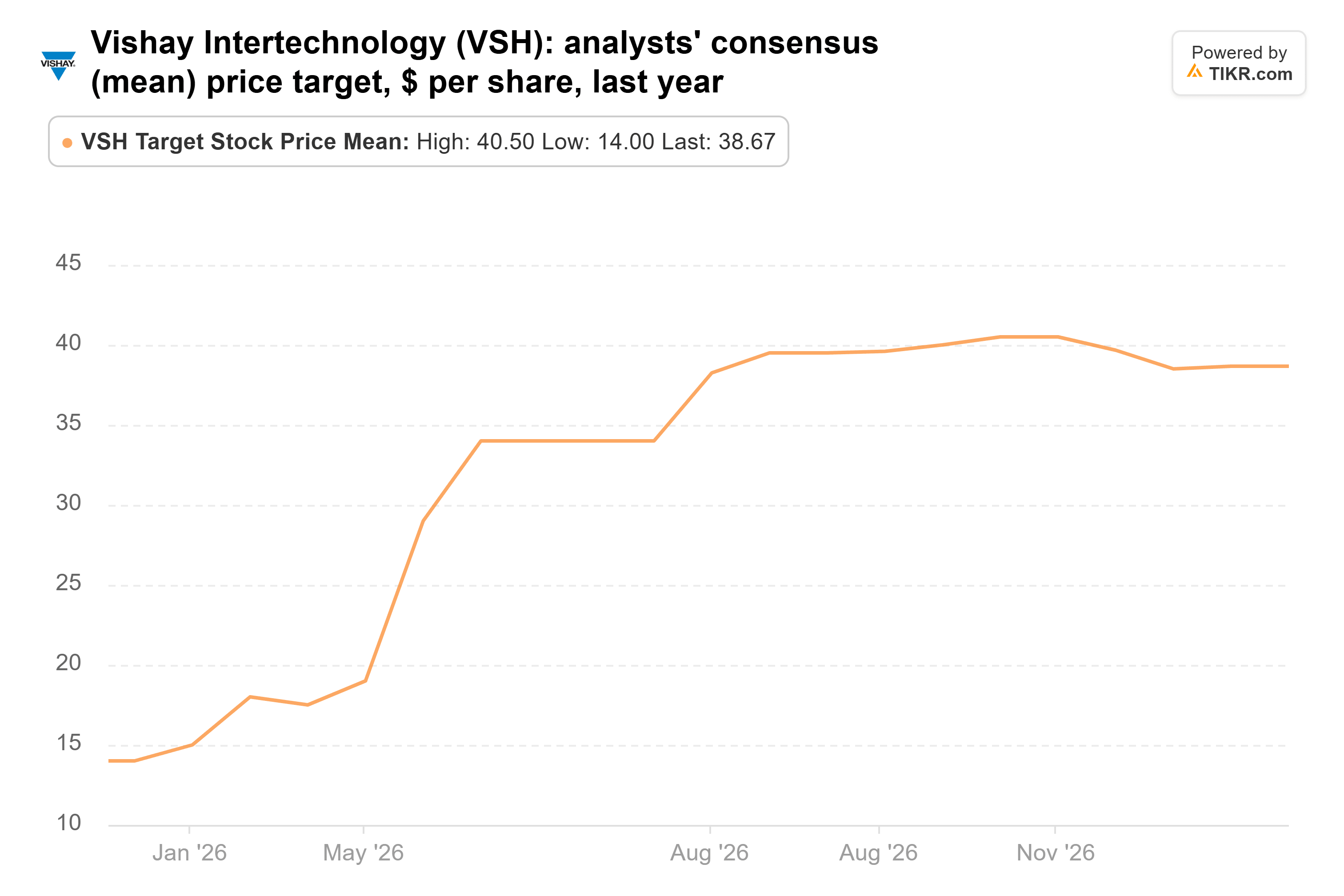
The $38.67 average from 7 analysts is just off its October high of $40.50 and sits 54% above the last close of $25.19. Even the lowest target, $27, is above the price. My read: at about 14x forward earnings, investors doubt this upcycle will last.
Moog’s targets are still well above the price
Moog rounds out the exits: 98,035 shares worth $42 million at June 30, or 2.2% of the fund. It’s down 21% since Sept. 30 and sits 25% below its 52-week high.
Wall Street has spent the year raising its numbers:
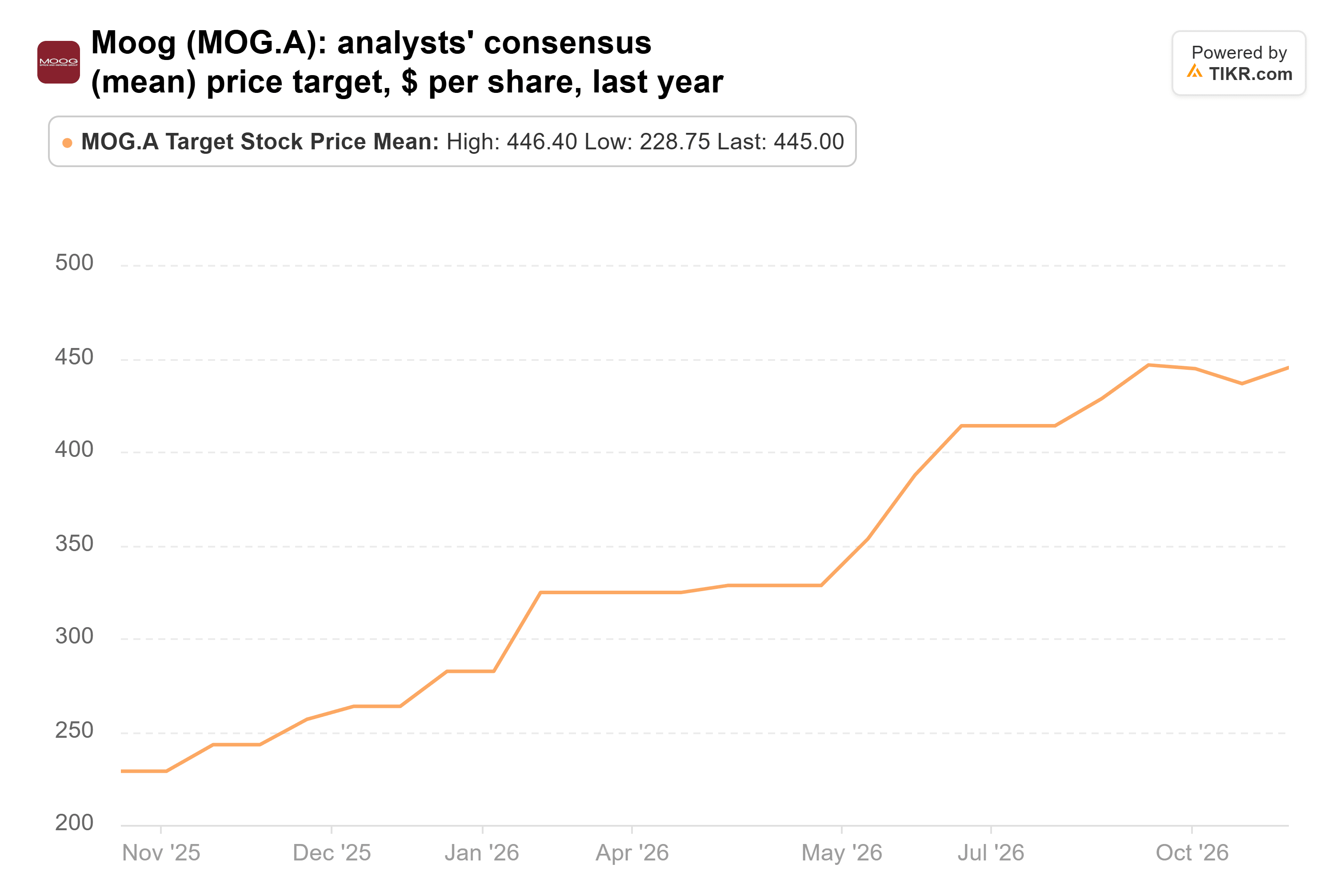
The average target climbed to $445 from $229 a year ago, and all six analysts’ targets fall between $417 and $480, against a last close of $335. Moog isn’t cheap at about 29x forward earnings, though, so its next report, expected in the coming days, has to back up the estimates behind those targets.
Vishay is the one I’d look at first
The fund’s conviction clearly sits in Microsoft, where it raised its share count 458% in the quarter, and Alphabet, where it more than doubled its shares. So far that’s a mixed result: Microsoft is down 0.9% since Sept. 30, and Alphabet is down 18%.
Of the three exits, the numbers back the fund on Circle. Its estimates are still falling, and the Street’s average target needs a rich multiple on 2028 earnings that sit below 2025’s. Moog’s case rests on a report that hasn’t come out yet.
If I could only buy one of the three right now, it’d be Vishay. It has record revenue, wider margins, a multiple of about 14x forward earnings, and a price below every analyst’s target. The risk is that a stock that has halved since Sept. 30 may be pricing in a downturn the results don’t show yet. Vishay’s next report will show whether revenue holds near this quarter’s record, and the fund’s next 13F, due by mid-February, will show whether it bought back into any of the three.
So what is Circle stock actually worth?
TIKR lets you forecast the future price of any stock in less than a minute. Just enter a few assumptions into TIKR’s valuation model and see what Circle could be worth. Start from Wall Street consensus estimates, or adjust the inputs to reflect your own view of the business. It’s free to use.
Disclaimer:
Please note that the articles on TIKR are not intended to serve as investment or financial advice from TIKR or our content team, nor are they recommendations to buy or sell any stocks. We create our content based on TIKR Terminal’s investment data and analysts’ estimates. Our analysis might not include recent company news or important updates. TIKR has no position in any of the stocks mentioned. Thank you for reading, and happy investing!