Key Takeaways
- Stansberry Asset Management, whose firm manages $1.29 billion, added to Nvidia, Shell and Visa in the third quarter. They are three of its five largest positions.
- Since Sept. 30, Nvidia has fallen 45%, Shell is down 2% and Visa is up 12%.
- Analysts’ average targets point to 95% upside for Nvidia, 18% for Shell and 12% for Visa.
- At about 9x forward earnings, Nvidia is the one the numbers back best, though its customers’ finances and new export rules are real risks.
Most 13F coverage goes to the famous names. But Stansberry Asset Management’s 13F for the quarter ended Sept. 30, filed Nov. 16, shows a fund putting more money into what it already owned most of. It added to Nvidia (NVDA), Shell (SHEL) and Visa (V), its No. 3, No. 4 and No. 5 holdings.
Its firm, Meristead Wealth, manages $1.29 billion in all, and the 13F holds $1.09 billion of US stocks across 308 positions. Since Sept. 30, the three stocks have gone three different ways.
Nvidia got a lot cheaper
The fund held 145,145 Nvidia shares on Sept. 30, up 34% from the quarter before. They were worth $33 million, 3.0% of its 13F stocks. The stock has since fallen 45% from its quarter-end price (the 13F doesn’t show what the fund paid), and it sits 48% below its 52-week high.
The estimates haven’t fallen with it. Analysts’ consensus for fiscal 2028 revenue (the year ending January 2028) has risen to $724 billion from $709 billion, about 71% growth. Instead, investors have been selling on the risks around the chips. One is new license rules on chip sales into Southeast Asia, which threaten Nvidia’s sales through overseas AI clouds.
Analysts have cut their price targets all the same:
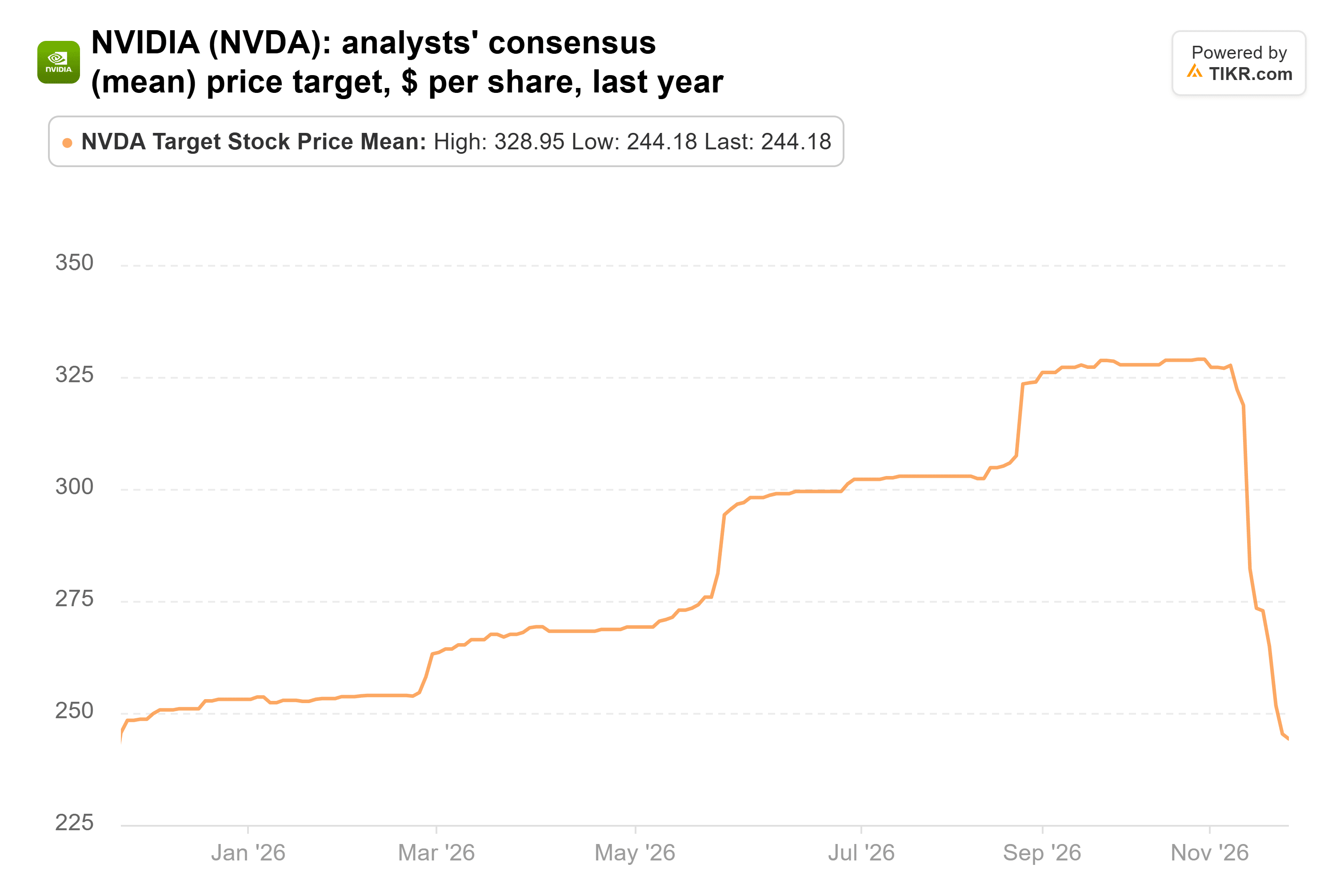
The average target of $244.18 is down from $328.95 in late October, back about where it stood a year ago. That’s still 95% above the last close. Even the lowest target among the 63 analysts who rate the stock, $130, sits above it.
TIKR tracks 63 analysts on Nvidia. How many say “Buy”?
See the full breakdown of Buy, Hold, and Sell ratings on Nvidia, along with Wall Street’s revenue and earnings estimates, all in one place. More than 500,000 investors use TIKR to research stocks like this one. See Nvidia’s Analyst Ratings
Shell pays you to wait
Shell has been far steadier. The fund held 320,889 shares on Sept. 30, up 50% on the quarter before. They were worth $31 million, 2.8% of its 13F stocks, and the stock is down 2% from its quarter-end price.
At about 8x forward earnings with a 3.3% dividend yield, Shell is priced like a stock the market expects little from. Analysts have grown more upbeat over the year:
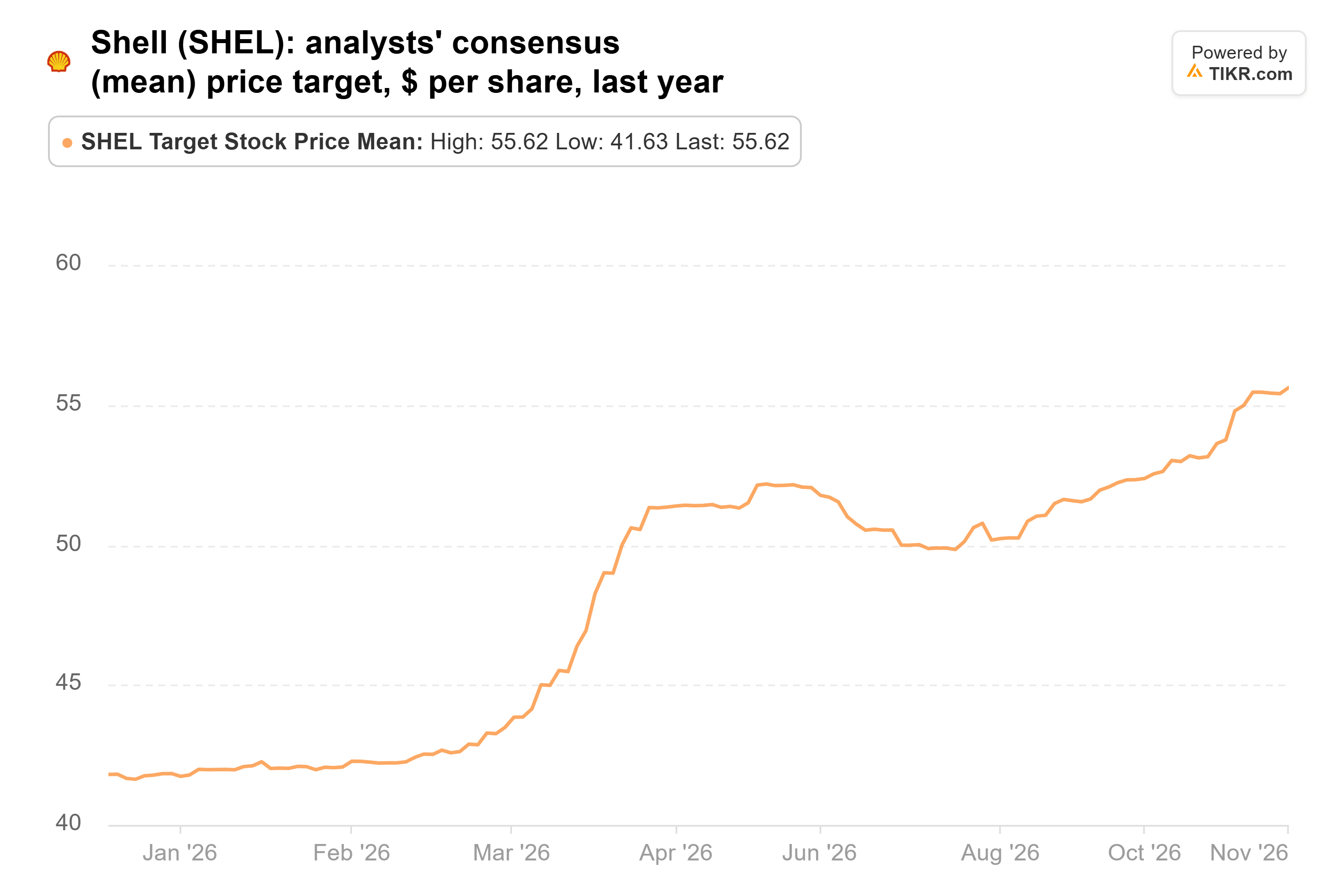
The average target has climbed steadily and sits at its high. At $110.81, it’s 18% above the last close, and the stock is 14% below its 52-week high. For income investors, the dividend is the draw, and it’s worth weighing against a utility like Eversource over a 20-year hold.
Visa already ran
Visa is the only one of the three that’s risen since Sept. 30. The fund held 80,837 shares, up 32% on the quarter before. They were worth $29 million, 2.7% of its 13F stocks, and the stock is 12% above its quarter-end price.
Bigger names were buying too. Bill Ackman told CNBC he bought Visa this year, calling it “a royalty on people spending money.” But big funds were split overall: by TIKR’s count, 21 bought Visa last quarter and 29 sold.
The year ahead looks slower. Visa guided to revenue growth in the low double digits for fiscal 2027 (the year ending September 2027). Its CFO also flagged faster growth in the incentives it pays card-issuing banks. Consensus normalized EPS for fiscal 2027 is $15.02, up just 4% from a year ago. Analysts have kept raising their targets regardless:
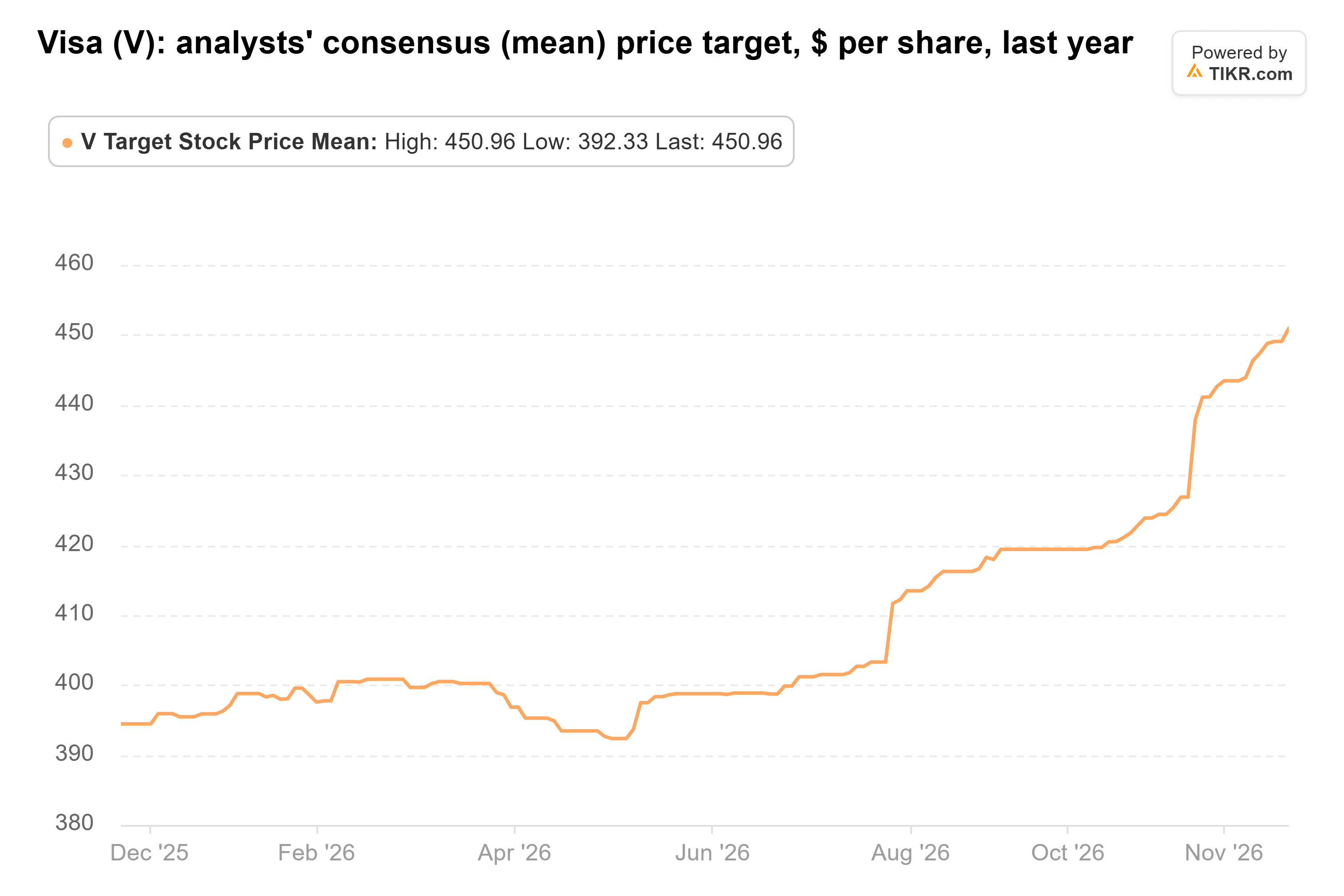
The average target is at its high of $450.96, 12% above the last close. At about 27x forward earnings, Visa already trades near its long-run average of 28x. So that upside rests on estimates that have barely moved.
The numbers back Nvidia
Nvidia trades at about 9x forward earnings. That’s less than half the 19x it traded at on Sept. 30 and far below its five-year average of 36x, while analysts keep raising their revenue estimates. Shell is cheap too, but its 18% upside is a fraction of Nvidia’s, and Visa’s multiple leaves little room.
The risk is that Nvidia’s customers falter. $150 billion of Anthropic’s Nvidia-tied compute can be ended on short notice, and the export rules could cut into more of its overseas sales.
If I could only buy one right now, it’d be Nvidia. The market is pricing it as if this cycle is ending, while analysts keep raising their numbers. Its next report, early next year, will show whether those estimates hold. The fund’s next 13F, due in mid-February, will show whether it kept adding.
So what is Nvidia stock actually worth?
TIKR lets you forecast the future price of any stock in less than a minute. Just enter a few assumptions into TIKR’s valuation model and see what Nvidia could be worth. Start from Wall Street consensus estimates, or adjust the inputs to reflect your own view of the business. It’s free to use.
Disclaimer:
Please note that the articles on TIKR are not intended to serve as investment or financial advice from TIKR or our content team, nor are they recommendations to buy or sell any stocks. We create our content based on TIKR Terminal’s investment data and analysts’ estimates. Our analysis might not include recent company news or important updates. TIKR has no position in any of the stocks mentioned. Thank you for reading, and happy investing!