핵심 요약
- 엔비디아의 최신 13F 신고서에 따르면 미국 주식 보유액은 483억 3천만 달러로, 거의 전부가 SpaceX, 인텔, CoreWeave, 코히런트, 시놉시스에 투자되어 있습니다.
- 애널리스트들은 CoreWeave에 대해 131%의 상승 여력이 있으며, 나머지 4개 기업에 대해서는 35%에서 82%의 상승 여력을 보고 있습니다.
- 젠슨 황이 엔비디아 CEO에서 물러나면서, 엔비디아가 이들 기업을 지원하는 데 의문이 제기되고 있습니다.
- 만약 지금 단 하나만 살 수 있다면, 아직까지도 이익 추정치가 상향 조정되고 있는 코히런트를 선택할 것입니다.
엔비디아는 AI 구축을 뒷받침하는 칩을 판매하는 것뿐만 아니라, 그 구축을 수행하는 기업들에도 상당한 지분을 보유하고 있습니다. 11월 16일에 제출된 9월 30일 분기 13F 신고서에 따르면, 8개 포지션에 걸쳐 총 483억 3천만 달러 상당의 미국 주식을 보유하고 있습니다.
이러한 지분은 지금 특히 더 중요해졌습니다. 젠슨 황이 11월 12일 CEO에서 사임했으며, 월스트리트저널은 임시 CEO 콜렛 크레스가 엔비디아가 자금을 지원해 온 컴퓨팅 거래와 스타트업 투자를 축소할 것으로 예상된다고 보도했습니다.
엔비디아가 보유한 지분 중 2% 이상 가치가 있는 것들 중, 월스트리트가 가장 큰 상승 여력을 보고 있는 5개는 다음과 같습니다: CoreWeave (CRWV), SpaceX (SPCX), Coherent (COHR), Intel (INTC) 그리고 Synopsys (SNPS). 이들 5개 기업은 9월 30일 기준 포트폴리오의 거의 98%를 차지했습니다.
1. CoreWeave는 고객만큼이나 대출 기관이 필요합니다
엔비디아는 9월 30일 기준 4,110억 달러 상당의 CoreWeave 주식 4,721만 주를 보유했으며, 이는 포트폴리오의 8.5%를 차지하며 6월 30일과 동일합니다. 엔비디아는 또한 CoreWeave의 칩 공급자이자, 그들의 용량 구매자이며, 1월에 주당 87.20달러에 20억 달러를 투자한 투자자이기도 합니다. 주가는 9월 30일 이후 43% 하락했으며, 이는 자체 가이던스를 상회한 3분기 실적에도 불구하고 나타난 것입니다. 3분기 매출은 168% 증가한 36억 6천만 달러를 기록했습니다.
문제는 그 성장에 드는 비용입니다: CoreWeave는 다음 계약 담보 대출의 수익률이 7%에서 7.5%가 될 것으로 예상하고 있습니다. 합의된 목표가는 1년 전 130.54달러, 8월 최고치 144.46달러에서 115.34달러로 하락했습니다:
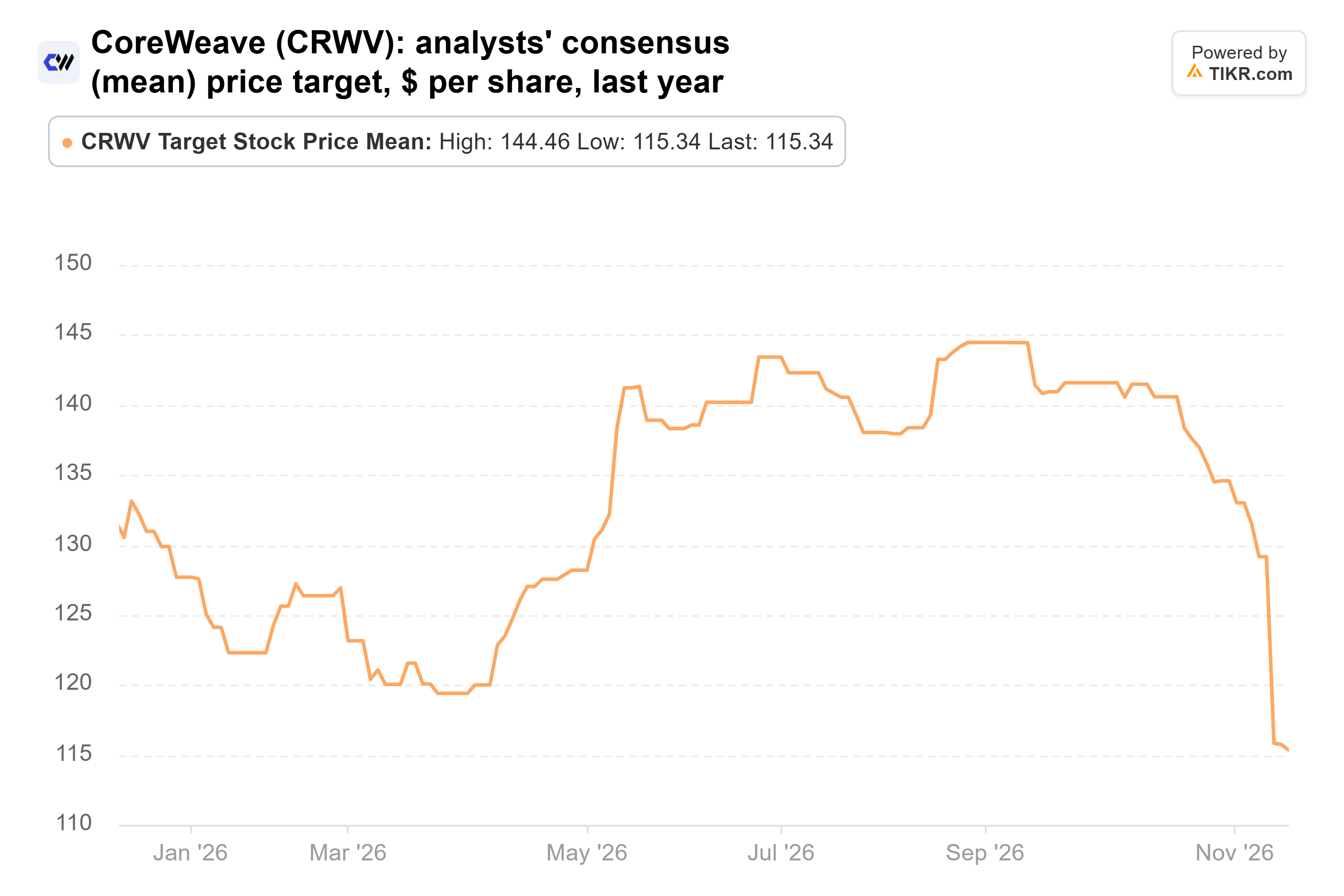
이는 CoreWeave가 계약으로 충당할 수 있는 비용으로 계속 차입할 수 있다면, 최종 종가 49.89달러보다 131% 높은 수치입니다.
TIKR은 CoreWeave에 대해 41명의 애널리스트를 추적합니다. 몇 명이 "매수"라고 말할까요?
CoreWeave의 매수, 보유, 매도 등급에 대한 전체 분석과 월스트리트의 매출 및 이익 추정치를 한곳에서 확인하세요. 50만 명 이상의 투자자들이 TIKR을 사용하여 이와 같은 주식을 조사합니다. CoreWeave의 애널리스트 등급 보기
2. SpaceX는 엔비디아의 가장 큰 베팅이며, 더 커졌습니다
SpaceX는 엔비디아 포트폴리오의 최상위를 차지합니다: 9월 30일 기준 196억 8천만 달러 상당의 주식 1억 3,047만 주를 보유했으며, 이는 전체의 40.7%를 차지합니다. 엔비디아는 해당 분기에 지분을 6% 더 추가했습니다. 이 5개 기업 중 엔비디아가 지분을 늘린 유일한 곳입니다. 주가는 9월 30일 이후 6% 하락했으며 52주 최고치보다 37% 낮습니다.
SpaceX는 빠르게 성장하고 있습니다. 3분기 매출은 161% 증가한 146억 달러를 기록했으며, 그중 75억 6천만 달러는 AI 부문에서 발생했습니다. 11월 14일에는 처음으로 발사대에서 스타십 상단을 포착하는 데 성공했습니다.
Nvidia doesn’t just sell the chips behind the AI buildout. It also owns big stakes in the companies doing the building, and its 13F for the quarter ended Sept. 30, filed Nov. 16, shows $48.33 billion of US stocks across eight positions.
Those stakes matter more than usual right now. Jensen Huang resigned as CEO on Nov. 12, and The Wall Street Journal reported that interim CEO Colette Kress is expected to pull back on the computing deals and startup investments Nvidia has been financing.
Of Nvidia’s positions worth 2% or more, these are the five where Wall Street sees the most upside: CoreWeave (CRWV), SpaceX (SPCX), Coherent (COHR), Intel (INTC) and Synopsys (SNPS). Together, they made up nearly 98% of the portfolio at Sept. 30.
1. CoreWeave needs its lenders as much as its customers
Nvidia held 47.21 million CoreWeave shares worth $4.11 billion at Sept. 30, 8.5% of the portfolio and unchanged from June 30. Nvidia is also its chip supplier, a buyer of its capacity, and an investor that put in $2 billion at $87.20 a share in January. The stock has fallen 43% since Sept. 30, even after a third quarter that beat its own guidance, with revenue up 168% to $3.66 billion.
The worry is the bill for that growth: CoreWeave expects its next contract-backed loan to yield 7% to 7.5%. The consensus target has slipped from $130.54 a year ago, and a peak of $144.46 in August, to $115.34:
That’s still 131% above the last close of $49.89, if CoreWeave can keep borrowing at a cost its contracts cover.
TIKR tracks 41 analysts on CoreWeave. How many say “Buy”?
See the full breakdown of Buy, Hold, and Sell ratings on CoreWeave, along with Wall Street’s revenue and earnings estimates, all in one place. More than 500,000 investors use TIKR to research stocks like this one. See CoreWeave’s Analyst Ratings
2. SpaceX is Nvidia’s biggest bet, and it got bigger
SpaceX tops Nvidia’s portfolio: 130.47 million shares worth $19.68 billion at Sept. 30, 40.7% of the total, after Nvidia added 6% more shares in the quarter. Of these five, it’s the only stake Nvidia grew. The stock is down 6% since Sept. 30 and 37% below its 52-week high.
SpaceX is growing fast. Its third-quarter revenue rose 161% to $14.6 billion, and its AI segment brought in $7.56 billion of it. On Nov. 14, it caught Starship’s upper stage with its launch tower for the first time.
Analysts have chased all of that higher. The consensus target has more than doubled since SpaceX listed, from $114.00 in June to $257.50, its high so far:
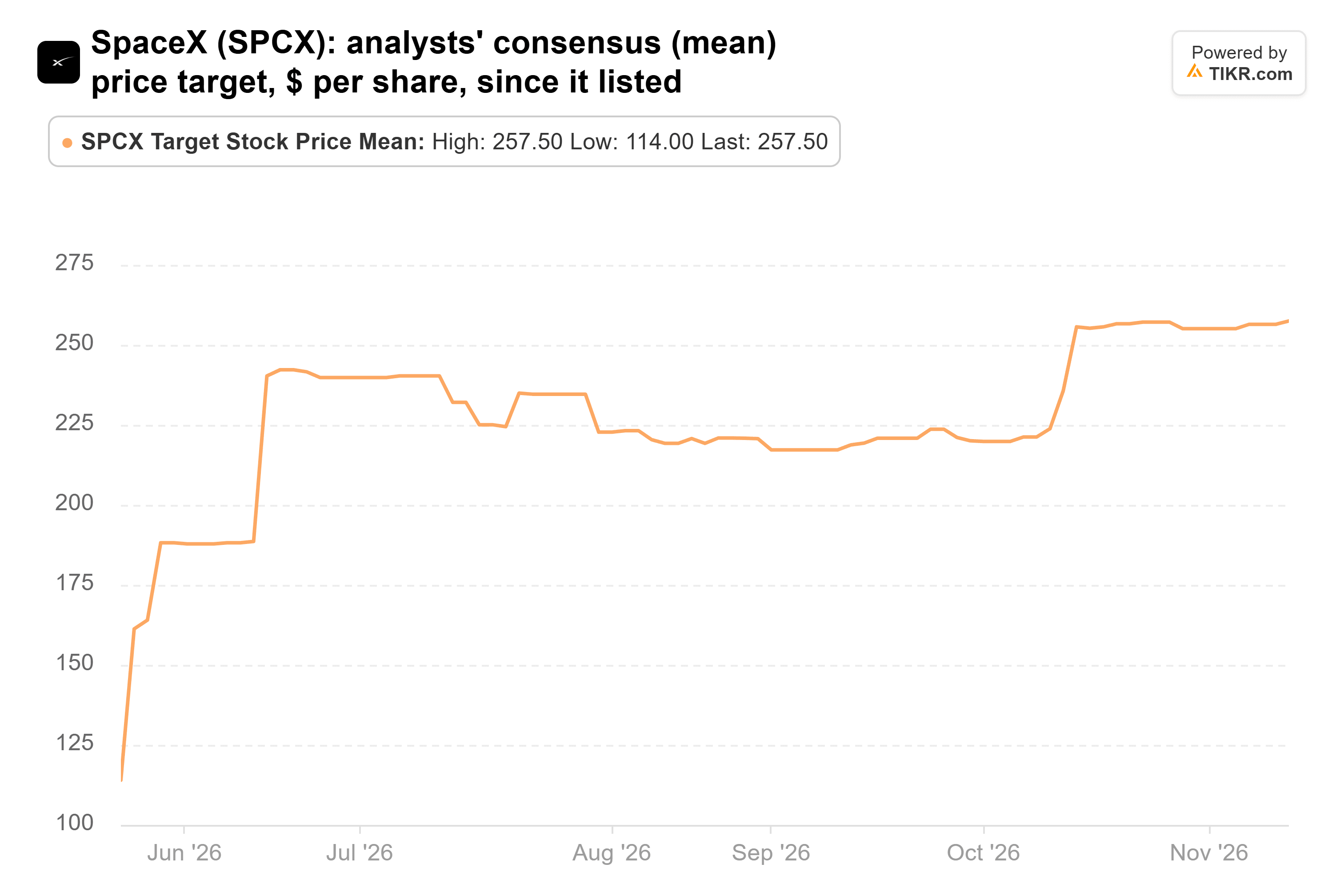
That’s 82% above the last close of $141.70. But one customer supplied 34.5% of third-quarter revenue, $170 of Morgan Stanley’s $300 target rests on enterprise AI, and management guides fourth-quarter capex to $35 billion to $40 billion.
3. Coherent trades below what Nvidia paid
Nvidia bought its Coherent stake outright: 7.79 million shares at $256.80 apiece in March, a $2 billion investment. Nvidia still held all of them at Sept. 30, worth $2.24 billion, or 4.6% of the portfolio. The stock has fallen 27% since then, to $210.86, which is below Nvidia’s price and 52% under its 52-week high.
Nvidia is also the lead customer for Coherent’s co-packaged optics, which management expects to bring in its first revenue in the December quarter. And analysts keep raising the earnings bar: consensus normalized EPS is $10.41 for fiscal 2027, the year ending June 2027, up from $9.42 a month earlier, and $15.79 for fiscal 2028. The weak spot is cash, since operating cash flow was negative $93 million in the September quarter and inventory rose to $3.3 billion. Still, two insiders bought $1.2 million of stock after the report.
The consensus target is off its August peak of $416.09, but it’s still more than double where it was a year ago:
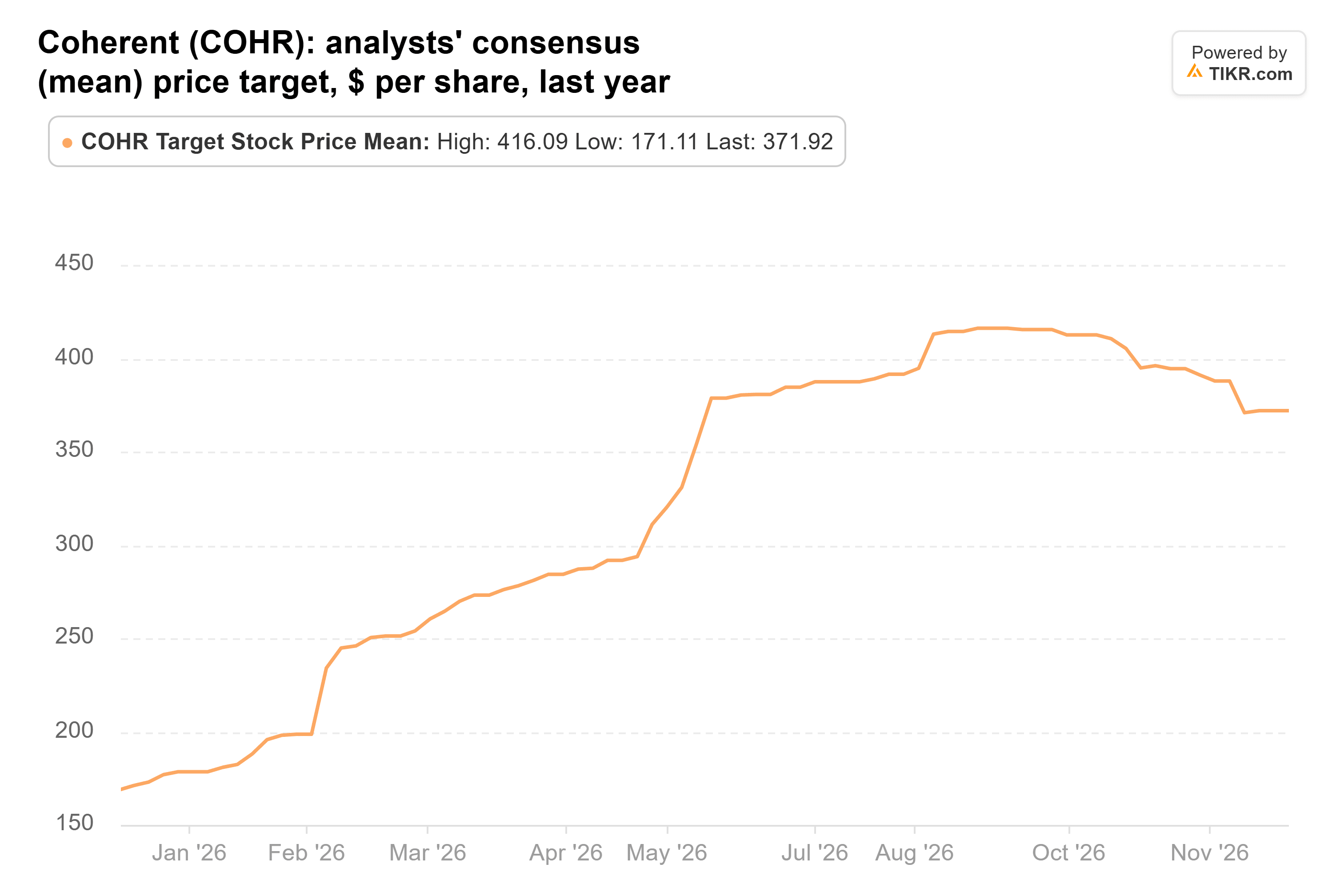
At $371.92, it’s 76% above the last close.
4. Nvidia is holding less Intel
Intel is Nvidia’s second-biggest holding: 161.08 million shares worth $19.37 billion at Sept. 30, or 40.1% of the portfolio. That’s 25% fewer shares than Nvidia held at June 30. The stock has fallen 54% since Sept. 30, after a weak outlook with its third-quarter report, and sits 61% below its 52-week high.
The server business is the bright spot. The data center segment’s operating margin cleared 40% in the third quarter, and CEO Lip-Bu Tan says AI systems now use about as many CPUs as GPUs. Tan also bought $9.7 million of stock after the drop. But analysts cut consensus 2027 normalized EPS to $1.79, from $2.11 before the report. And Huang championed the 2025 deal that paired Intel CPUs with Nvidia graphics and came with Nvidia’s $5 billion investment, so that deal’s future now rests on Nvidia’s next leader.
The consensus target has fallen from its October peak of $118.05, though it’s still far above the $37.27 of a year ago:
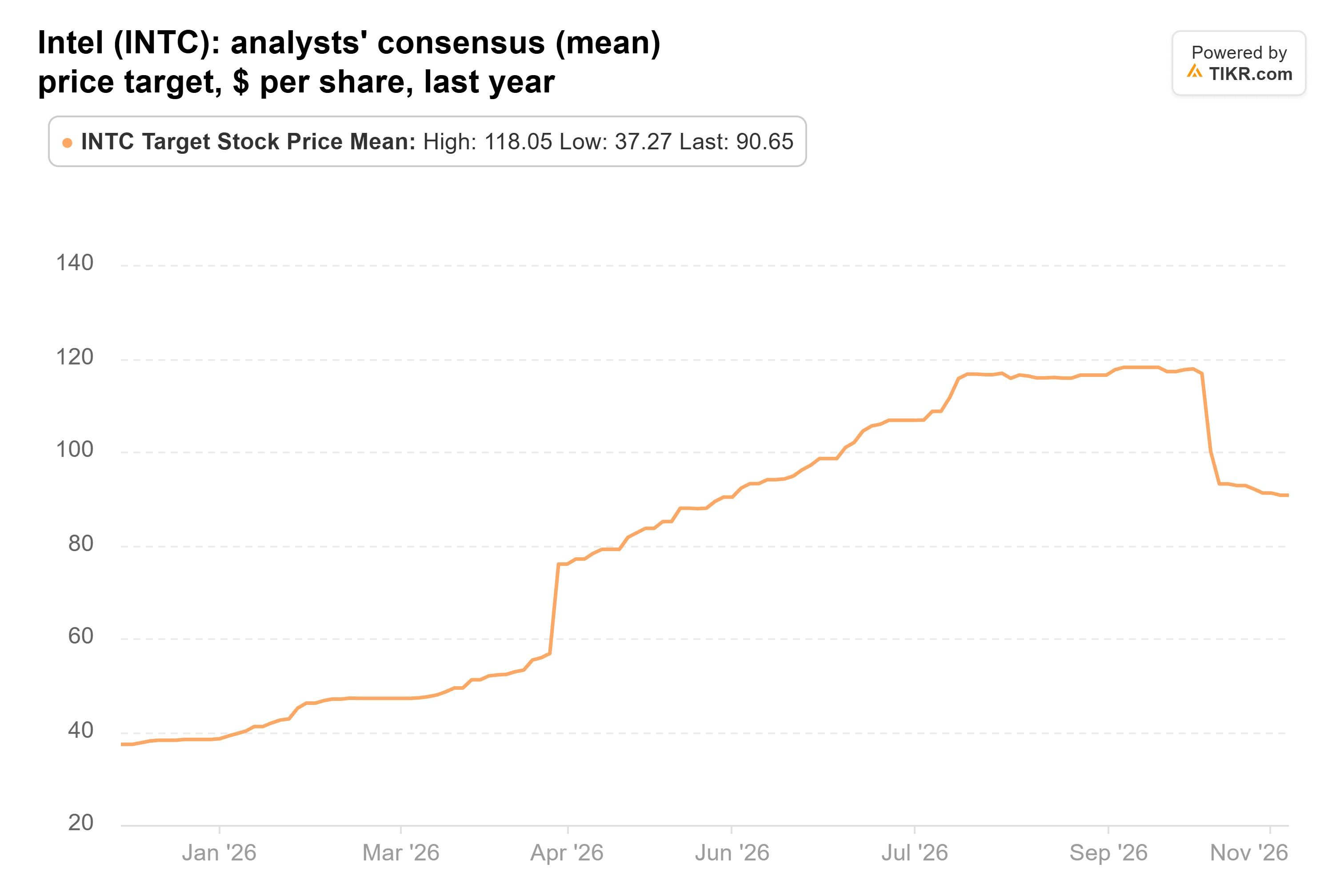
At $90.65, it sits 64% above the last close of $55.17.
5. Synopsys keeps beating its own guidance
Nvidia trimmed its Synopsys stake by 10% in the quarter, to 4.35 million shares worth $1.89 billion at Sept. 30, or 3.9% of the portfolio. The stock is up 0.1% since then and sits 19% below its 52-week high.
Synopsys’s numbers have been steadier. Revenue rose 42% to $2.48 billion in its fiscal third quarter, ended July 31, and most of the gain came from a full quarter of Ansys, which it bought in July 2025. Non-GAAP EPS of $3.91 beat the high end of its guidance. It guided to revenue of $9.69 billion to $9.74 billion for the fiscal year that ended Oct. 31, and it reports that year in early December.
Analysts’ view has barely budged, with the consensus target moving from $556.40 a year ago to $589.55:
![Line chart from TIKR of Synopsys' analysts' consensus (mean) price target, $ per share,</div></article></div><span></span><span></span></div><!--]--></div><div class=](https://res.cloudinary.com/tikr/images/w_3024,h_2016,c_scale/f_webp,q_auto/v1794982796/images/2026-11-18_fund-e932118ff164_SNPS_street_targets_1yr/2026-11-18_fund-e932118ff164_SNPS_street_targets_1yr.png?_i=AA)
목차
전 세계 수천 명의 투자자가 TIKR을 사용하여 투자 분석을 강화하는 데 동참하세요.