Key Takeaways
- Xiaomi’s revenue fell 5.2% in the September quarter as memory costs pushed it to cut production of budget phones.
- Qualcomm needs Android growth to offset its shrinking Apple business in the December quarter.
- Arm earns royalties on the same phones, but low-end models pay it the least.
- Qualcomm trades at 17x forward earnings, above its five-year average of 14x, while analysts expect earnings to fall in fiscal 2027 before rising 27% in fiscal 2028.
Xiaomi (XIACY) just reported its third straight quarter of shrinking revenue, as the global memory shortage pushed it to make far fewer budget phones.
That’s bad news for Qualcomm (QCOM). Xiaomi is one of the biggest Android buyers of Snapdragon chips, and Qualcomm is counting on Android phone makers to replace the business it’s losing at Apple (AAPL). The cuts reach Arm Holdings (ARM), which collects a royalty on nearly every smartphone processor.
What Xiaomi Reported
- Revenue fell 5.2% from a year earlier to 107.2 billion yuan ($16.1 billion).
- Net income fell 68% to 3.9 billion yuan (about $586 million).
- Smartphone shipments fell nearly 30%, against 20% for the market, per Counterpoint Research.
Counterpoint says double-digit price increases kept Xiaomi’s phone revenue steady as it moved into premium models like the 18 Fold.
Android Has to Carry Qualcomm’s December Quarter
Qualcomm’s handset revenue fell 20% to $5.1 billion in the June quarter, which management called the bottom for its China Android business. September edged up 1% to $5.14 billion, 26% below a year earlier. For December, management expects a mid-single-digit decline from September, as falling Apple revenue outweighs Android growth.
That needs Android makers building more phones, yet Xiaomi’s shipments have fallen from a year earlier every quarter this year.
The generous reading is that Xiaomi is dropping cheap phones and keeping premium ones, the kind that drove most of Qualcomm’s handset growth in fiscal 2025. I don’t buy it. In July, Qualcomm said buyers were drifting to cheaper flagships and older generations. When memory eats a bigger share of a phone’s cost, phone makers look to save on the chip.
TIKR Tracks 37 Analysts on Qualcomm. How Many Say “Buy”?
See the full breakdown of Buy, Hold, and Sell ratings on Qualcomm, along with Wall Street’s revenue and earnings estimates, all in one place. More than 500,000 investors use TIKR to research stocks like this one. See Qualcomm’s Analyst Ratings
Arm Has a Cushion
In February, Arm’s CFO said a 20% drop in phone units would cost it about 2% to 4% of phone royalties at worst, since the lost phones would be low-end models on older designs. That’s what Xiaomi is cutting. But by July, Arm said the memory squeeze had reached mid-tier and premium phones.
The Number That Matters: $12.18
Qualcomm said the 20% Android decline would cost it more than $1.50 of fiscal 2026 EPS, and analysts have cut their fiscal 2027 numbers since its November report:
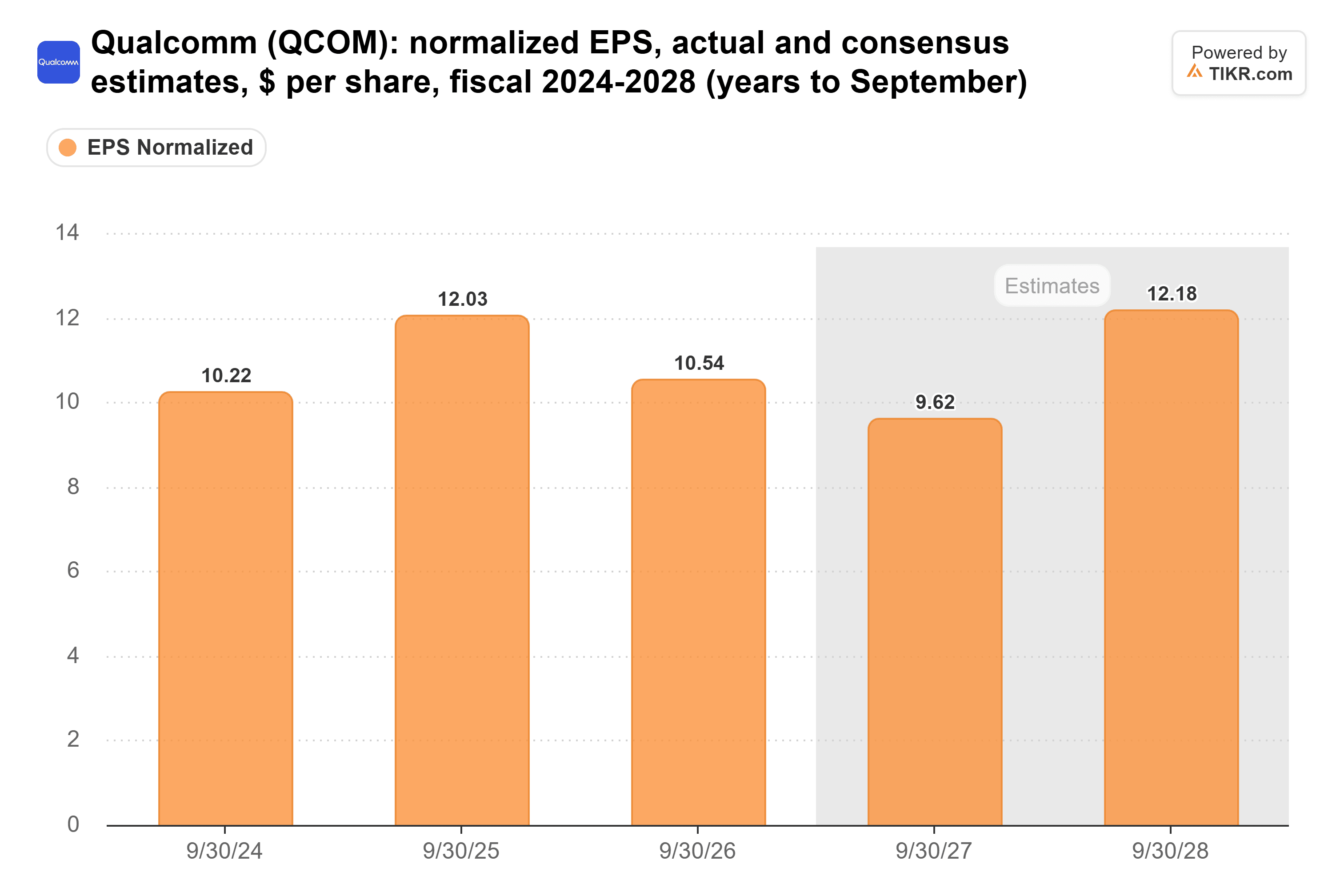
Consensus has normalized EPS slipping to $9.62 in fiscal 2027 from $10.54 in fiscal 2026, then jumping 27% to $12.18 in fiscal 2028. That needs an Android recovery, and those Nov. 18 estimates predate Xiaomi’s report.
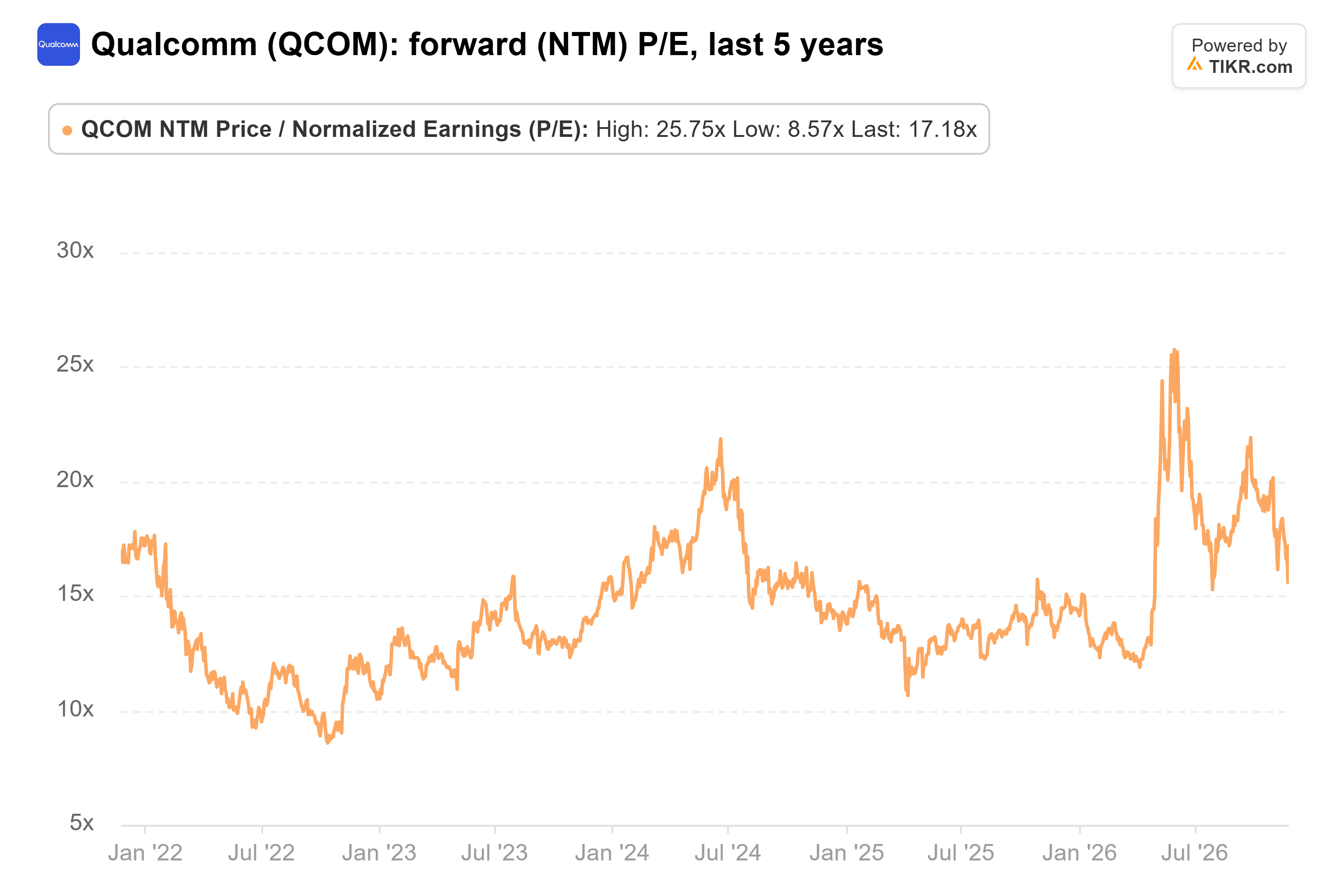
Investors are already paying for that rebound: Qualcomm trades at 17x forward earnings, above its five-year average of 14x.
What Qualcomm’s February Report Has to Show
Data center helps: management guided to more than $650 million in December and kept its $5 billion fiscal 2027 target. But handsets will still be close to half of revenue, and at 17x the stock is priced for them to recover. Xiaomi’s quarter says that hasn’t started.
Qualcomm reports in early February. A 4% to 6% drop would put handset revenue near $4.8 billion to $4.9 billion. Land there with Android growing, and the June bottom holds. Fall well short, and the squeeze has reached Qualcomm’s chips.
So What Is Qualcomm Stock Actually Worth?
TIKR lets you forecast the future price of any stock in less than a minute. Just enter a few assumptions into TIKR’s valuation model and see what Qualcomm could be worth. Start from Wall Street consensus estimates, or adjust the inputs to reflect your own view of the business. It’s free to use.
Disclaimer:
Please note that the articles on TIKR are not intended to serve as investment or financial advice from TIKR or our content team, nor are they recommendations to buy or sell any stocks. We create our content based on TIKR Terminal’s investment data and analysts’ estimates. Our analysis might not include recent company news or important updates. TIKR has no position in any of the stocks mentioned. Thank you for reading, and happy investing!