Key Takeaways
- Western Digital (WDC) stock fell approximately 28% in the five trading sessions ended November 6 before rebounding 9.9% to $289.78 on November 9.
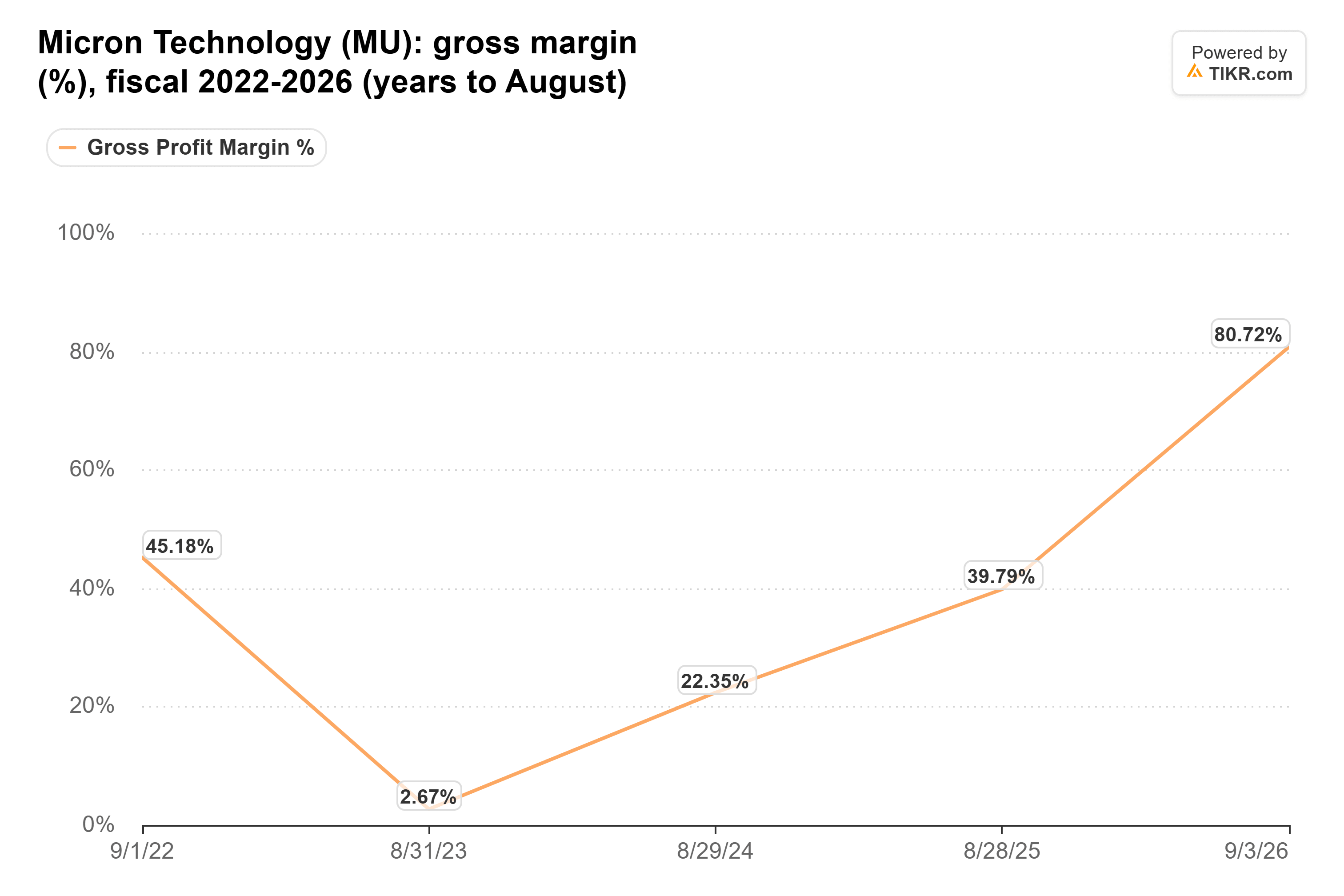
- Micron Technology (MU) reported an 80.7% gross margin in fiscal 2026, compared with Western Digital’s 48.9%, highlighting its stronger current profitability.
- Western Digital’s normalized earnings per share are projected to rise from $24.72 in fiscal 2027 to $40.40 in fiscal 2028, representing approximately 63% growth.
- Micron offers more direct AI memory exposure, while Western Digital’s improving margins, contracted storage demand, and earnings outlook make it an attractive alternative.
What Happened?
Western Digital (WDC) stock declined approximately 28% from October 30 through November 6, closing at $263.78 before rebounding approximately 9.9% to $289.78 on November 9.
Micron Technology (MU) also faced selling pressure as investors reassessed AI infrastructure spending, semiconductor valuations, and the sustainability of elevated memory prices.
During CNBC’s November 2 episode of Mad Money, a caller told Jim Cramer that he had purchased a substantial Western Digital position and planned to hold it for two to three years.
“I think it’s a good company, but I think Micron’s a better company.”
He added that Micron has more technology, suggesting its advanced memory capabilities made it his preferred investment.
However, Western Digital’s latest operating results show why the comparison is more complicated.
The company reported fiscal first-quarter 2027 revenue of $4.38 billion, up 55% year over year, while non-GAAP gross margin expanded to 58.1%, increasing 1,420 basis points.
Management expects approximately $5.1 billion in fiscal second-quarter revenue, with non-GAAP gross margin reaching 60% to 61%.
Western Digital’s average selling price per terabyte increased approximately 28% year over year, reflecting stronger pricing and demand for higher-capacity hard drives.
These results suggest data center storage demand remains strong despite recent stock volatility, although sustained pricing power will be critical to future profitability.
The key question is whether Micron’s higher margins justify Cramer’s preference or Western Digital’s projected earnings growth offers a more attractive opportunity.
Is Western Digital Stock Undervalued or Overvalued?
Western Digital’s recent selloff makes its earnings outlook particularly interesting as analysts expect profitability to accelerate over the next two years.
According to TIKR consensus estimates dated October 27, Western Digital generated normalized earnings per share of $10.22 in fiscal 2026, with analysts projecting $24.72 in fiscal 2027 and $40.40 in fiscal 2028.
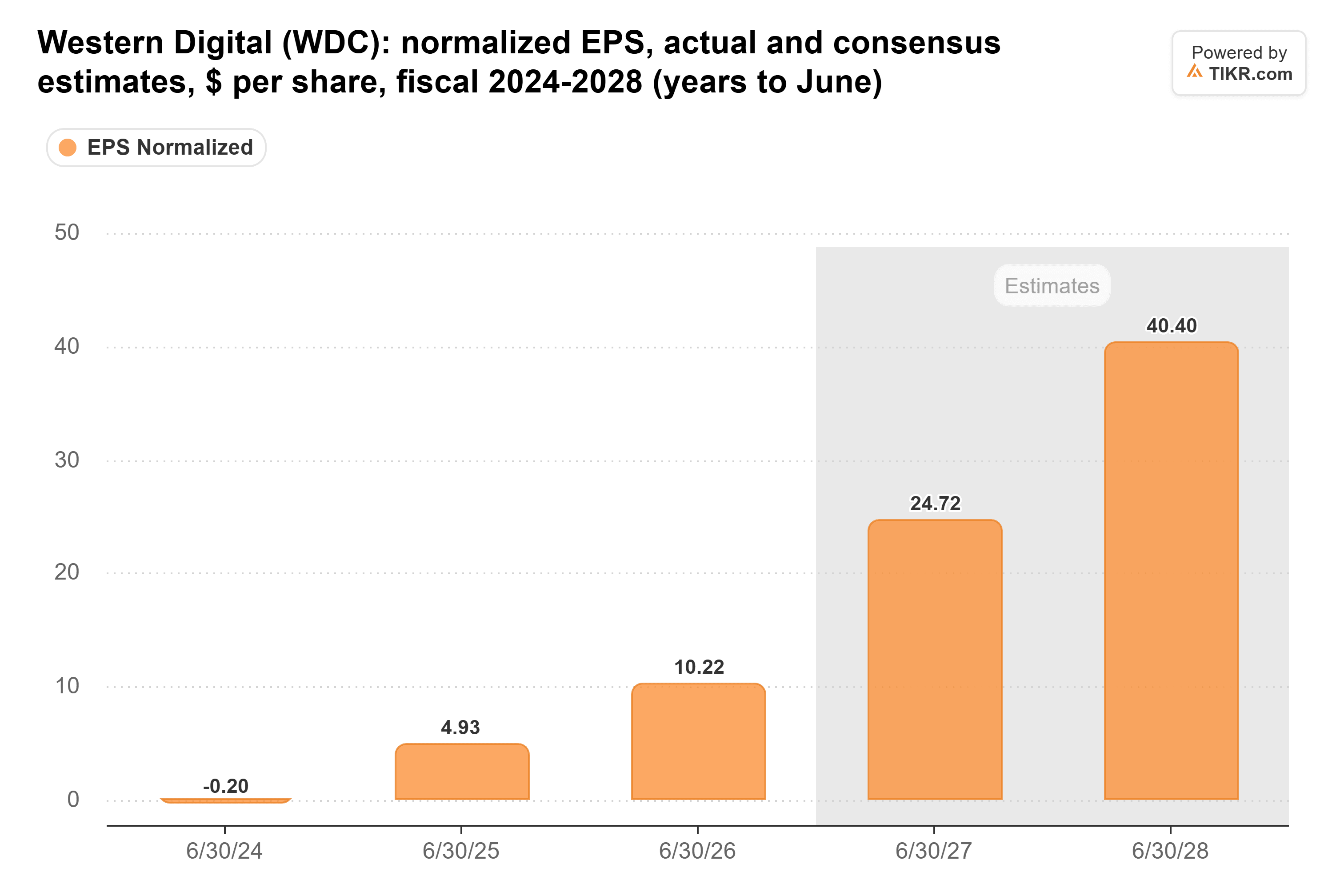
That represents approximately 63% projected earnings growth between fiscal 2027 and fiscal 2028, supported by stronger hard-drive pricing, higher-capacity storage demand, and operating leverage.
Based on its November 9 closing price of $289.78 and TIKR’s October 27 fiscal 2027 normalized EPS estimate of $24.72, Western Digital traded at an indicative forward P/E of approximately 11.7 times.
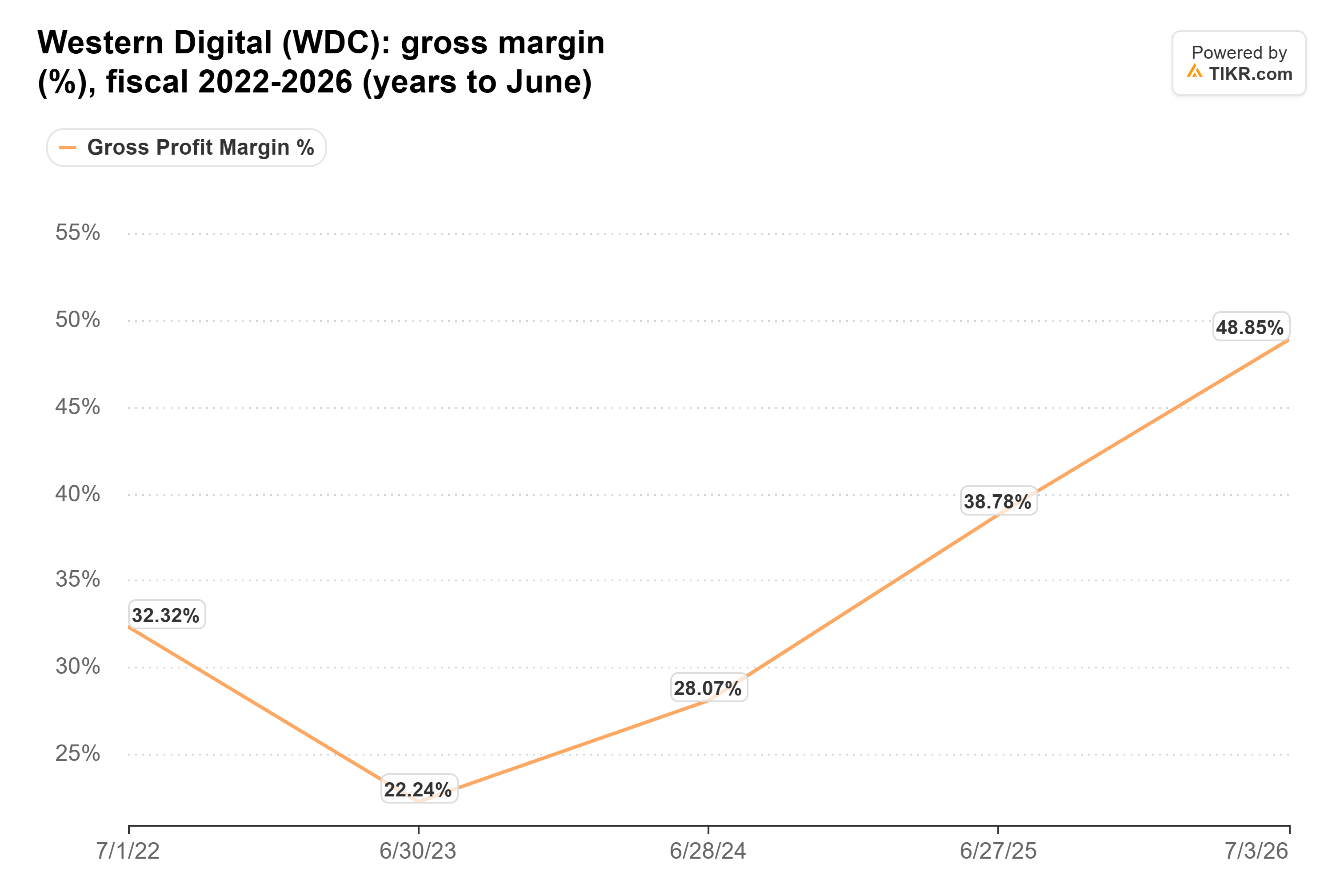
Western Digital’s gross margin also improved from 22.2% in fiscal 2023 to 48.9% in fiscal 2026, according to TIKR historical data. Comparisons across earlier years require caution following its February 2025 Sandisk separation.
Micron, meanwhile, reported an 80.7% gross margin in fiscal 2026, supported by strong DRAM and NAND pricing and AI-related memory demand.
However, its gross margin fell to just 2.7% in fiscal 2023, according to TIKR historical data, illustrating the volatility associated with memory-industry pricing cycles.
Micron’s advanced memory technology and long-term customer agreements provide exposure to growing AI infrastructure investment, although its profitability remains sensitive to memory pricing and additional production capacity.
Western Digital also benefits from long-term storage agreements, with higher-capacity drives and stronger selling prices supporting margin expansion.
Still, rising DRAM and NAND component costs could pressure Western Digital’s manufacturing economics, while Micron could face margin compression if memory supply eventually catches up with demand.
Over the next 12 months, Western Digital’s biggest test will be whether it can sustain stronger pricing and achieve its projected 60% to 61% quarterly non-GAAP gross margin. Micron’s upcoming results will help determine whether AI memory demand can support its unusually strong profitability.
Western Digital looks potentially attractive at approximately 11.7 times its supplied fiscal 2027 earnings estimate if analysts’ growth expectations materialize. Micron remains the stronger business on current gross margins and offers more direct AI memory exposure. For investors with a two-to-three-year horizon, Western Digital provides an interesting earnings-growth opportunity, but the more attractive investment will ultimately depend on valuation, pricing power, and how sustainably each company can grow profits.
So what is Western Digital stock actually worth?
TIKR lets you forecast the future price of any stock in less than a minute. Just enter a few assumptions into TIKR’s valuation model and see what Western Digital could be worth. Start from Wall Street consensus estimates, or adjust the inputs to reflect your own view of the business. It’s free to use.
Value Western Digital for free
Disclaimer:
Please note that the articles on TIKR are not intended to serve as investment or financial advice from TIKR or our content team, nor are they recommendations to buy or sell any stocks. We create our content based on TIKR Terminal’s investment data and analysts’ estimates. Our analysis might not include recent company news or important updates. TIKR has no position in any of the stocks mentioned. Thank you for reading, and happy investing!