Key Takeaways
- DoorDash CEO Tony Xu says its Dot robots now complete close to 10% of orders in Phoenix, the same week Uber started delivering Uber Eats orders by drone in Texas.
- DoorDash builds its own robots and drones while Uber relies on partners, which could give DoorDash the better shot at a lower cost per order.
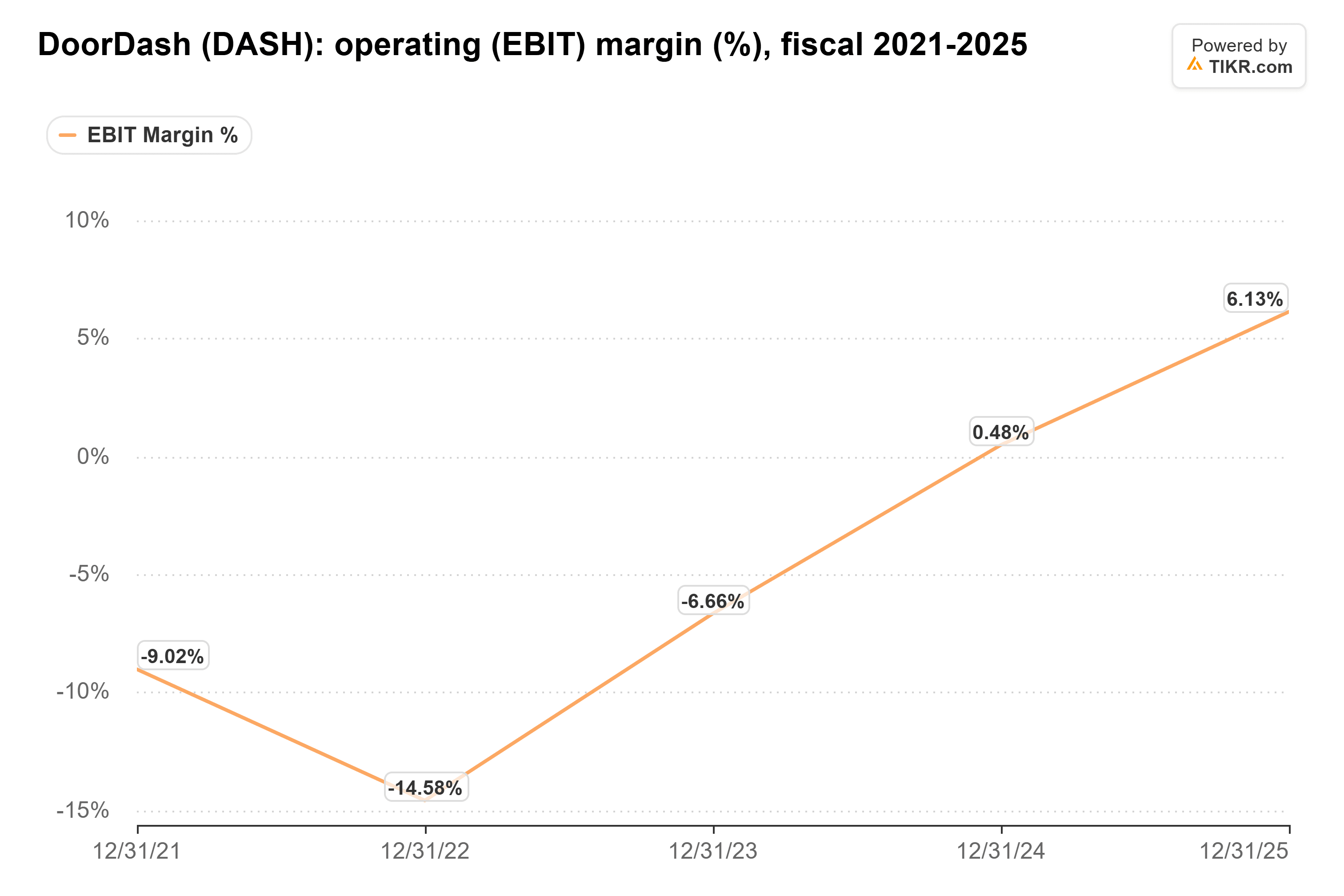
- A cheaper order matters more to DoorDash, whose EBIT margin was 6.1% in 2025 against Uber’s 10.7%, with an Instacart deal pending.
- DoorDash hasn’t shared what a Dot delivery costs, so the test is whether it takes the robots beyond Phoenix.
Uber Technologies (UBER) started delivering Uber Eats orders by Zipline drone in Spring, Texas, a Houston suburb, on Tuesday, Nov. 17, and Uber’s president is aiming for 1 million drone deliveries a day by the end of 2029.
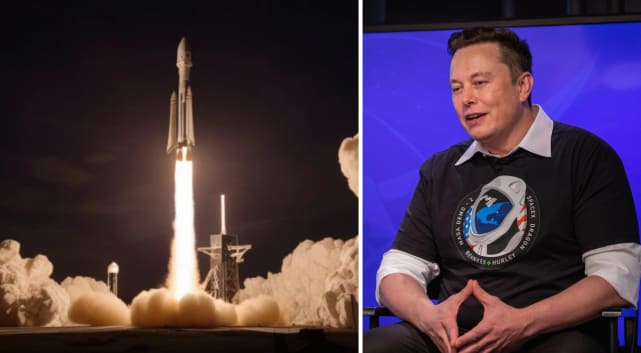
The next day, DoorDash (DASH) CEO Tony Xu had a number of his own. Asked at the TomorrowX Summit how big DoorDash’s robot program has gotten, he said “we’re seeing close to 10% of the volume in the Phoenix market being actually completed by Dots.”
He added that these are real customers placing real orders, not demos.
That means DoorDash reached its year-end target early. In August, management said it expected Dot to deliver a high single-digit percentage of orders in its largest test market by the end of the year.
The rivalry is heating up elsewhere too. Earlier this month, Amazon (AMZN) started giving Prime members free Uber Eats delivery, and DoorDash is still waiting to close its roughly $17 billion deal for Instacart (CART), which still needs regulatory and stockholder approval.
TIKR tracks 49 analysts on Uber. How many say “Buy”?
See the full breakdown of Buy, Hold, and Sell ratings on Uber, along with Wall Street’s revenue and earnings estimates, all in one place. More than 500,000 investors use TIKR to research stocks like this one. See Uber’s Analyst Ratings
Ahead of schedule, in one city
Phoenix is one market. For scale, DoorDash handled 970 million orders across its marketplaces in the second quarter alone.
The market didn’t treat Xu’s number as a turning point. DoorDash shares closed up 1.15% at $166.80 on Nov. 18, then fell 5.8% on Nov. 19 in a broad sell-off that cut the S&P 500 by 2.0% and Uber by 4.6%.
Gavin Baker, who interviewed Xu, asked how Dot is doing against DoorDash’s unit-economics goals. Xu gave no numbers, saying DoorDash commits to leases and manufacturing capacity years ahead, so it needs to see real customer benefits before making big bets: “when you see us scale these programs, you should have confidence that the unit economics are there and that customer benefits are real.”
A cheaper order matters more at DoorDash
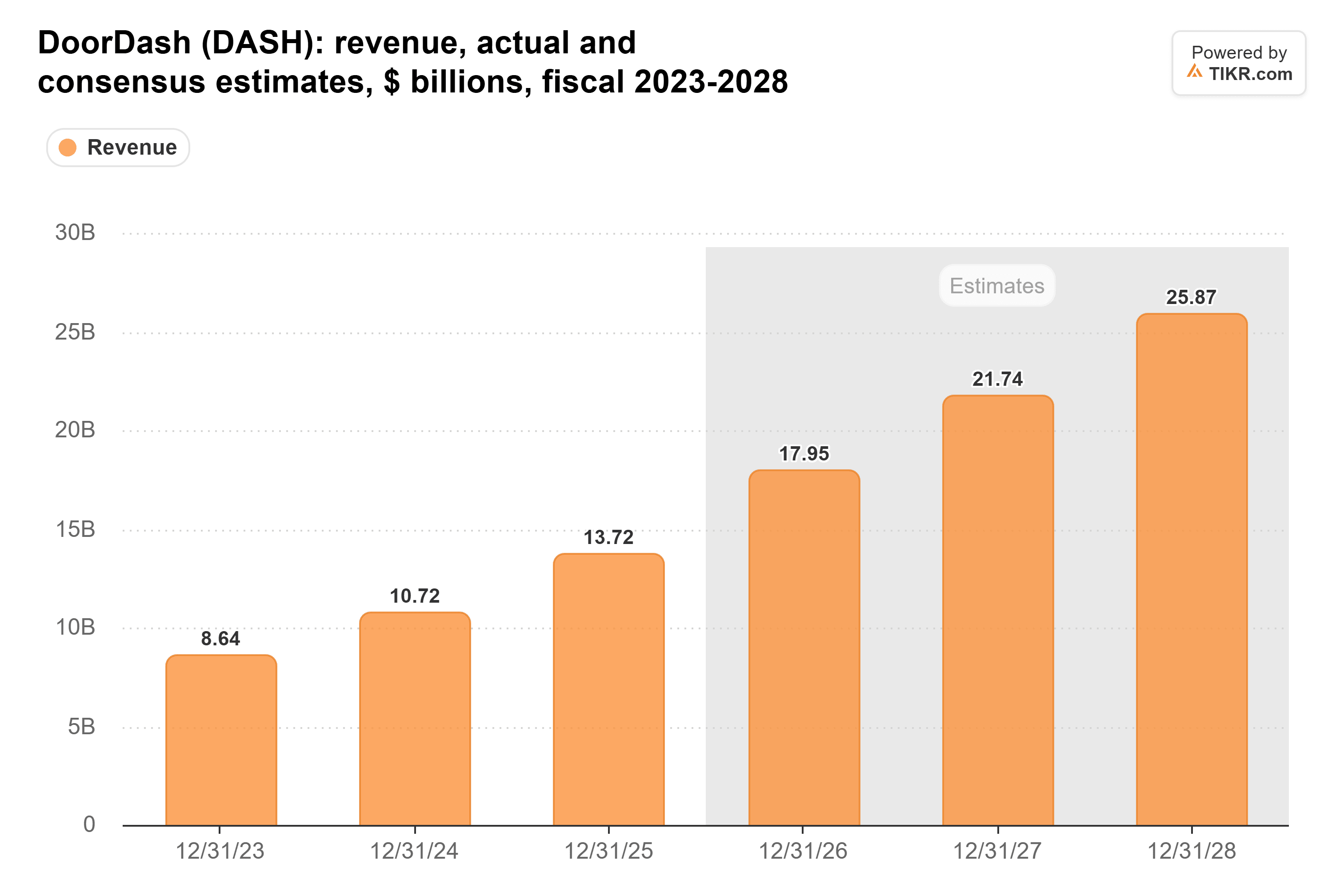
Analysts expect DoorDash’s revenue to nearly double from 2025 to 2028.
DoorDash keeps only a thin slice of that revenue as operating profit. Its EBIT margin, as TIKR measures it, turned positive in 2024 and reached 6.1% in 2025.
Xu named a lower cost per delivery as one of the milestones DoorDash has to hit before it rolls its robots out nationwide. A business with margins this thin feels every cent it saves on an order.
Uber is partnering its way in
Uber starts from a stronger profit position. Its EBIT margin reached 10.7% in 2025, up from -22.0% in 2021.
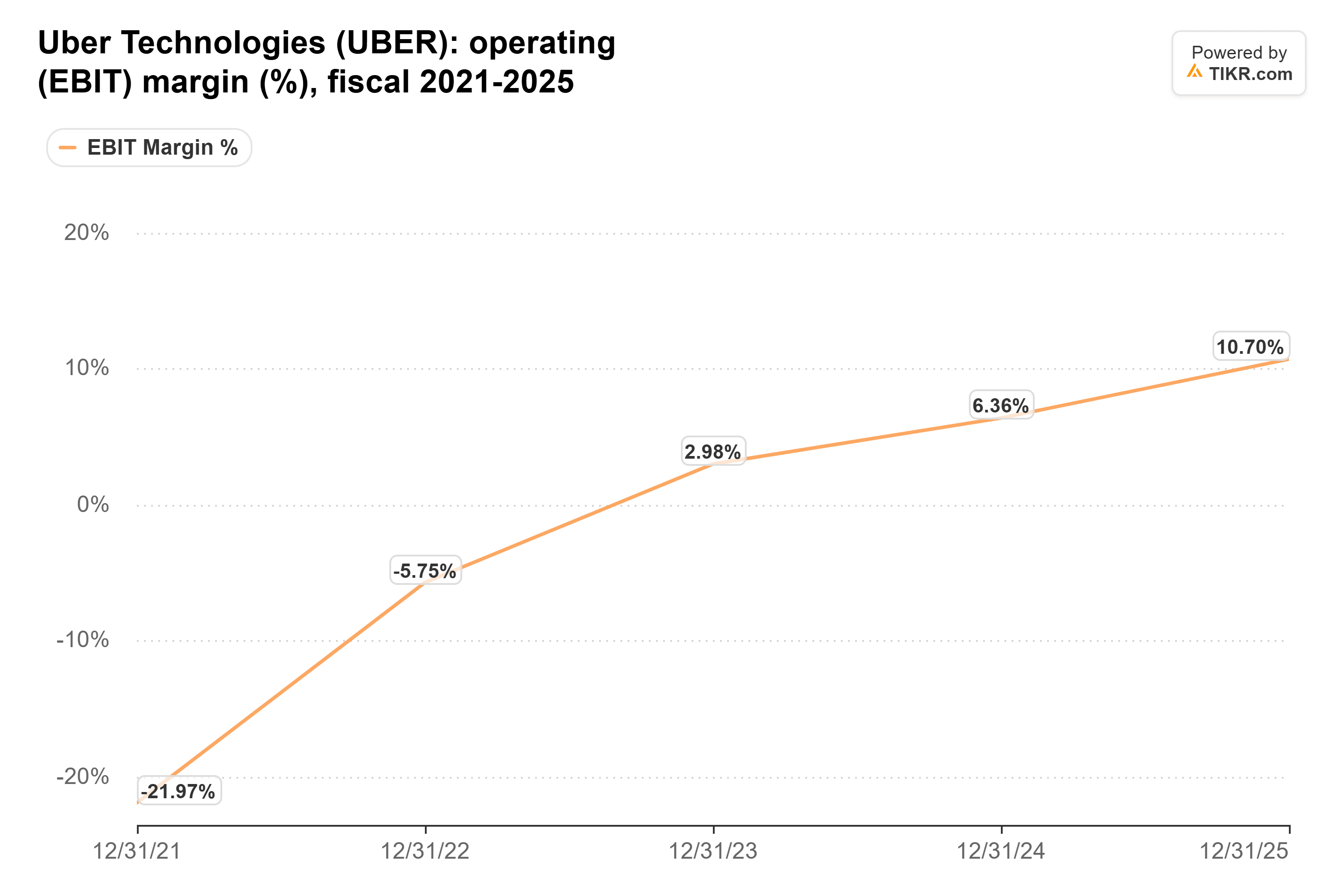
Uber is leaning on partners for autonomous delivery. Zipline flies its drones, and Uber said in August it would invest in Zipline. The Amazon deal works the same way: Amazon keeps the customer, and Uber handles the delivery.
DoorDash works with partners too, but it built its own Dot robots and DoorDash Air drones. That looks like the better bet for margins. Whatever a Dot saves on an order stays with DoorDash, while Uber’s terms with Zipline aren’t public, so it’s unclear how much of the drone savings Uber keeps.
Then there’s grocery. Xu said delivery is harder to automate than a robotaxi, because a passenger can walk to the car: “That cannot happen with burritos and bananas.” Instacart handled 91.4 million orders in the third quarter, up 10%. If the deal closes, those orders look like a natural next job for DoorDash’s own fleet, though the company hasn’t said it plans that.
One city, and the right bet
Uber’s drones do have a real rival, and DoorDash’s approach looks like the stronger long-term play for margins, even though Uber has more profit to work with today. DoorDash still hasn’t said what a Dot delivery costs. Its fourth-quarter report, likely in February, is the next chance to hear whether Dot is headed for a wider rollout beyond Phoenix, which by Xu’s own standard would show the unit economics work.
So what is DoorDash stock actually worth?
TIKR lets you forecast the future price of any stock in less than a minute. Just enter a few assumptions into TIKR’s valuation model and see what DoorDash could be worth. Start from Wall Street consensus estimates, or adjust the inputs to reflect your own view of the business. It’s free to use.
Disclaimer:
Please note that the articles on TIKR are not intended to serve as investment or financial advice from TIKR or our content team, nor are they recommendations to buy or sell any stocks. We create our content based on TIKR Terminal’s investment data and analysts’ estimates. Our analysis might not include recent company news or important updates. TIKR has no position in any of the stocks mentioned. Thank you for reading, and happy investing!