Key Takeaways
- TSMC rallied as much as 7.3% in Taipei on Monday after Taiwan activated its stock stabilization fund following the market’s worst week since 2001.
- Reuters and Bloomberg reported that TSMC is drafting 3D DRAM plans at Nvidia’s request, which would pit it against Samsung, SK Hynix and Micron.
- TSMC’s gross margin slipped to 66.4% in the third quarter on the 2-nanometer ramp, setting a high bar for any new memory business.
- October revenue arrives today, and the fourth-quarter guide implies roughly NT$554 billion to NT$576 billion a month.
TSMC spent last week absorbing other people’s bad news. Now it might be making some news of its own.
Taiwan Semiconductor Manufacturing (2330) rallied as much as 7.3% in Taipei on Monday after Taiwan’s government activated its stock stabilization fund. The island’s market had just posted its worst week since 2001, since a Democratic midterm sweep added to worries about AI spending.
The more interesting news landed Friday. Reuters and Bloomberg, citing The Information, reported that TSMC is drafting plans to make 3D DRAM at the request of Nvidia (NVDA), its largest customer.
That would put TSMC up against Samsung, SK Hynix and Micron Technology (MU). And Micron just stumbled: Bloomberg reported Thursday that it has all but halted construction of a Taiwan memory plant over a labor dispute.
Nvidia goes shopping for memory
Details are thin, but a few are specific:
- TSMC could build new memory fabs, or buy an existing plant and convert it.
- Hsu Kuo-chin, the vice president who oversees TSMC’s advanced packaging, is leading the effort.
- There’s no production timeline, and neither company commented.
The motive is easy to see. An AI-driven memory shortage has pushed prices higher, so chip designers are scrambling to lock in supply. Micron’s stalled Taoyuan project makes that worse, because Taiwan accounts for about 60% of Micron’s DRAM output. The company says its existing Taiwan operations are running normally.
Did any of this change how investors see the three stocks? Compare the last three months…
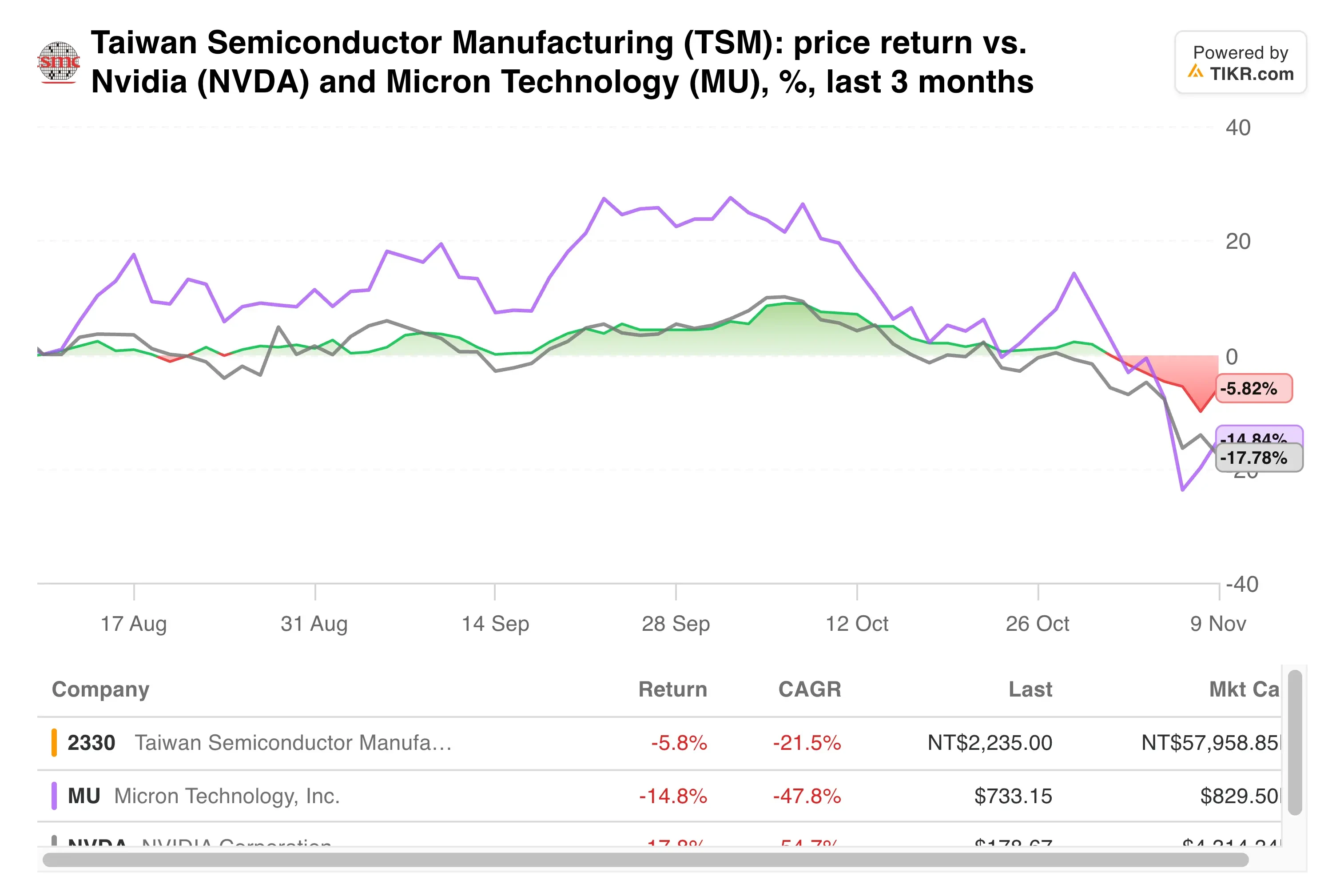
Monday’s bounce helped, although Reuters noted that analysts still saw the rebound as shaky.
TIKR tracks 21 analysts on TSMC. How many say “Buy”?
See the full breakdown of Buy, Hold, and Sell ratings on TSMC, along with Wall Street’s revenue and earnings estimates, all in one place. More than 500,000 investors use TIKR to research stocks like this one. See TSMC’s Analyst Ratings
The logic business keeps compounding
TSMC doesn’t need memory to grow. Third-quarter revenue rose 41.2% to $46.72 billion in U.S. dollars, while net income jumped 68.7% in NT dollar terms. Net margin reached 51.1%.
Leading-edge nodes carried the quarter. Chips at 7 nanometers and below made up 79% of wafer revenue, and 2-nanometer already contributed 8%.
Guidance points even higher. TSMC expects fourth-quarter revenue of $52.3 billion to $54.3 billion, and here’s the run that sets up:
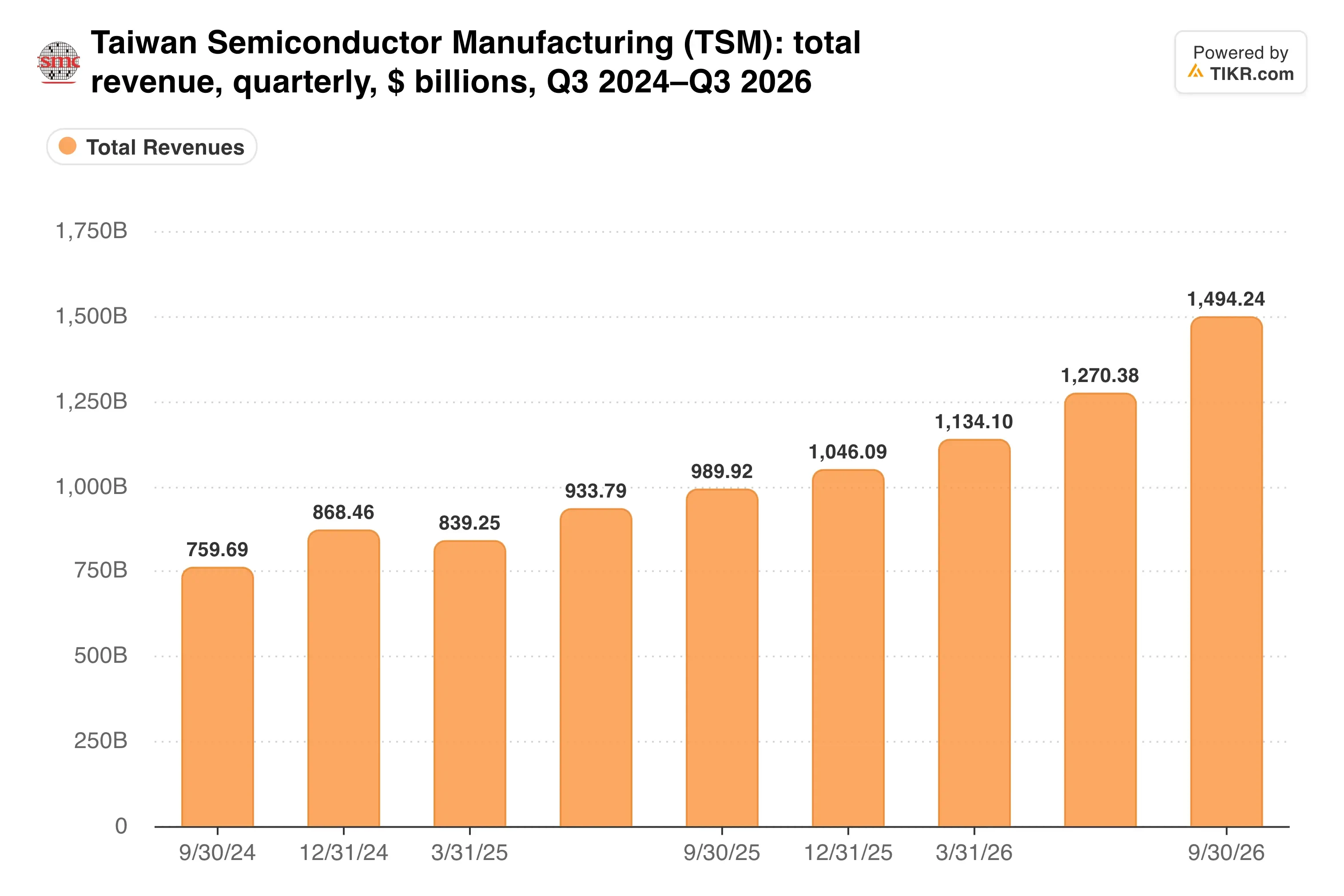
The midpoint sits 14.1% above the third quarter. So full-year 2026 revenue should grow about 44% in dollars, with CFO Wendell Huang crediting “the steep ramp-up of our 2-nanometer technology” in the release.
Micron’s Taiwan troubles also cut the other way for Nvidia. A foundry with TSMC’s process depth would make a credible fourth supplier. That alone hands Nvidia leverage over its current memory vendors, even if no wafer ever ships.
A 66% margin sets the bar
Here’s the catch. Gross margin slipped to 66.4% in the third quarter from 67.7% in the second, mostly because of the 2-nanometer ramp. Management guided 65% to 67% for the fourth quarter.
Memory is a different animal. TSMC has stayed a pure-play foundry since 1987, while memory prices swing hard with supply and demand.
That steadiness shows up clearly in its margin history.
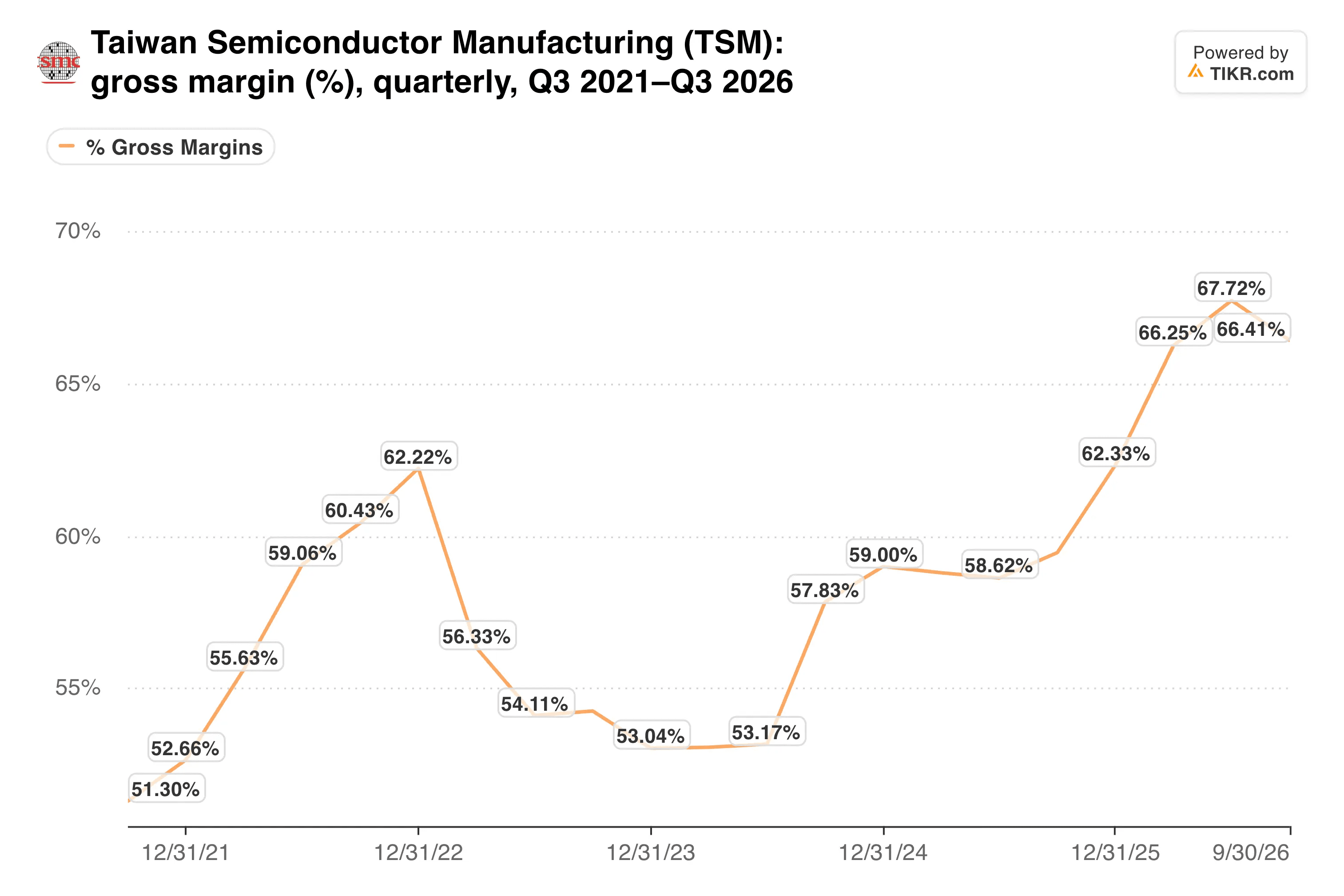
Any memory plant would start from a margin above 66%, so the hurdle for a new business is steep.
My take: I think this report says more about Nvidia’s leverage than TSMC’s plans. Nvidia gains bargaining power with memory makers just by having TSMC sketch a fab. But I wouldn’t give TSMC credit for memory until it names a site, a customer commitment and a date. A new DRAM fab takes years to build, and today’s shortage may not last that long. Meanwhile, the core business is doing more than enough on its own.
October revenue arrives today. The fourth-quarter guide implies roughly NT$554 billion to NT$576 billion a month, against NT$511.86 billion in September. A print in that range would show demand shrugging off last week’s panic. After that, the mid-January report brings 2027 guidance, and possibly a first word on memory.
So what is Taiwan Semiconductor Manufacturing stock actually worth?
TIKR lets you forecast the future price of any stock in less than a minute. Just enter a few assumptions into TIKR’s valuation model and see what Taiwan Semiconductor Manufacturing could be worth. Start from Wall Street consensus estimates, or adjust the inputs to reflect your own view of the business. It’s free to use.
Disclaimer:
Please note that the articles on TIKR are not intended to serve as investment or financial advice from TIKR or our content team, nor are they recommendations to buy or sell any stocks. We create our content based on TIKR Terminal’s investment data and analysts’ estimates. Our analysis might not include recent company news or important updates. TIKR has no position in any stocks mentioned. Thank you for reading, and happy investing!