Key Takeaways
- Washington proposed tariffs of up to 15% on Taiwan, or up to 25% if talks fail.
- Taiwan’s notice exempts chips, smartphones, PCs and servers, the core of TSMC’s, Apple’s and Qualcomm’s businesses.
- TSMC’s selloff started with AI doubts in Taipei, and the stock trades below its five-year average multiple.
- The bigger chip risk is the separate Section 232 tariffs, which TSMC is answering in Arizona, a tougher setup for Intel.
Taiwan Semiconductor Manufacturing (TSM) fell 7% in early trading on Nov. 25, then closed down 2% at $342, as Taiwan landed on Washington’s newest tariff list. Read the fine print, though, and TSMC’s chips are exempt. Smartphones from Taiwan, India and Vietnam are exempt, and China-made ones face up to 10%. That matters for Apple (AAPL), which got half its fiscal 2025 revenue from the iPhone.
Qualcomm (QCOM), whose phone chips TSMC makes, gets the same relief. Intel (INTC) gets less out of it, since a tariff on Taiwan-made chips would have helped it win outside customers for its US factories.
Taiwan made the list. Its chips didn’t
The US Trade Representative proposed tariffs on all goods from 14 economies. Taiwan faces up to 15%, and up to 25% if talks fail. Its notice exempts smartphones, PCs, servers and chips outright. Chips already fall under separate Section 232 tariffs. Nothing takes effect yet, and public hearings start Jan. 25.
TIKR tracks 36 analysts on TSMC. How many say “Buy”?
See the full breakdown of Buy, Hold, and Sell ratings on TSMC, along with Wall Street’s revenue and earnings estimates, all in one place. More than 500,000 investors use TIKR to research stocks like this one. See TSMC’s Analyst Ratings
TSMC’s selloff started in Taipei
Taiwan’s Taiex fell 7.2% in early trading as an AI rally faded, and TSMC’s Taipei shares had dropped 4% before U.S. trading opened. The U.S. drop looks like investors cutting AI exposure across the board.
TSMC’s third-quarter revenue rose 50.9% to NT$1.494 trillion ($46.7 billion) at a 66.4% gross margin, and October revenue was up 59.7%. Analysts expect earnings to keep climbing through 2028:
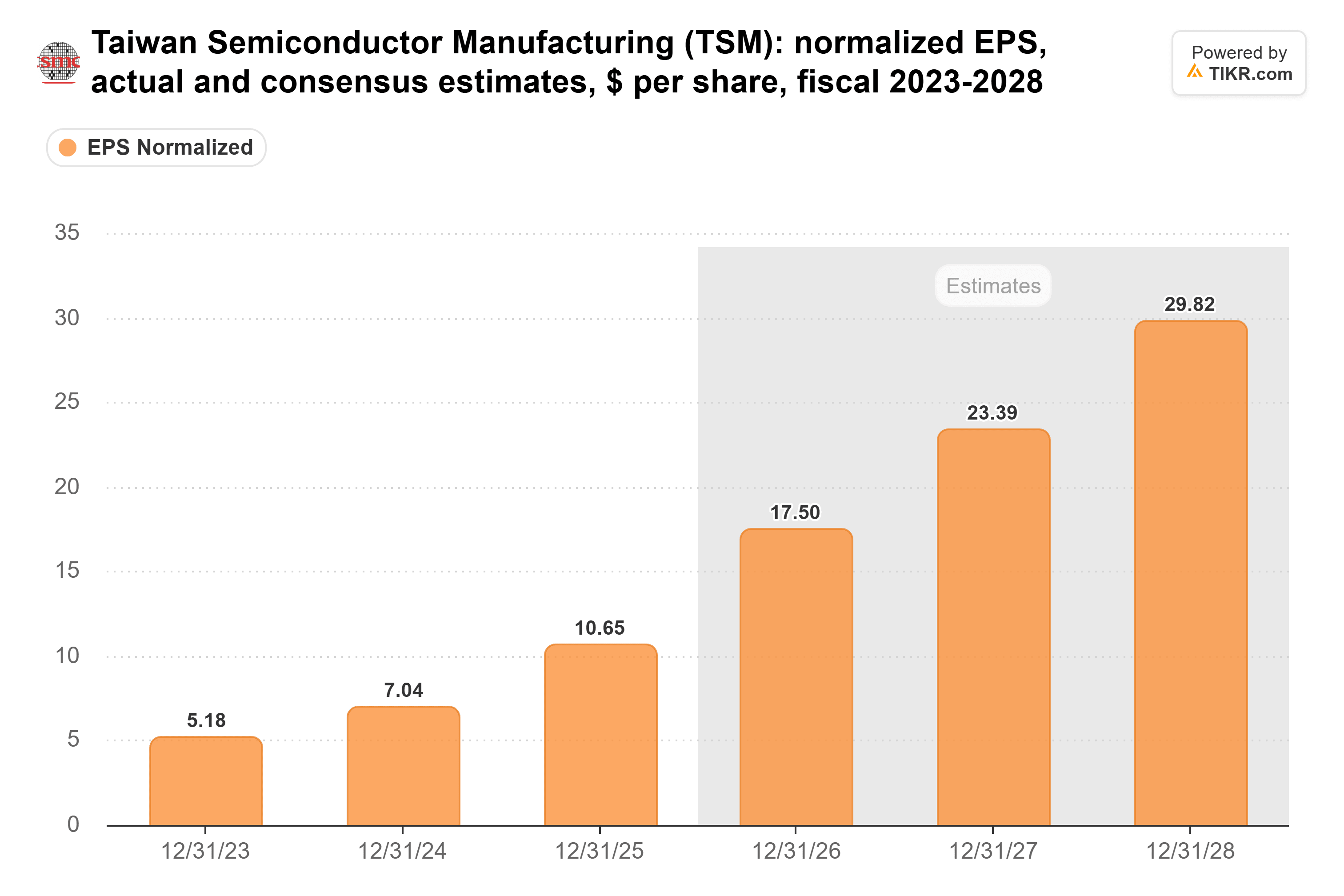
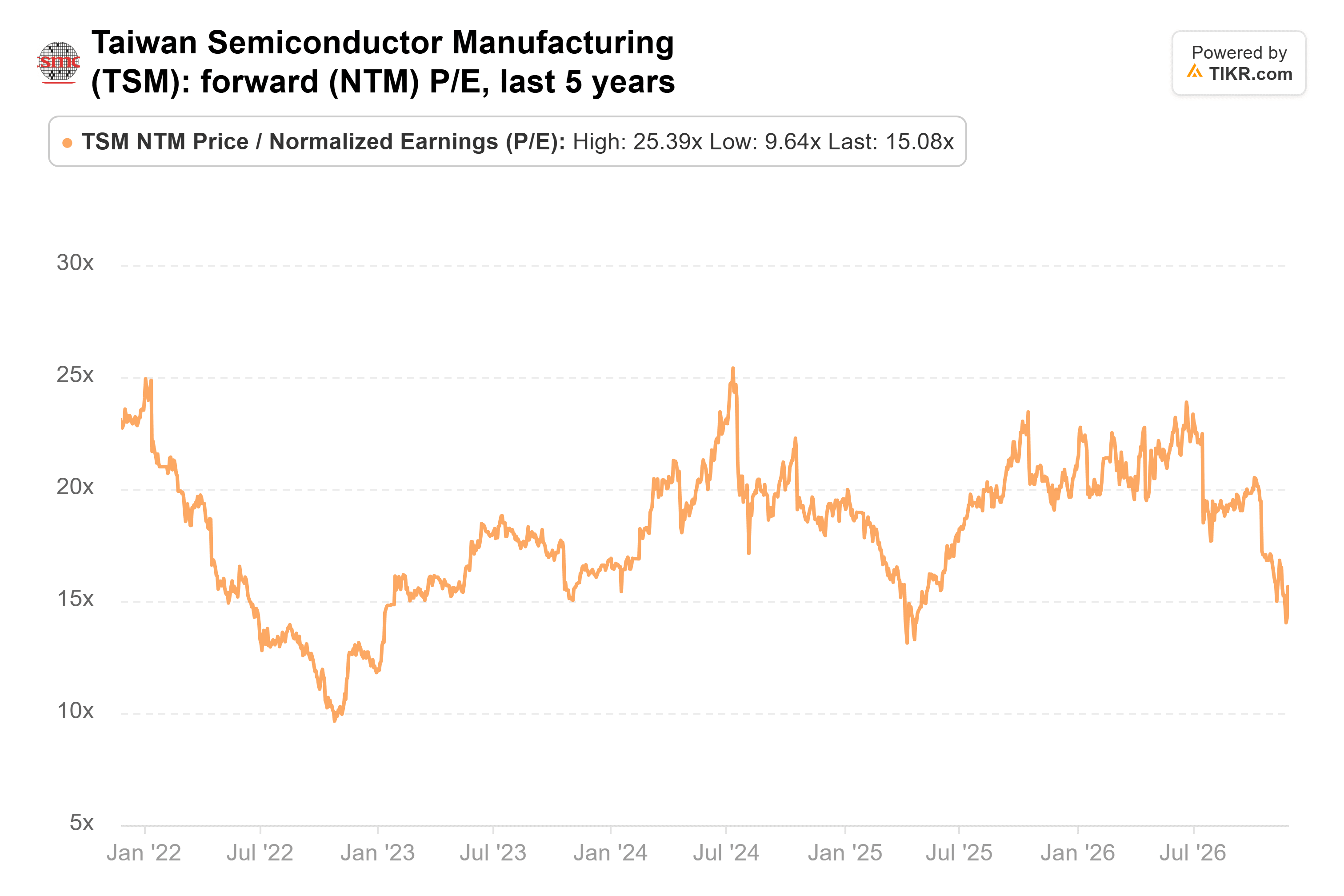
Those estimates were set in October, and a tariff round that exempts chips gives analysts no reason to cut them. Yet at 15x forward earnings, TSMC trades below its five-year average of 18x:
TSMC’s real tariff fight is in Arizona
Section 232 is the bigger threat, with Trump floating chip tariffs as high as 300% in August 2025. TSMC’s answer is to build where that tariff can’t reach, with $265 billion pledged to US chipmaking.
That’s a tougher setup for Intel, whose foundry revenue rose 58% to $6.7 billion in the third quarter, mostly from its own chips. Now it has to win outside customers on technology and price, and at 39x forward earnings, investors are already paying for that. Its late-January report will show whether any are signing.
Apple already knows what a tariff costs
Apple paid about $1.1 billion in tariffs in the September 2025 quarter. Those tariffs were struck down in February, and refunds added about 2 points to its gross margin in the June 2026 quarter, part of fiscal 2026’s jump:
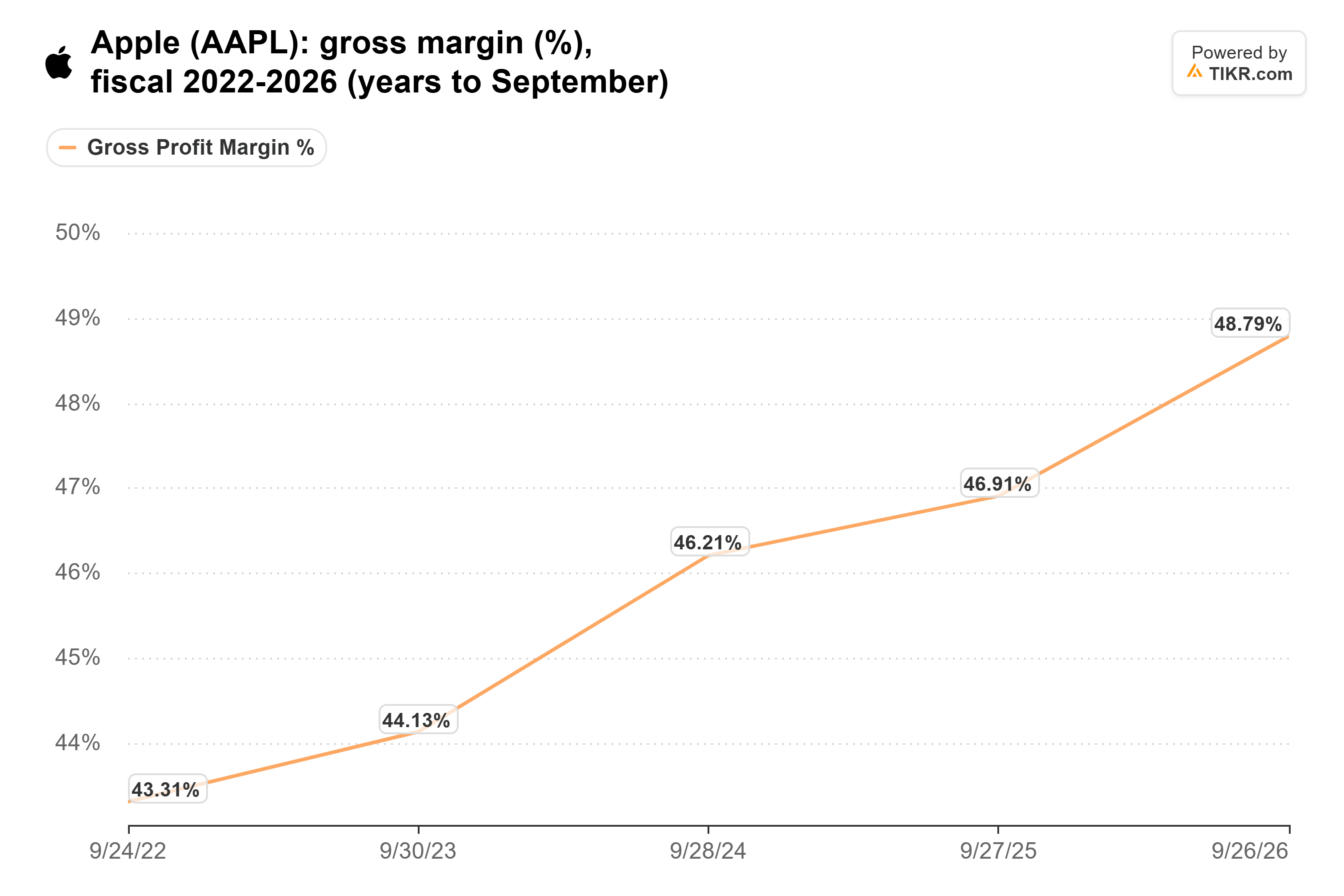
Those refunds won’t repeat, so fiscal 2026’s 48.8% is a high starting point. Still, with India-made phones exempt and China-made ones capped at 10%, the iPhone faces a lighter fight than the one Apple only just escaped. AirPods could get caught, since headphones aren’t exempt, but Wearables, Home and Accessories brought in a much smaller $35.7 billion in fiscal 2025.
Qualcomm is in a similar spot, with its chips and the phones they go into exempt outside China. Its handset revenue fell 26% to $5.1 billion in its September quarter, and it’s raising chip prices to cover higher costs. Its early-February report will show whether those increases stick.
Good news, with a bigger tariff still ahead
This round is good news for TSMC and Apple. TSMC’s drop looks like an AI scare, and I think the market is giving the exemption too little credit.
Of course, these are proposals, and the exemptions and the 10% cap have to survive the hearings. Next up for TSMC: November revenue in early December, against a fourth-quarter guide of $52.3 billion to $54.3 billion, and anything Trump says about Section 232 at TSMC’s Arizona groundbreaking on Dec. 4.
So what is TSMC stock actually worth?
TIKR lets you forecast the future price of any stock in less than a minute. Just enter a few assumptions into TIKR’s valuation model and see what TSMC could be worth. Start from Wall Street consensus estimates, or adjust the inputs to reflect your own view of the business. It’s free to use.
Disclaimer:
Please note that the articles on TIKR are not intended to serve as investment or financial advice from TIKR or our content team, nor are they recommendations to buy or sell any stocks. We create our content based on TIKR Terminal’s investment data and analysts’ estimates. Our analysis might not include recent company news or important updates. TIKR has no position in any of the stocks mentioned. Thank you for reading, and happy investing!