Key Takeaways
- President Trump backed a bipartisan bill that would give US film and TV productions a 20% federal tax credit on labor costs.
- A credit would lower what Netflix and Disney pay to film in the US, helping cash flow and margins.
- Incentives already cut Netflix’s content costs by about $1.0 billion in 2025, and a US credit would cover any qualifying US shoot.
- The bill hasn’t passed and would only cover productions starting after 2026.
President Trump wants Congress to pay for movies made in America. Two of the biggest spenders on film and TV, Netflix (NFLX) and Walt Disney (DIS), could be among the winners.
On Nov. 13, Trump posted on Truth Social that he’s working with Sens. Tim Scott and Adam Schiff and lawmakers from both parties on the Motion Picture, Television, and Entertainment Revitalization Act. He wrote that Hollywood has been “virtually ‘emptied out’ by the Tax Incentives, and much more, given by other Countries,” and that the industry “was MADE IN AMERICA, and must STAY IN AMERICA.”
A 20% Credit, With Room to Stack
Lawmakers introduced the bill in both chambers on Sept. 24. It would:
- Give a 20% credit on pay for US work on qualifying film and TV productions
- Add 5-point bonuses, capped at 30% in total, for qualifying multi-state producers, rural Opportunity Zone or disaster-area shoots, producers that shift work home from abroad, and independent productions (which publicly traded studios can’t claim)
- Cover projects over $1 million that shoot at least 75% of principal photography days in the US
- Let studios sell the credit and use it on top of state incentives
It would cover productions starting principal photography in tax years beginning after Dec. 31, 2026.
Netflix’s Content Bill Is the Swing Factor
Netflix plans about $20 billion of cash content spending in 2026. Content payments rose 18.5% in the first nine months of 2026, nearly twice the 9.5% rise in content amortization. Amortization trails cash, so much of that spending will hit expenses over the next few years. The credit wouldn’t touch it, though: it only covers productions starting after 2026.
Free cash flow has climbed from slightly negative in fiscal 2021 to $9.5 billion in fiscal 2025:
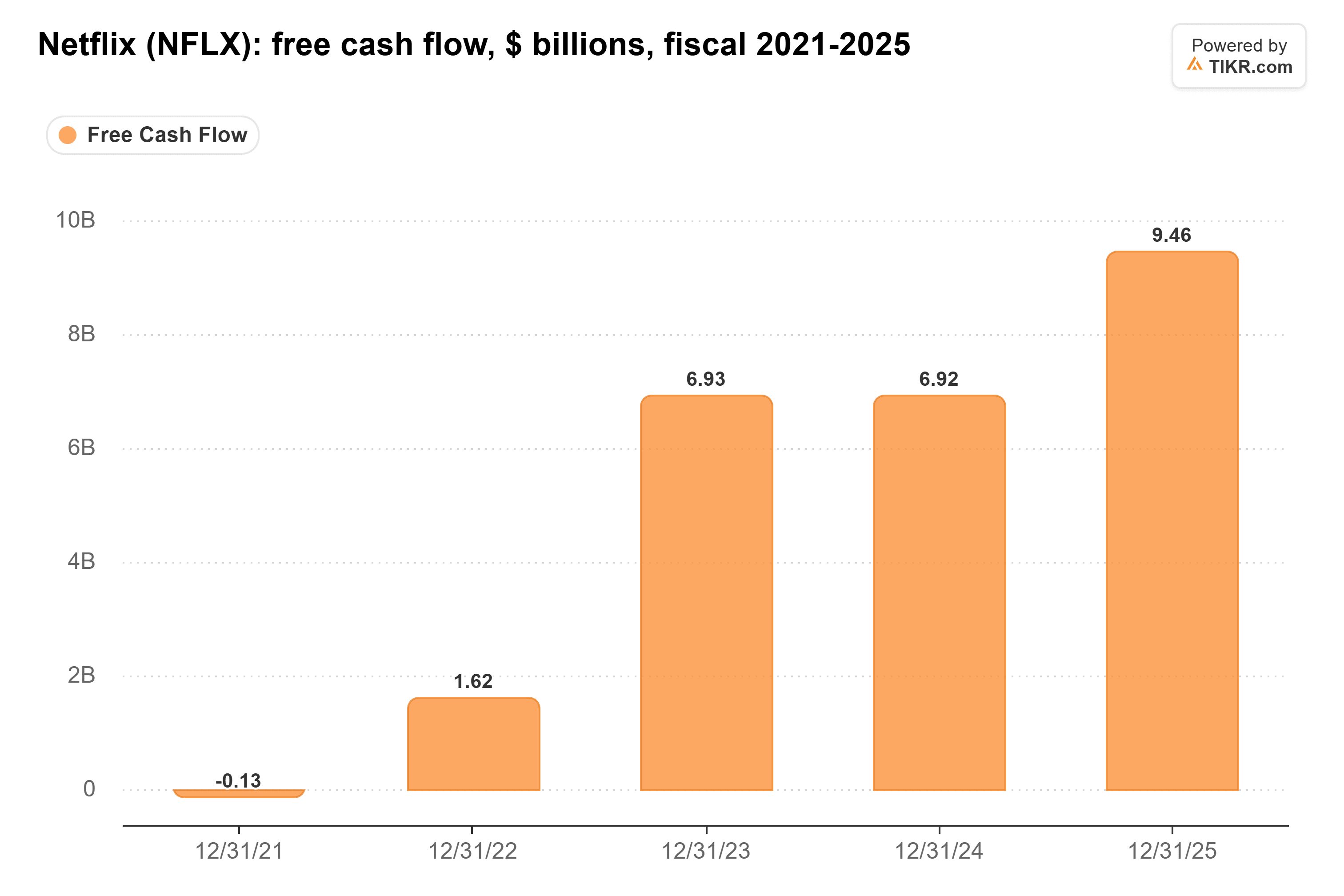
Management expects about $12 billion this year, but that includes a $2.8 billion termination fee from the collapsed Warner Bros. Discovery deal.
The operating margin went from 20.6% in fiscal 2023 to 29.5% in fiscal 2025, mostly because content amortization shrank as a share of revenue:
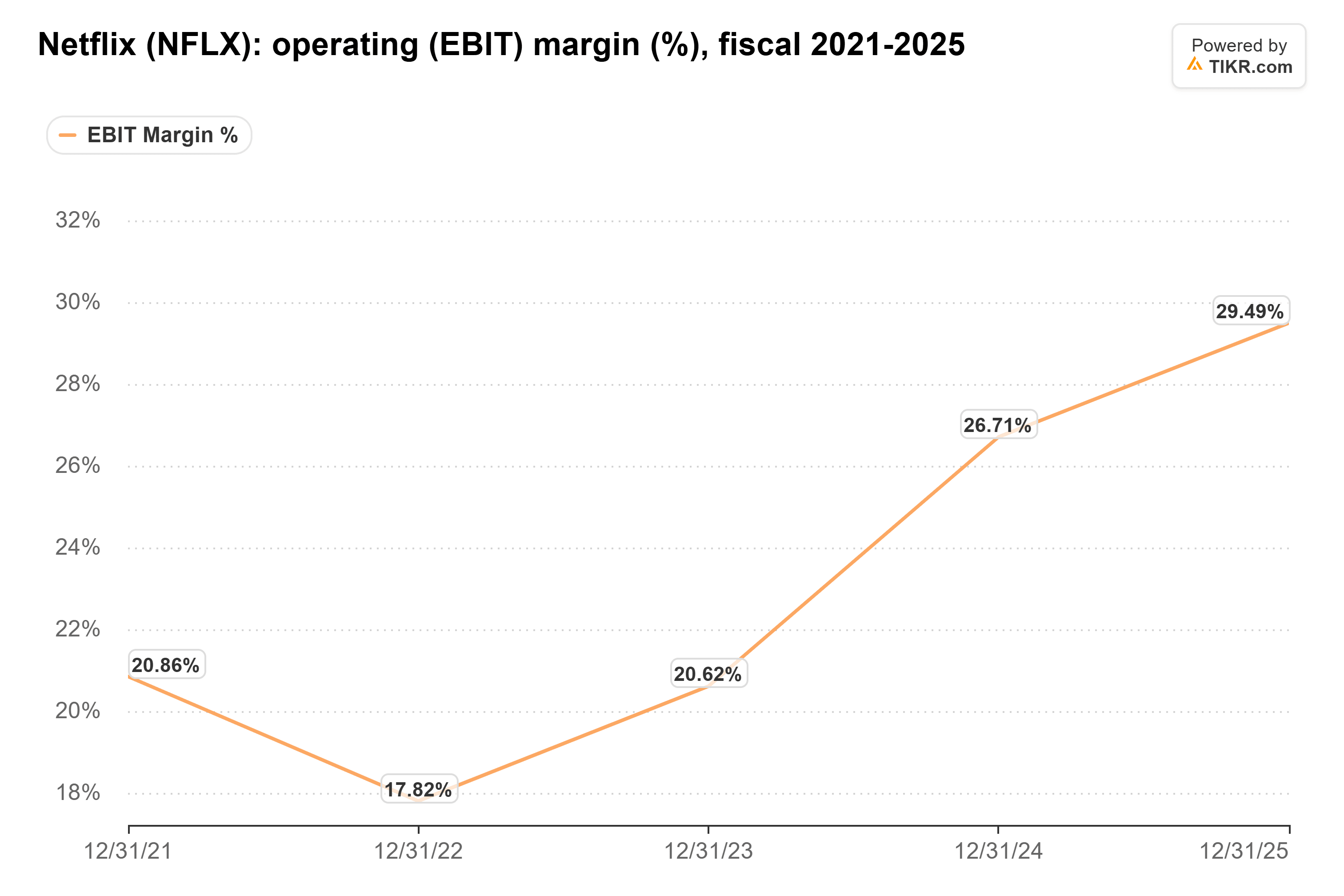
Netflix’s annual report says tax incentives lowered its content amortization by about $1.0 billion in 2025, equal to about 2 points of margin. A credit at home could add more.
TIKR Tracks 51 Analysts on Netflix. How Many Say “Buy”?
See the full breakdown of Buy, Hold, and Sell ratings on Netflix, along with Wall Street’s revenue and earnings estimates, all in one place. More than 500,000 investors use TIKR to research stocks like this one. See Netflix’s Analyst Ratings
Disney Gets More Out of Every Point Saved
Disney’s operating margin nearly tripled, from 5.2% in fiscal 2021 to 14.9% in fiscal 2025:
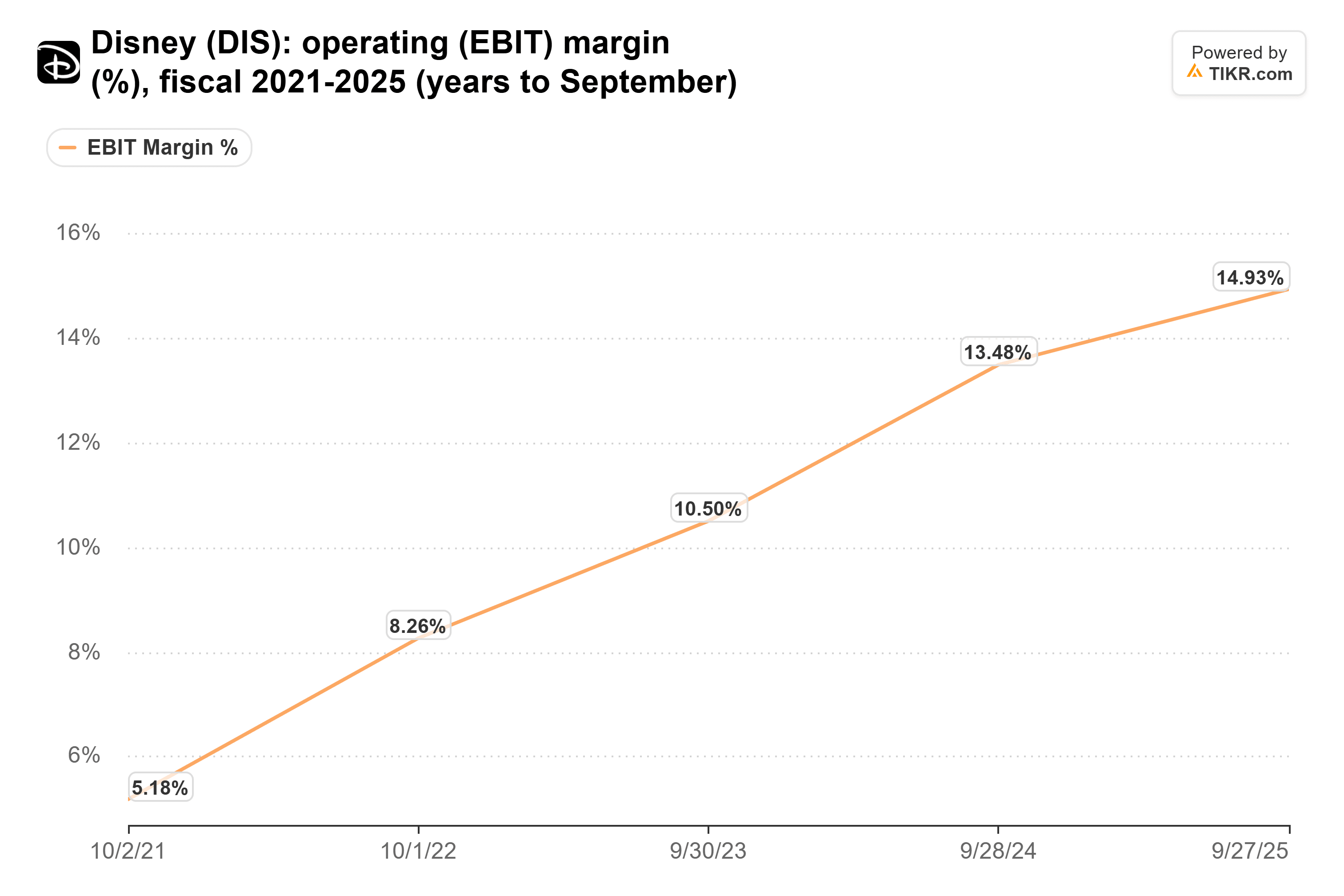
That’s about half of Netflix’s margin, so Disney’s profit is more sensitive to cost cuts. Savings worth 1% of revenue would lift its operating profit about 7%, against about 3% for Netflix. The gain depends on how much of Disney’s slate shoots in the US.
What Decides the Gain for Netflix and Disney
The credit doesn’t require moving anything: shoots already in the US would qualify too. For projects in Canada, the UK or Australia, the countries Trump named, the math turns on total cost after federal, state and foreign incentives.
Even so, it’s a real tailwind for both if it passes, and I’d expect investors to see it at Netflix first, where content cash is the number they watch most. Netflix’s 2027 outlook in January will show how hard that bill is pushing on margins before any credit arrives.
So What Is Netflix Stock Actually Worth?
TIKR lets you forecast the future price of any stock in less than a minute. Just enter a few assumptions into TIKR’s valuation model and see what Netflix could be worth. Start from Wall Street consensus estimates, or adjust the inputs to reflect your own view of the business. It’s free to use.
Disclaimer:
Please note that the articles on TIKR are not intended to serve as investment or financial advice from TIKR or our content team, nor are they recommendations to buy or sell any stocks. We create our content based on TIKR Terminal’s investment data and analysts’ estimates. Our analysis might not include recent company news or important updates. TIKR has no position in any of the stocks mentioned. Thank you for reading, and happy investing!