Key Takeaways
- Morgan Stanley, UnitedHealth and ExxonMobil each yield 2.7%, the highest yields among Fisher Investments’ biggest positions.
- Fisher’s 13F for the quarter ended Sept. 30 shows a new ExxonMobil position and 19% more UnitedHealth shares.
- All three dividends are covered today, but ExxonMobil’s cash depends on oil prices that fell more than $20 a barrel in November.
- Morgan Stanley is the one to look at first: its dividend takes about a third of its earnings, and analysts see 25% upside.
Ken Fisher’s firm just handed income investors a short list.
Fisher Investments, which manages $386.7 billion, filed its 13F for the quarter ended Sept. 30 on Nov. 6. Among its top holdings, the three highest yielders are Morgan Stanley (MS), UnitedHealth (UNH) and ExxonMobil (XOM), and each pays 2.7% at today’s prices. All three pay the same yield, but the businesses paying those checks are very different.
1. Morgan Stanley’s dividend has room to grow
Fisher held 26.58 million Morgan Stanley shares at Sept. 30, worth $5.00 billion, or 1.4% of its 13F stocks. That’s about 2% more shares than three months earlier, and the stock is down 10% since.
The dividend is well covered. Morgan Stanley raised it 15% in June, to $1.15 a quarter, and its dividends still took just 34.1% of GAAP earnings over the last twelve months. Analysts expect the 2027 dividend to be 35.0% of earnings, and the bank’s 14.9% CET1 ratio is about three points above its requirement.
The consensus target has climbed from $169.57 a year ago to $211.50, though it’s down from its $237.33 peak in September:
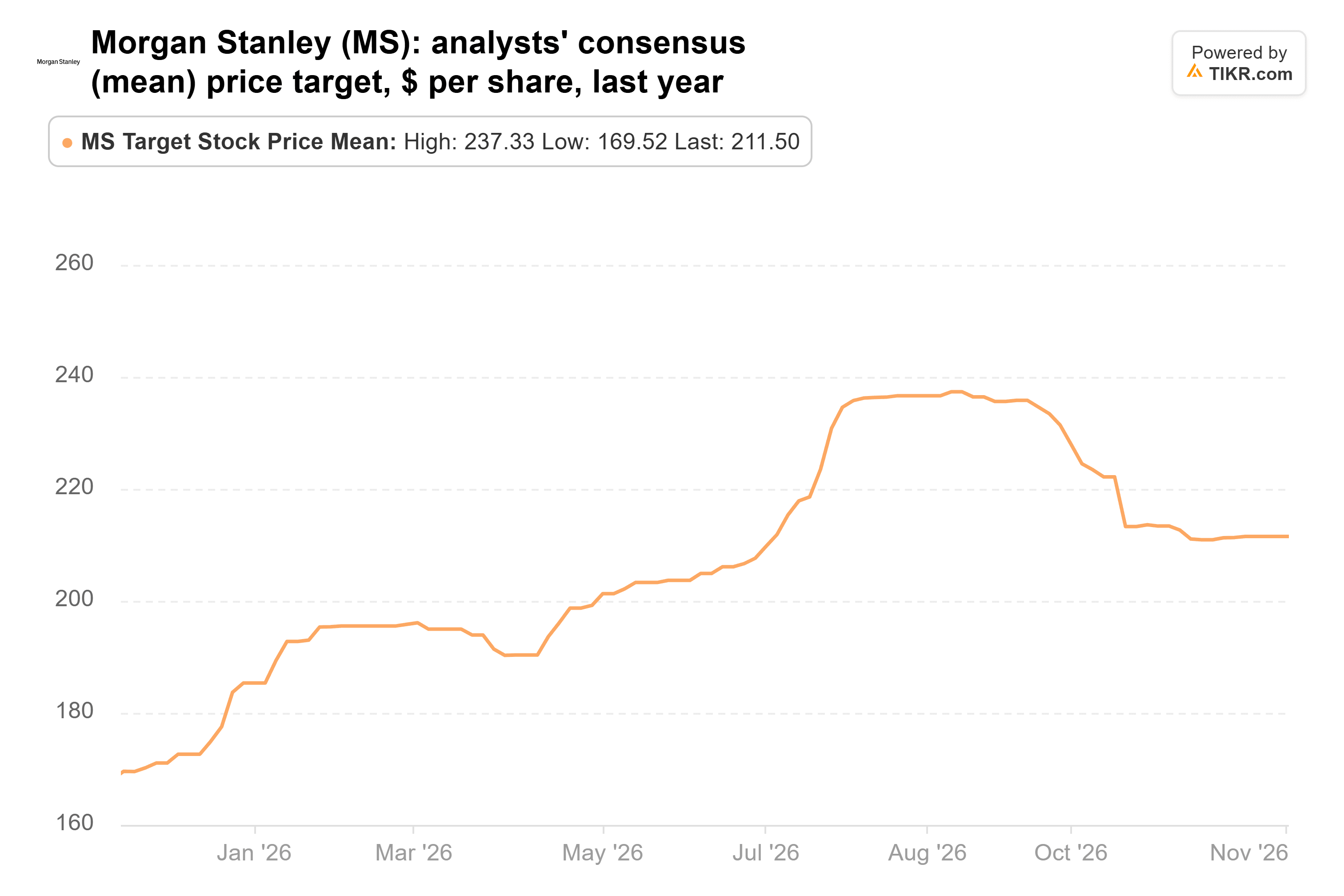
That’s 25% above today’s price. At about 13x forward earnings, the stock trades below its five-year average of 14x.
6 safe dividend stocks paying retirees 6%+ yields
There are over 100 stocks paying 6%+ annual dividends today.
But after an extensive investment review leveraging TIKR’s proprietary data, we now believe only six of them are truly safe for retirees.
They’re all yours as part of our new investment report. Learn more about how to get access right here.
2. UnitedHealth’s check is covered, with Washington in the way
UnitedHealth has the same 2.7% yield and a much bigger question mark. Fisher added 19% to its stake in the third quarter, ending September with 10.83 million shares worth $3.98 billion, or 1.1% of its 13F stocks. The stock is down 7% since.
The dividend itself looks safe. Over the twelve months to Sept. 30, UnitedHealth paid $8.17 billion of dividends out of $22.83 billion of free cash flow, a comfortable 35.8%. The business behind that cash is recovering too. Medical costs took 88.4% of premiums in the third quarter, down from 89.9% a year earlier, and management has raised its 2026 outlook three times, to at least $20.50 of adjusted EPS.
What has slowed is dividend growth. June’s raise was 5.0%, to $9.28 a year. Before that, the dividend grew 12.6% a year, from $4.83 in 2020 to $8.73 in 2025.
Analysts are more upbeat than the market. The consensus target fell to $357.81 in April and has since recovered to $478.48:
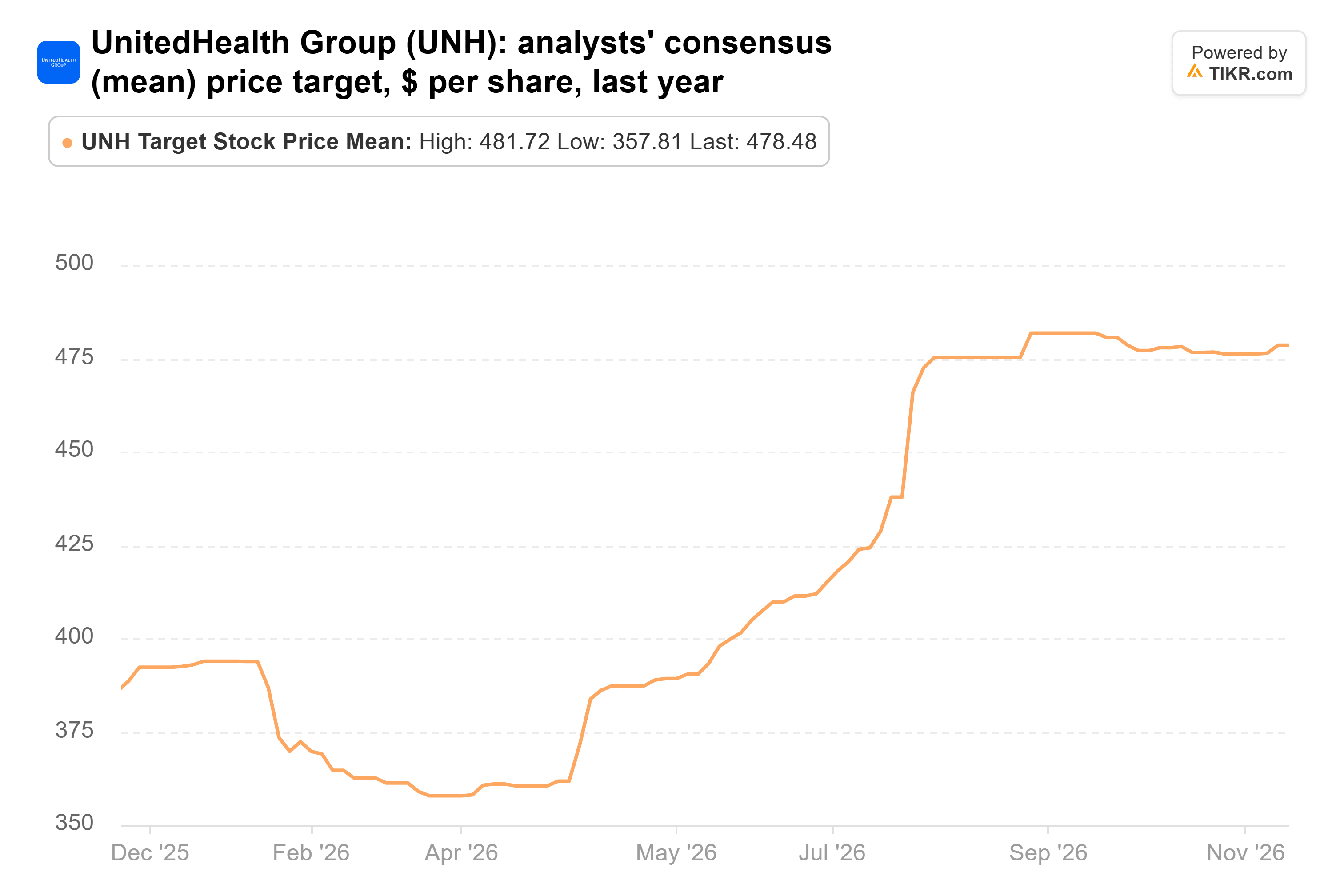
That’s 40% above today’s price. At about 15x forward earnings, UnitedHealth trades well below the 19x it has averaged at quarter-ends since mid-2014.
Washington is a big part of why. On Nov. 20, the Centers for Medicare & Medicaid Services proposed a star-ratings overhaul that it estimates would cut Medicare Advantage bonuses by about $107 billion over 2031-2037. The rule still has to be finalized, and UnitedHealth is already suing the agency over its 2027 ratings.
3. ExxonMobil’s 44-year streak leans on a windfall
ExxonMobil is the biggest of Fisher’s three positions, and the newest. Fisher opened the position in the third quarter and held 31.93 million shares at Sept. 30, worth $5.20 billion, or 1.5% of its 13F stocks. The stock is down 3% since.
On Oct. 30, ExxonMobil raised its quarterly dividend to $1.07 from $1.03. The company counts that as its 44th consecutive year of annual dividend growth. This year’s windfall covers the dividend easily: third-quarter free cash flow was $19.1 billion, against $4.3 billion of dividends.
But 2025 is a better guide to an ordinary year. That year, dividends took a heavy 73.0% of free cash flow. With $20.0 billion of buybacks on top, total payouts of $37.2 billion were more than the $26.1 billion of free cash flow.
That matters because the windfall is fading. Brent fell more than $20 a barrel in November, to around $90, and ExxonMobil says each $1 of Brent is worth about $700 million of yearly earnings. Analysts expect normalized EPS of $13.71 this year, $12.49 in 2027 and $10.33 in 2028.
The consensus target has risen from $128.72 a year ago to $184.18:

That’s 16% above today’s price, the least upside of the three. The stock trades at about 11x forward earnings, below its five-year average of 13x. But this year’s earnings were lifted by the disruption in the Strait of Hormuz. On the 2028 estimate, the stock trades closer to 15x.
Morgan Stanley is the one to start with
If I could only buy one of the three right now, it’d be Morgan Stanley. Its dividend takes about a third of its earnings, and it just rose 15%. Analysts expect the dividend to grow 9.5% a year, from $4.30 a share in 2026 to $5.16 in 2028. That’s faster than analysts expect from either of the other two, and the stock trades below its own average multiple.
UnitedHealth has the bigger upside, the cheaper multiple against its history and a well-covered dividend of its own. Until Washington settles its Medicare rules, though, I’d rather collect a check from a business whose next few years don’t hang on a Medicare rule. ExxonMobil has the longest record, but its coverage depends on oil prices that are already falling.
The risk with Morgan Stanley is that this year’s trading and IPO boom cools. Its return on tangible equity fell to 22.6% in the third quarter from 26.6% in the second. In the last downturn, diluted EPS fell from $8.03 in 2021 to $5.18 in 2023.
The fourth-quarter report, due in mid-January, is the first test. A return on tangible equity above the bank’s 20% goal would support the case, and one near 20% on weaker trading would undercut it. Fisher’s next 13F, due by mid-February, will show whether it still holds all three.
Forget Morgan Stanley: 6 safe 6%+ dividend yields you can buy right now
Dividends can hold the key to enormous wealth. But only if you buy the right ones.
Picking the right high-yield dividend stock can be the difference between a dream retirement…and scraping by every month, waiting for the next Social Security check to clear.
We’ve identified six stocks yielding 6%+ that we believe every retiree should know about right now. (And Morgan Stanley isn’t one of them.)
Disclaimer:
Please note that the articles on TIKR are not intended to serve as investment or financial advice from TIKR or our content team, nor are they recommendations to buy or sell any stocks. We create our content based on TIKR Terminal’s investment data and analysts’ estimates. Our analysis might not include recent company news or important updates. TIKR has no position in any of the stocks mentioned. Thank you for reading, and happy investing!